Lan Ying
Active 1600 to 1643 · Chinese painting: Ming · 9 works
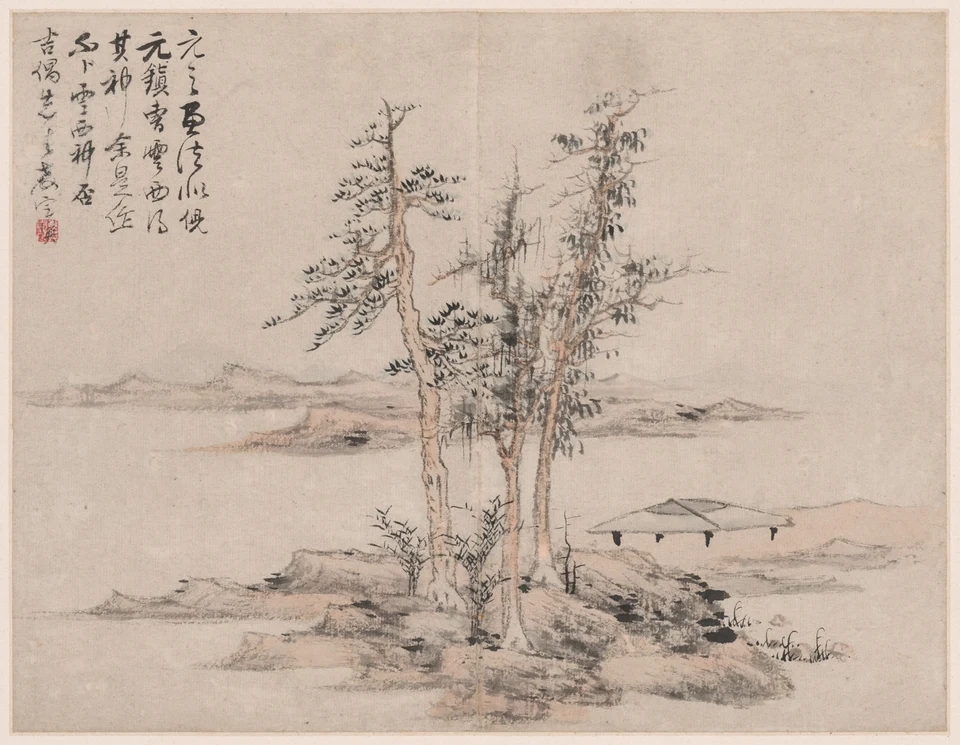
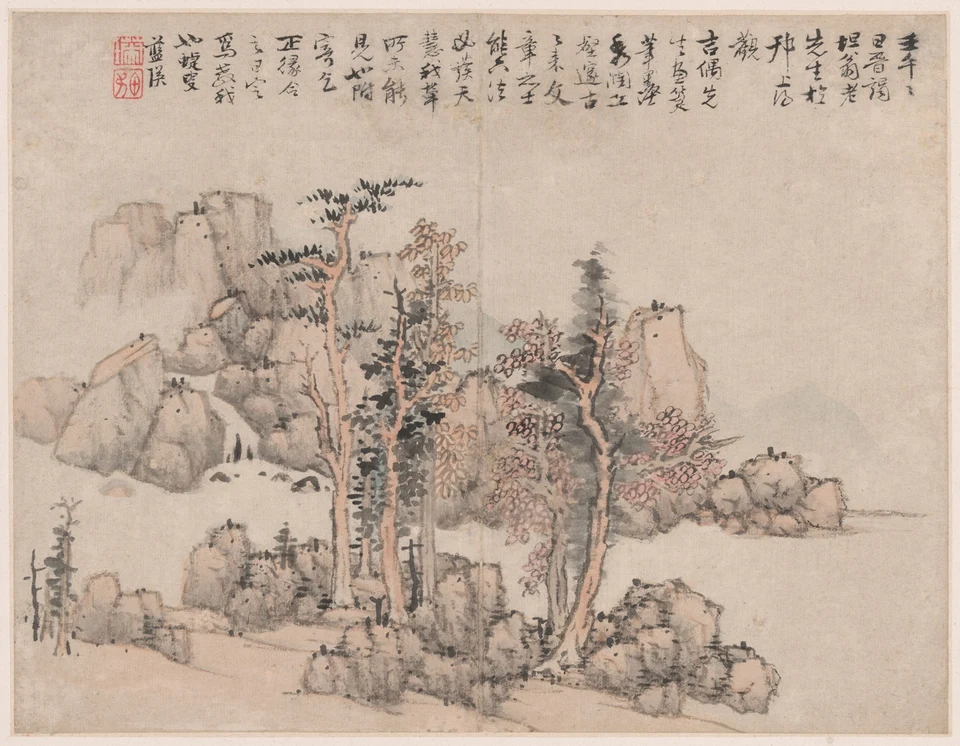
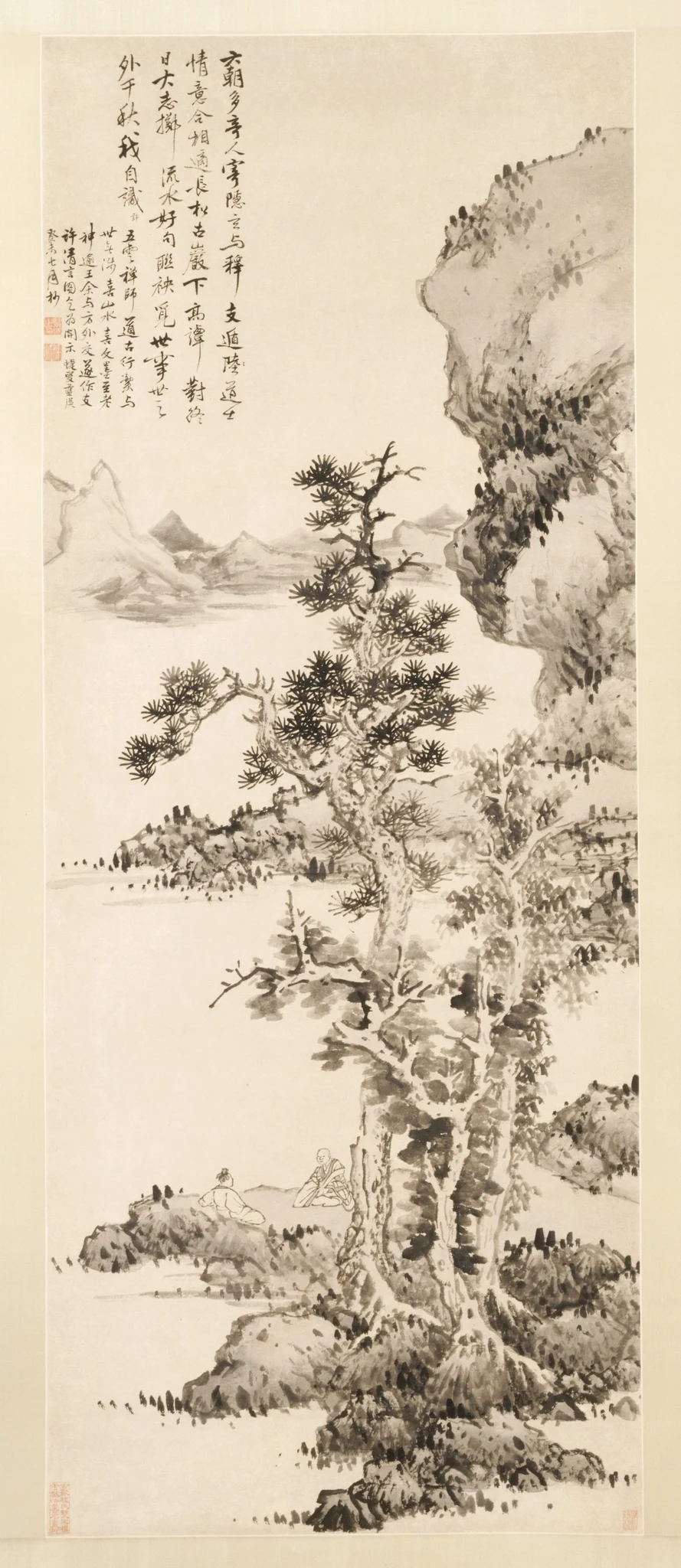
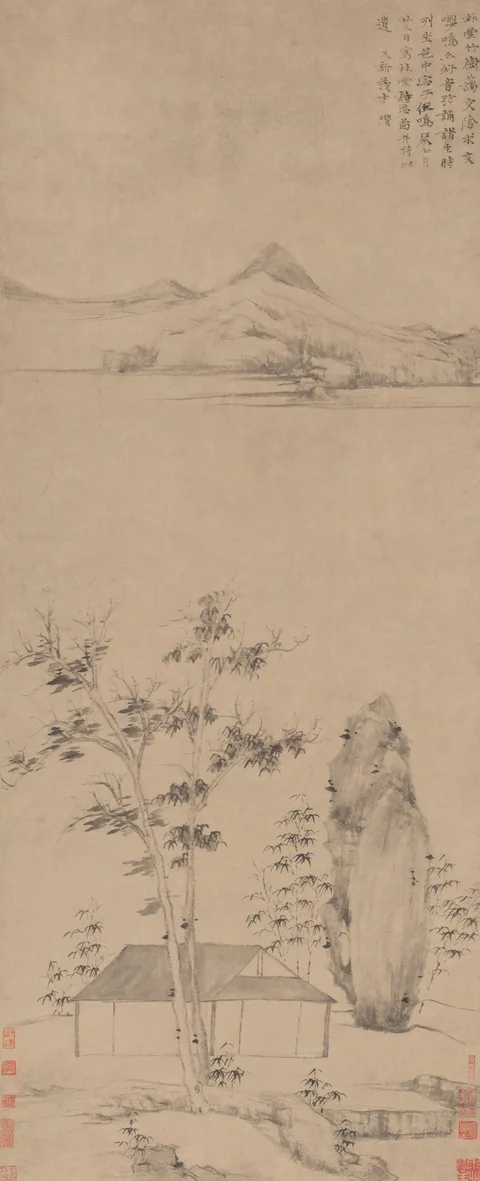
Lan Ying made earlier Chinese painting a resource for new compositions. A professional artist from Hangzhou, he studied the historically minded circle of Dong Qichang and produced albums that revisit masters of the Song and Yuan dynasties. Working “after” an older painter did not necessarily mean duplicating one picture: it could mean adapting a manner of shaping rocks, arranging mountains, or handling the brush. Lan combined this historical knowledge with a taste for dramatic structure. His album leaves make a useful comparison, showing how one artist could move between different inherited approaches.
9 works · 1600–1643
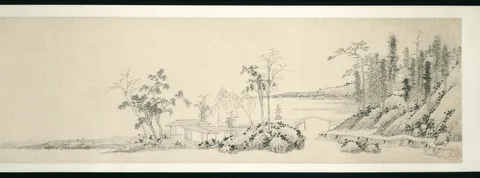
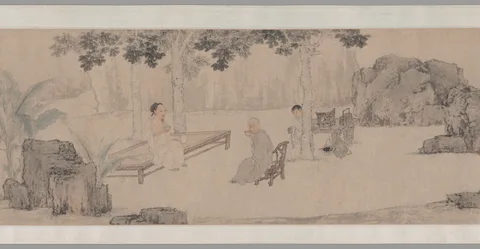
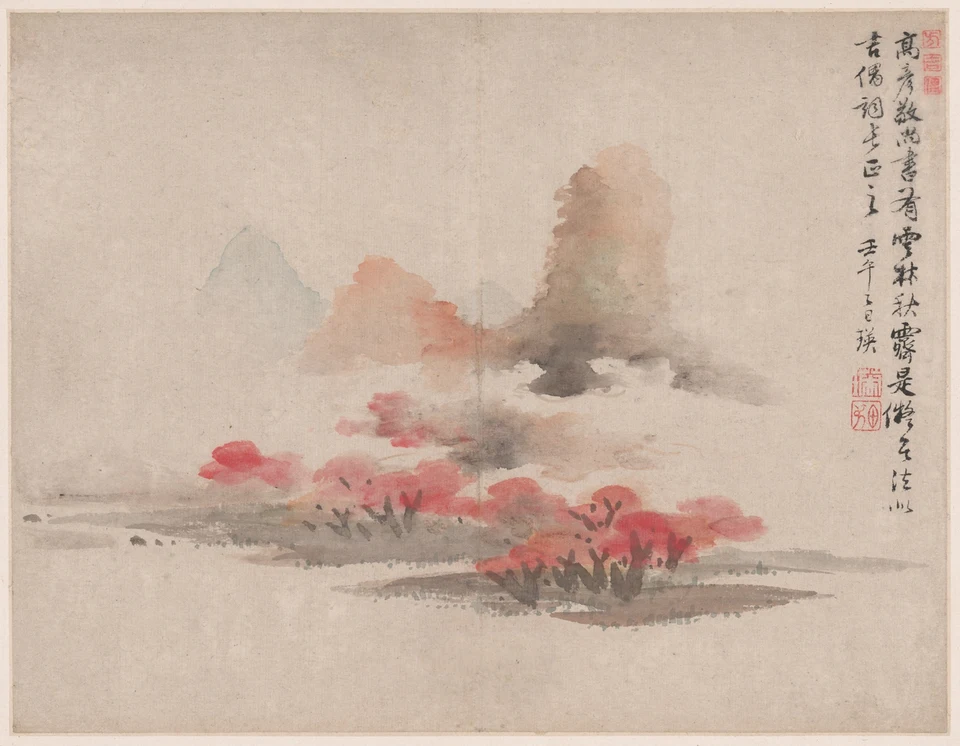
Compare two landscapes named after different ancient masters. Where do the mountain outlines and clusters of brushstrokes change?
1600–1637 · 6 works
Walk these 6Two painters active in Zhejiang worked through the last years of the Ming. Lan Ying, a professional from Hangzhou, studied many old masters through imitation and inspired Chen Hongshou, whose archaic figures have fine, even lines and elongated faces. Dong Qichang’s firm line between scholars and professionals embittered Chen, the Asian Art Museum notes.
In the museum: Chinese painting: Ming room · 2 works
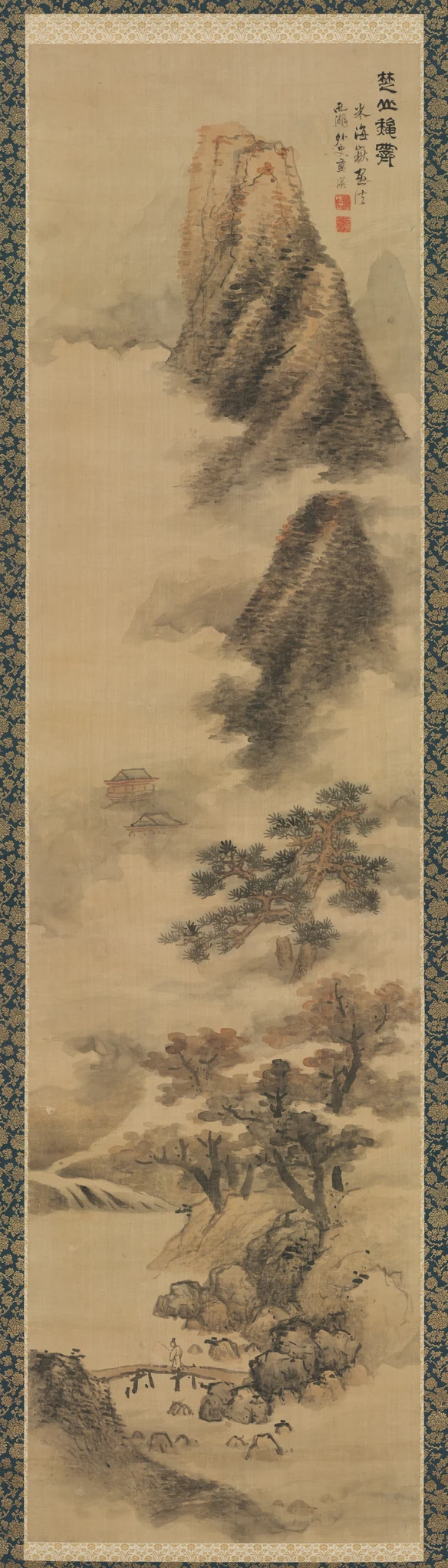 Clearing Autumn Mists in the Chu Mountains1600s
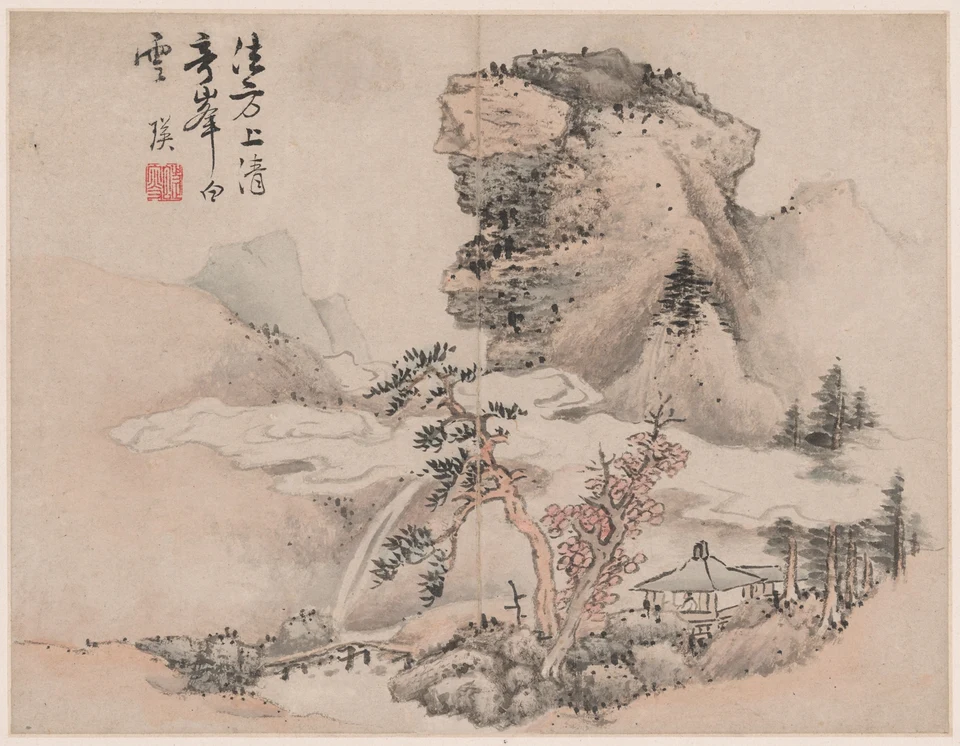 Landscape in the Style of Ancient Masters: after Fang CongyiMing dynasty (1368–1644), first half of 17th century
- Landscape in the Style of Ancient Masters: after Gao KegongMing dynasty (1368–1644), first half of 17th century
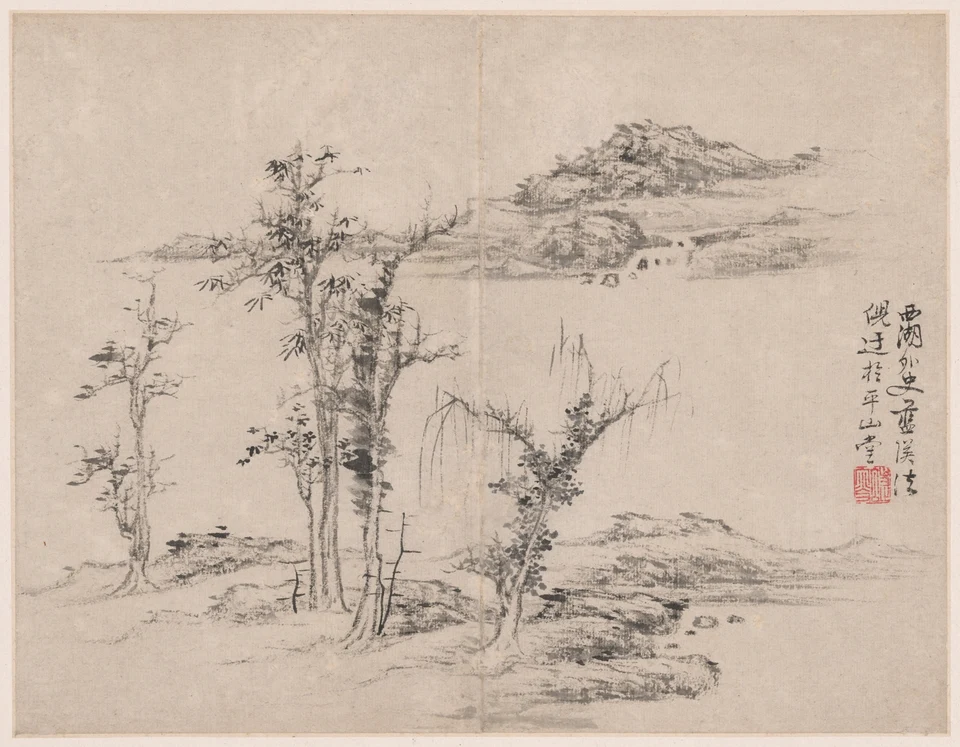 Landscape in the Style of Ancient Masters: after Ni Zan (1301-1374)Ming dynasty (1368–1644), first half of 17th century
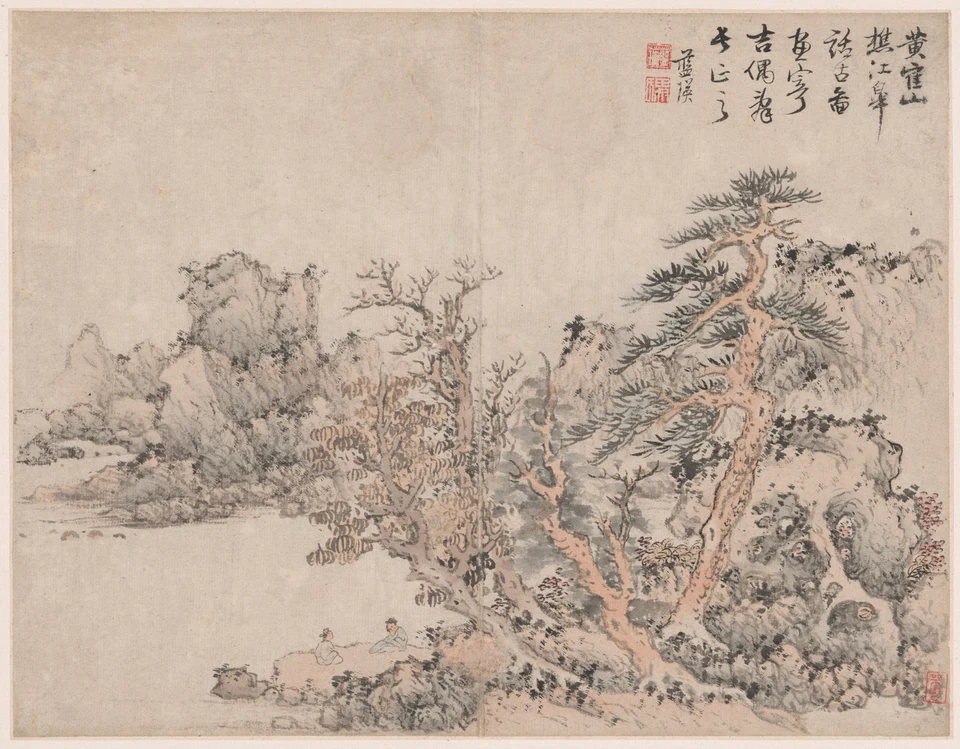 Landscape in the Style of Ancient Masters: after Wang Meng (c. 1308-1385)Ming dynasty (1368–1644), first half of 17th century
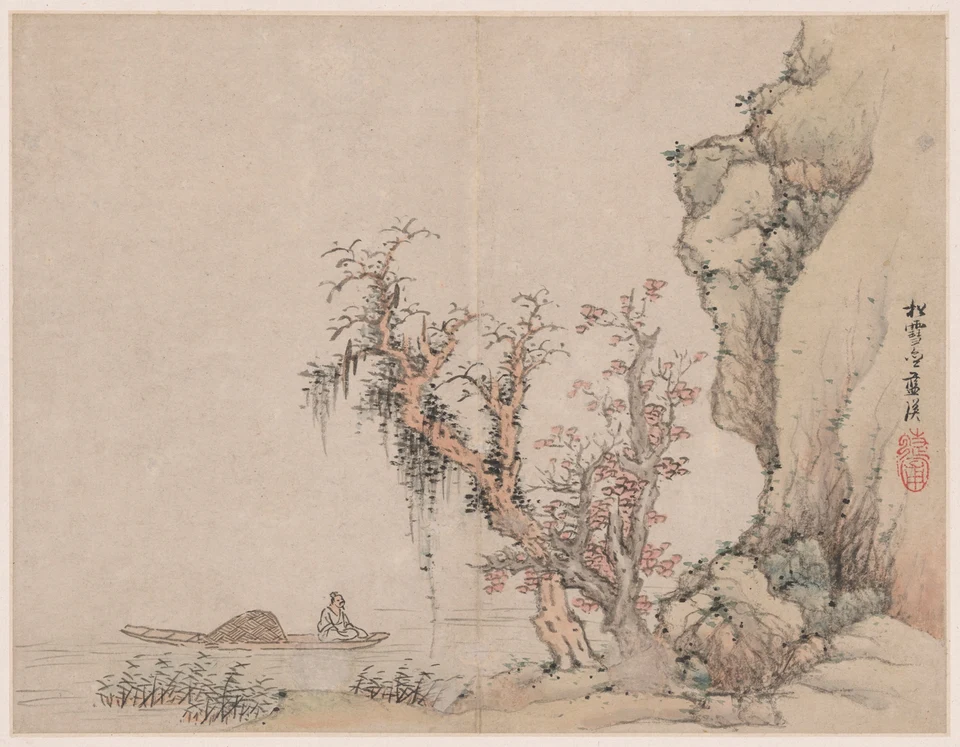 Landscape in the Style of Ancient Masters: Songxuezhai Lan YingMing dynasty (1368–1644), first half of 17th century
1642–1643 · 3 works
Walk these 3In the museum: Chinese painting: Ming room · 1 work