Giovanni Battista Tiepolo
1696–1770 · Rococo, Baroque · 16 works
Giovanni Battista Tiepolo used painting to transform the experience of a room. His frescoes for churches and palaces in Italy, Germany, and Spain opened ceilings into imagined skies, while his easel paintings gave religious and literary stories a comparable sense of drama. He considered the viewer’s position as well as the figures within the picture. Drawings and oil sketches reveal the planning behind these effects: bodies, clouds, and architecture can be arranged with remarkable economy. Even a small work may suggest a much larger space extending beyond its edges.
16 works · 1719–1759
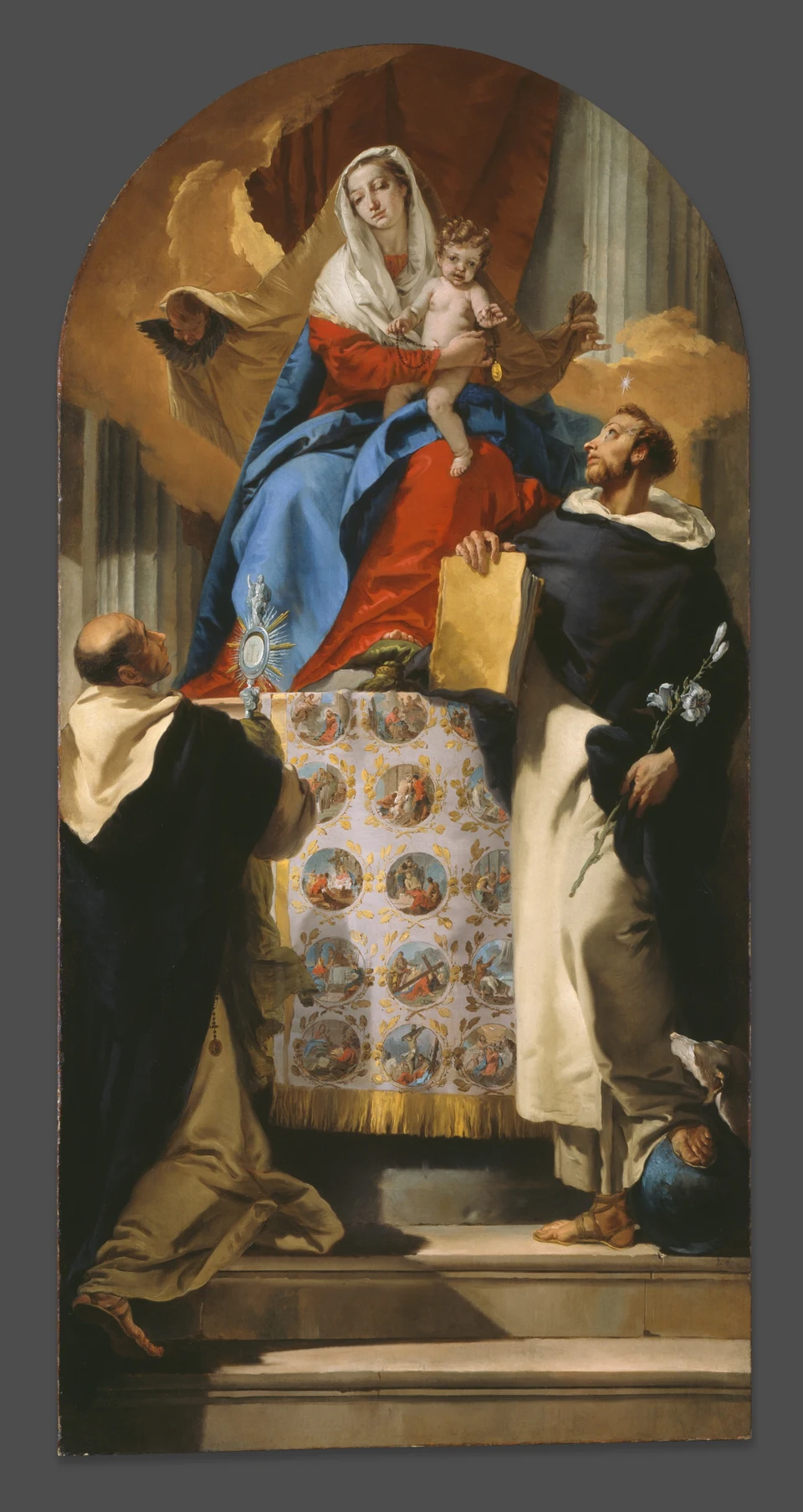
In Virgin and Child with Saints Dominic and Hyacinth, trace the view upward from the altar. What makes the upper figures seem to occupy a different space?
1719–1726 · 3 works
Walk these 3In the museum: Rococo room · 3 works
1732–1739 · 5 works
Walk these 5In the museum: Rococo room · 5 works
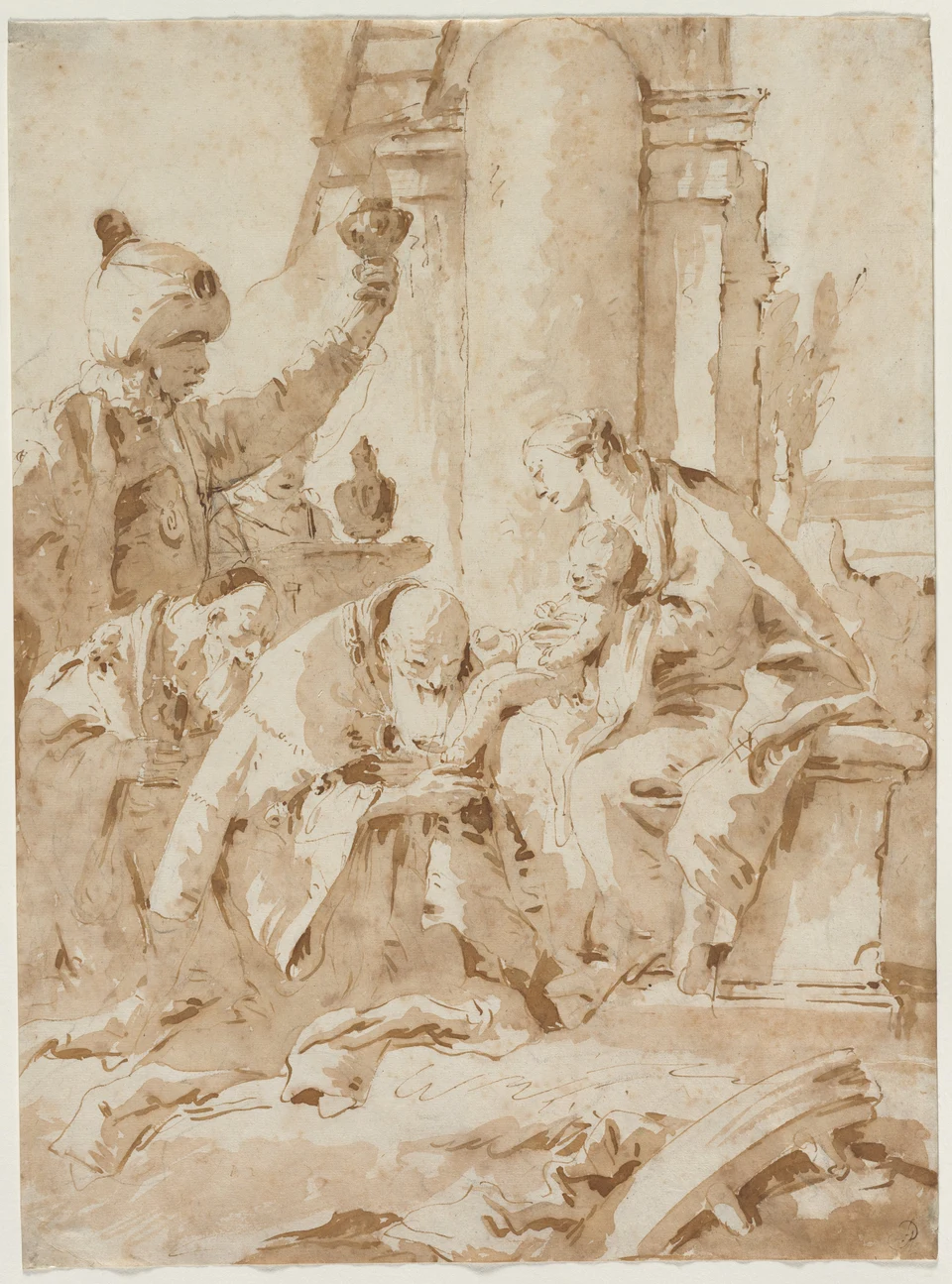
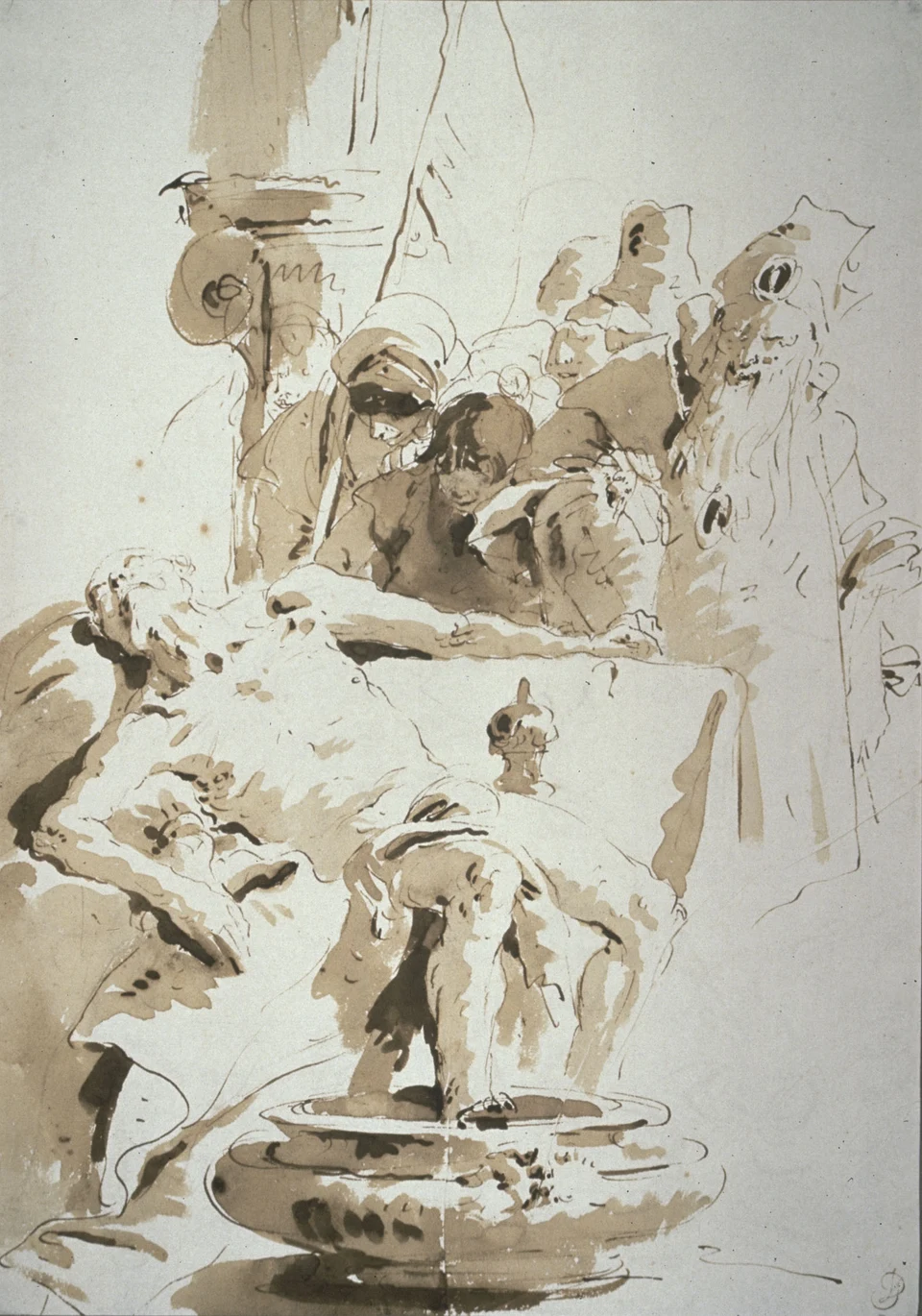
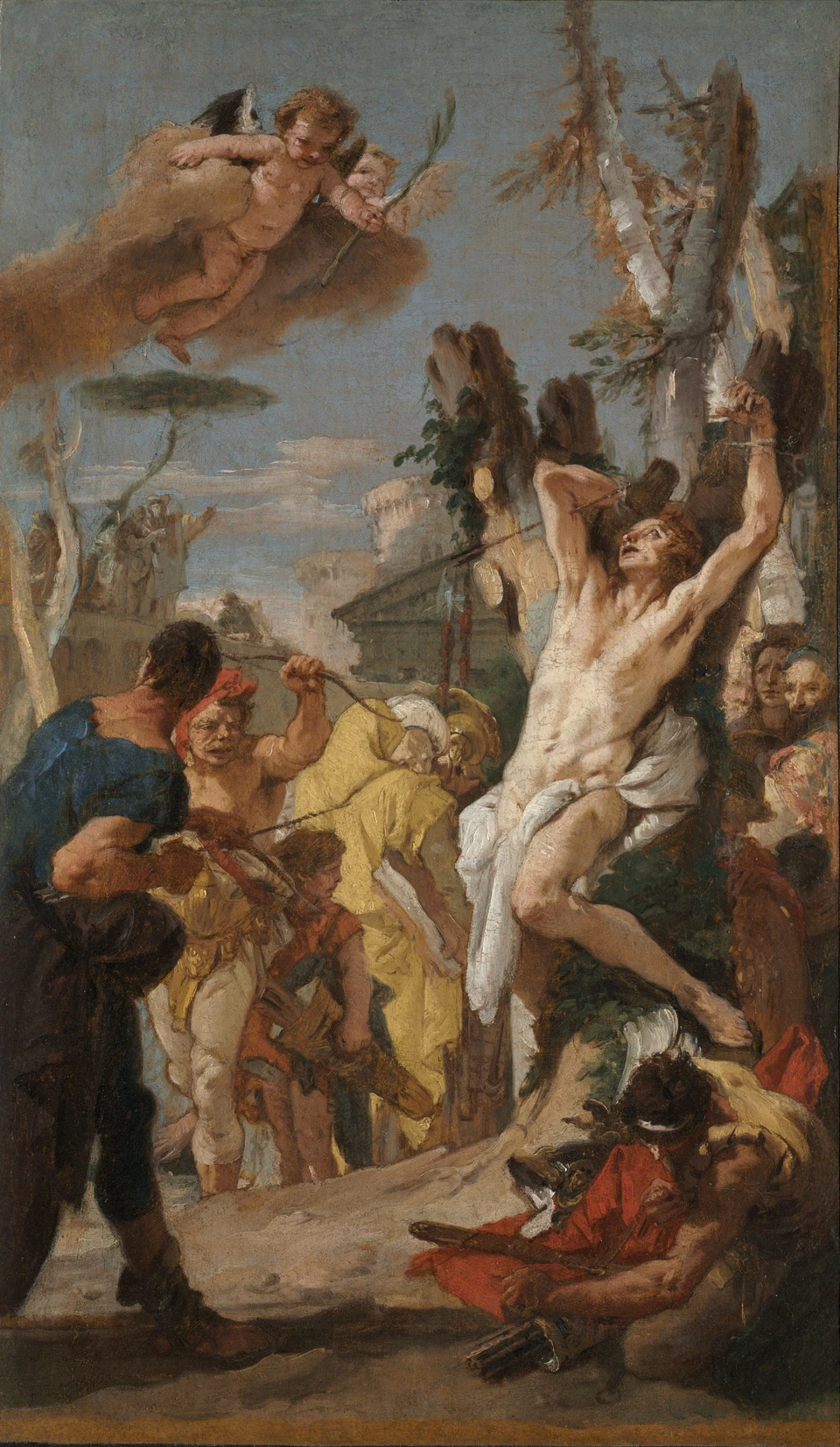
1742–1759 · 8 works
Walk these 8In the museum: Rococo room · 7 works
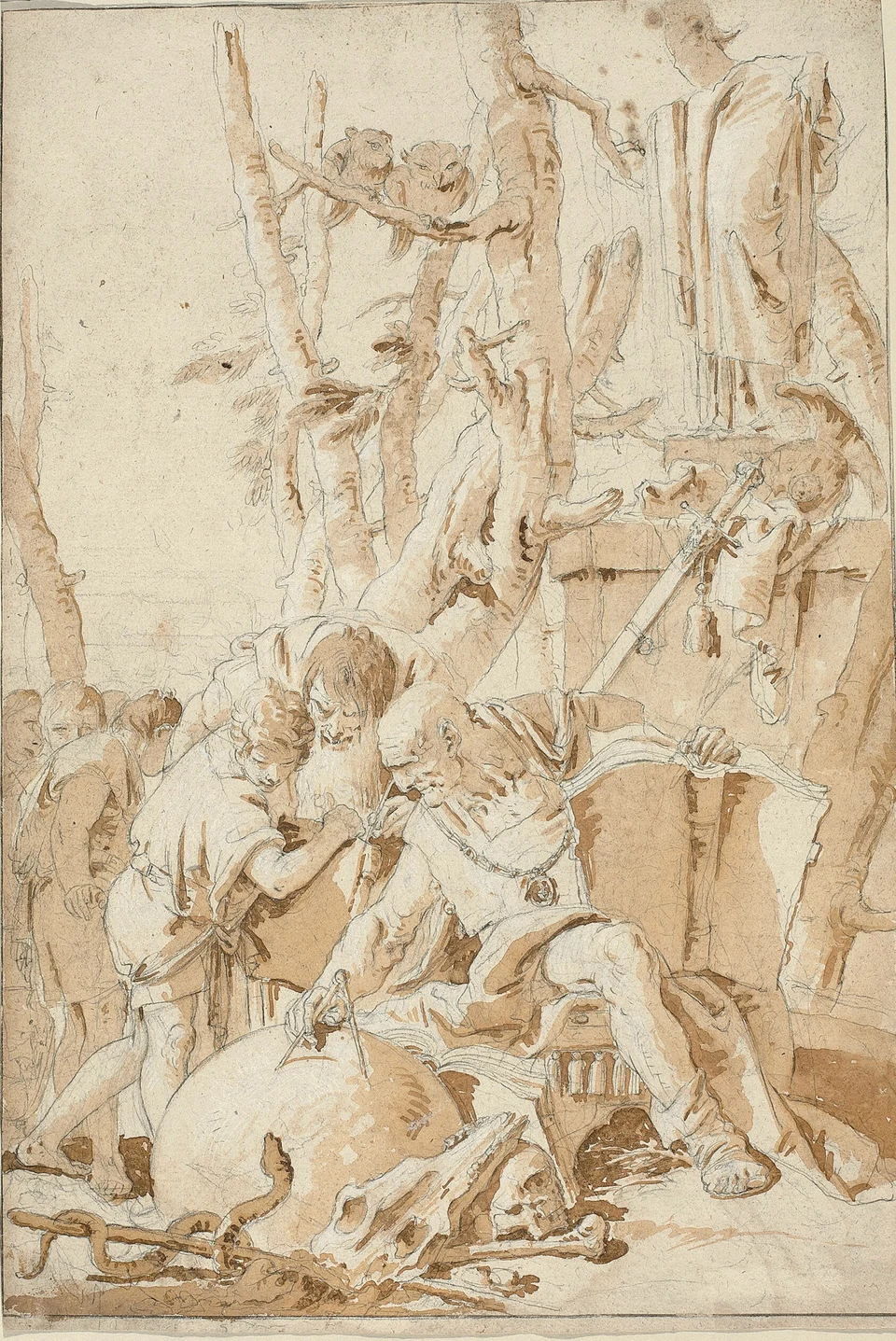 Democritus and Heraclitus Laughing and Sorrowing over the Follies of the World1742/43
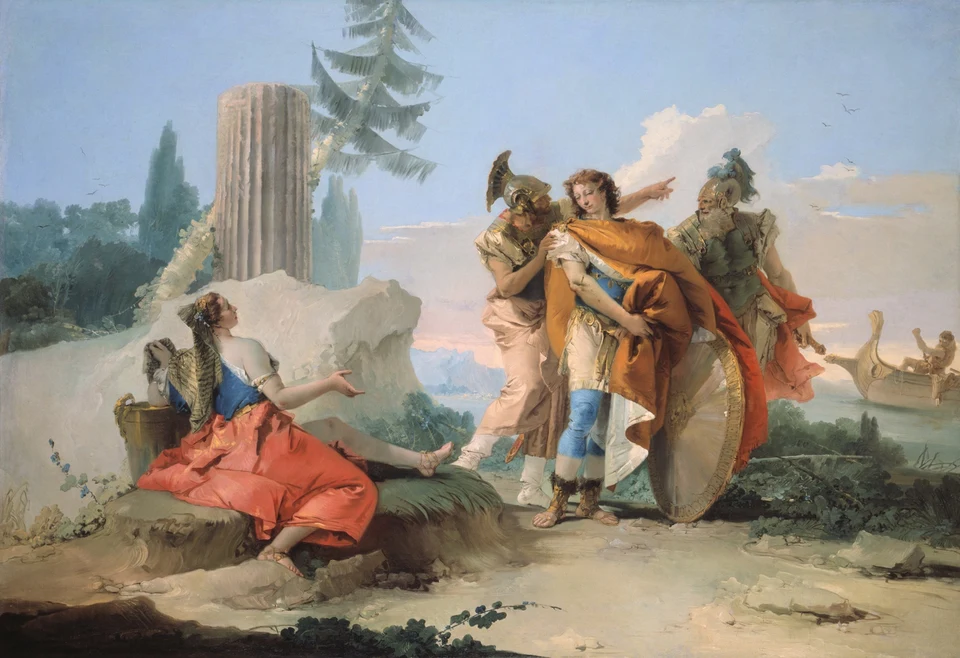 Armida Abandoned by Rinaldoc. 1742–45
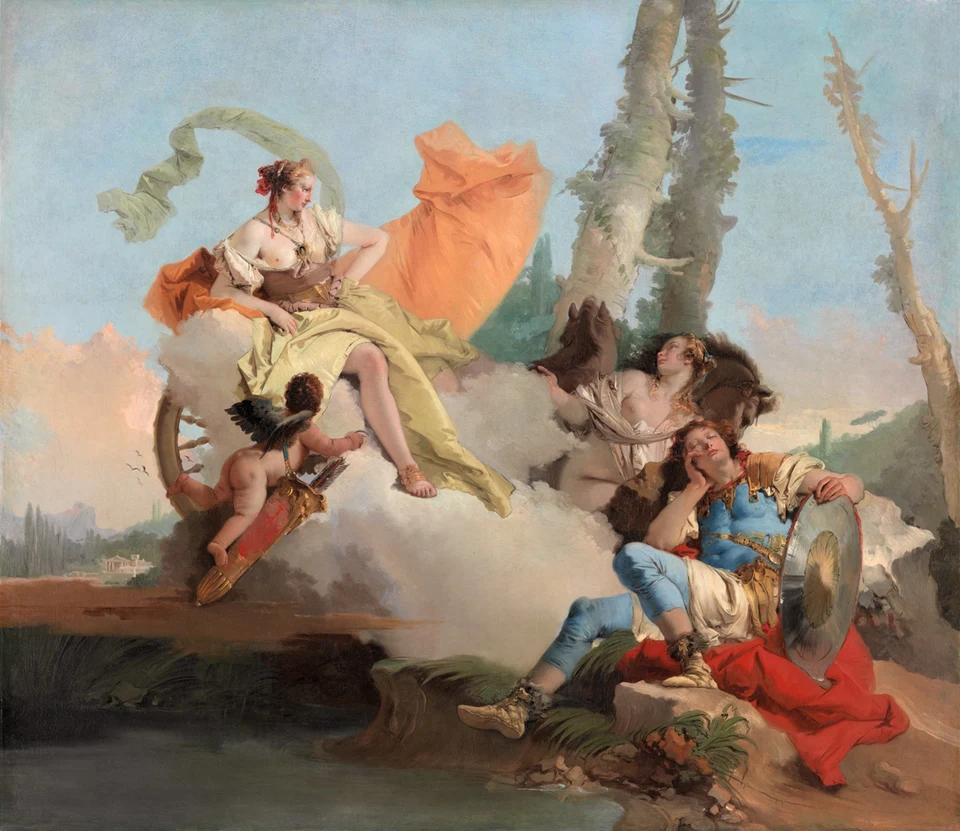 Armida Encounters the Sleeping Rinaldoc. 1742–45
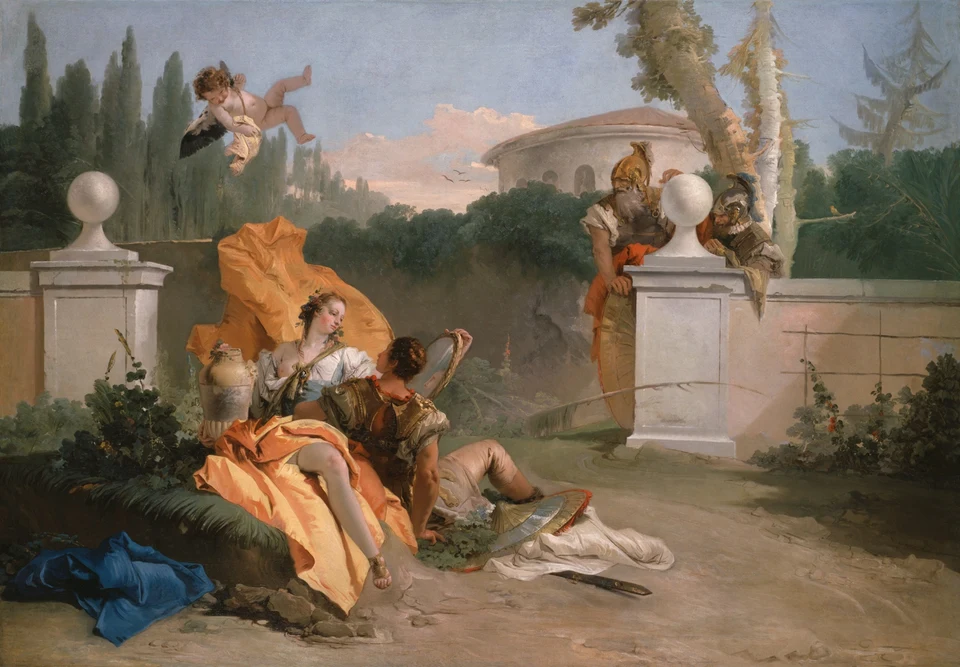 Rinaldo and Armida in Her Gardenc. 1742–45
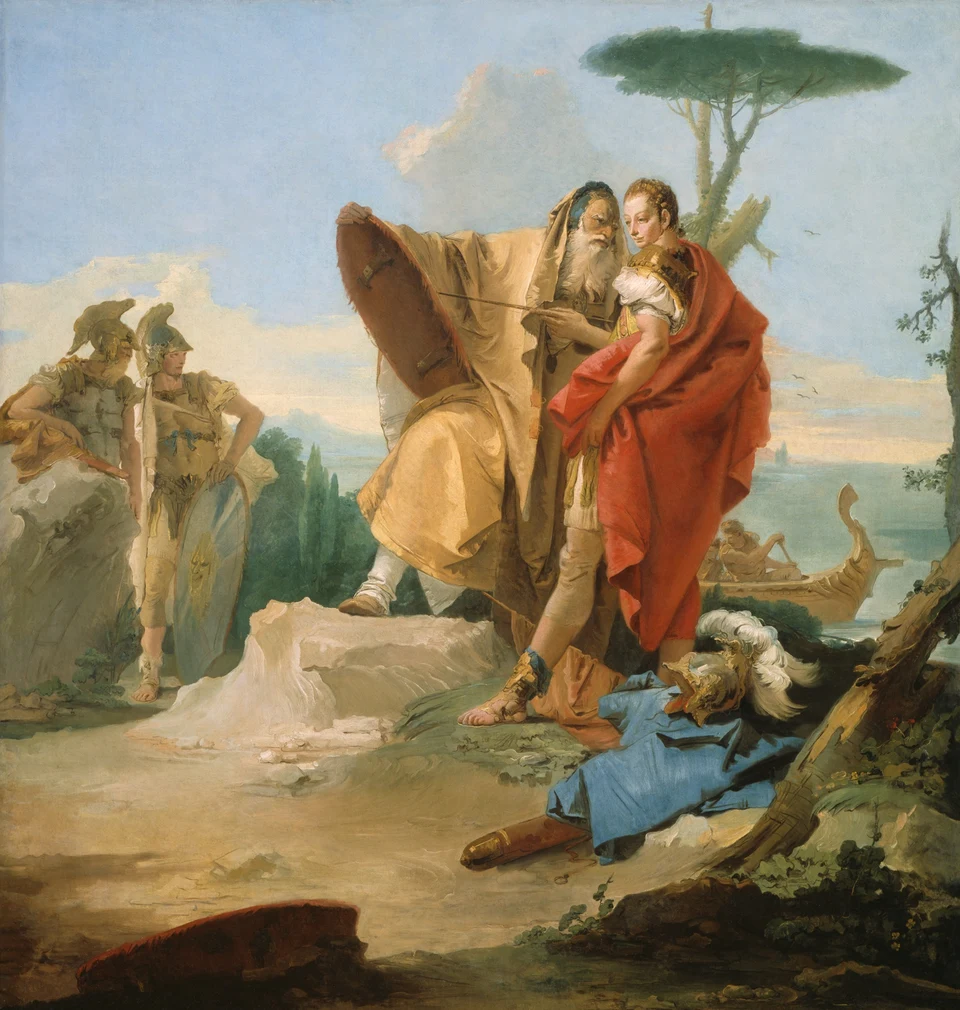 Rinaldo and the Magus of Ascalonc. 1742–45
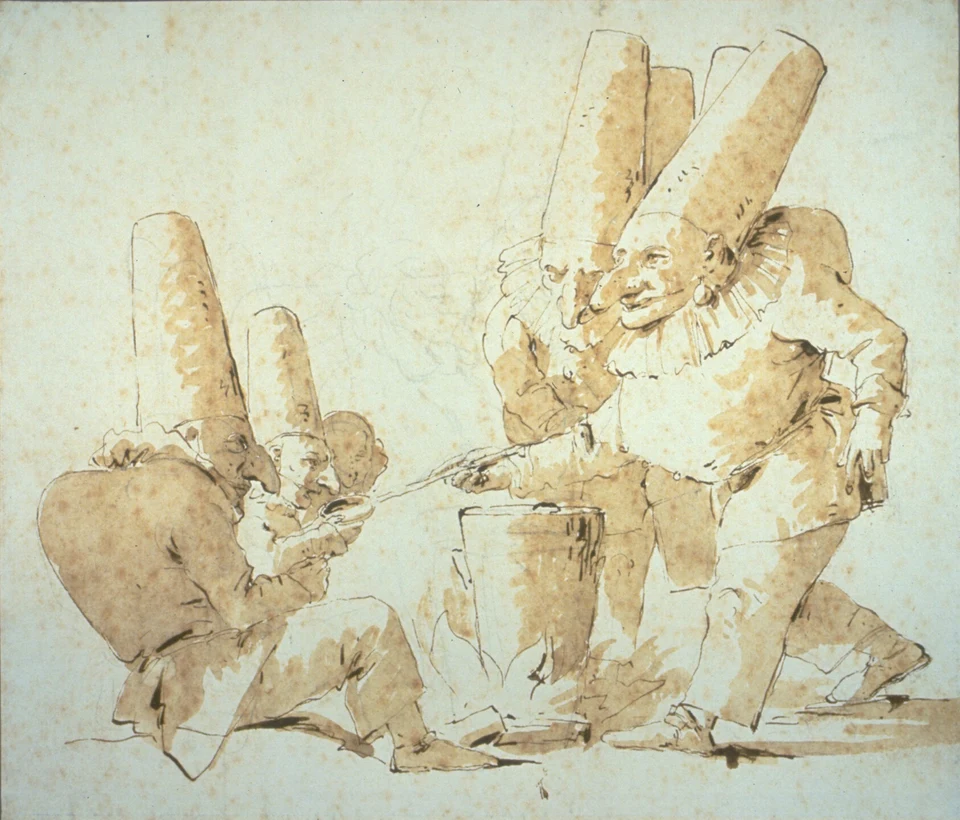 Punchinellos Cooking and Tasting Gnocchi (Punchinellos' Repast)1740/52
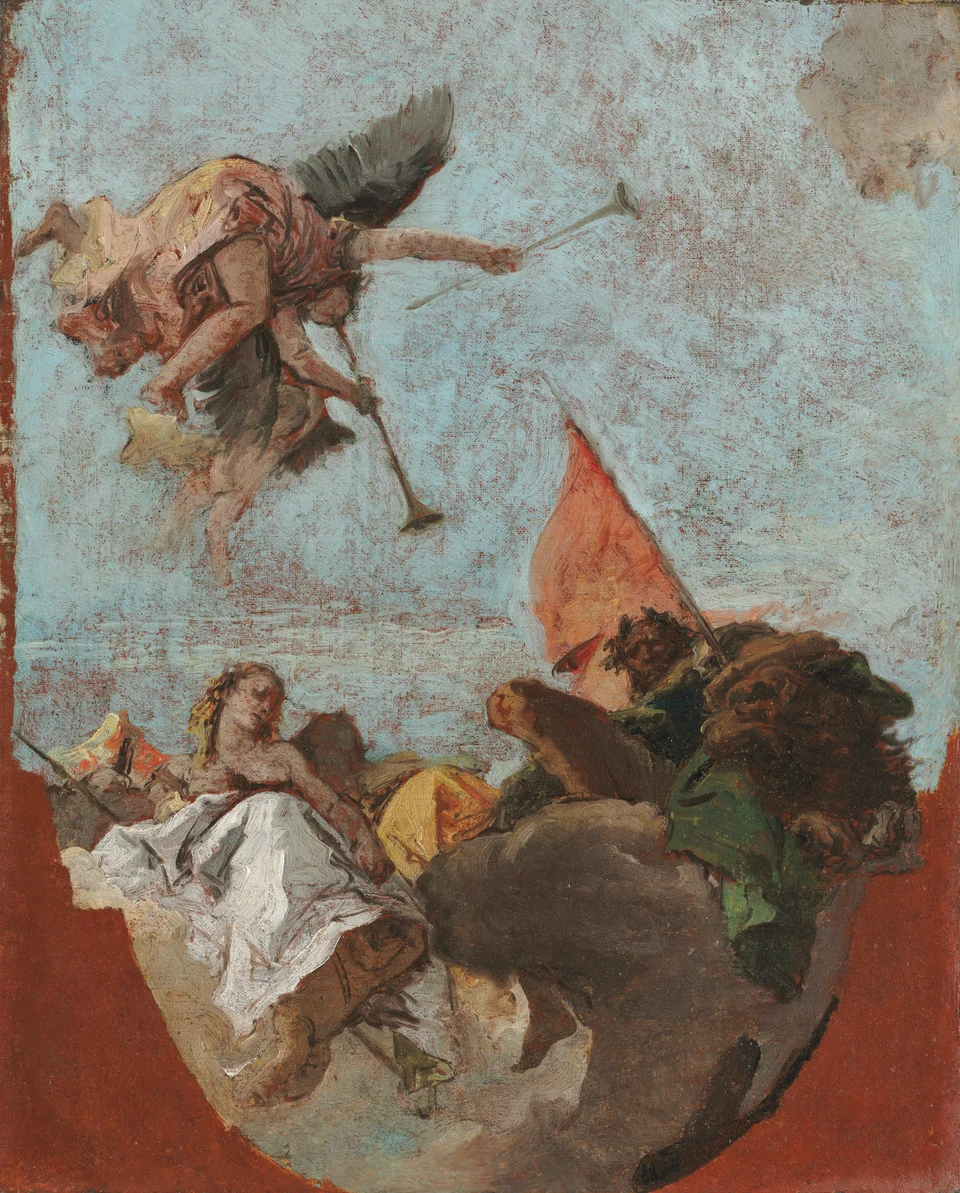 Sketch for a Ceiling1750s
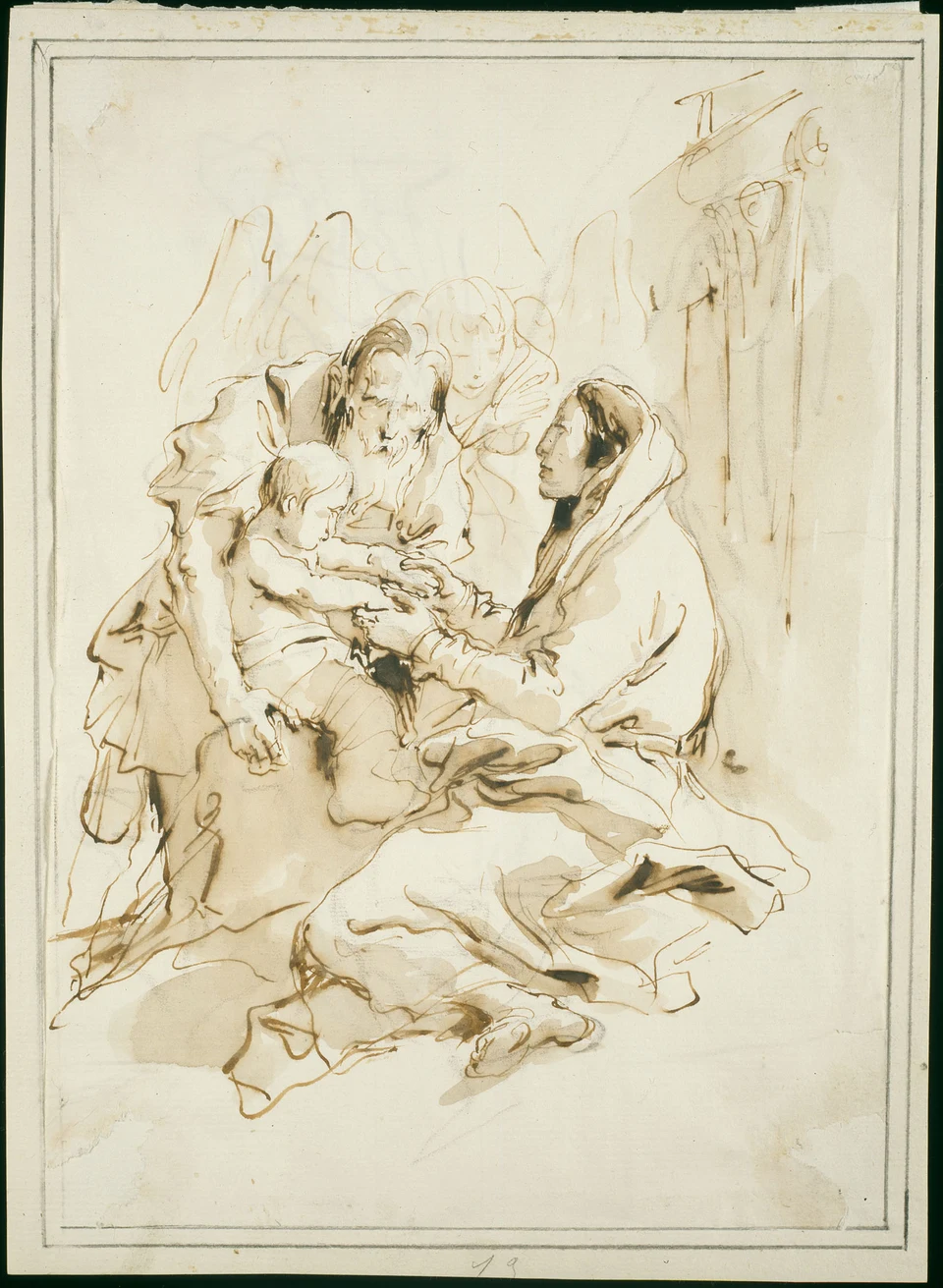 The Holy Family, Saint Joseph with a Book1750–59
Canaletto
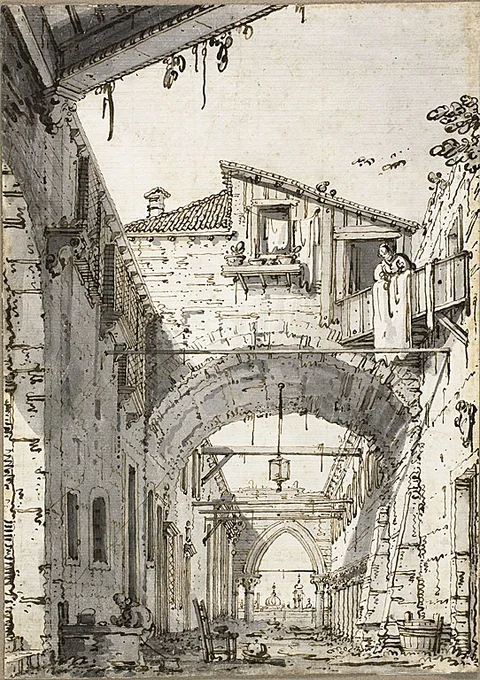
Capriccio: A Street Crossed by Arches (recto) Sketches of Doorway, Staircase and Second Floor of Building (verso), c. 1720
François Boucher
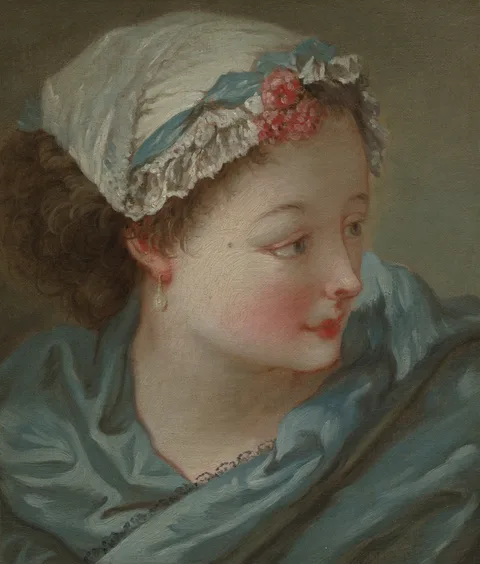
Head of a Young Woman, early 1730s
Jean Antoine Watteau
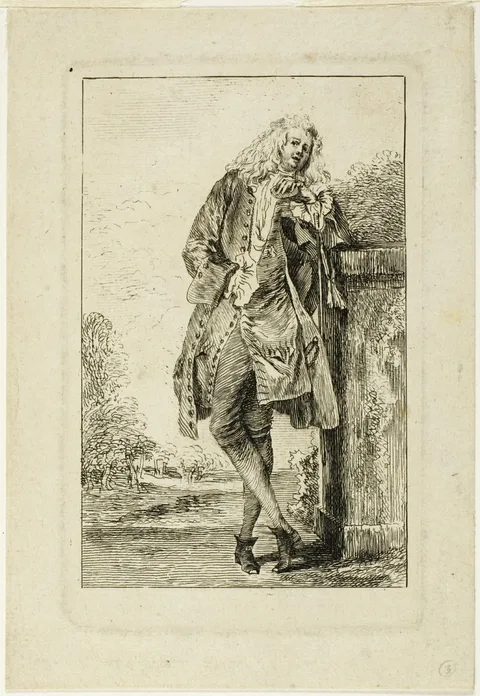
Standing Man Leaning on His Elbow, before 1710