Jean Antoine Watteau
1684–1721 · Rococo · 14 works
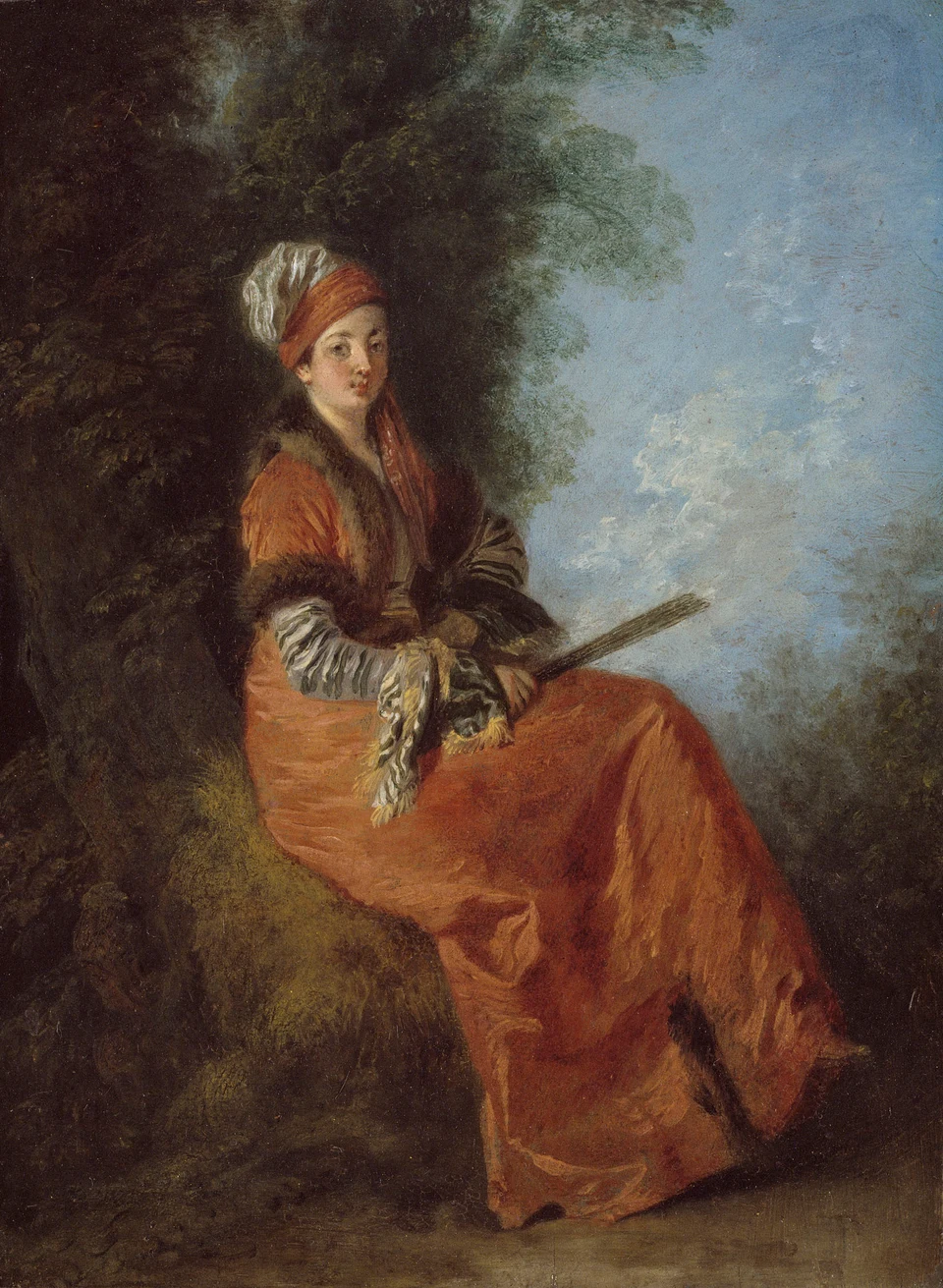
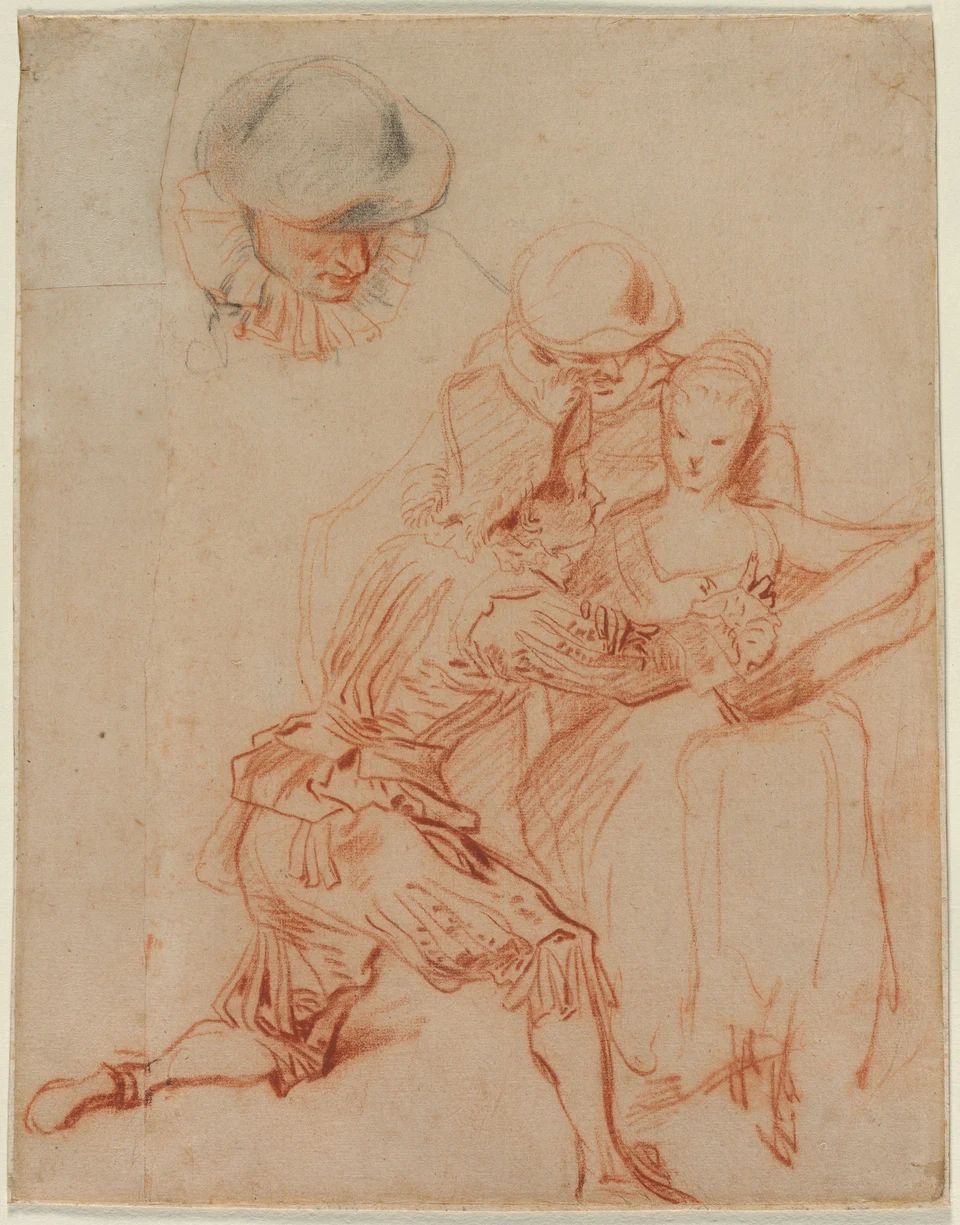
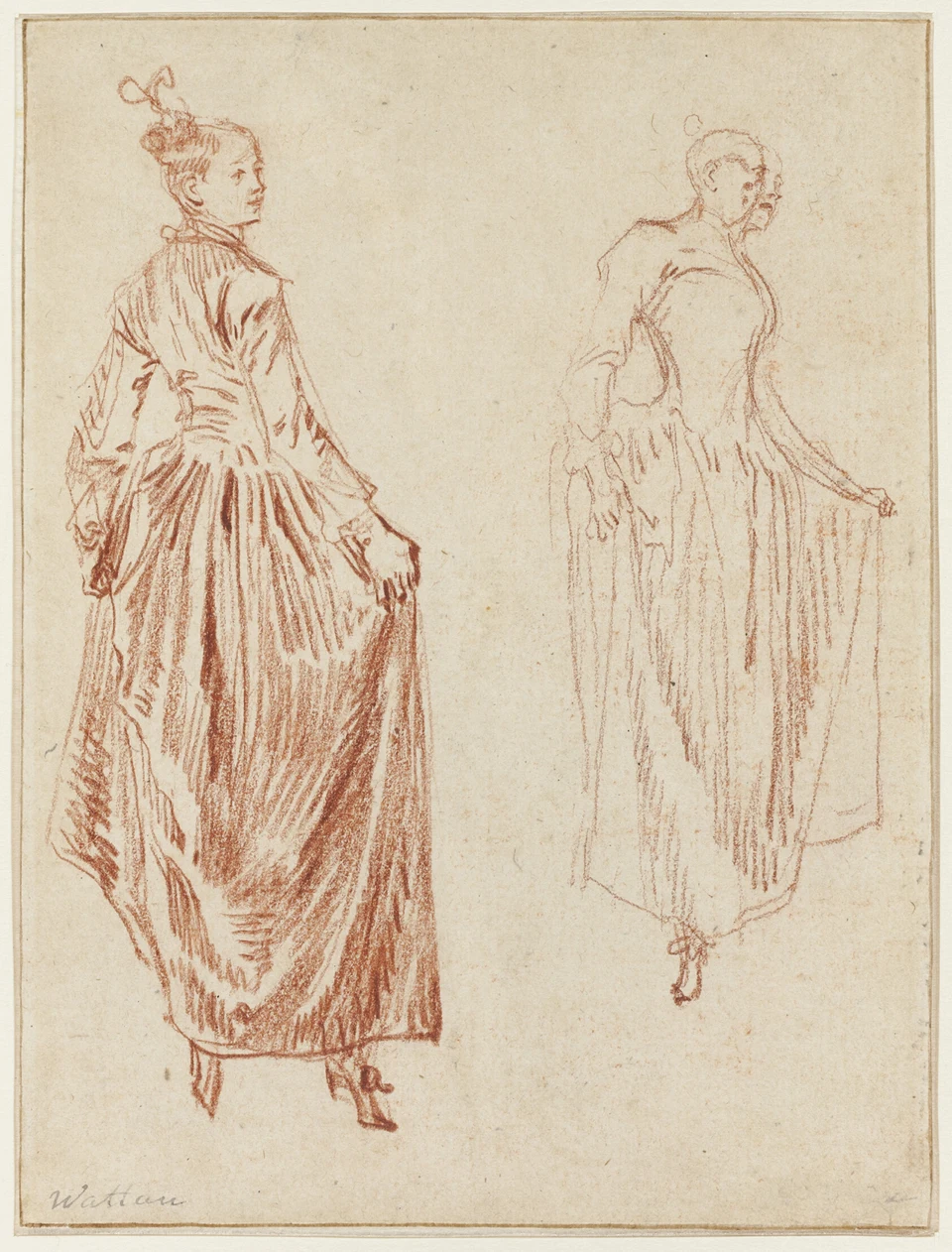
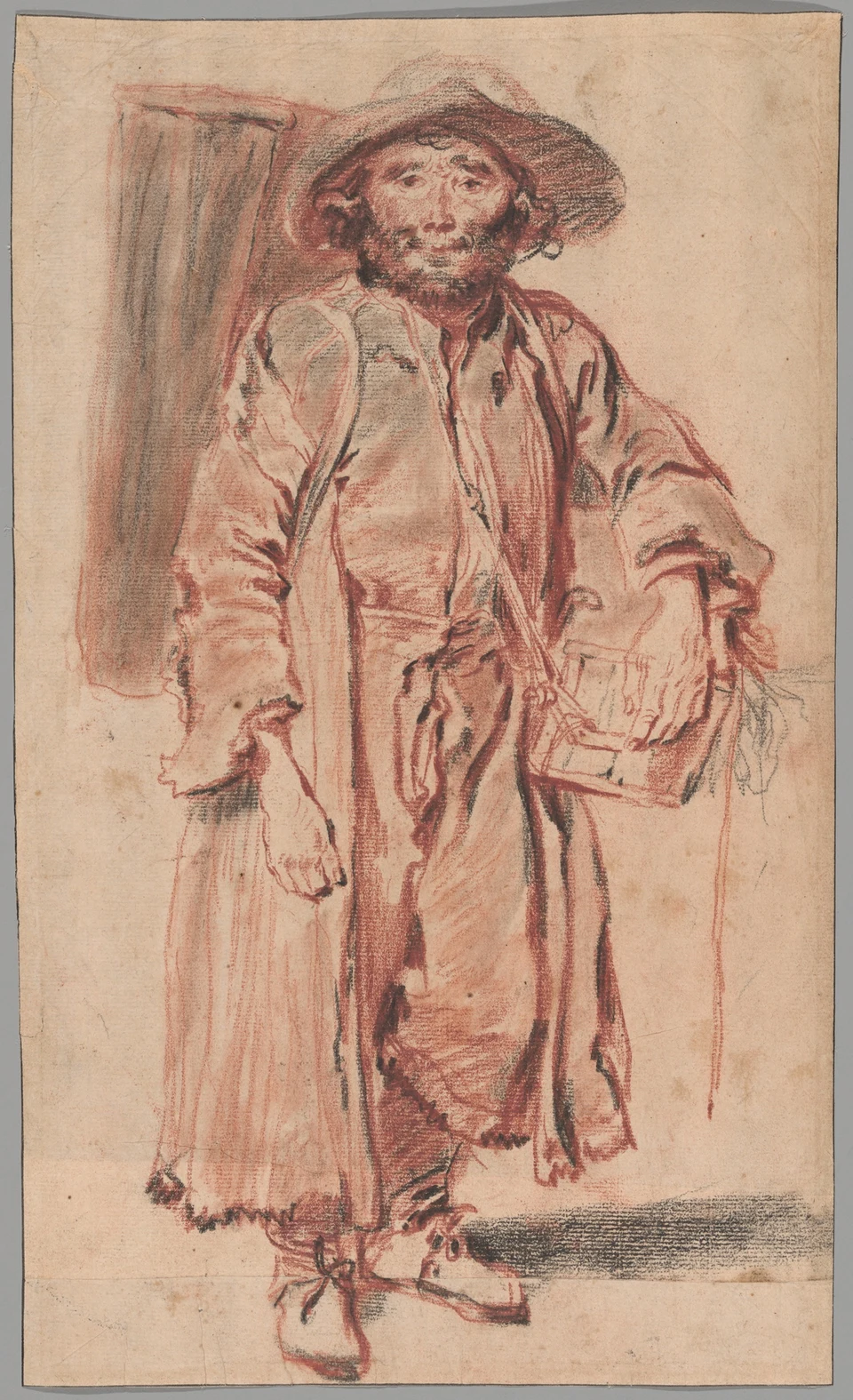
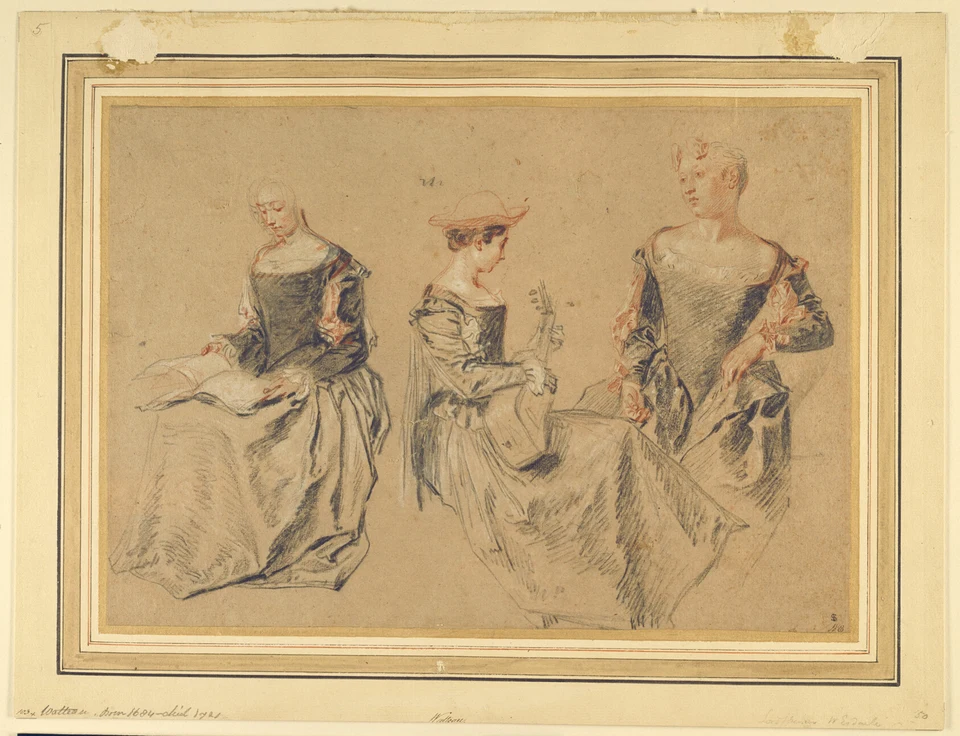
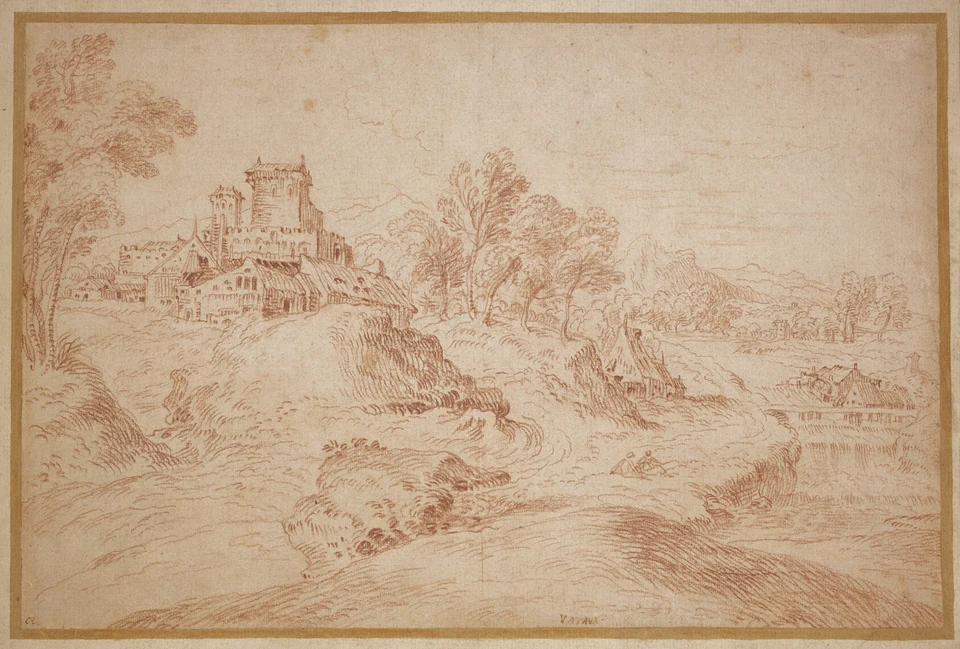
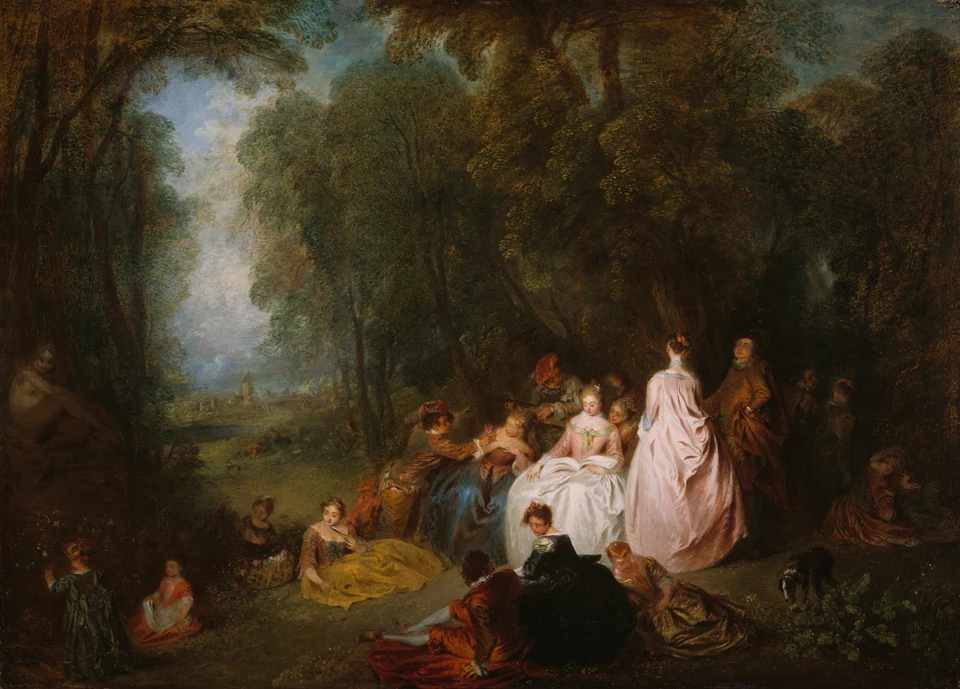
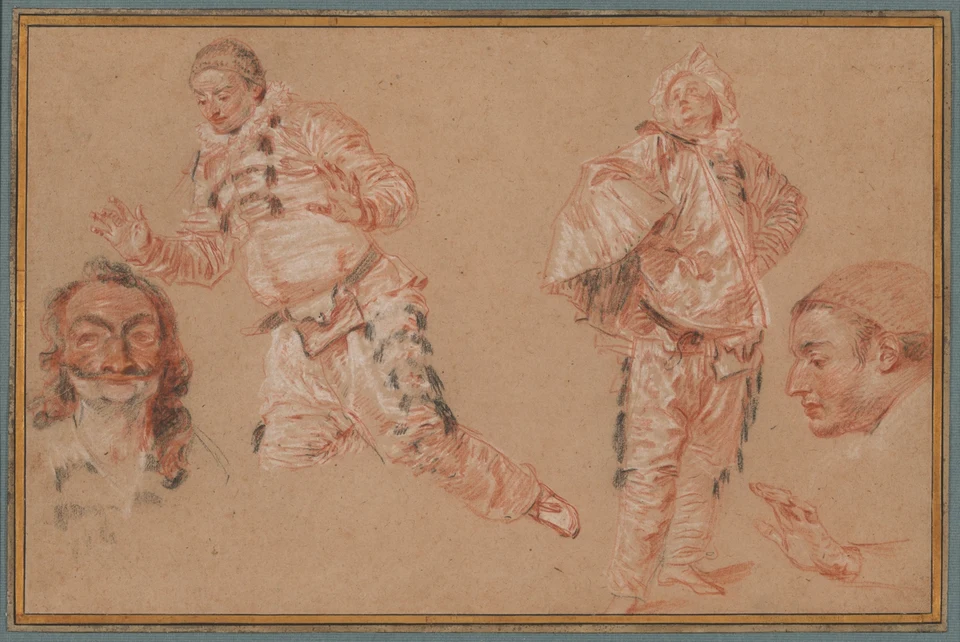
Antoine Watteau’s figures often seem caught between performance and private thought. Theatrical dress, music, and elegant gatherings appear in imagined landscapes, but the relationships between people remain open to interpretation. These scenes became known as fêtes galantes, a category developed around his unusual subjects. His chalk drawings attend closely to turns of the head, folded fabric, and the weight of a standing or seated body. Looking from a figure study to a painting reveals how a small observation of posture can become part of a much less settled story.
14 works · 1707–1721
Compare The Dreamer with a drawing of a seated figure. How much can a tilted head or the position of the hands suggest without a clear action?
1707–1710 · 6 works
Walk these 6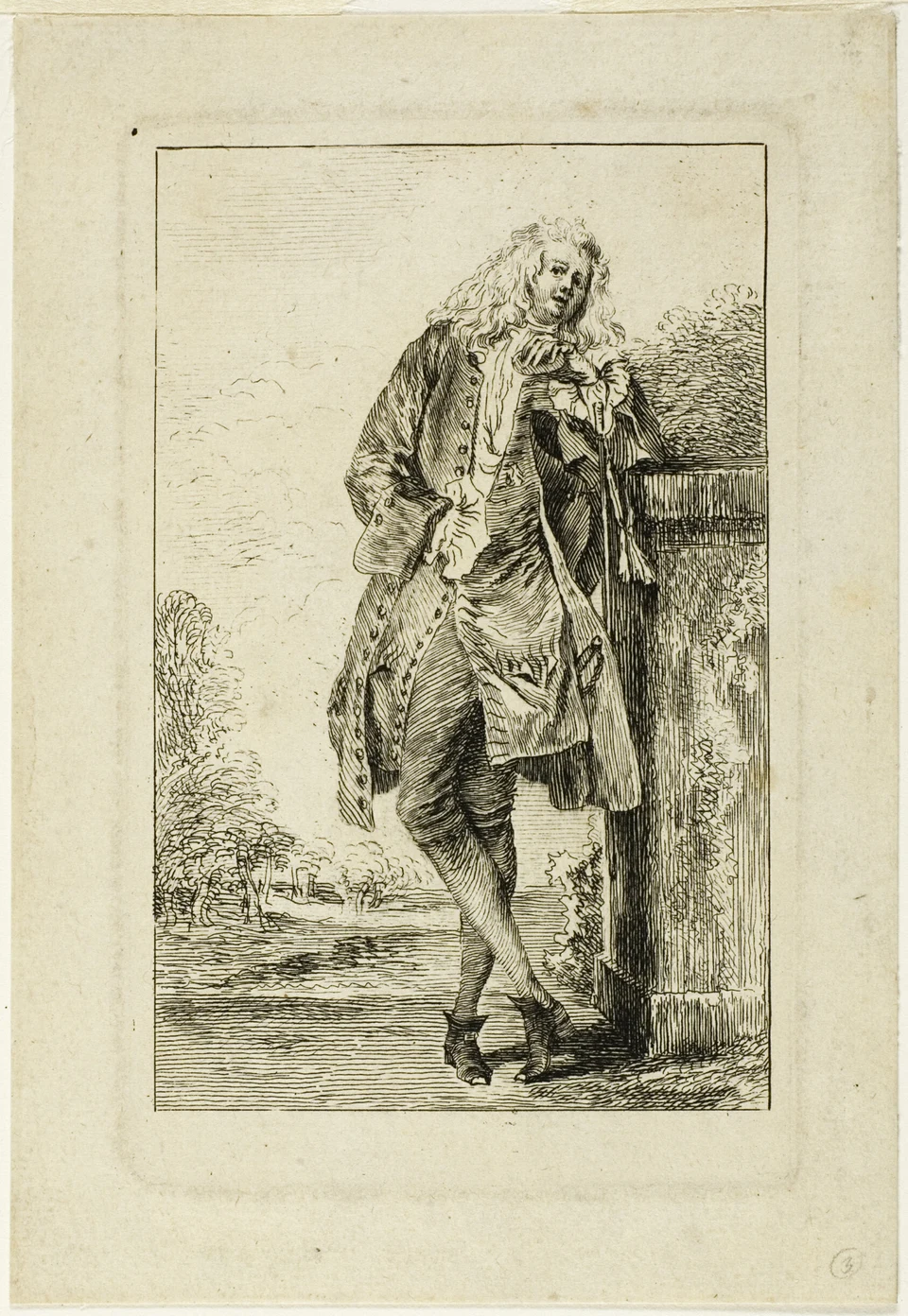 Standing Man Leaning on His Elbowbefore 1710
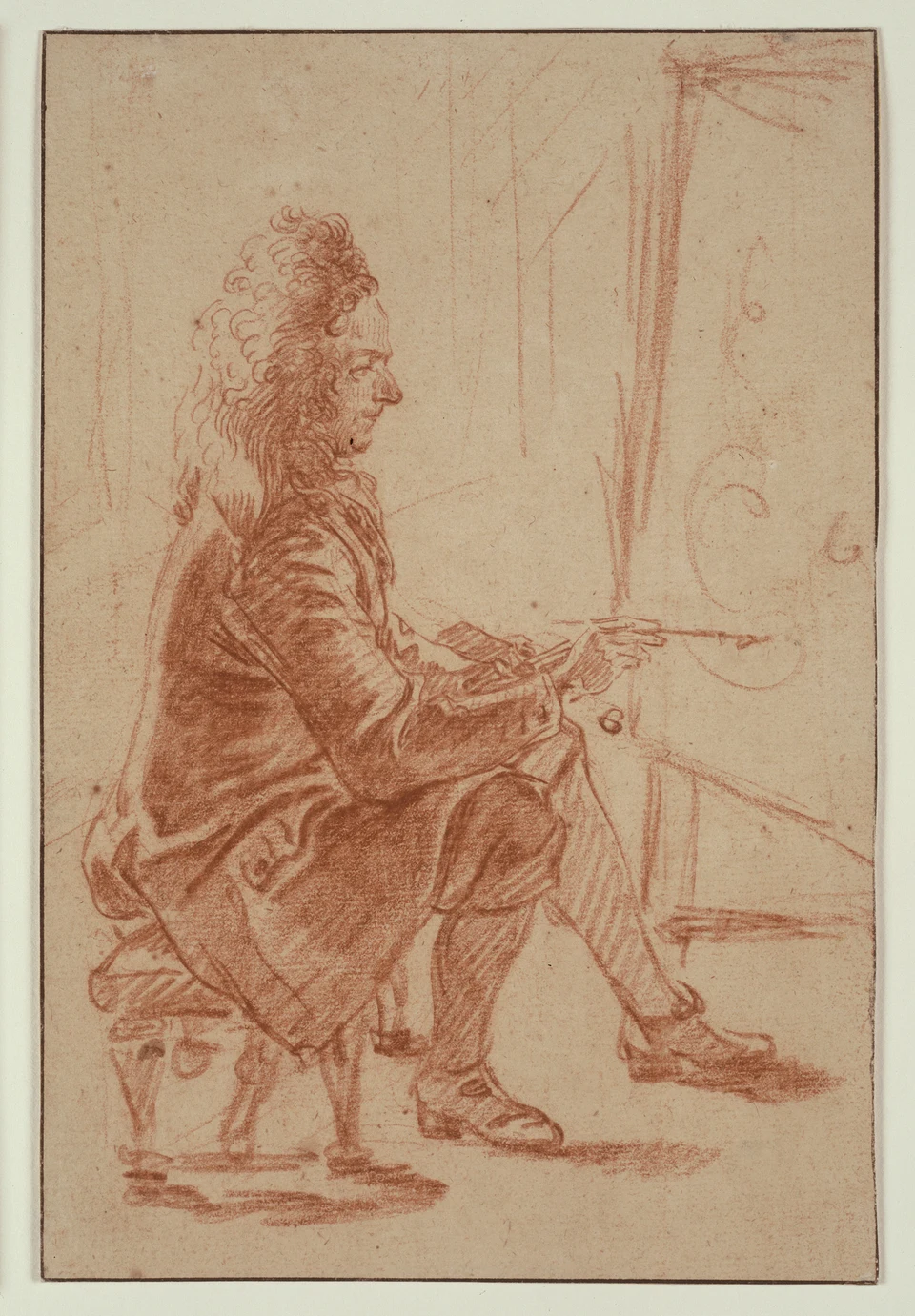 A Bewigged Painter (Possibly Claude Audran), Seated at his Easel, Seen in Profilec. 1709
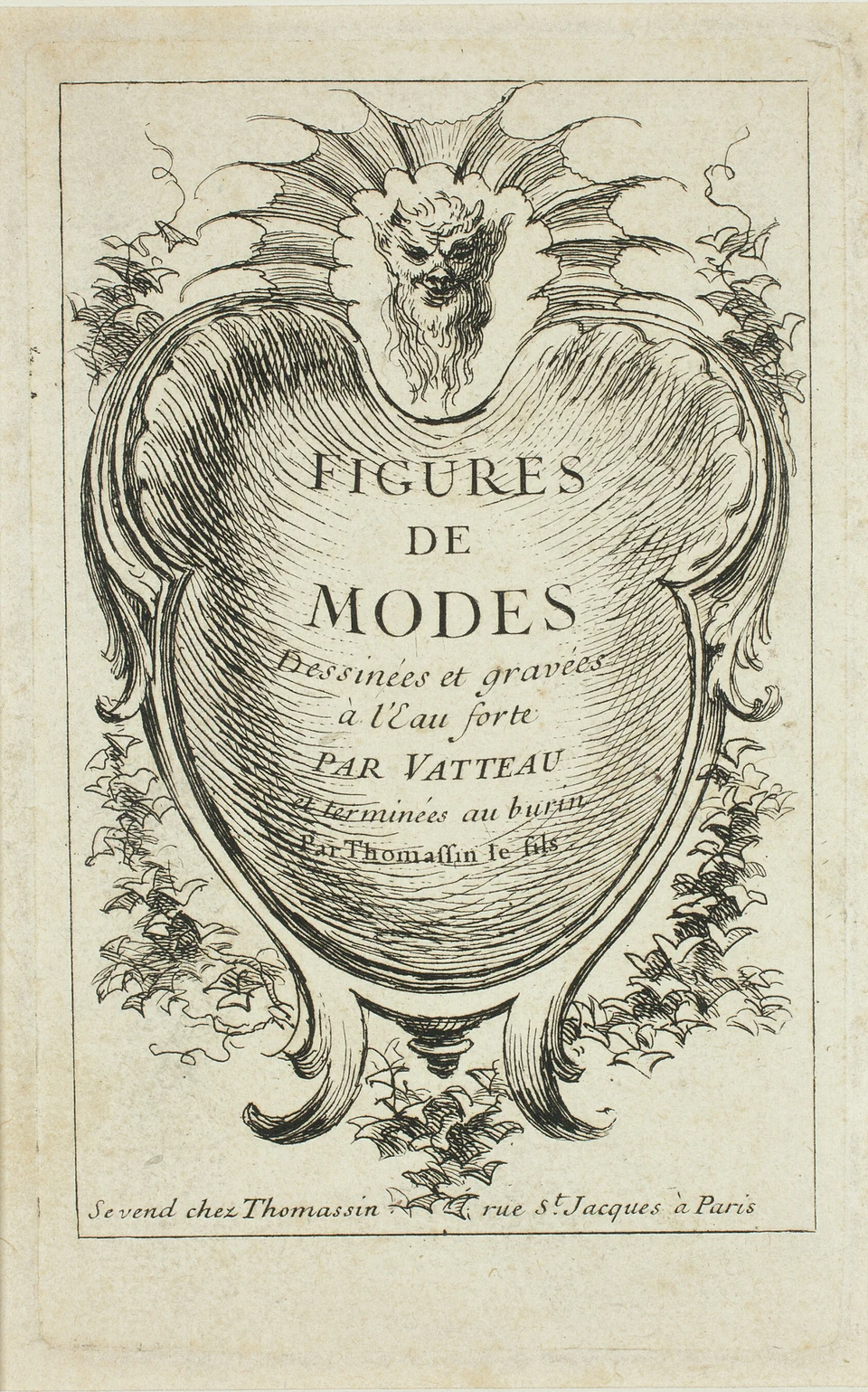 Figures de Modes (Frontispiece, from Figures de Mode)c. 1710
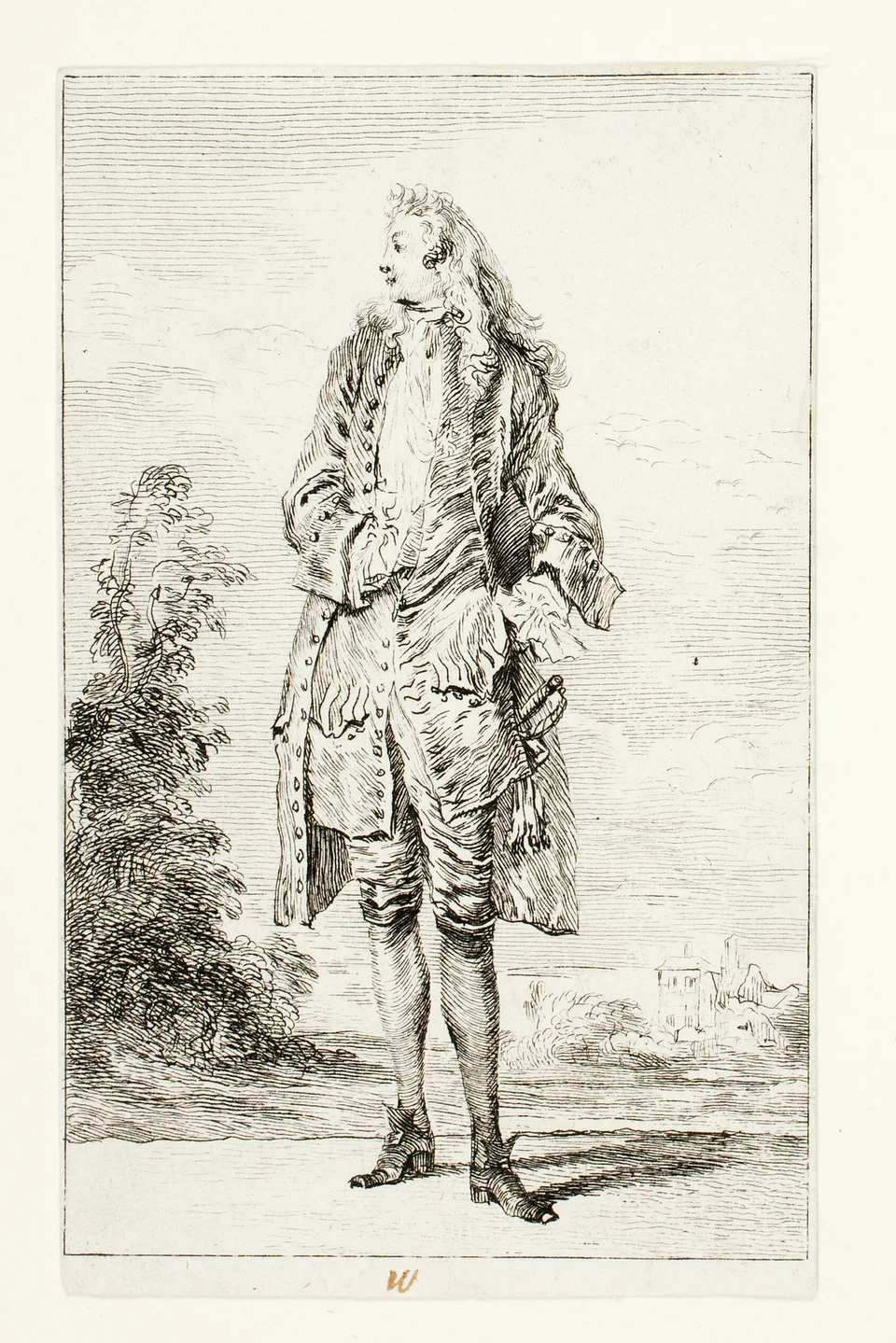 Standing Man with Hand in Vest, from Figures de Modesc. 1710
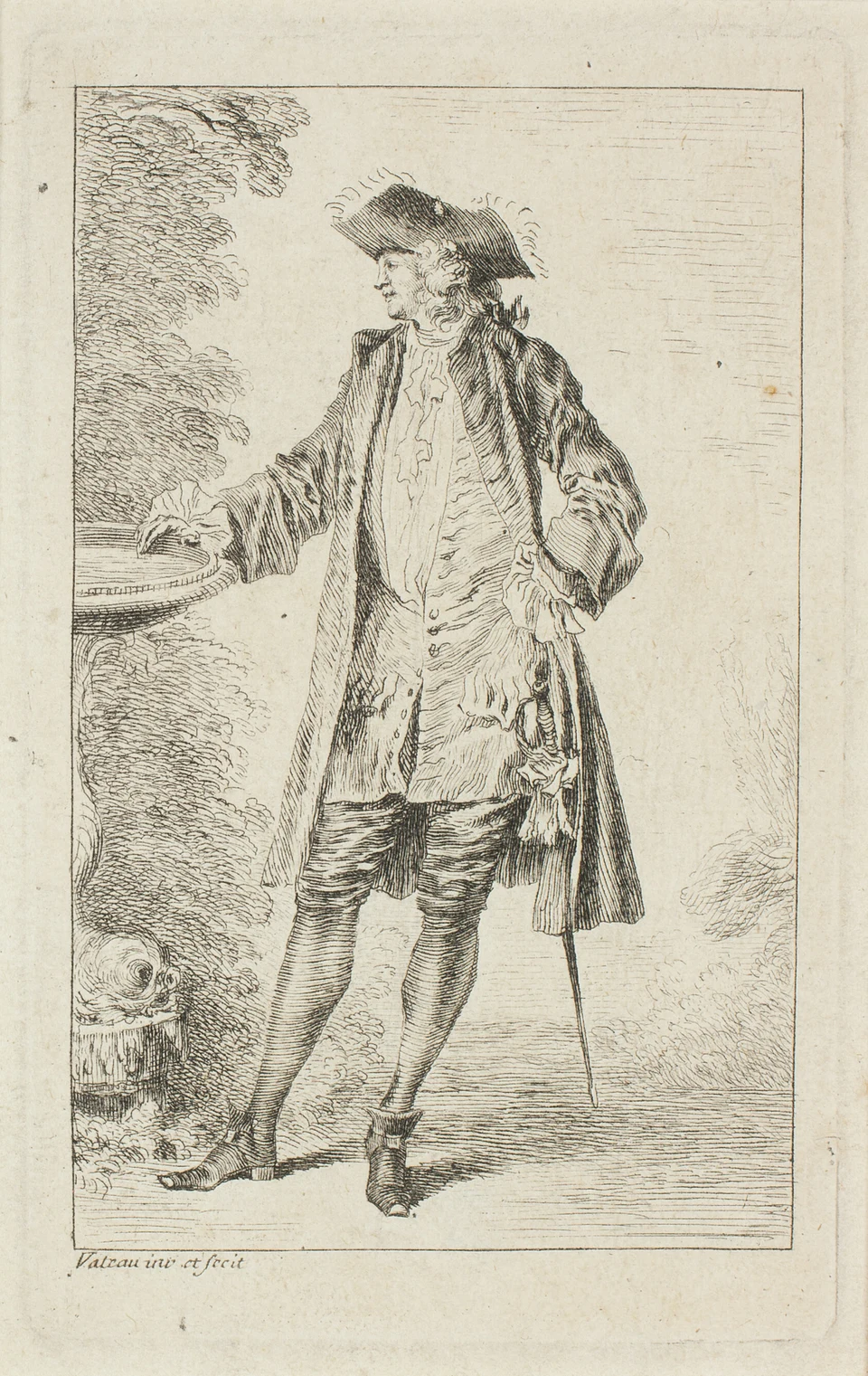 Standing Man with Hand on Basin, from Figures de modesc. 1710
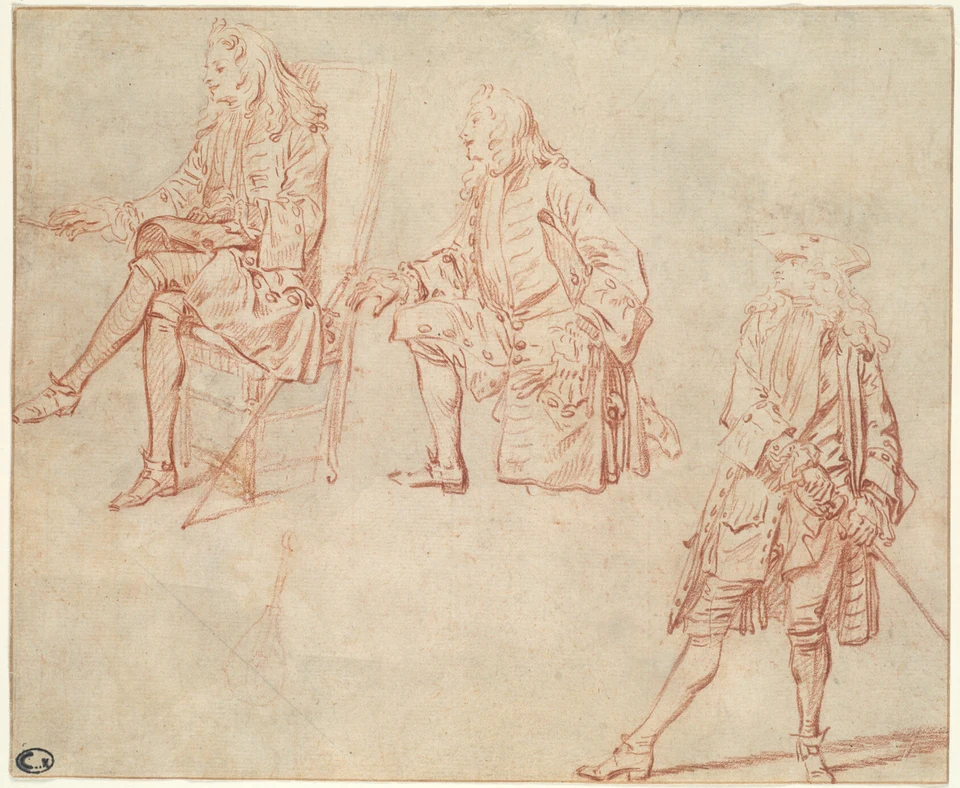 Three Studies of a Gentleman1710/11
1711–1714 · 3 works
Walk these 3In the museum: Rococo room · 3 works
1715–1721 · 5 works
Walk these 5In the museum: Rococo room · 3 works
Canaletto
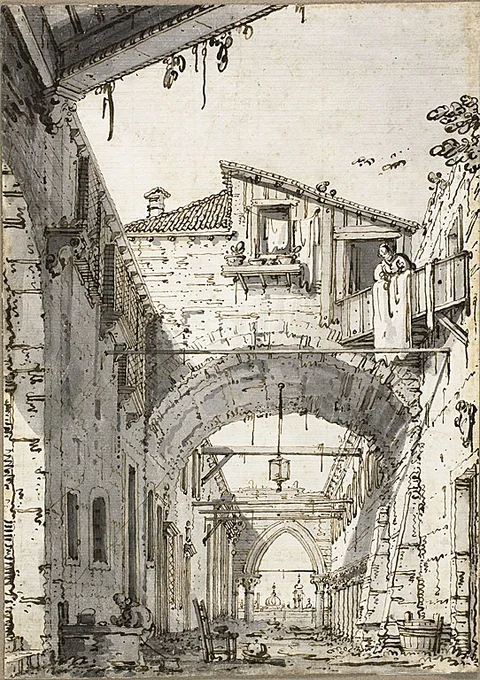
Capriccio: A Street Crossed by Arches (recto) Sketches of Doorway, Staircase and Second Floor of Building (verso), c. 1720
François Boucher
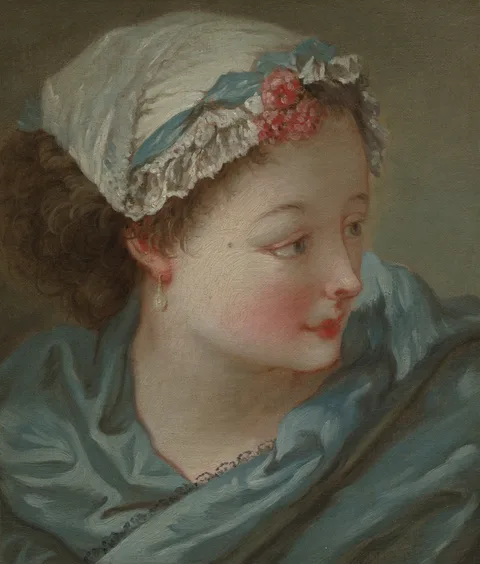
Head of a Young Woman, early 1730s
Giovanni Battista Tiepolo
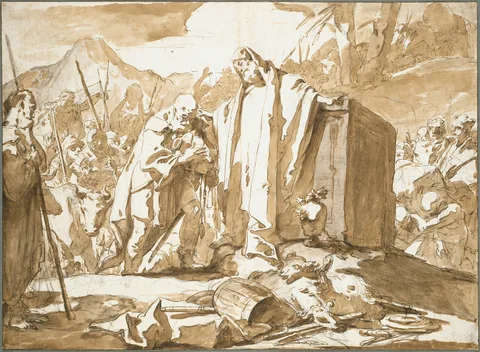
The Meeting of Abraham and Melchizedek, c. 1719