Vasily Kandinsky
1866–1944 · The Blue Rider, Abstract art, Expressionism · 6 works
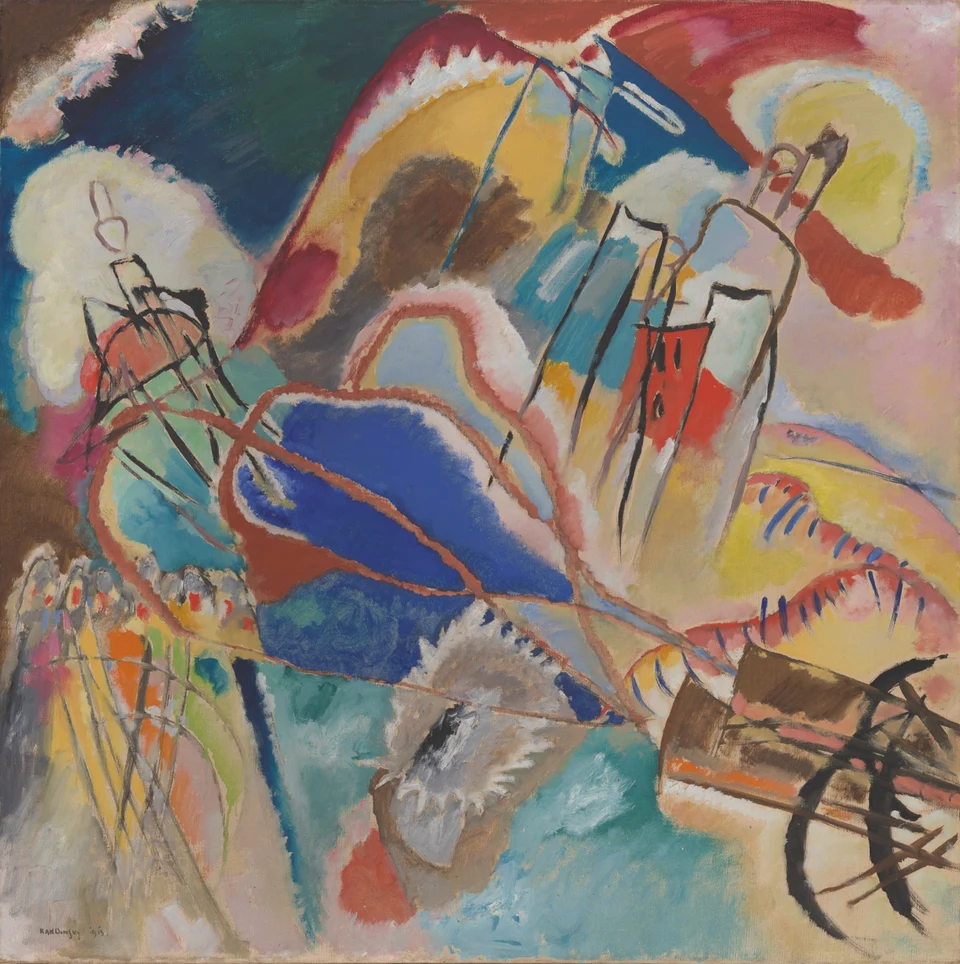
Vasily Kandinsky was born in Moscow in 1866 and studied law before turning to art at about thirty. He moved to Munich in 1896. Music convinced him that painting could move people without showing things, and in the 1910s he made pictures now counted among the first fully abstract works. He later taught at the Bauhaus.
6 works · 1909–1916
1909–1912 · 3 works
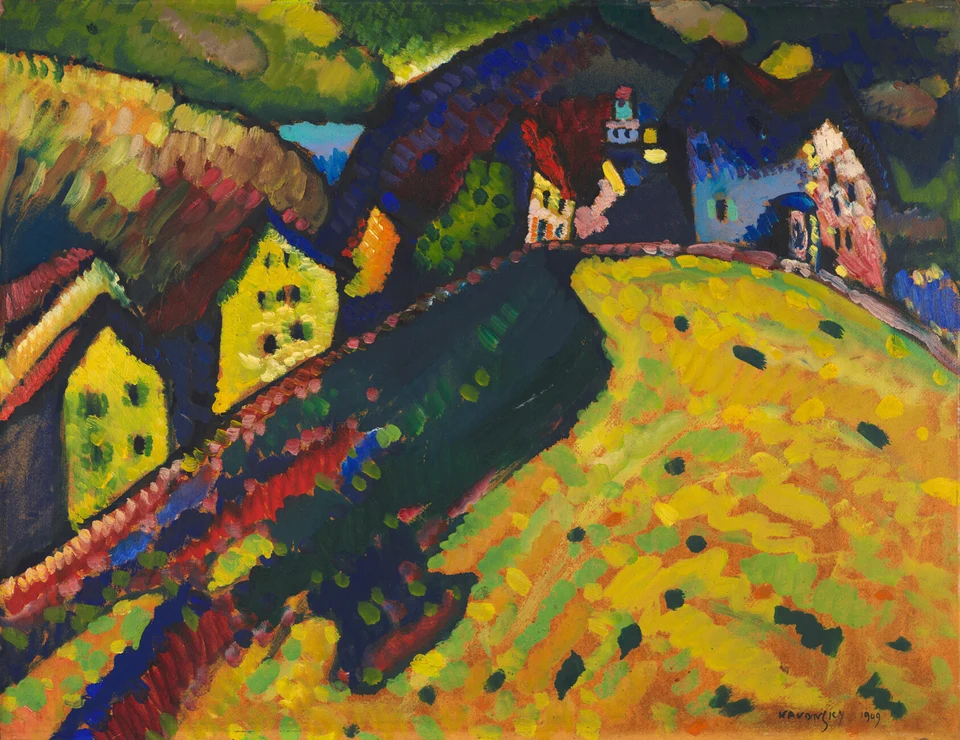
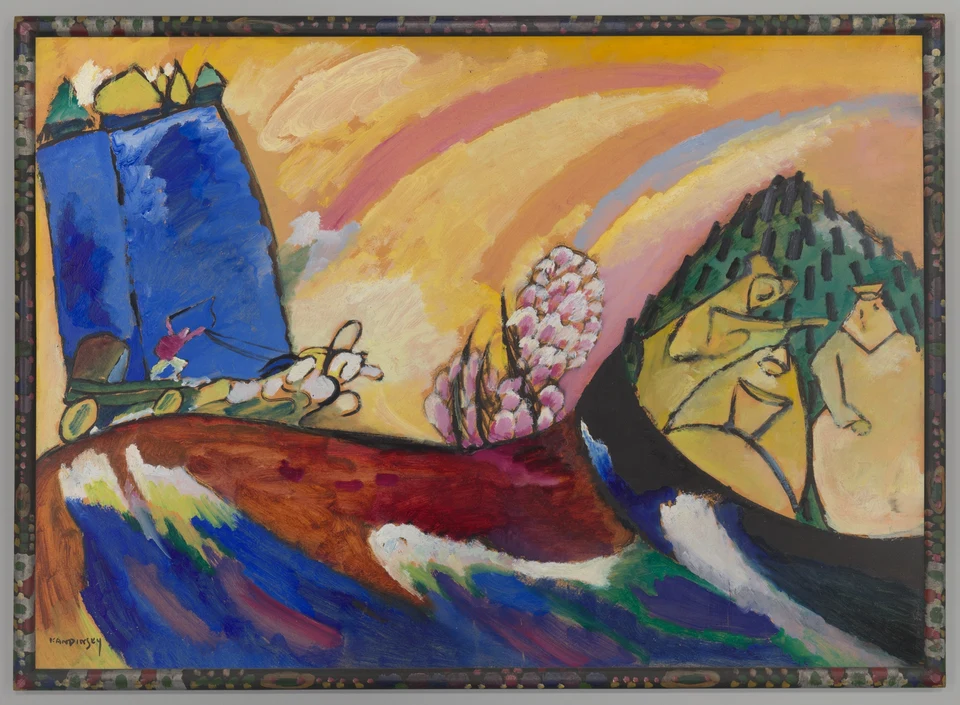
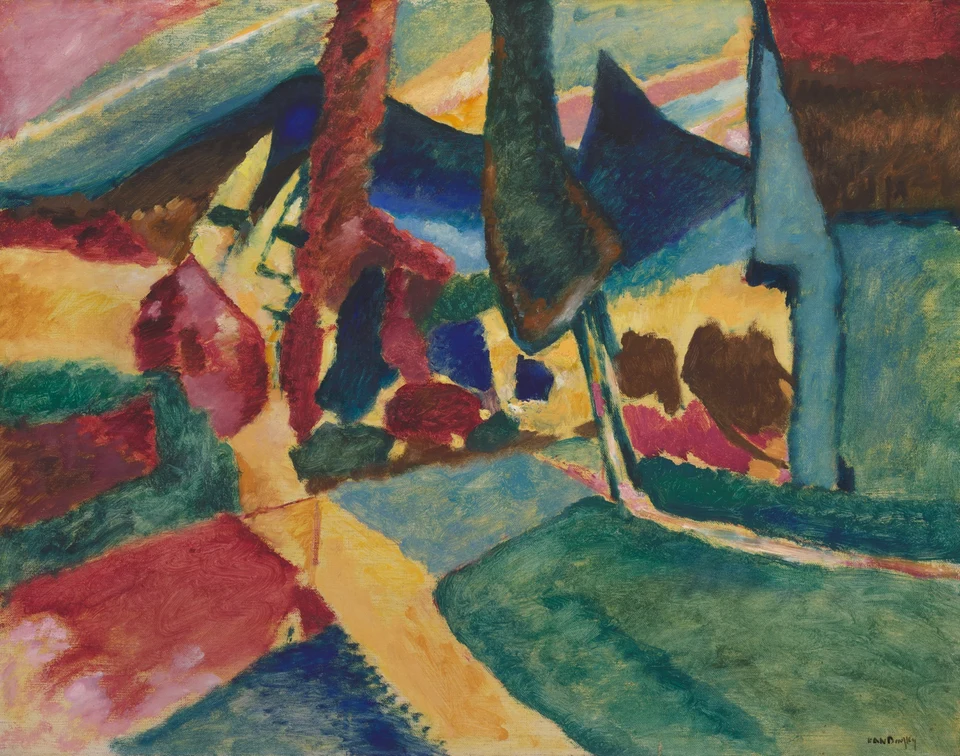
Walk these 3This room starts at Murnau, where Gabriele Münter bought a house in 1909 and she and Kandinsky spent their summers, often with Jawlensky. In 1911 Kandinsky and Franz Marc started the Blue Rider, and August Macke and Paul Klee showed with them. Three works here come before the group began; Klee’s run on to 1920, after the war scattered it.
In the museum: The Blue Rider room · 3 works
1913–1916 · 3 works
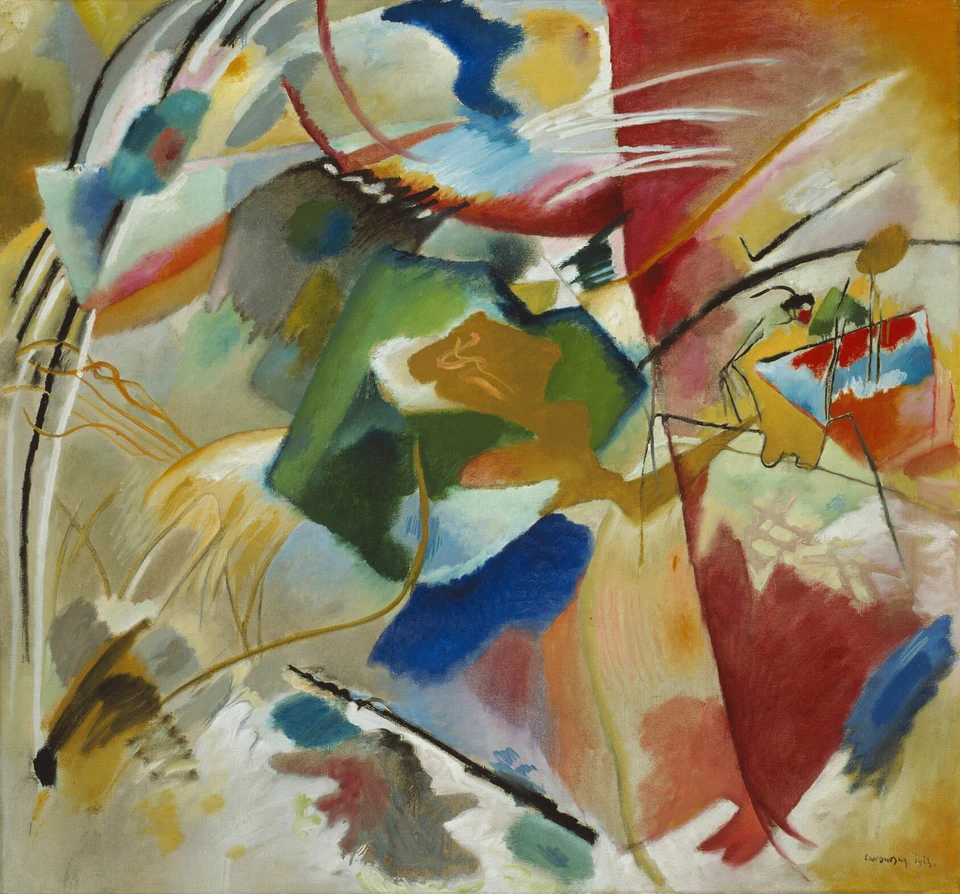
Walk these 3Two painters reached abstraction by different roads. Piet Mondrian began with Dutch fields, farms and trees and slowly reduced them to straight lines and flat color. Vasily Kandinsky, in Munich, let color and line work like music. The works hang by date, and the roads do not run evenly: Mondrian still painted a farm around 1916.
In the museum: De Stijl room · 3 works
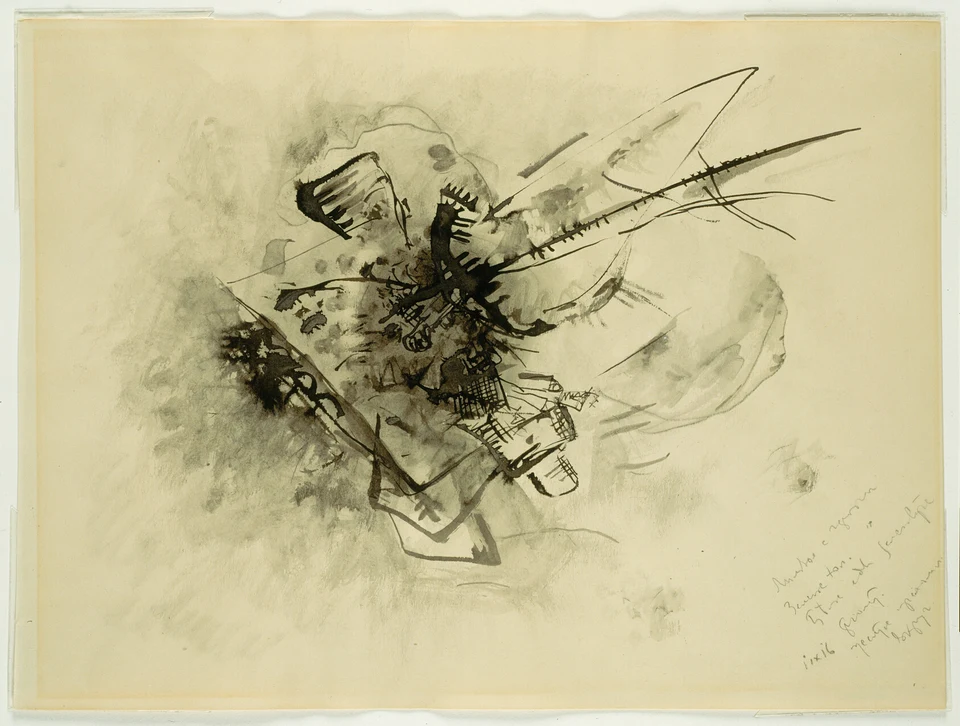
The Blue Rider · 3 works
Walk these 3This room starts at Murnau, where Gabriele Münter bought a house in 1909 and she and Kandinsky spent their summers, often with Jawlensky. In 1911 Kandinsky and Franz Marc started the Blue Rider, and August Macke and Paul Klee showed with them. Three works here come before the group began; Klee’s run on to 1920, after the war scattered it.
In the museum: The Blue Rider room · 3 works
Abstract art · 3 works
Walk these 3In the museum: De Stijl room · 3 works
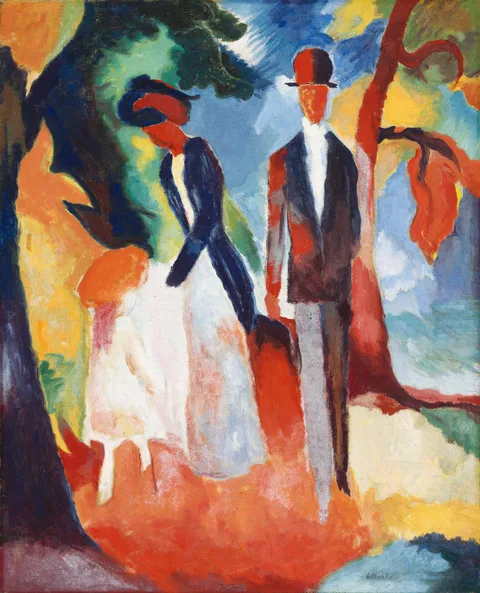
August Macke
People by the Blue Lake, 1913
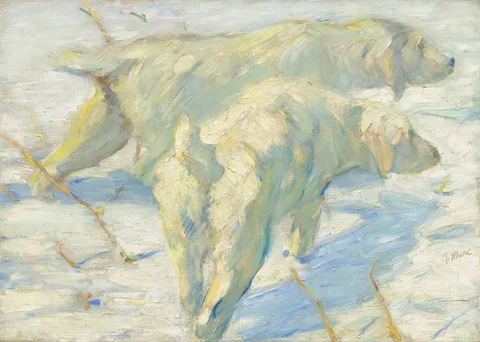
Franz Marc
Siberian Dogs in the Snow, 1909/1910
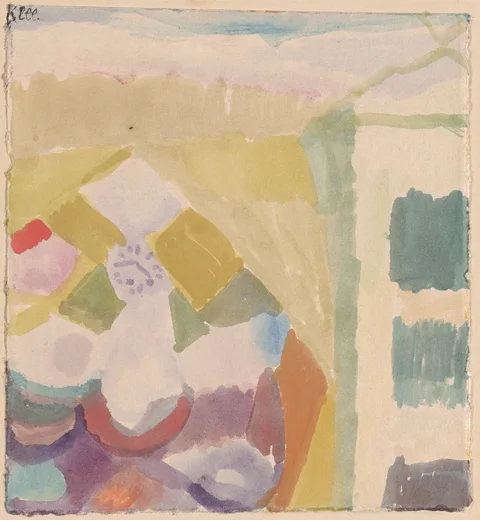
Paul Klee
Interieur mit der Uhr (Interior with the Clock), 1913