Bring your favorites together in your free personal gallery.
Your galleryImprovisation No. 30 (Cannons)
Look first
- What catches your attention?
- Where does your eye go next?
- What would you ask about this work?
Show me
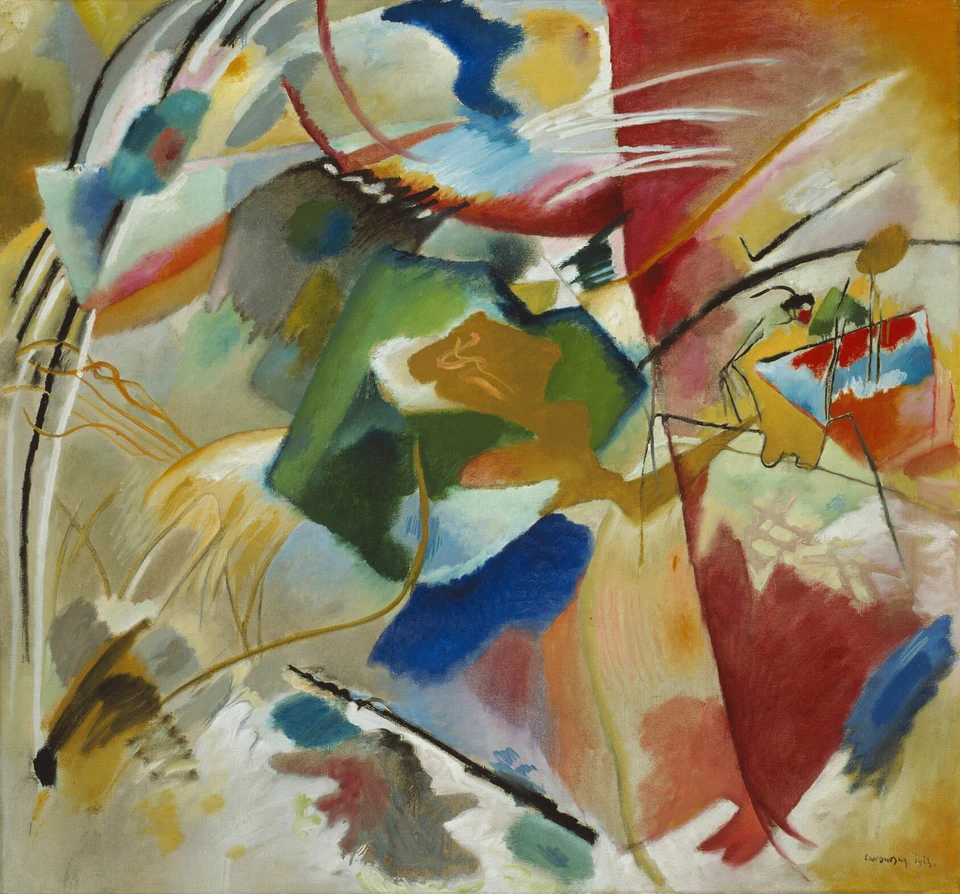
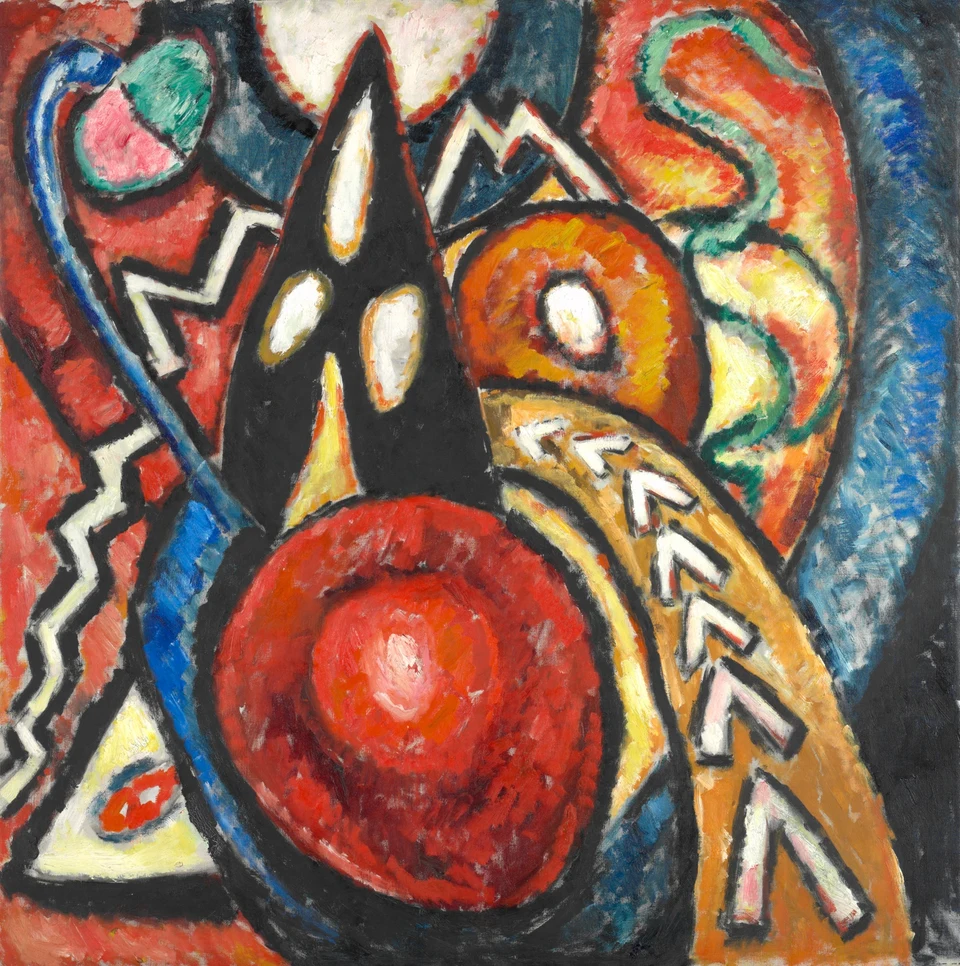
Find the cannons and their wheels at the lower right, then the leaning towers near the top. Which shapes can you name, and which are only color?
Kandinsky called paintings like this improvisations, spontaneous works he described as coming from the unconscious. He made them between 1910 and 1914. This one belonged to his friend Arthur Jerome Eddy, a Chicago collector. Kandinsky wrote to Eddy that the cannons might reflect the constant talk of war that year. The true content, he added, is what viewers feel before the forms and colors.
Oil on canvas · 111 × 111.3 cm · Art Institute of Chicago · Modernism · Abstract art
Look again
What do you notice now?
Try a quick sketch
Take a minute to sketch on any paper. No upload needed.
What did you draw first? What did you leave out?
Details and source
- Museum title
- Improvisation No. 30 (Cannons)
- Artist
- Vasily Kandinsky
- Date
- 1913
- Medium
- Oil on canvas
- Dimensions
- 111 × 111.3 cm (43 11/16 × 43 13/16 in.)
- Credit line
- Arthur Jerome Eddy Memorial Collection
- Image license
- CC0 1.0 · Public domain
- Museum record
- Art Institute of Chicago
Artist’s life 1866–1944
View in the AtlasGaller’s rooms and hanging scale are imagined. The image is the museum’s original digital reproduction.