Anthony van Dyck
1599–1641 · Baroque · 14 works
Anthony van Dyck built a career across Antwerp, Italy, and the English court, where he settled in 1632. His portraits helped patrons present themselves through an assured pose, graceful clothing, and carefully managed distance from the viewer. The paintings owe much to his study of Rubens and Titian, but portrait prints reveal another aspect of his work. Without the color of silk or a grand setting, the arrangement of a head, collar, and hand must carry the encounter. Religious pictures and drawings extend his attention to gesture beyond the portrait.
14 works · 1619–1635
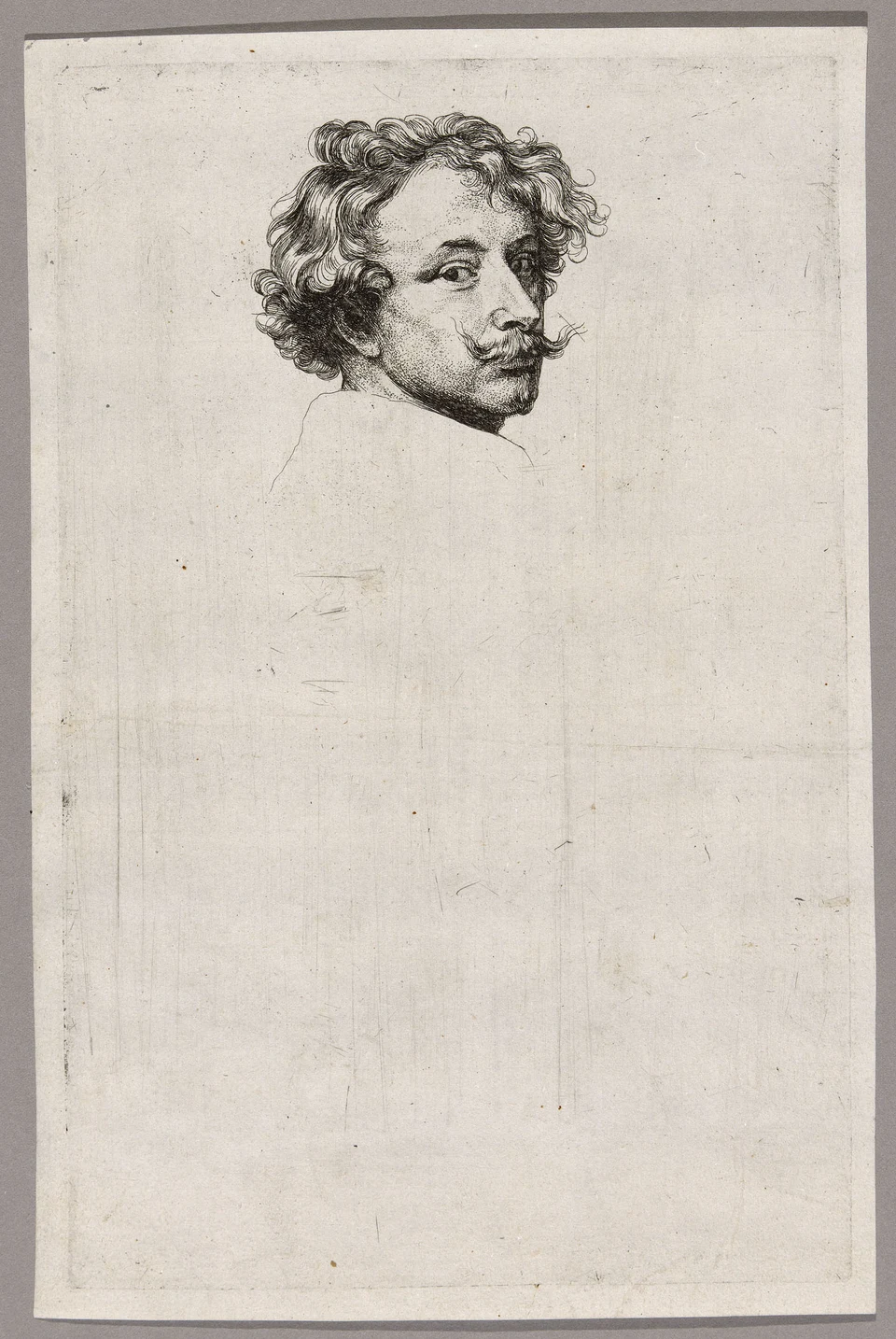
Compare the painted portraits with Jan de Wael. How do the eyes, collar, and surrounding blank space establish the sitter’s presence?
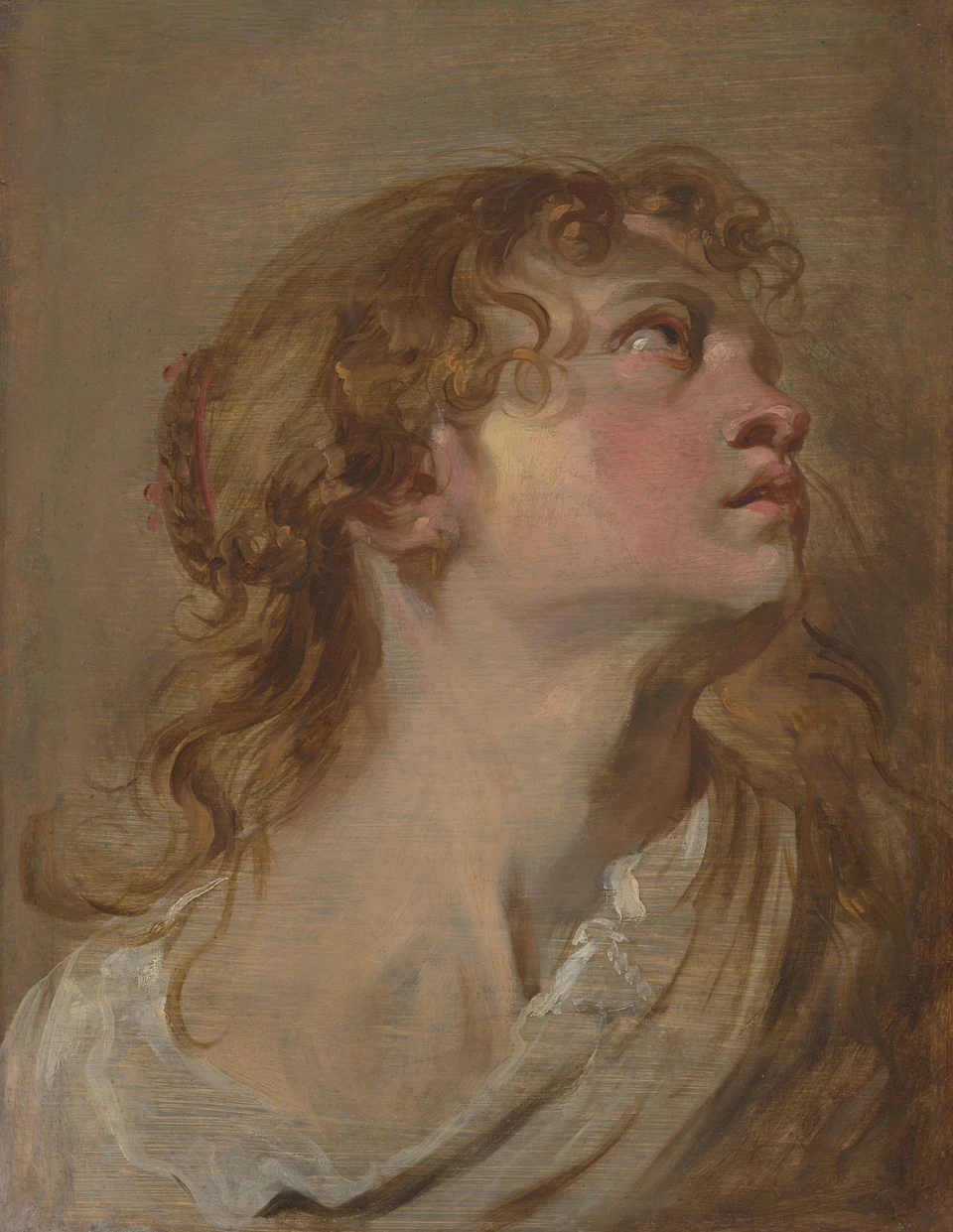 Head of a Girlc. 1618–c. 1620Attributed to Anthony van Dyck
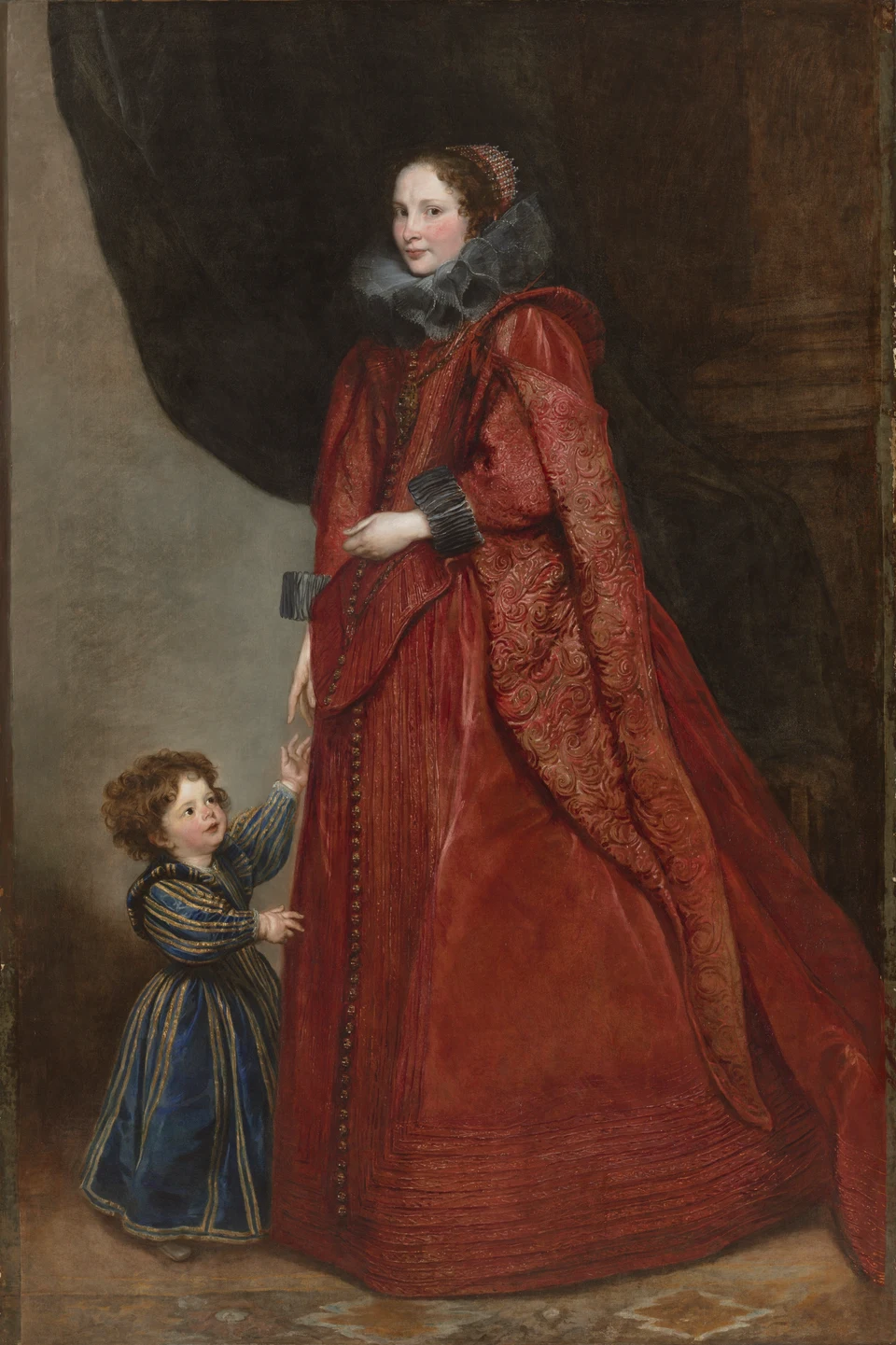 A Genoese Lady with Her Childc. 1623–25
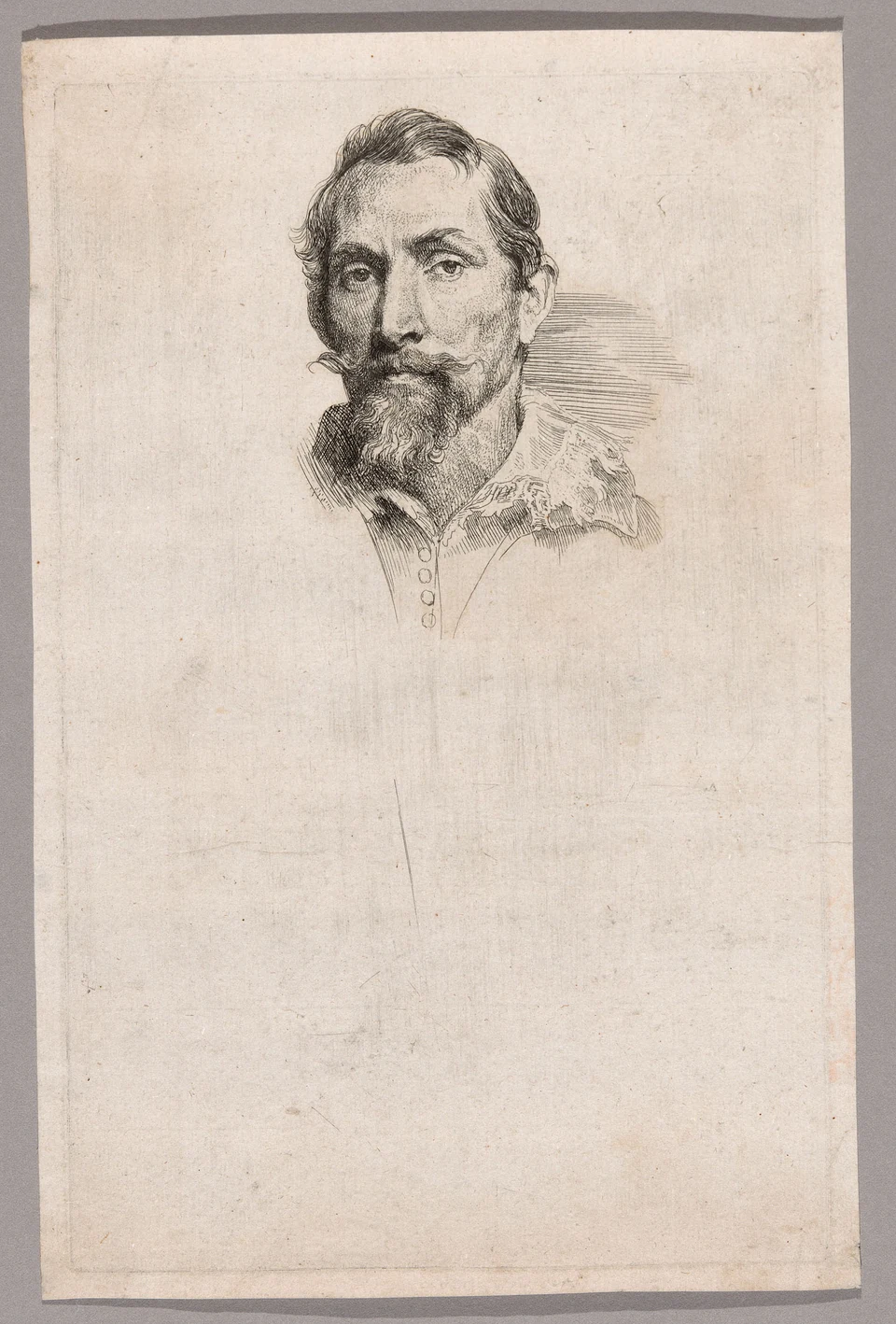 Frans Snyders1630/33
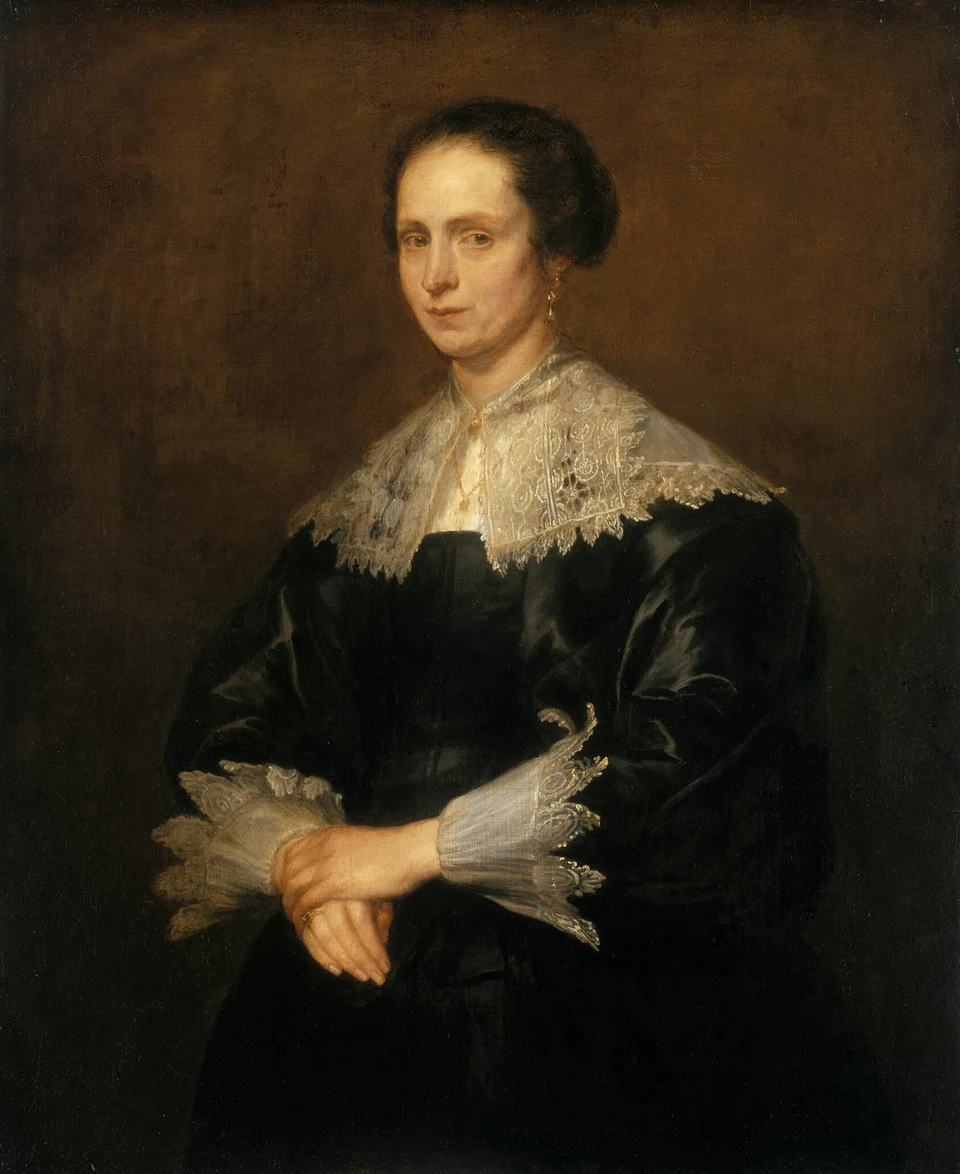 Helena Tromper Du Boisc. 1631Attributed to Anthony van Dyck
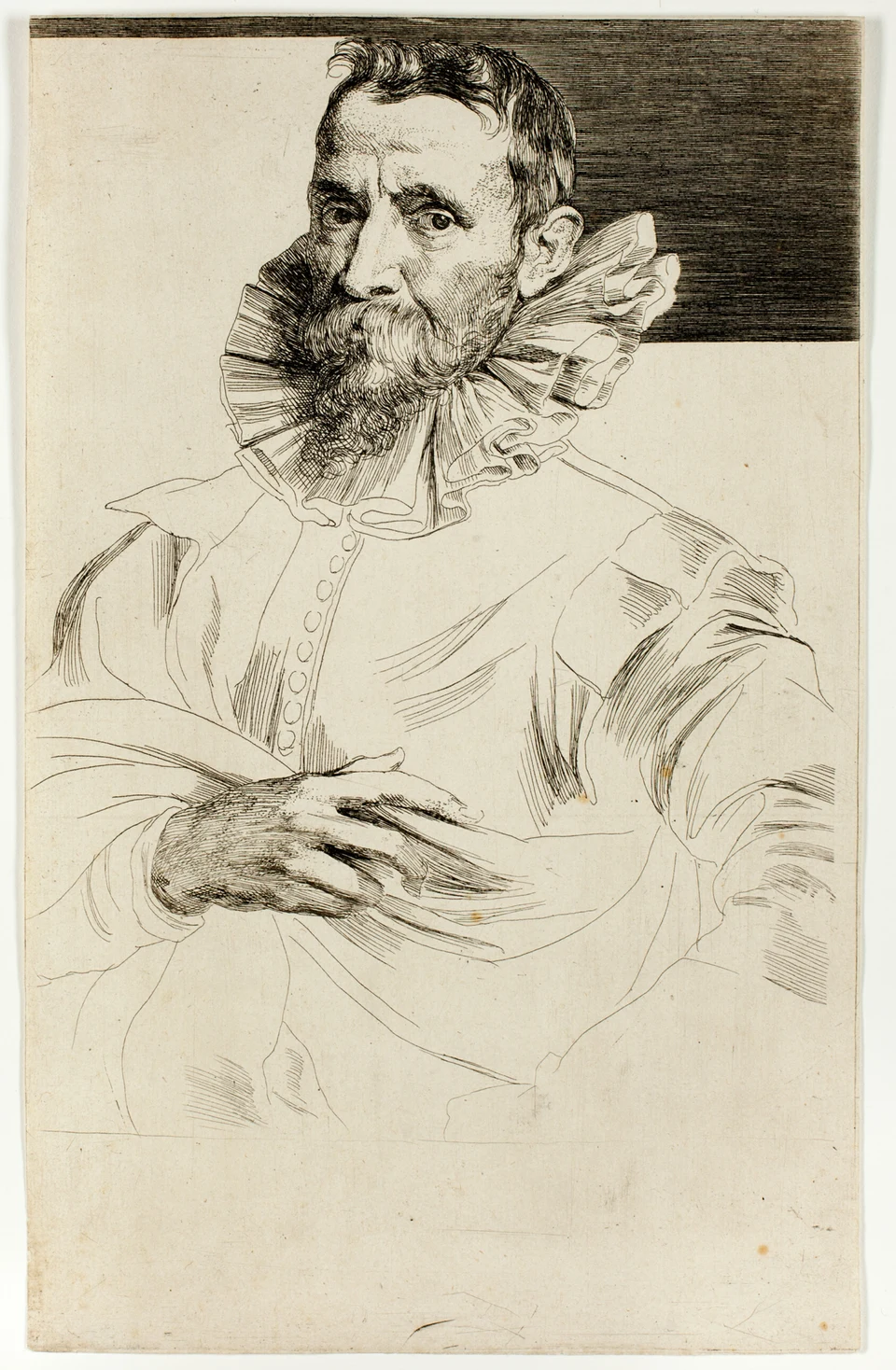 Jan Brueghel the Elder1630/33
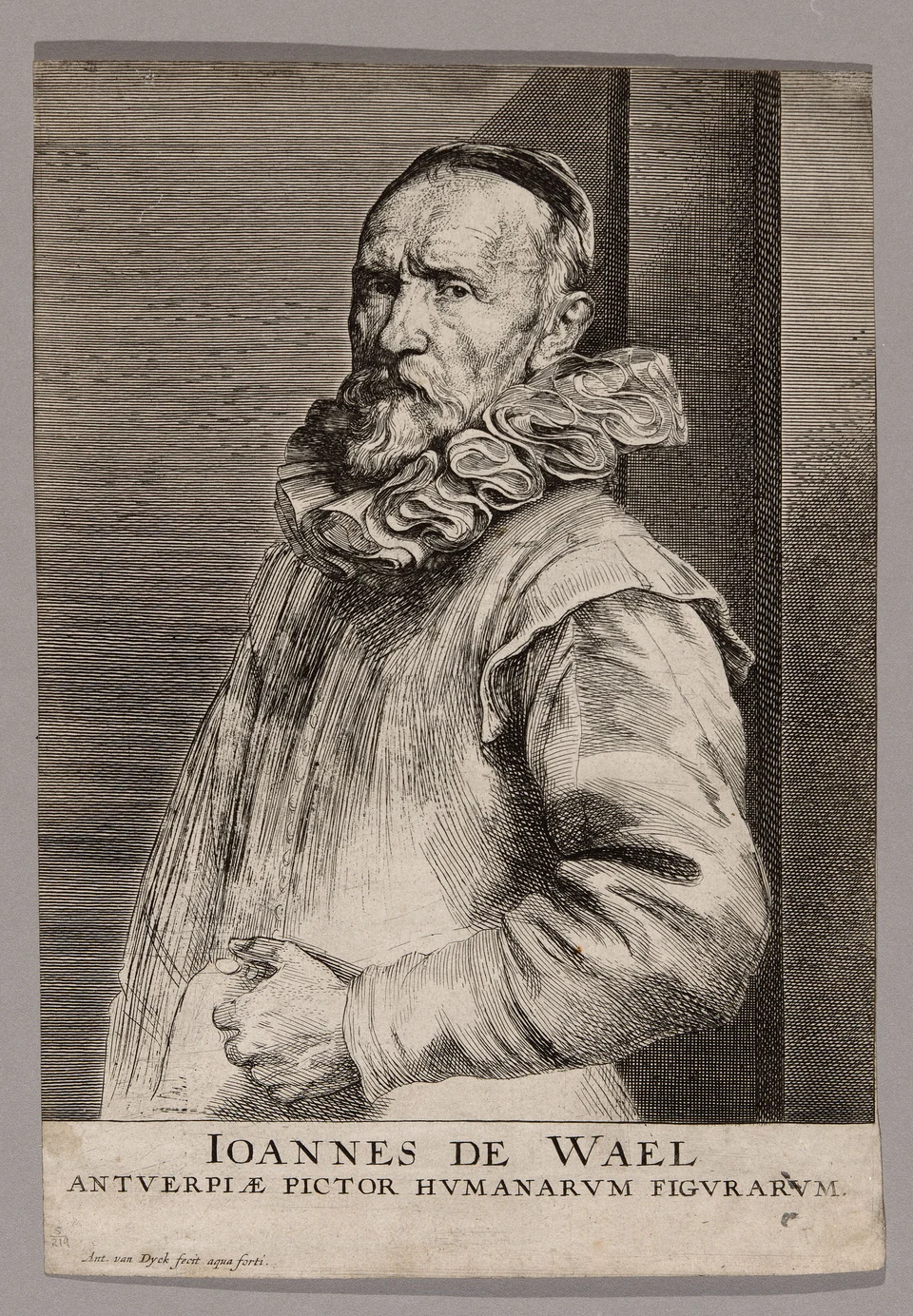 Jan de Wael1630/33
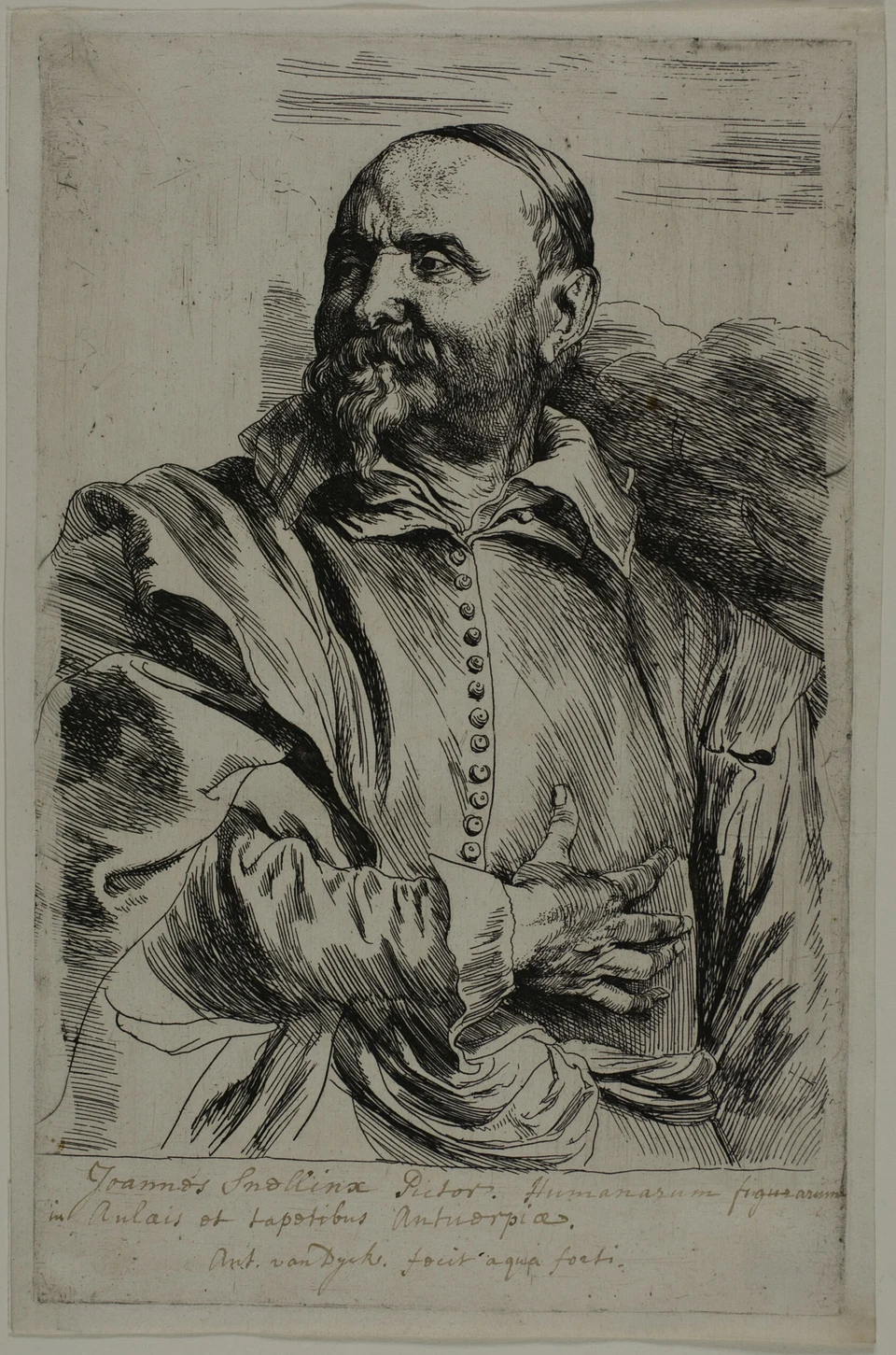 Jan Snellinx1630/33
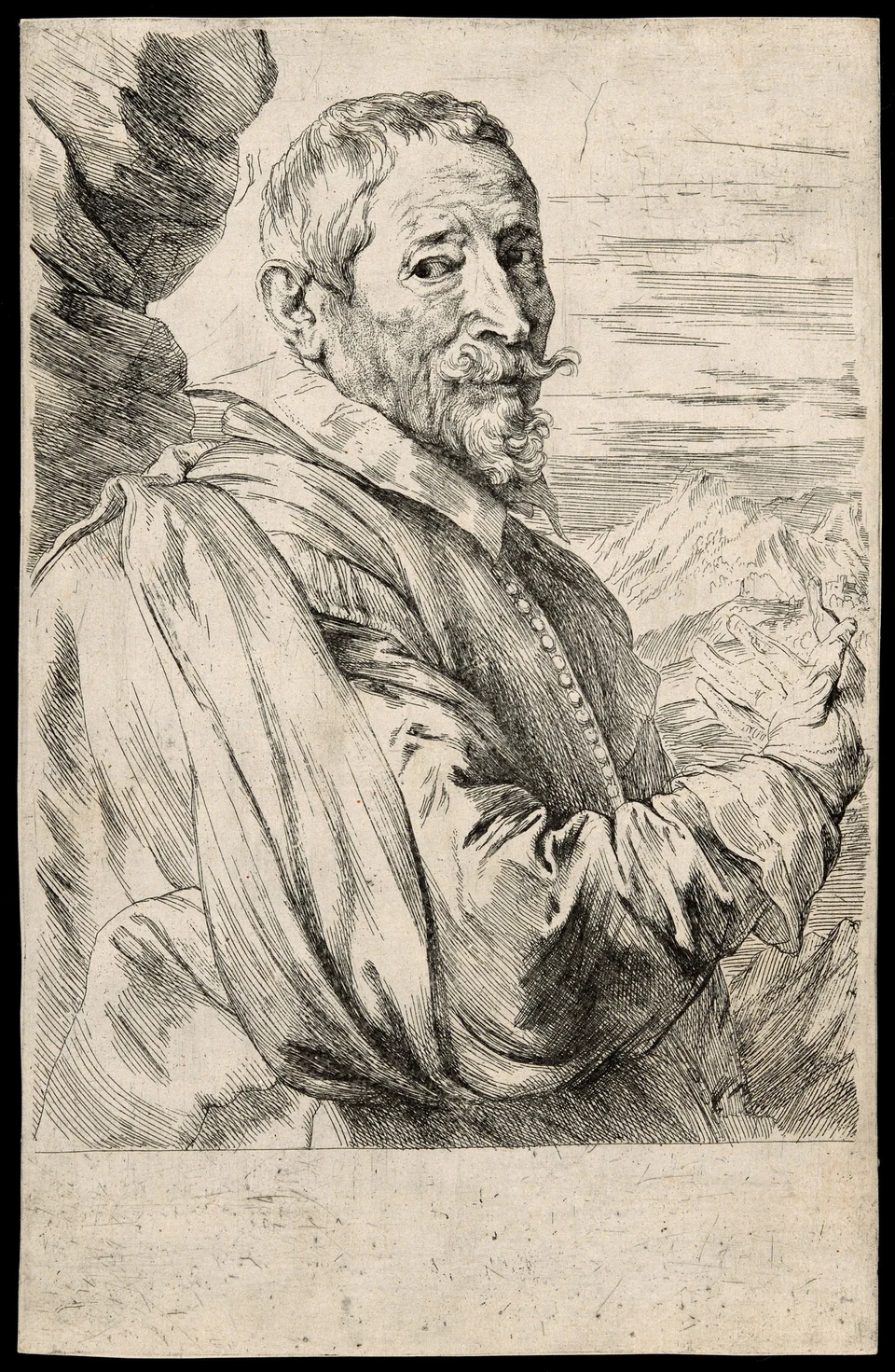 Joos de Momper1630/33
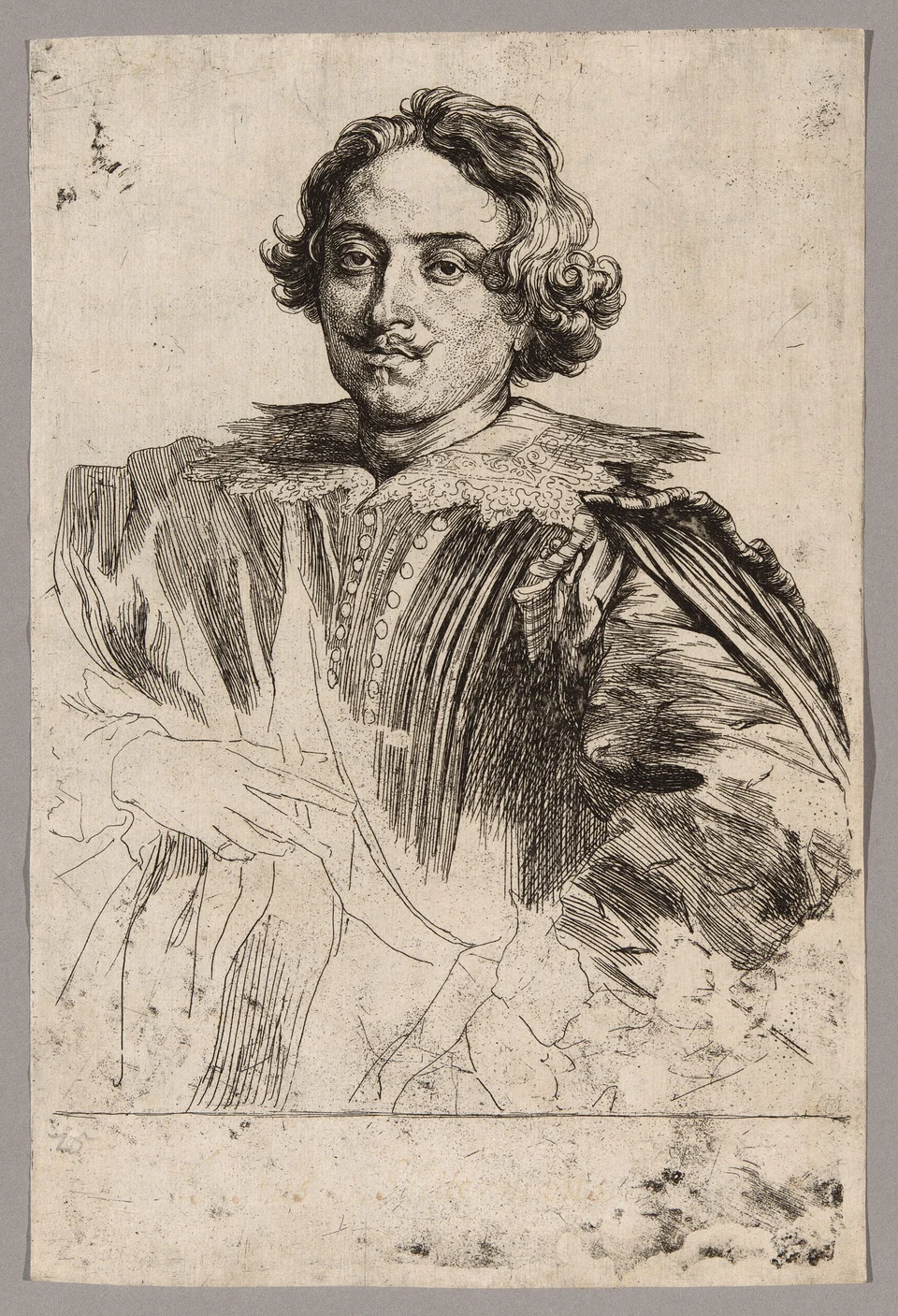 Justus Sustermans1630/33
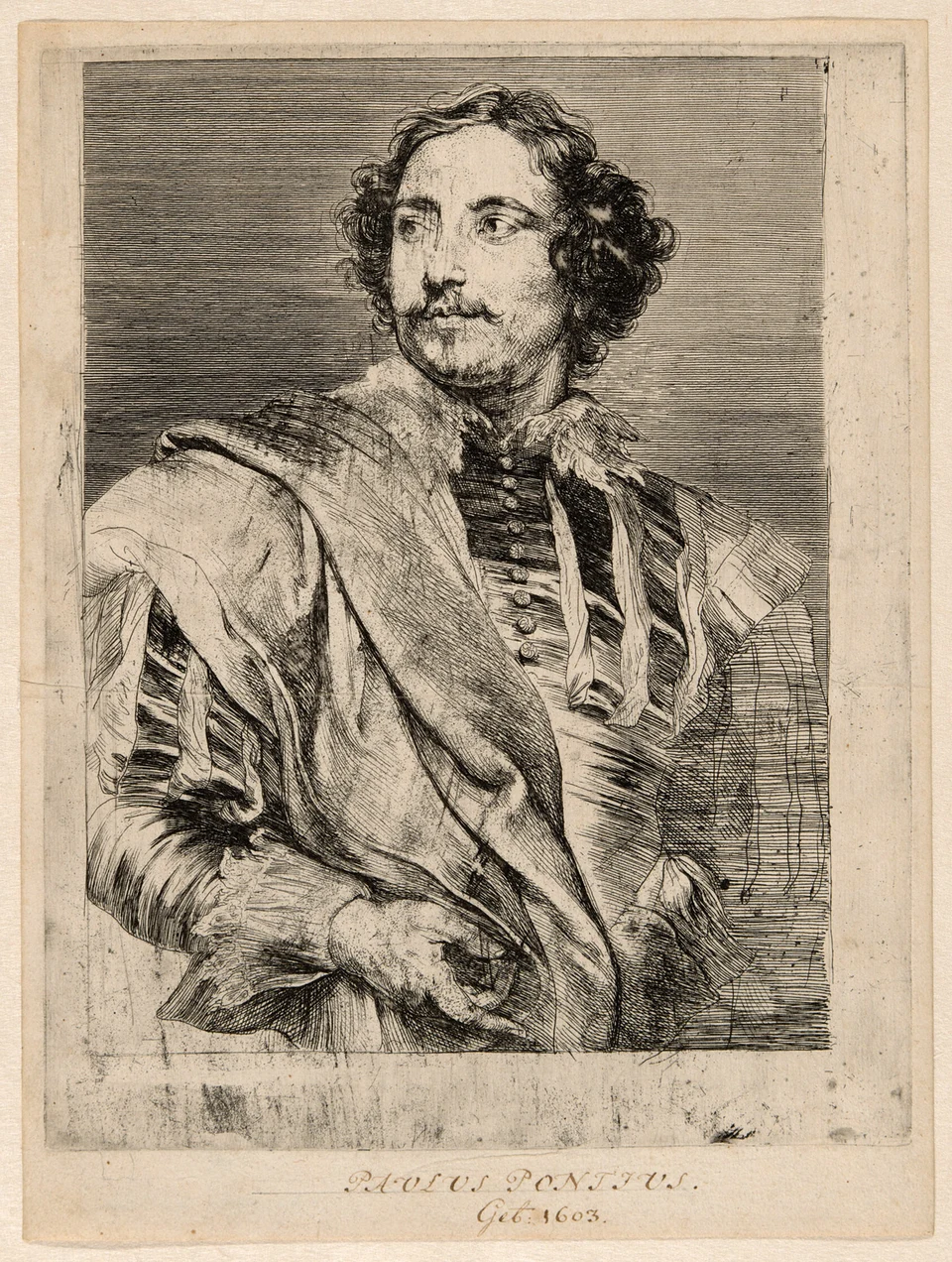 Paulus Pontius1630/33
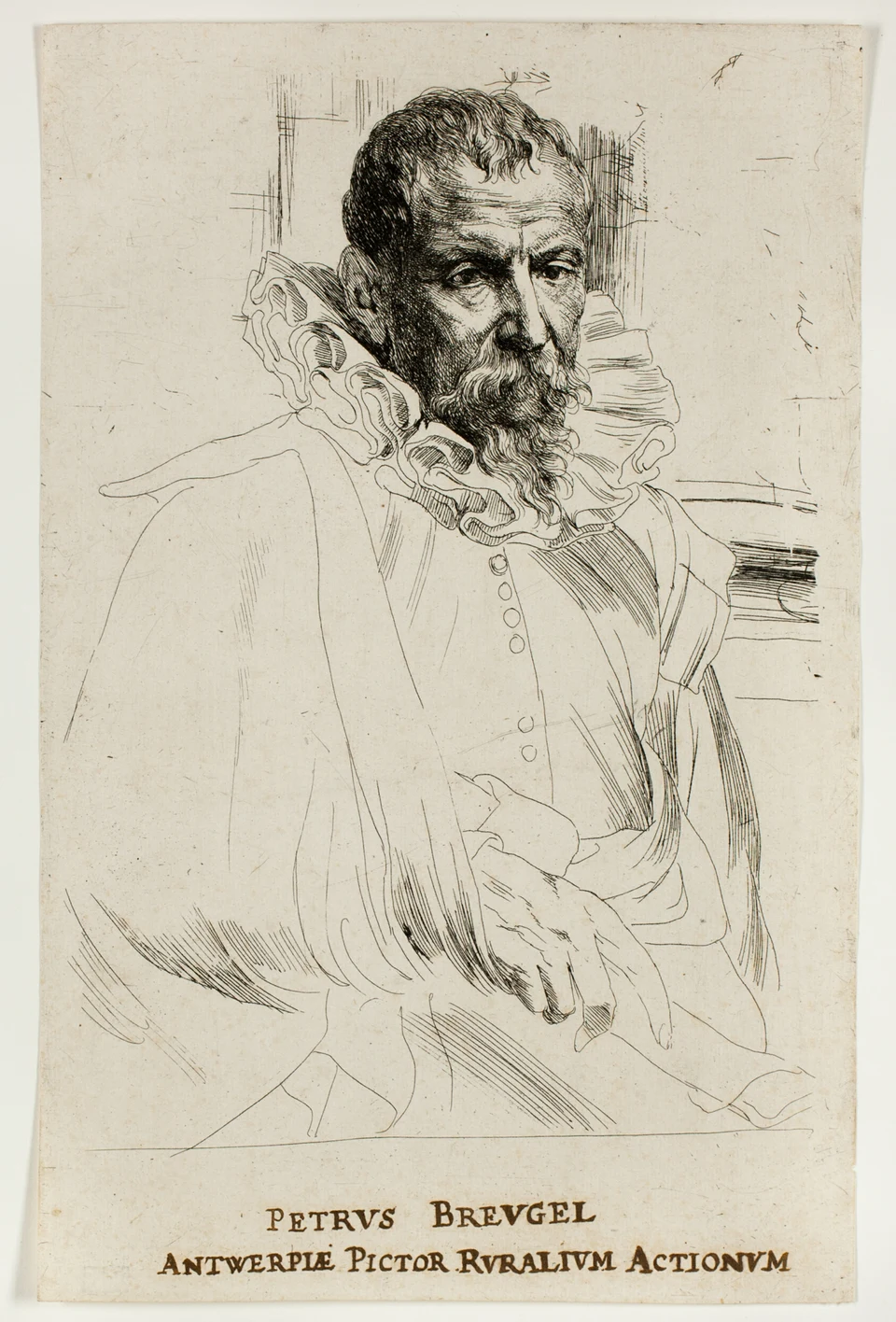 Pieter Brueghel the Younger1630/33
- Self-Portrait1630/33
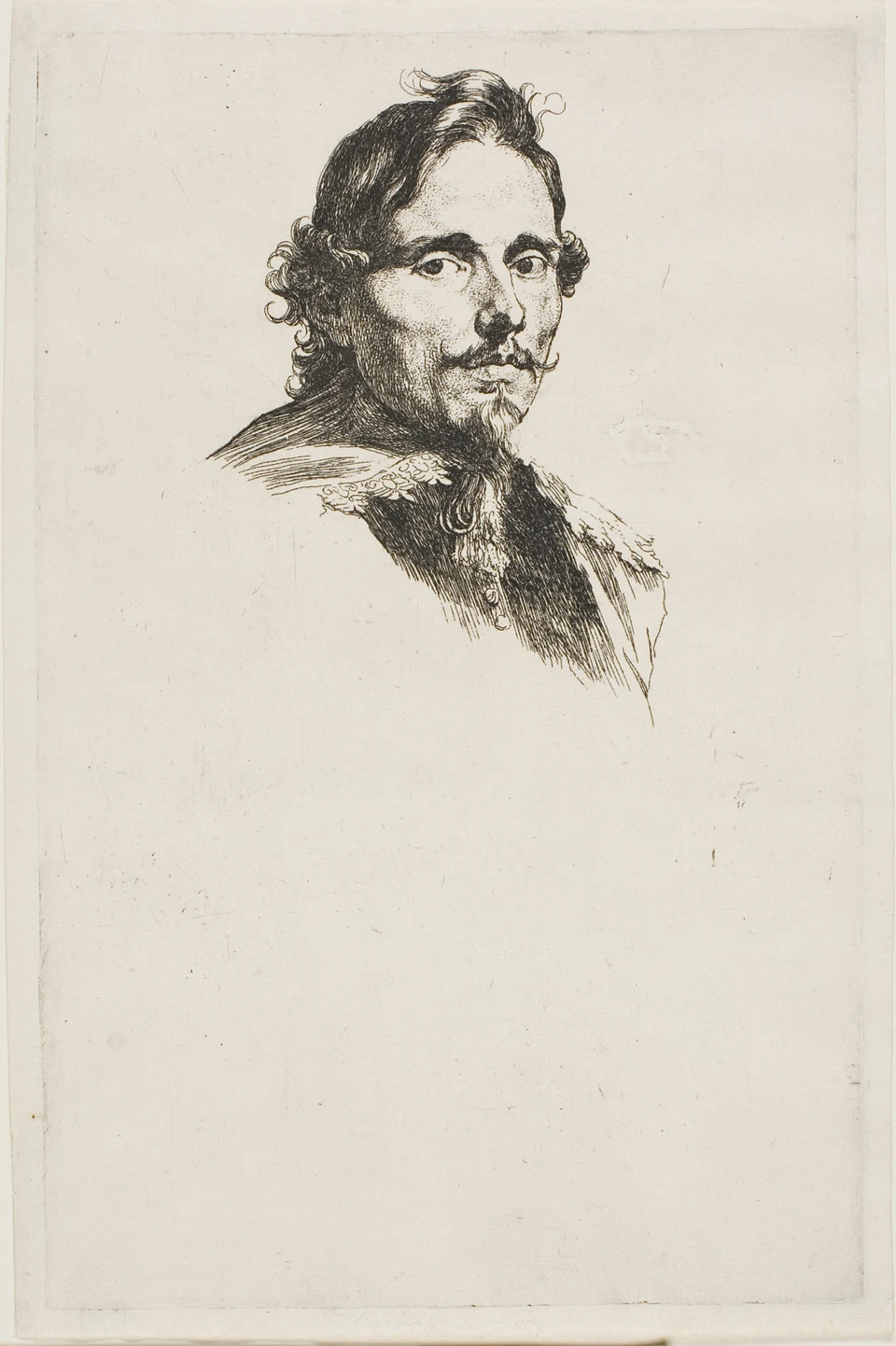 Philippe Le Roy1630/40
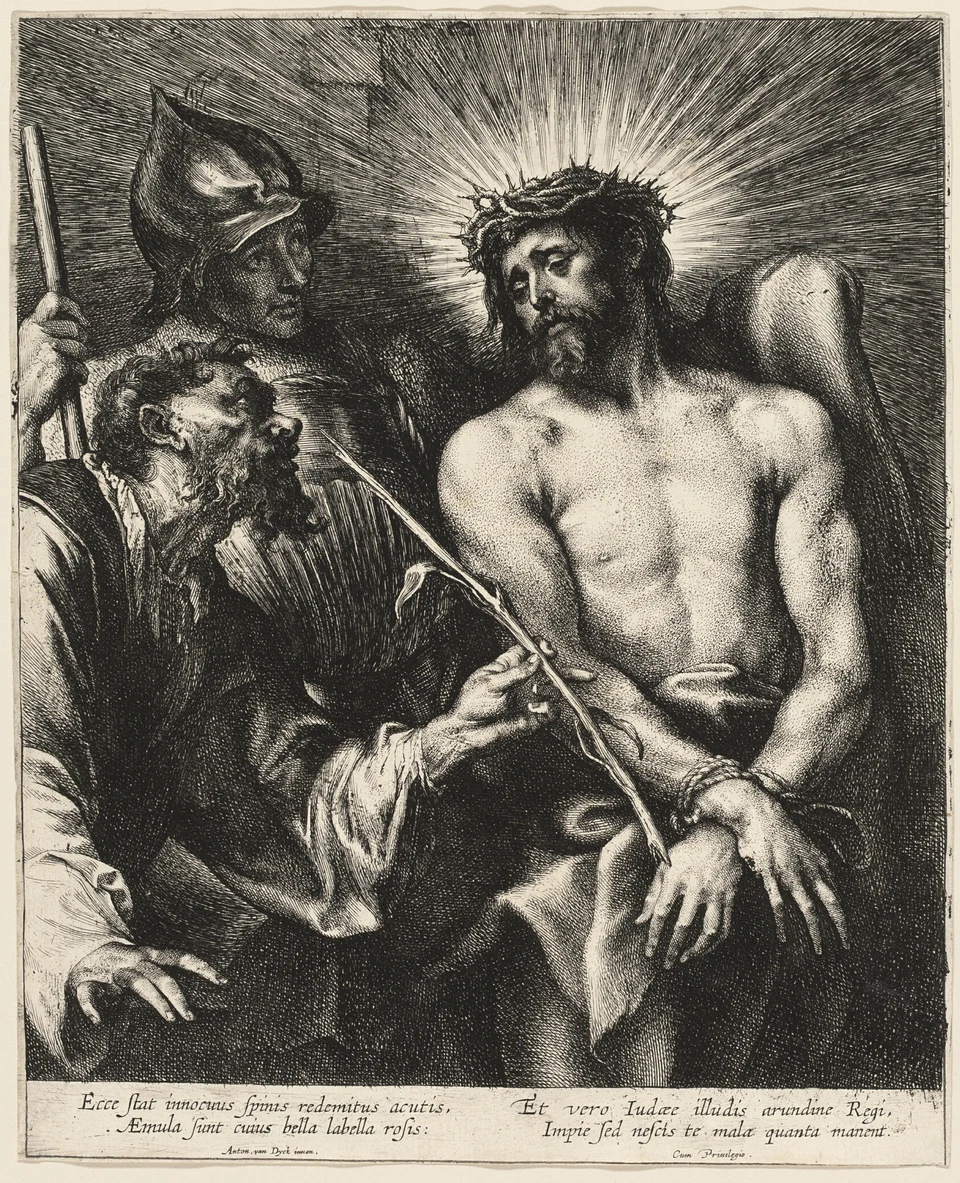 The Reed Offered to Christ1630/40
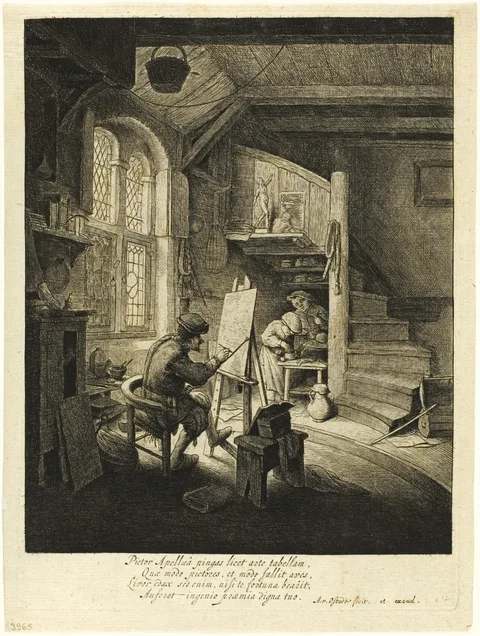
Adriaen van Ostade
The Painter, c. 1647
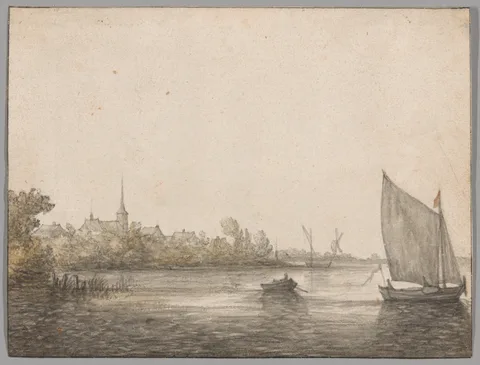
Aelbert Cuyp
View of IJsselmonde Seen Across the New Maas, c. 1640
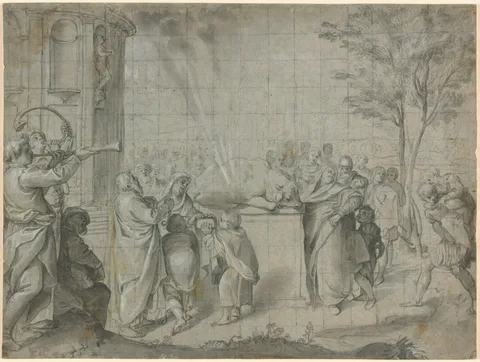
Agostino Carracci
The Sacrifice of Pelias to Neptune, 1584