Artists
467 artists, 2737 works from public collections
Opening artists…
The artist directory couldn’t load. Try again.
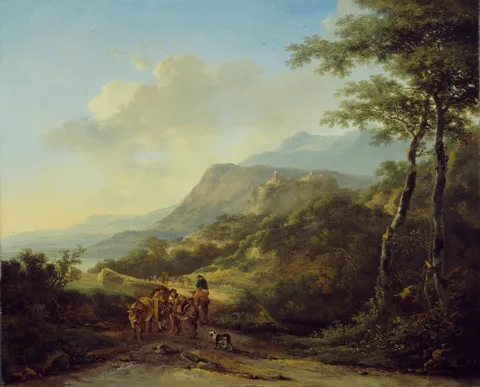
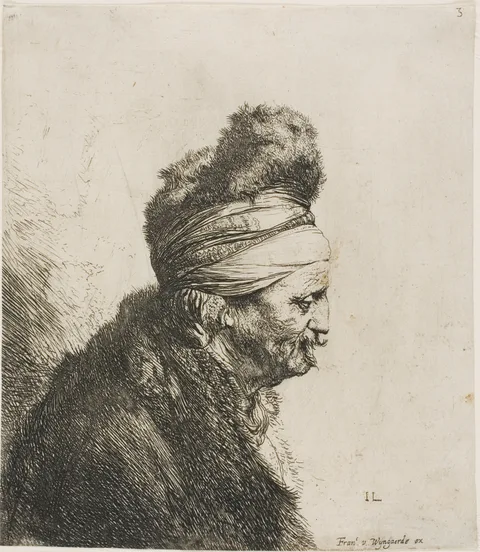
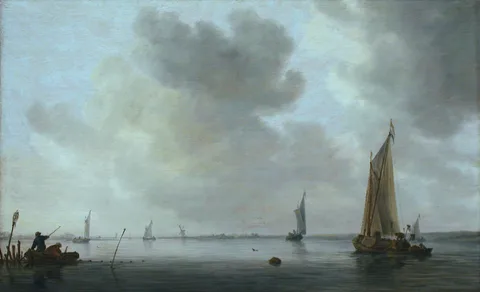
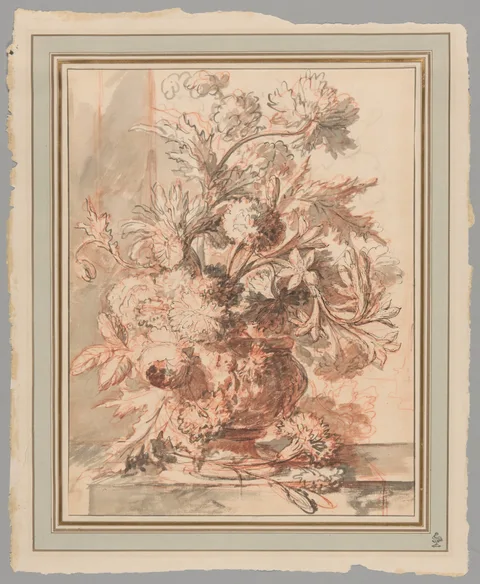
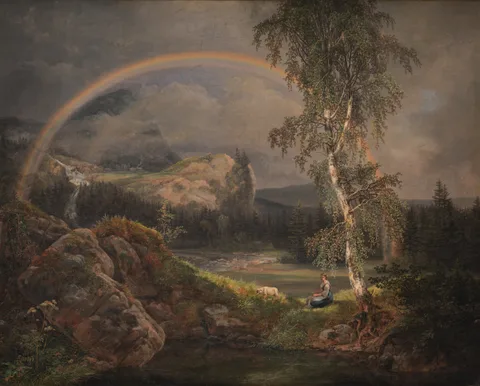
A rainbow arches over a Norwegian landscape; Vesuvius erupts and a castle stands in moonlight. Explore landscapes where weather and light shape the scene.
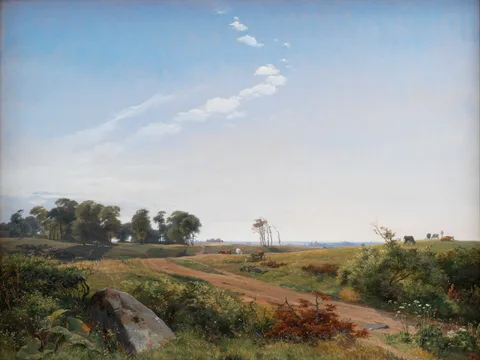
Fields, a high coastal cliff and a cowshed shape this group of paintings. Look for the people and animals that give each stretch of countryside a scale.
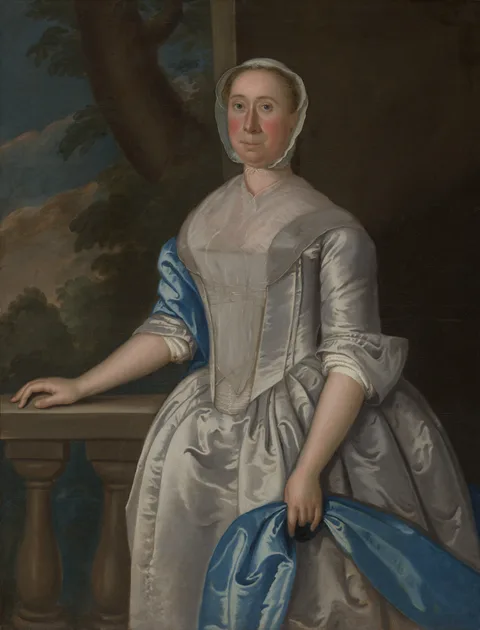
John Hesselius presents Mrs. Thomas Sprigg in a pale dress with blue drapery gathered across it. Her hand rests on a balustrade, while trees and distant sky frame the figure. Follow the light along the folded fabric, then compare those shifting surfaces with the more steadily described face and hands.
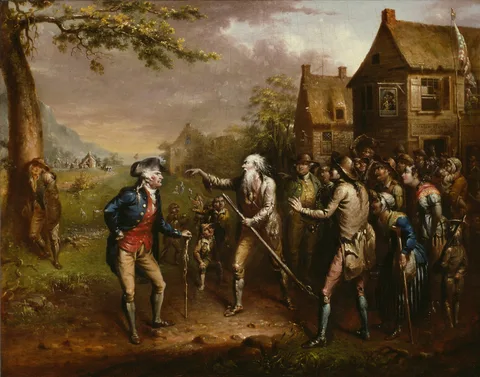
John Quidor draws on Washington Irving’s story of Rip Van Winkle. The painting shows Rip returning after his long sleep to a community that no longer recognizes him. Gestures and faces turn the encounter into a crowded drama. Follow the movement from Rip toward the townspeople, and notice how the setting gives each figure a place in the story.
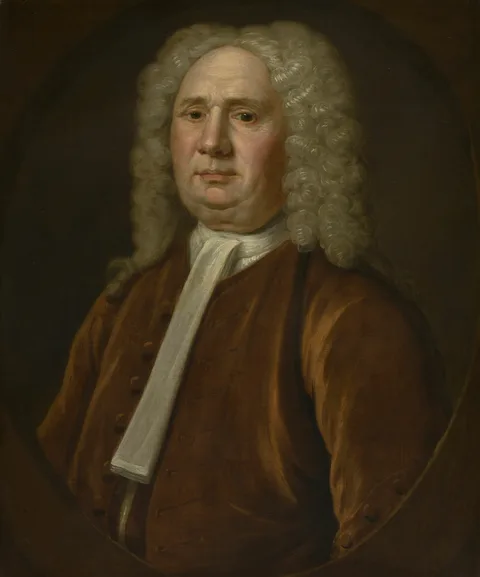
John Smibert’s portrait of Captain John Garish draws attention to a face framed by a pale wig and dark clothing. A white neckcloth brings light down through the center of the painting. Compare its narrow folds with the warmer, broader passages of the coat, and notice how little background is needed to establish the sitter’s presence.
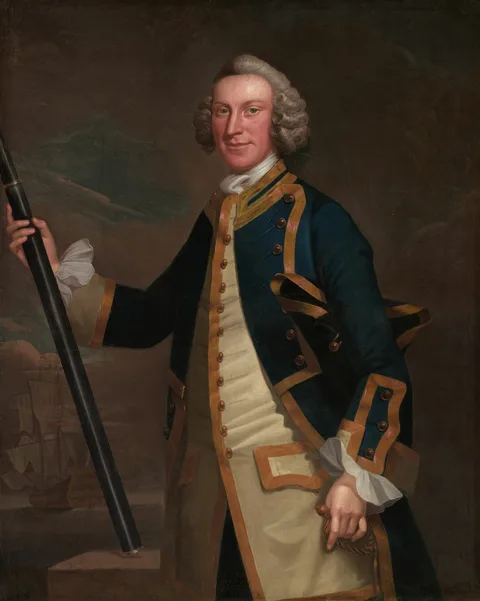
John Wollaston’s portraits combine carefully arranged figures with rich clothing and outdoor backdrops. A naval officer holds a staff, a woman sits in a shining blue dress, and a young man carries a book. Compare how their hands, fabrics and surrounding space help each sitter present a different public image.
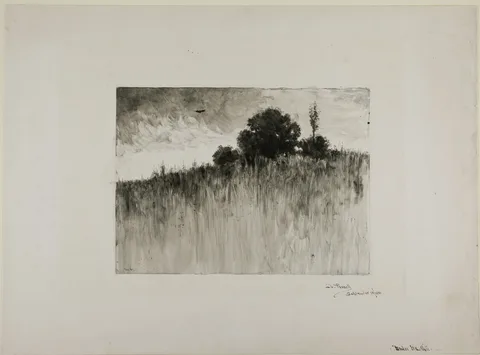
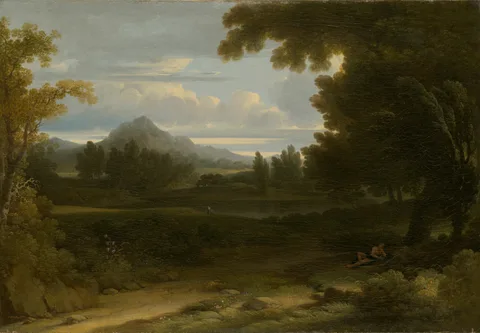
Joshua Shaw’s Solitude places a reclining figure within an idealized landscape. The Art Institute identifies the setting as an imagined Arcadian scene, rather than a record of one specific place. Follow the land and water into the distance, and consider how the figure offers a quiet point from which to take in the view.
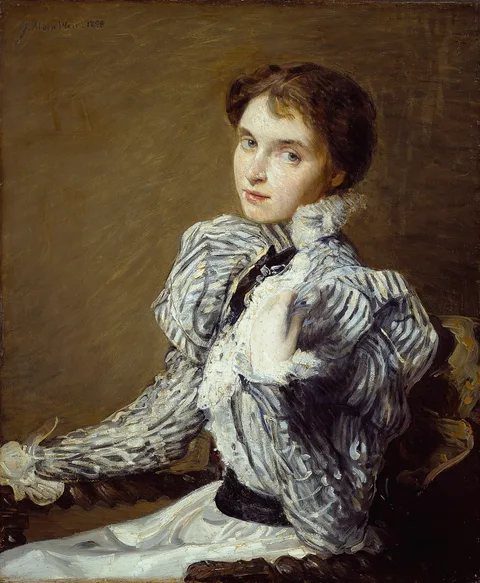
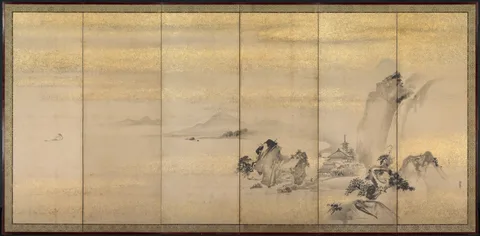
Kano Naonobu’s paired screens use stretches of open space to set small buildings, trees and rocks within broad landscapes. One scene evokes summer, the other winter. The quiet intervals between the ink forms are as noticeable as the forms themselves. These screens survive with conservation repairs and replacement paper, documented by Cleveland; their present appearance includes both the original painting and that later care.
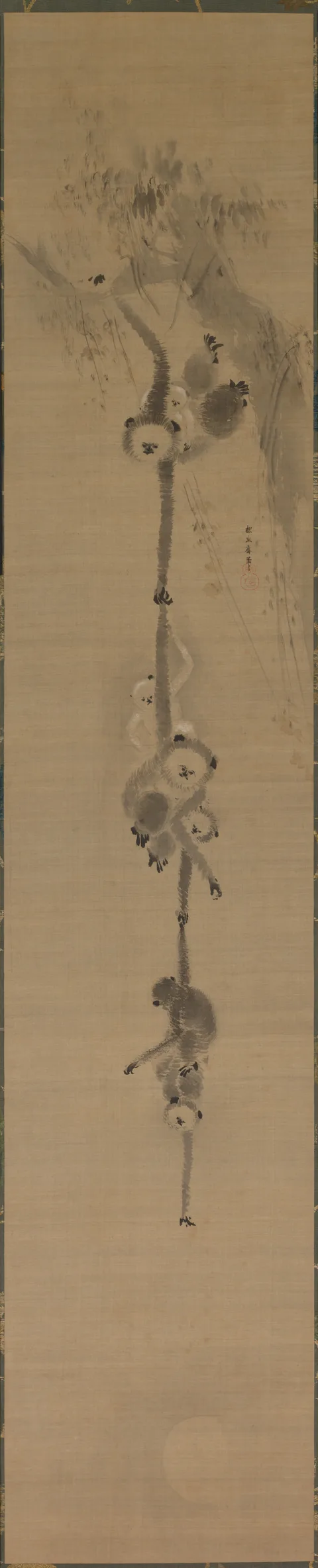
Kano Tan’yū makes ink describe both quiet weather and lively movement. Across a pair of screens, shores, buildings and distant hills carry the eye through changing seasons. In a narrow hanging scroll, gibbons stretch toward the moon’s reflection, turning an animal scene into a Buddhist image of mistaken perception. Compare the long, connected landscape with the steep vertical chain of bodies.
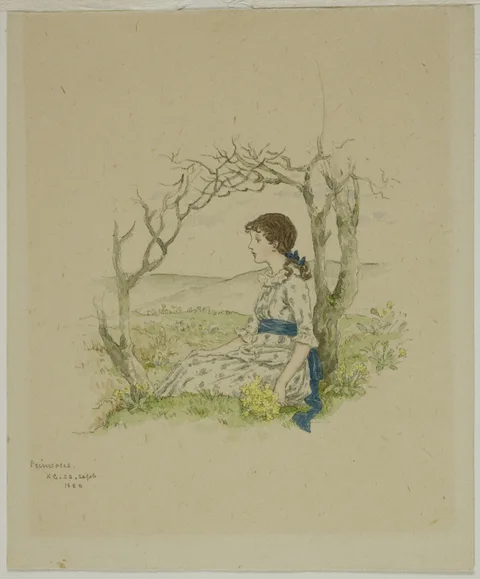
Kate Greenaway’s drawings move between small scenes of children, decorative lettering and pages that combine pictures with verse. Fine outlines and restrained watercolor leave much of the paper visible. Some sheets retain lightly worked passages and aged mounts; looking closely reveals how a few marks can suggest a face, a dress or a garden.
No artists found
Try a different name or movement, or return to the full directory.