Utagawa Kuniyoshi
1797–1861 · Japanese painting, Ukiyo-e · 15 works
Utagawa Kuniyoshi designed prints that range from powerful warriors and strange encounters to comic actors and recognizable places. A pupil of Utagawa Toyokuni, he became a leading print designer in nineteenth-century Edo. His landscapes sometimes explore Western approaches to depth, while his figure designs can compress an extraordinary amount of action into a single sheet. Moving between the city views and the heroes of the Water Margin reveals this breadth. The same attention to a strong silhouette can organize a distant building, a dramatic pose, or a comic face.
15 works · 1819–1853
Compare a city view with a warrior print. How do the sizes and positions of the figures change your sense of distance and action?
1819–1827 · 4 works
Walk these 4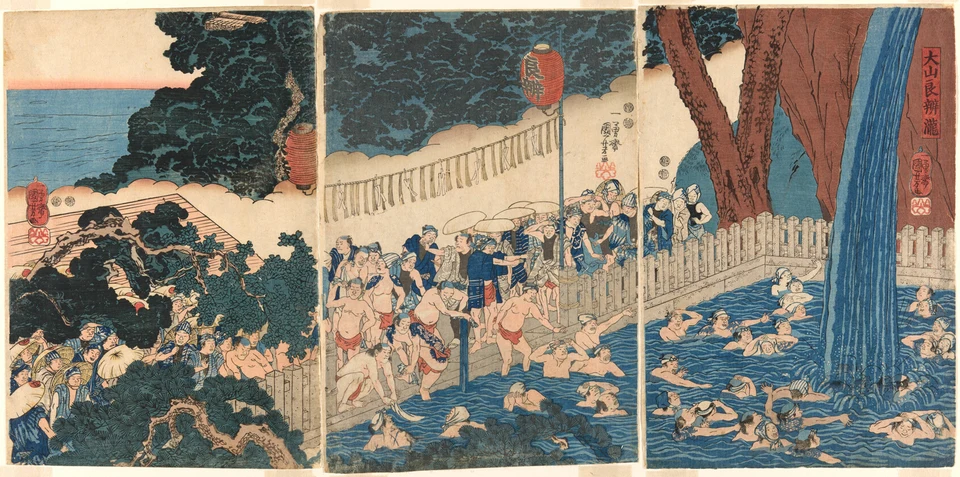 Roben Waterfall at Mount Oyama (Oyama Roben no taki)c. 1818/20
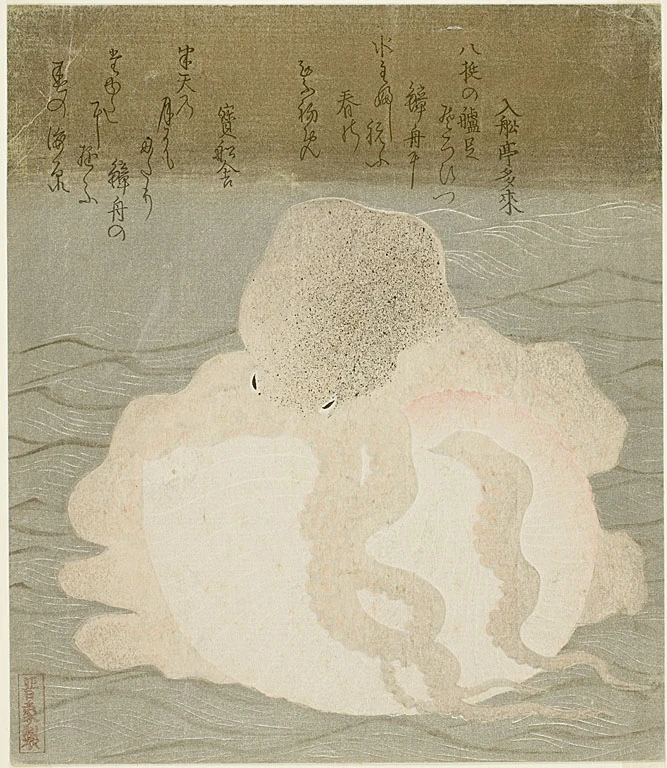 Octopus and Shellabout 1820sAttributed to Utagawa Kuniyoshi
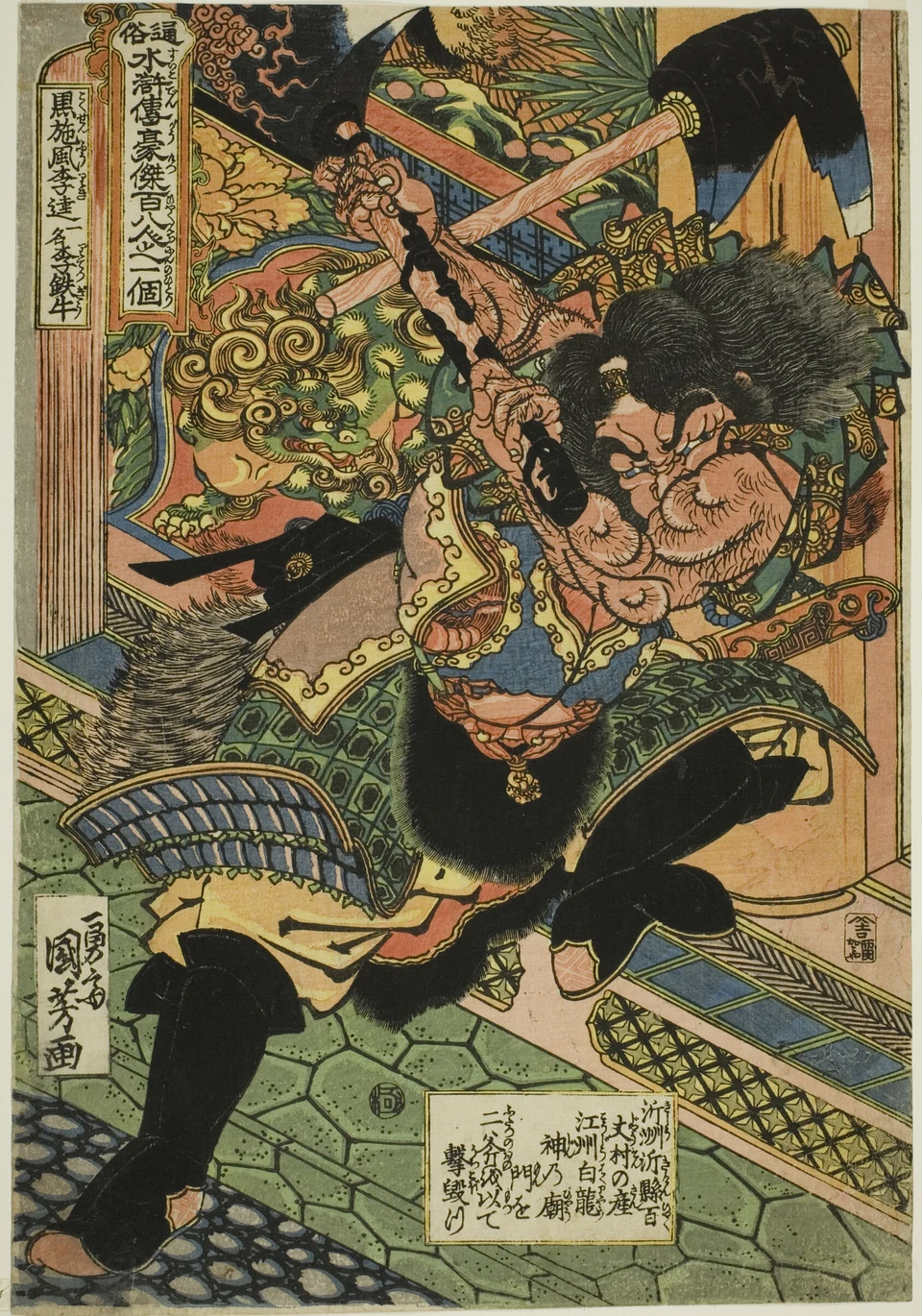 Li Kui (Kokusenpu Riki, ichimei Ritetsugyu), from the series "One Hundred and Eight Heroes of the Popular Water Margin (Tsuzoku Suikoden goketsu hyakuhachinin no hitori)"c. 1827
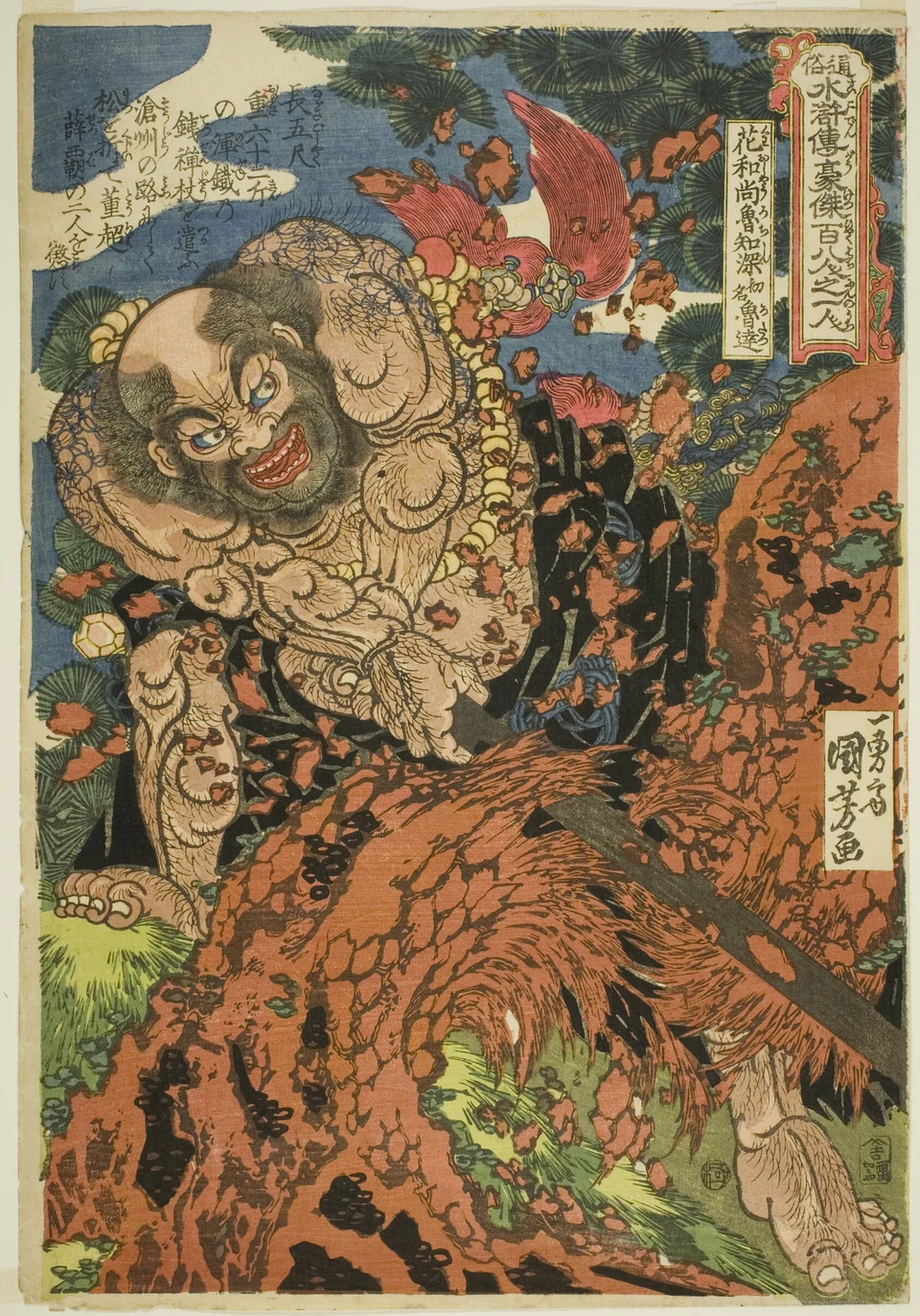 Lu Zhishen, Originally Named Lu Da (Kaosho Rochishin shomei Rotatsu), from the series "One Hundred and Eight Heroes of the Popular Water Margin (Tsuzoku Suikoden goketsu hyakuhachinin no hitori)"c. 1827
1829–1830 · 3 works
Walk these 3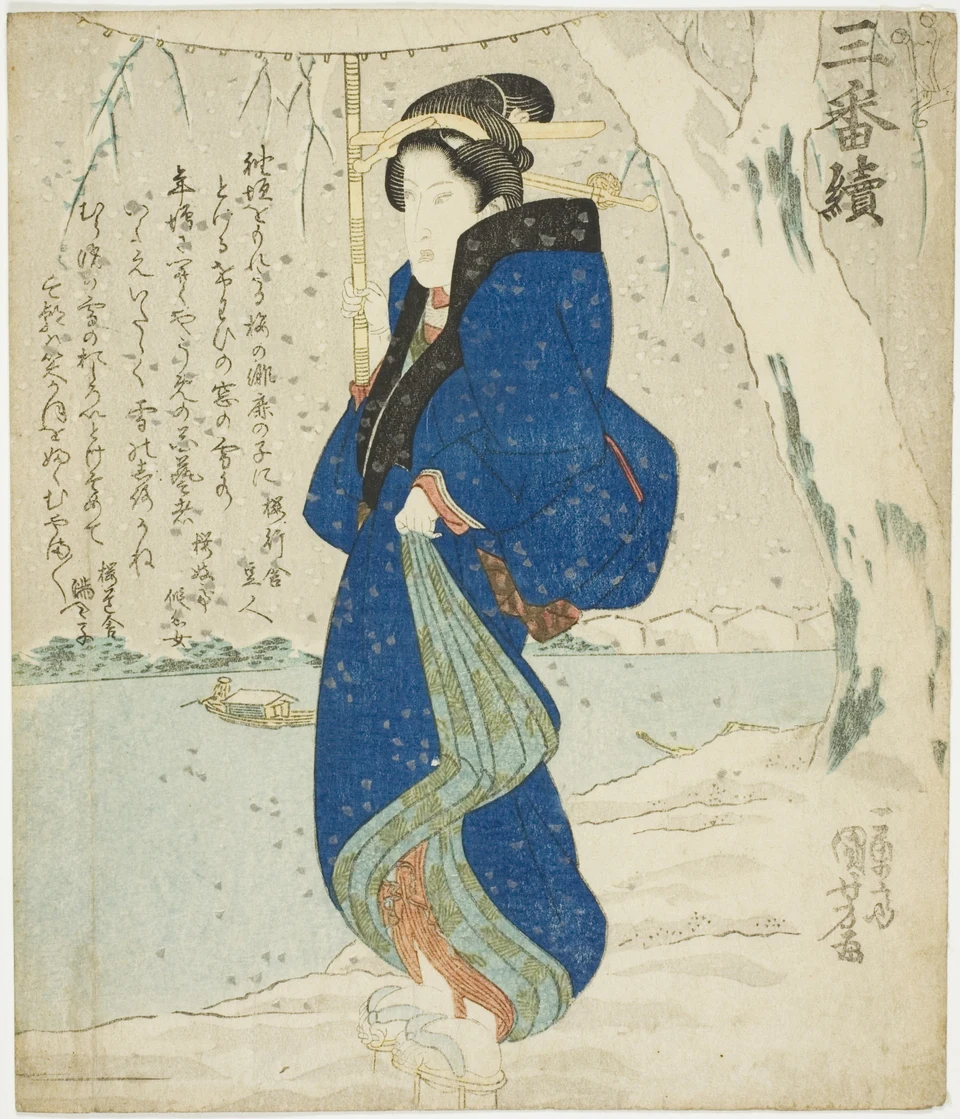 Snow: Onoe Kikugoro III, from "A Set of Three (Sanbantsuzuki)"c. 1829
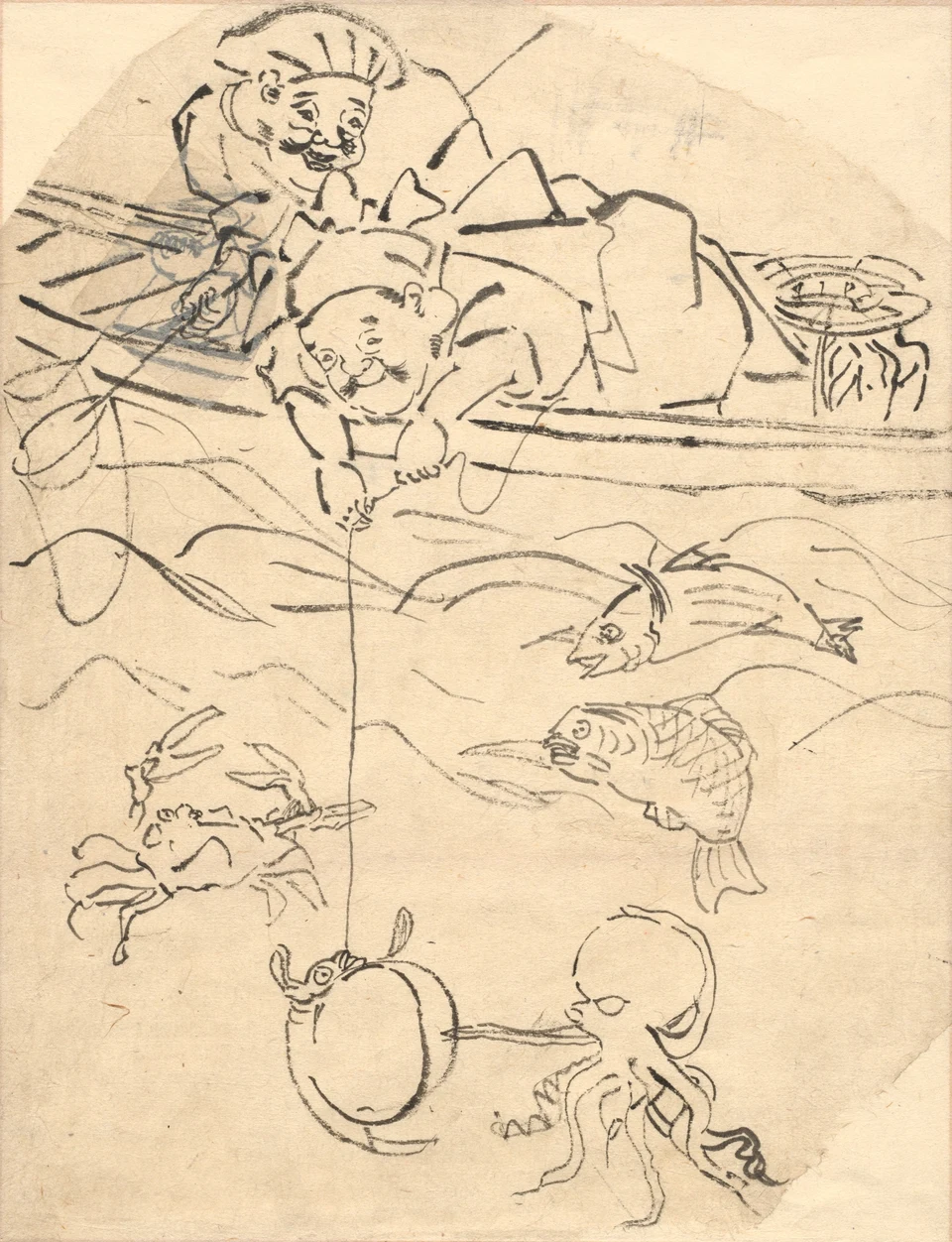 Daikoku and Ebisu, Two of the Seven Gods of Happinessc. 1830s
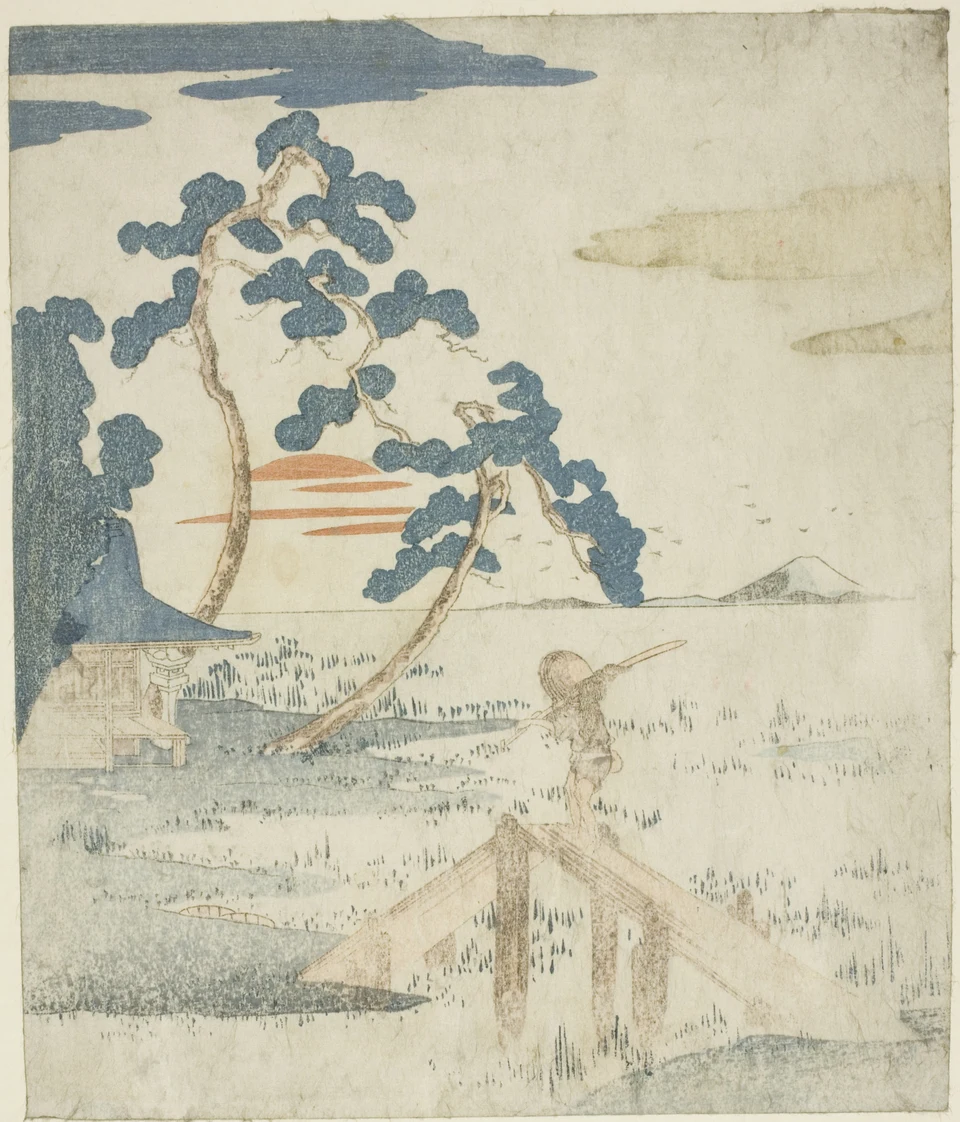 Man Crossing a Bridge as the Sun Rises, from an untitled edition (without poetry) of the illustrations for the series "Five Prints of Mount Fuji (Fuji goban no uchi)"c. 1830Attributed to Utagawa Kuniyoshi
1832–1853 · 8 works
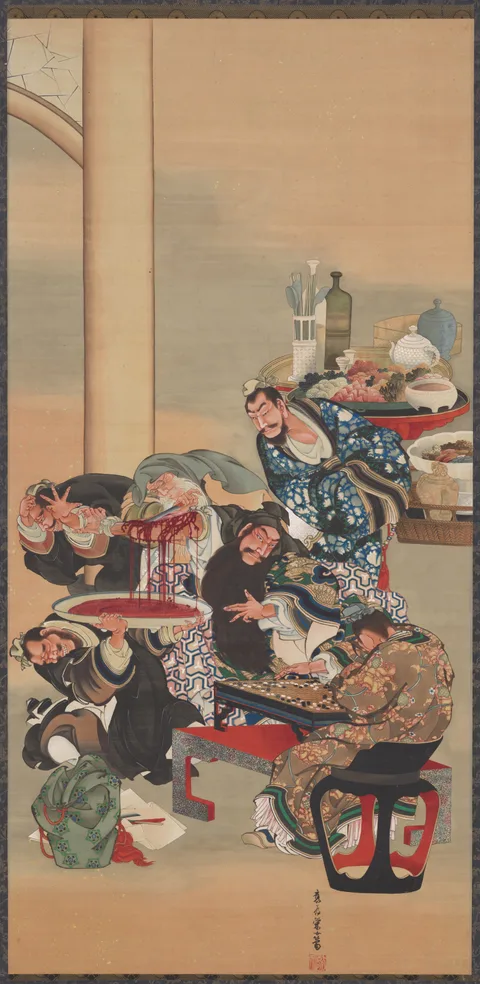
Walk these 8Ukiyo-e stayed popular from the last decades of the Edo period into the Meiji period. Hokusai’s daughter Katsushika Ōi painted a scene from a Chinese novel, and Utagawa Kuniyoshi drew actors as wall graffiti. His pupil Tsukioka Yoshitoshi turned legend and history into prints, Ogata Gekkō won prizes at world’s fairs, and Tsukioka Kōgyo specialized in Noh.
In the museum: Ukiyo-e room · 1 work
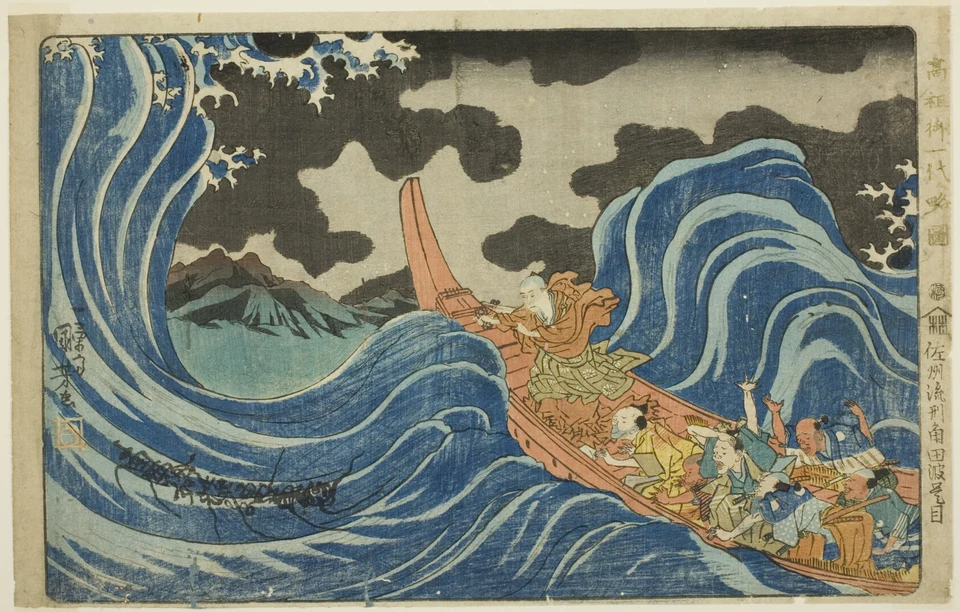 Casting a Mantra on the Waves at Kakuta on His Exile to Sado Island (Sashu rukei Kakuta nami daimoku), from the series "Concise Illustrated Biography of the Great Priest [Nichiren] (Koso go ichidai ryakuzu)"c. 1830/35
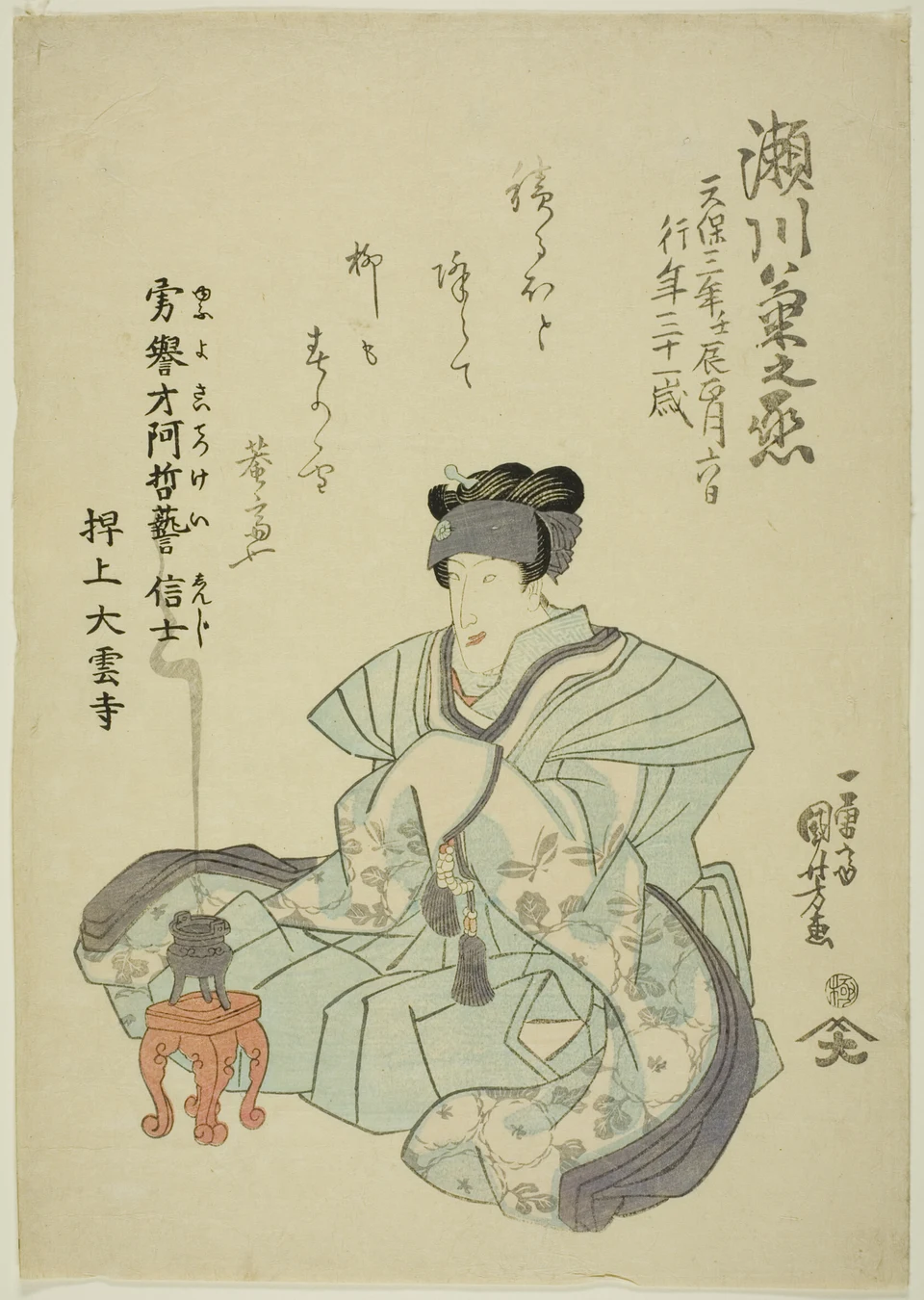 Memorial Portrait of the Actor Segawa Kikunojo V1832
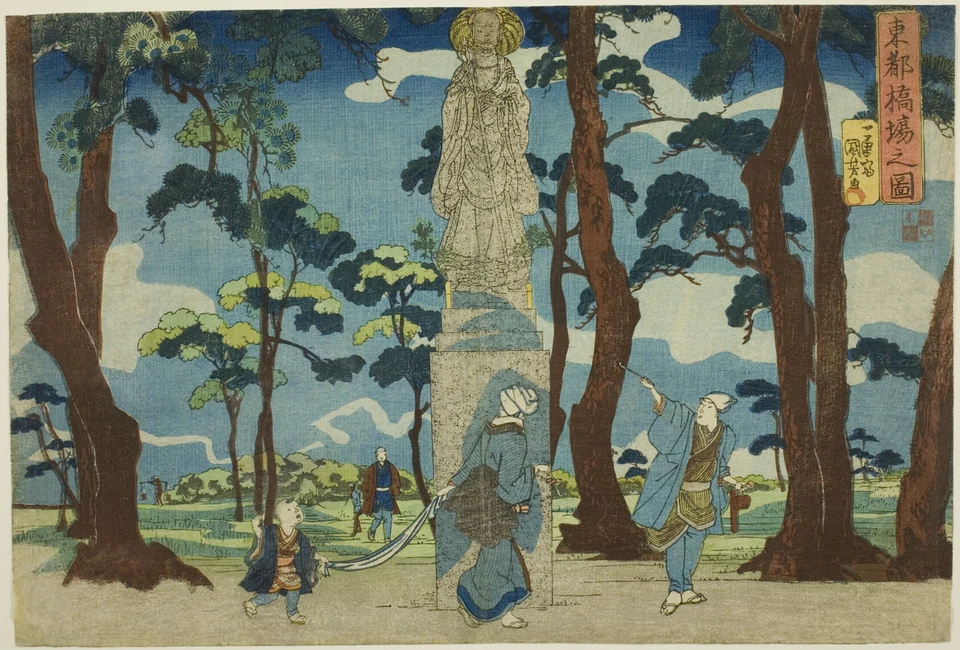 View of Hashiba in the Eastern Capital (Toto Hashiba no zu), from the series "Views of the Eastern Capital (Toto no zu)"early 1830s
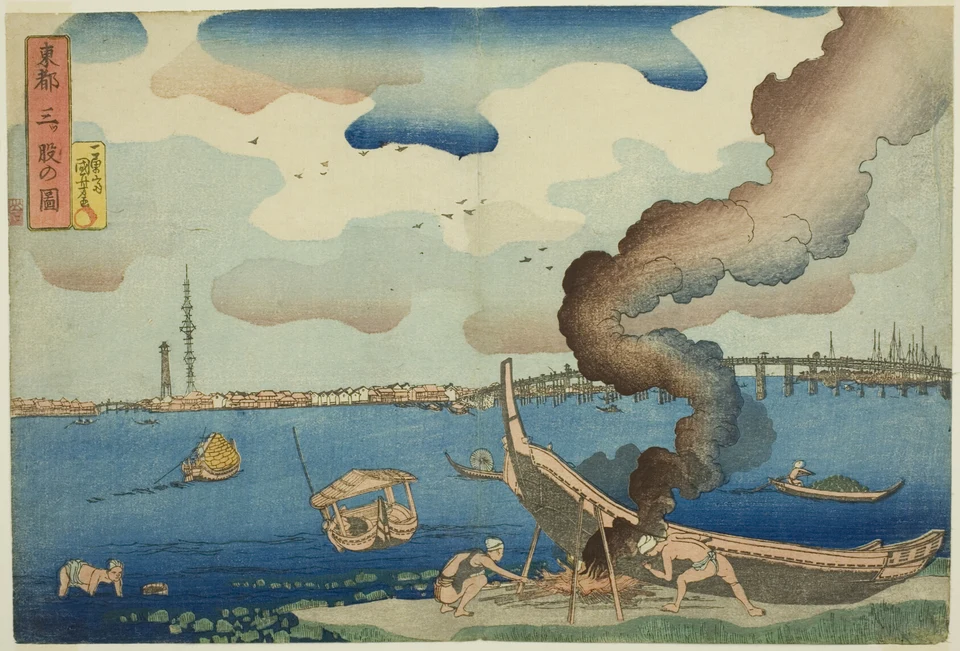 View of Mitsumata in the Eastern Capital (Toto Mitsumata no zu), from the series "Views of the Eastern Capital (Toto no zu)"early 1830s
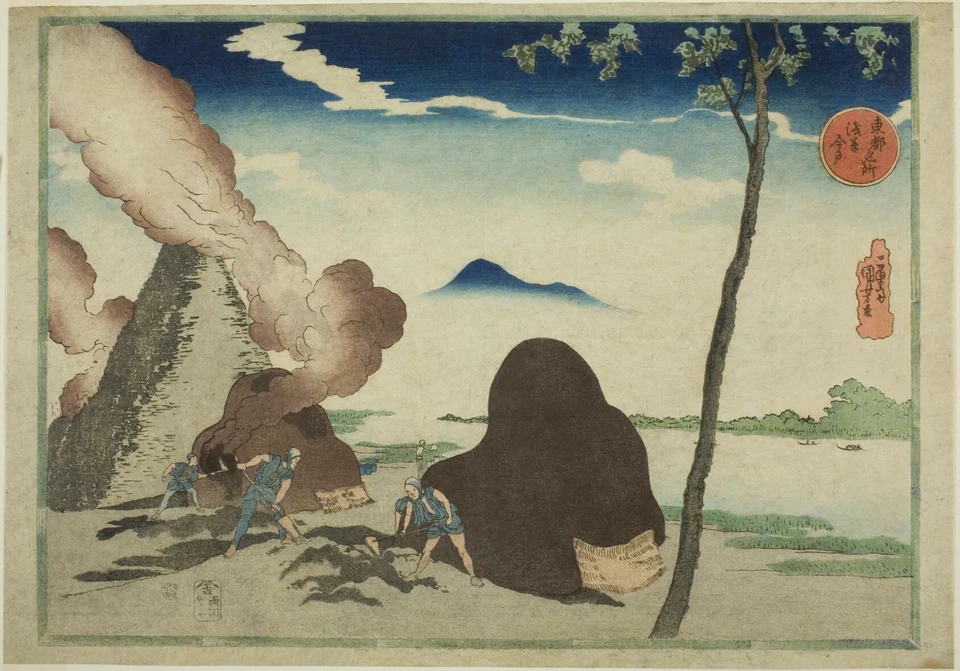
- Asakusa Imadoc. 1832/33
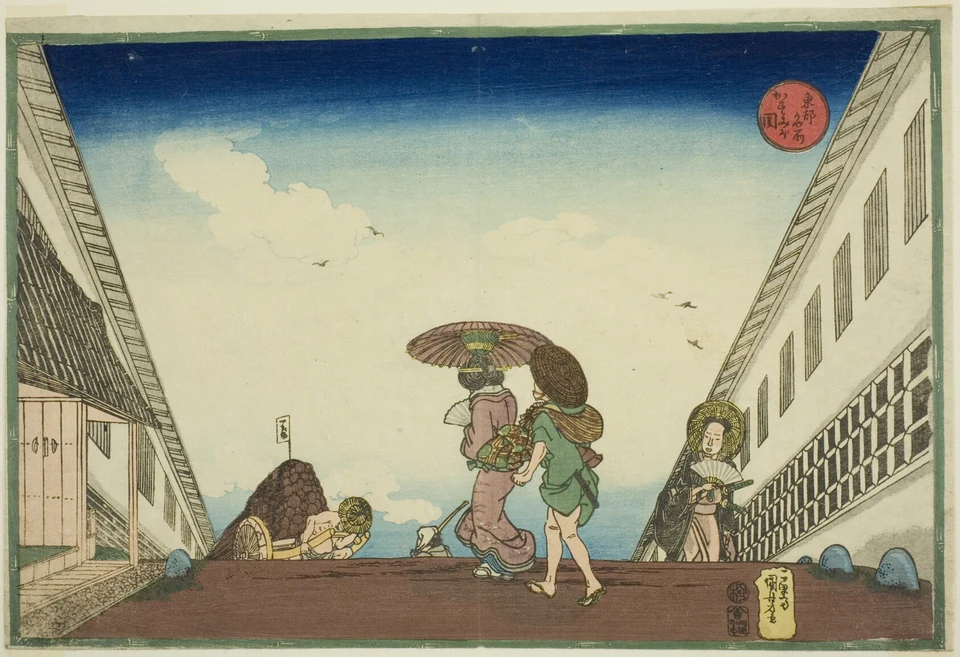 Kasumigasekic. 1832/33
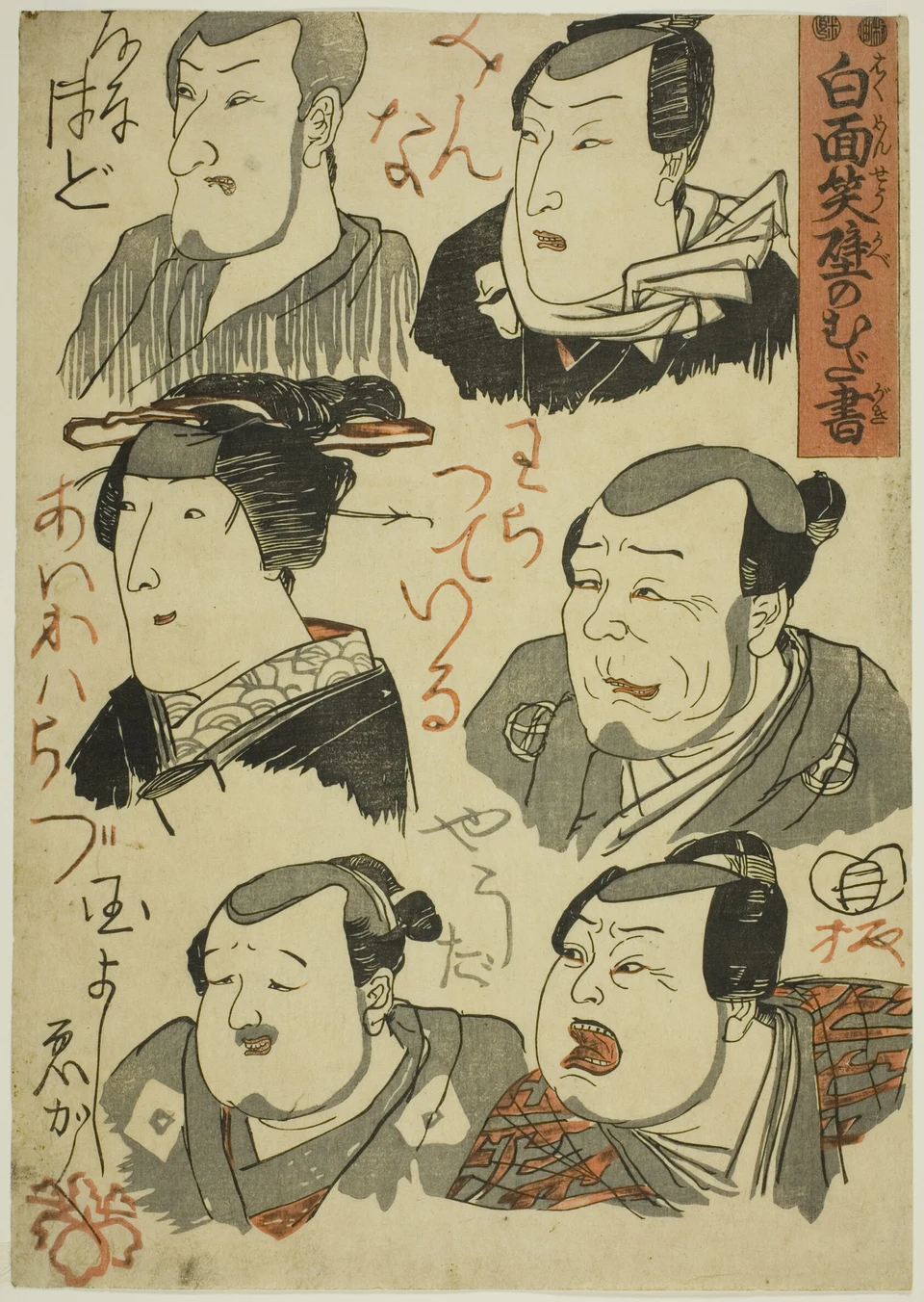 Caricatures of Laughing Actors Scribbled on a Wall (Hakumensho kabe no mudagaki)c. 1848/51
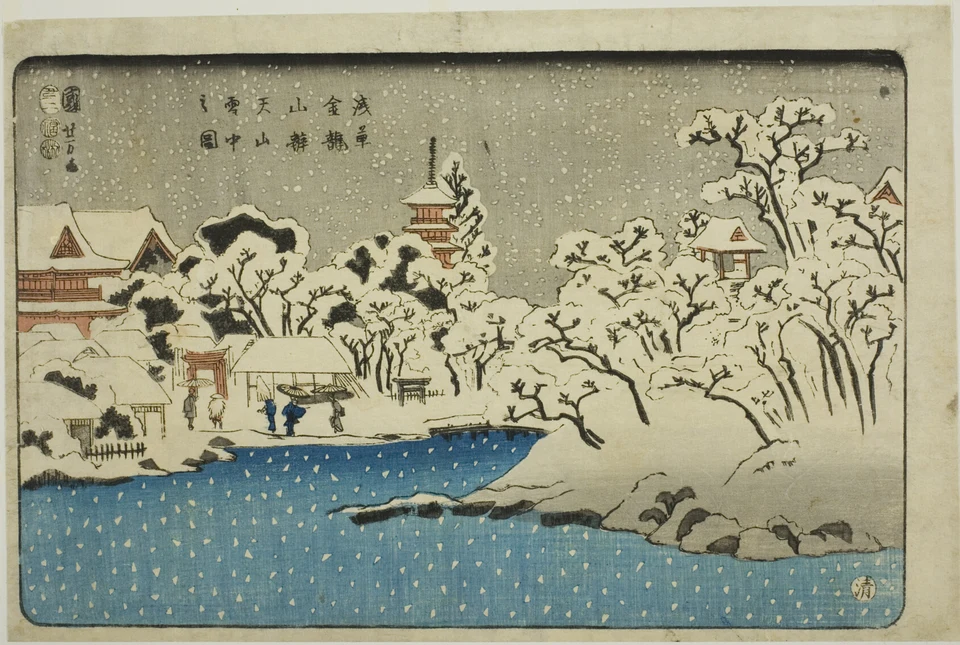 Snow on Benten Hill at Kinryuzan Temple in Asakusa (Asakusa Kinryuzan Bentenyama setchu no zu)1853
Japanese painting · 1 work
Walk this workUkiyo-e · 1 work
Walk this workUkiyo-e stayed popular from the last decades of the Edo period into the Meiji period. Hokusai’s daughter Katsushika Ōi painted a scene from a Chinese novel, and Utagawa Kuniyoshi drew actors as wall graffiti. His pupil Tsukioka Yoshitoshi turned legend and history into prints, Ogata Gekkō won prizes at world’s fairs, and Tsukioka Kōgyo specialized in Noh.
In the museum: Ukiyo-e room · 1 work
Other works · 13 works
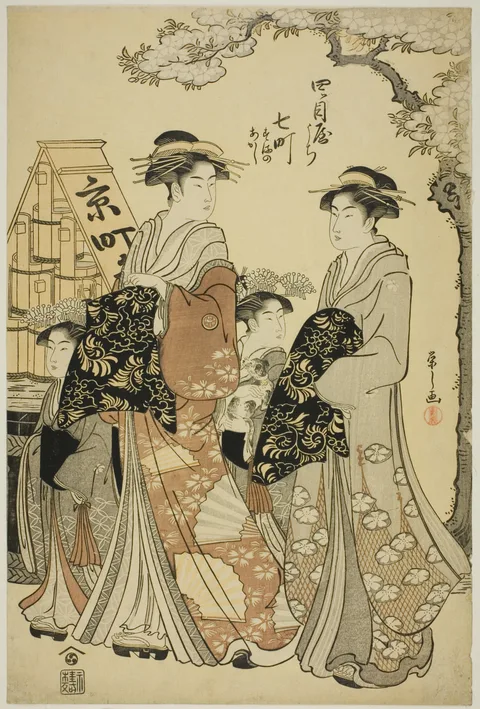
Walk these 13Chōbunsai Eishi
Nanamachi of the Yotsumeya with Attendants Sumano and Akashi, c. 1787
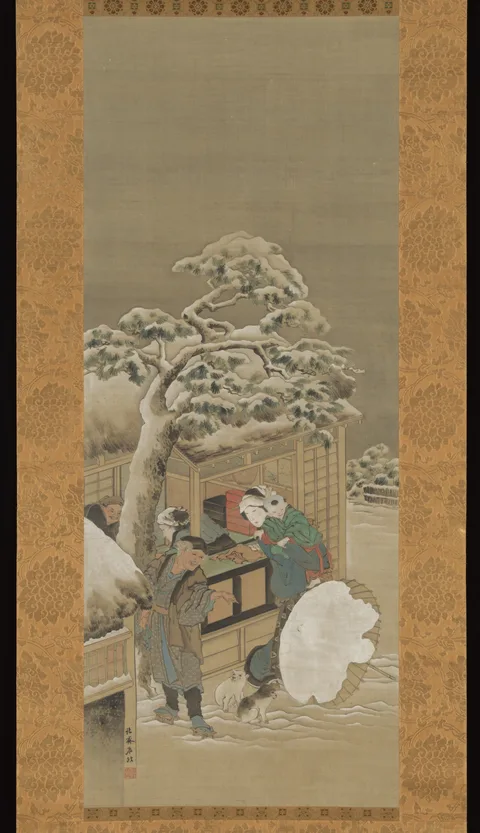
Katsushika Hokusai
In Front of a Shop, dated 1780
Katsushika Ōi
Operating on Guan Yu's Arm, 1840s