Chōbunsai Eishi
1756–1829 · Ukiyo-e, Japanese painting · 14 works
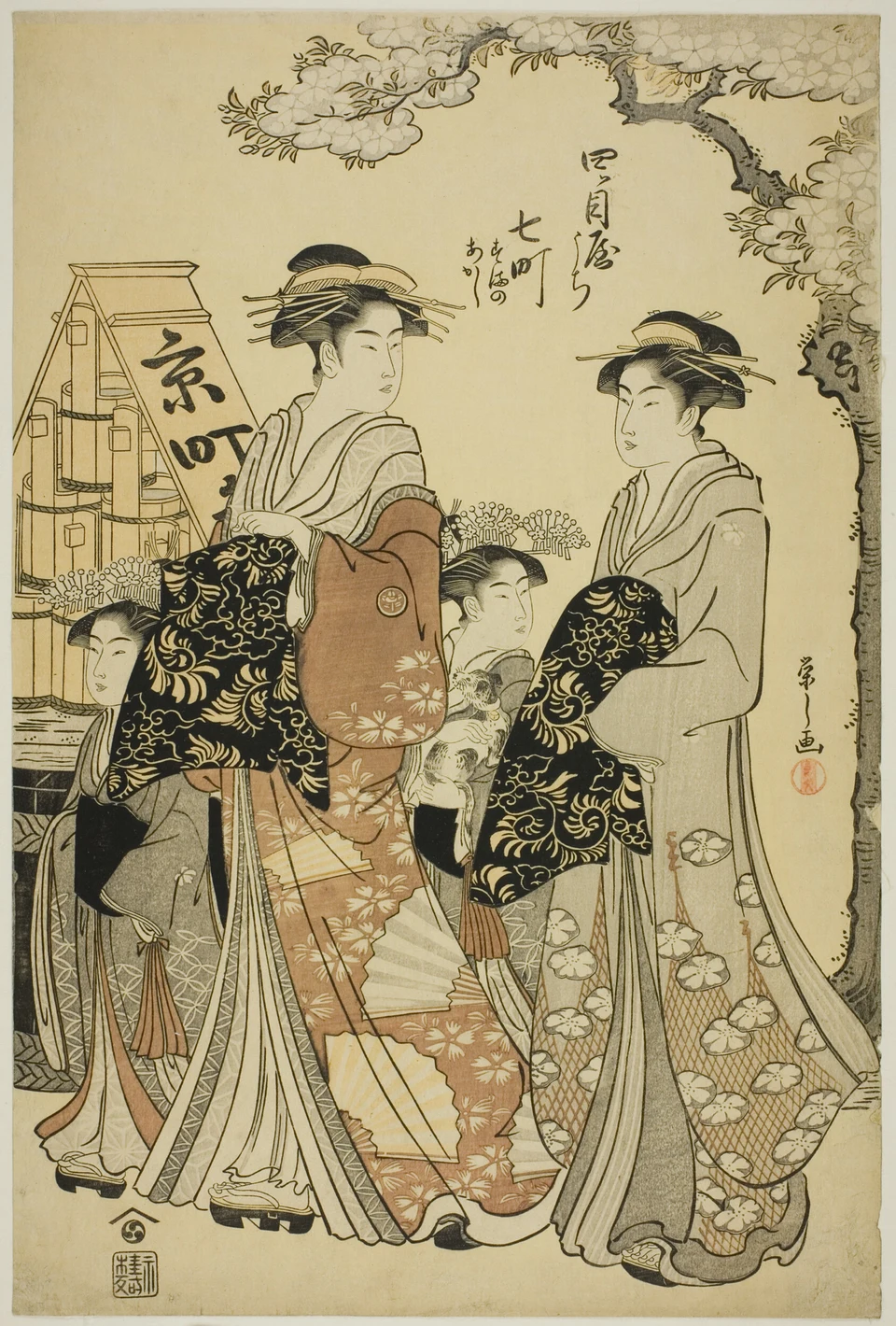
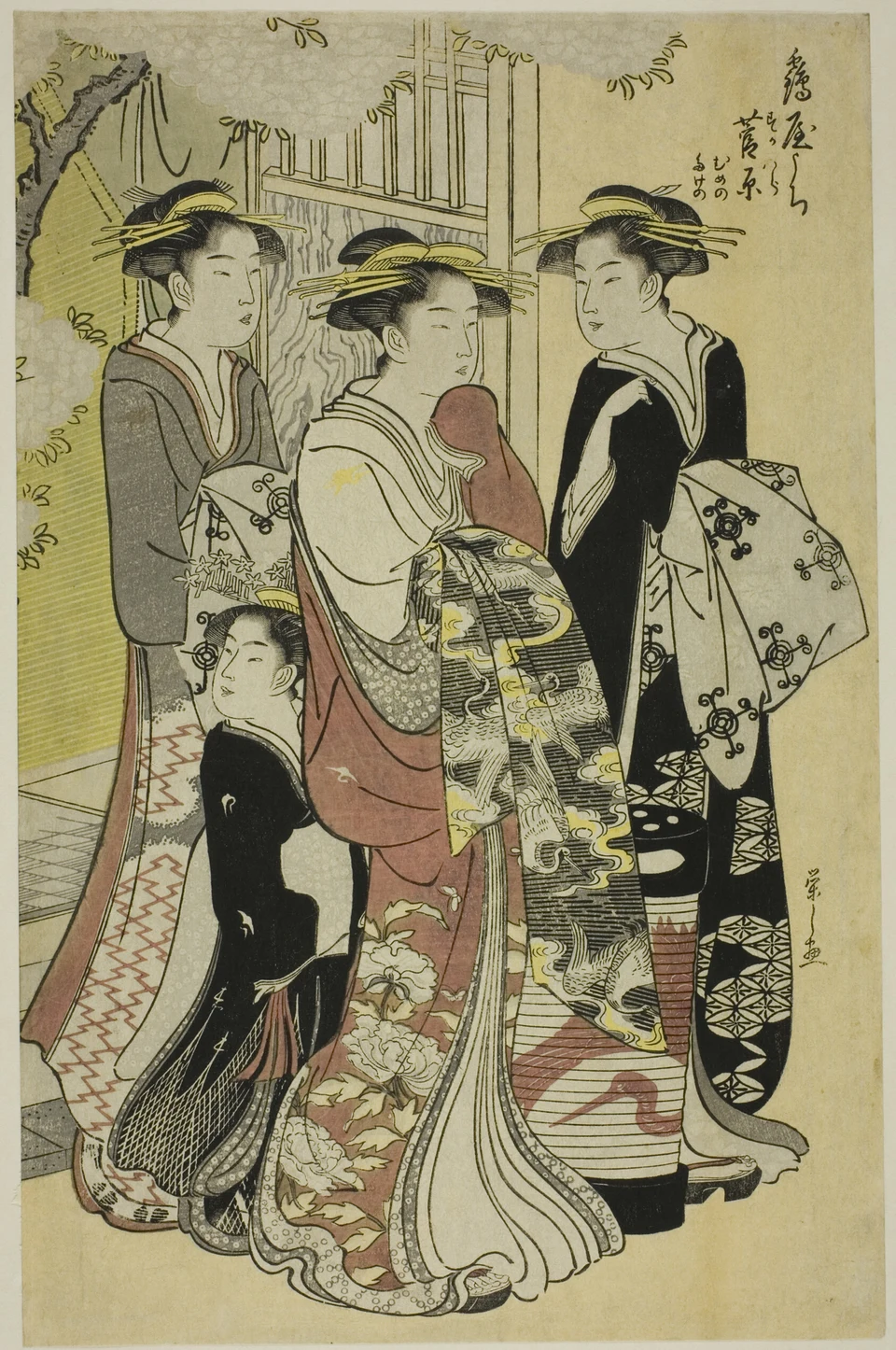
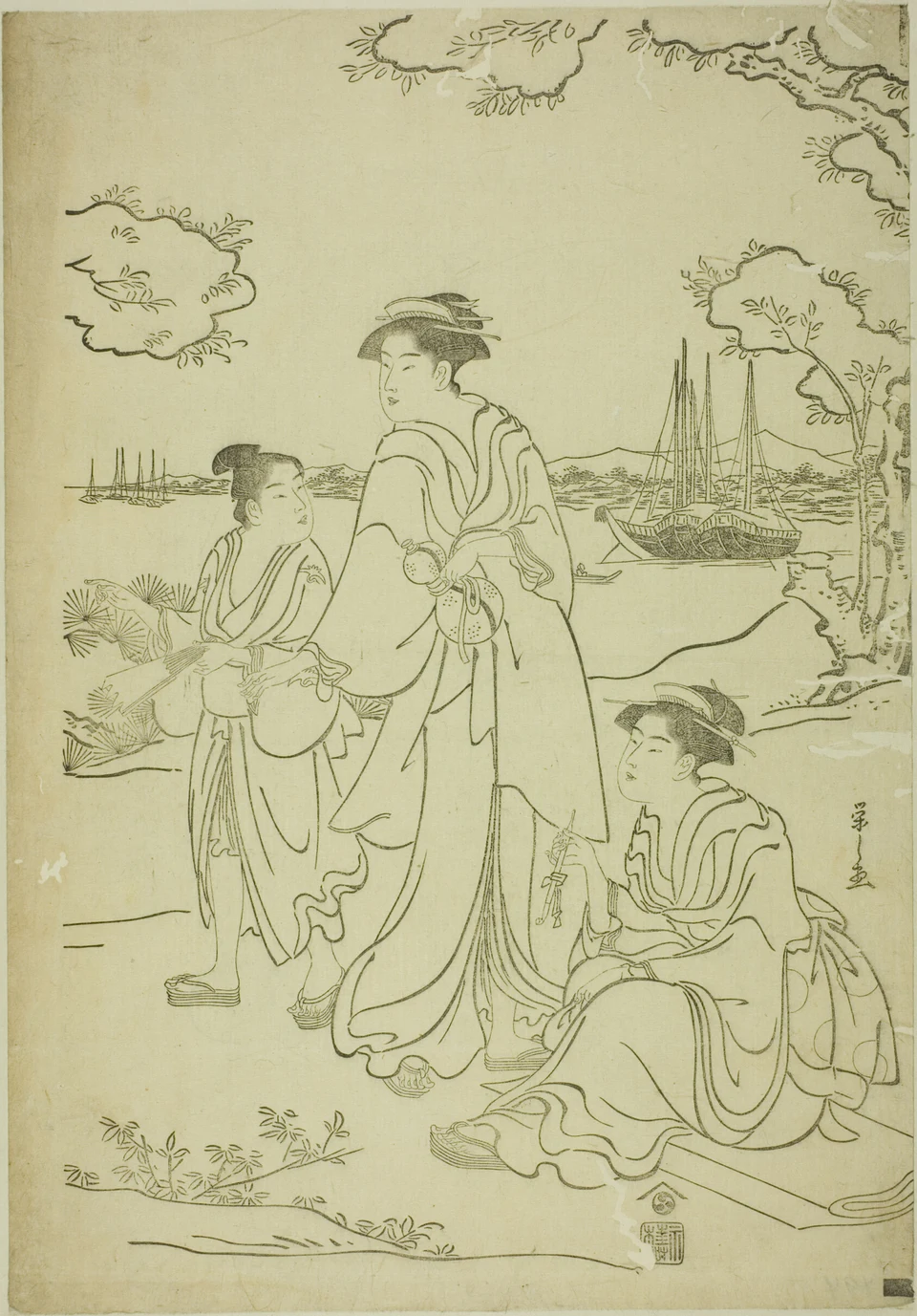
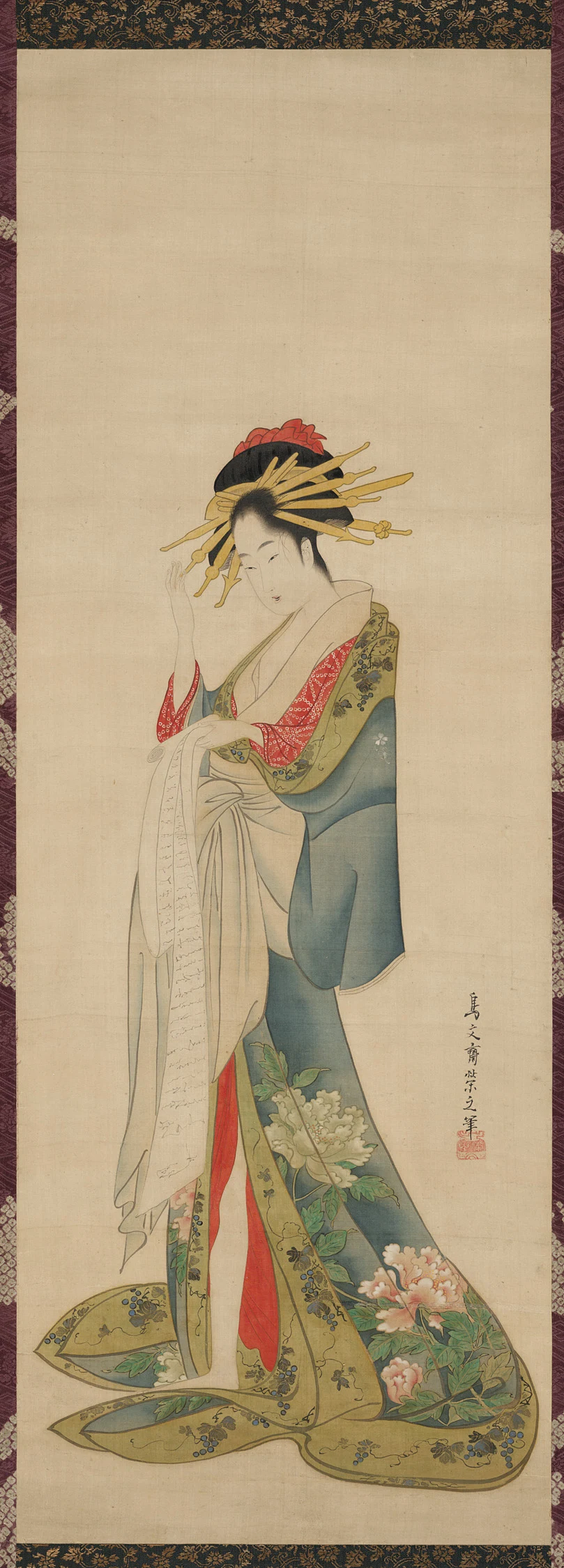
Chōbunsai Eishi brought the training of a samurai painter into the commercial world of Edo prints. He studied the Kanō tradition and served the shogun before turning to images of fashionable women and urban pleasures. His tall figures, controlled contours, and carefully arranged clothing give everyday gestures a measured elegance. In the later part of his career he concentrated increasingly on painting rather than print design. A small action, such as adjusting a hairpin or reading a letter, becomes an occasion to organize the whole figure and the space around it.
14 works · 1787–1822
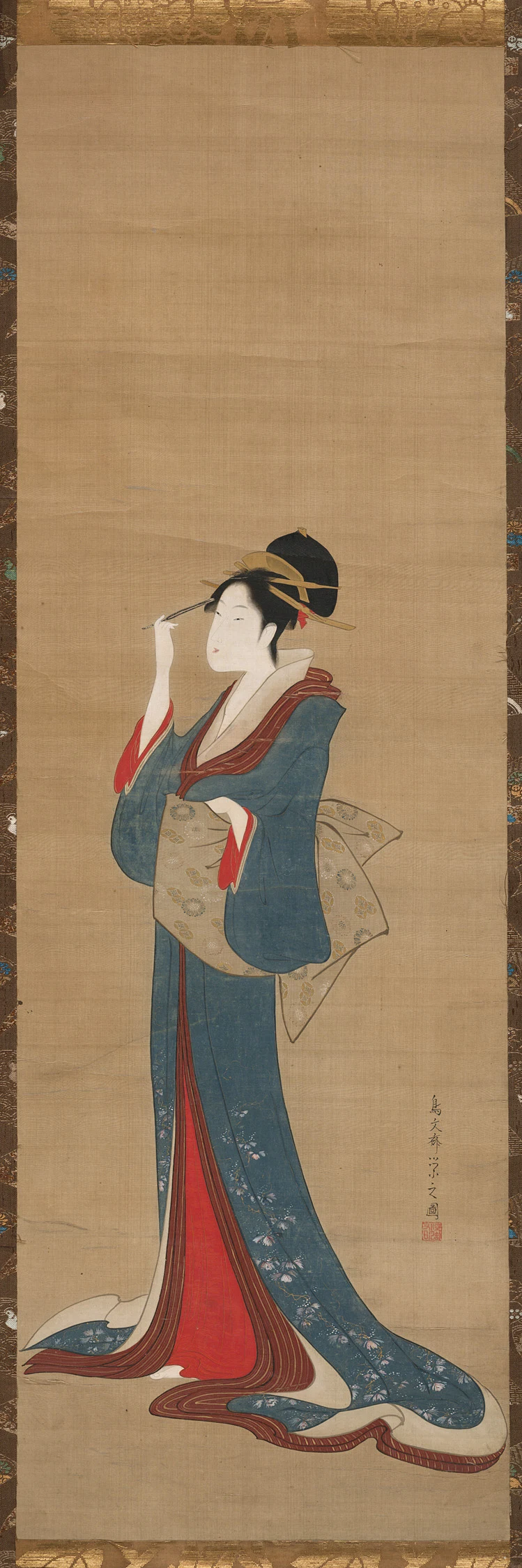
In Beauty Replacing Her Hairpin, follow the line from the raised arm through the clothing. Where does it change direction?
c. 1787 · 3 works
Walk these 3Around 1790 Edo’s print designers celebrated courtesans and kabuki actors as stars. Chōbunsai Eishi, a samurai who left his post as an official painter, drew courtesans with their attendants. Tōshūsai Sharaku, active for about ten months, and Utagawa Toyokuni I portrayed actors. The courtesans of the Yoshiwara were exploited in a system of forced and strictly controlled prostitution.
In the museum: Ukiyo-e room · 1 work
1788–1790 · 7 works
Walk these 7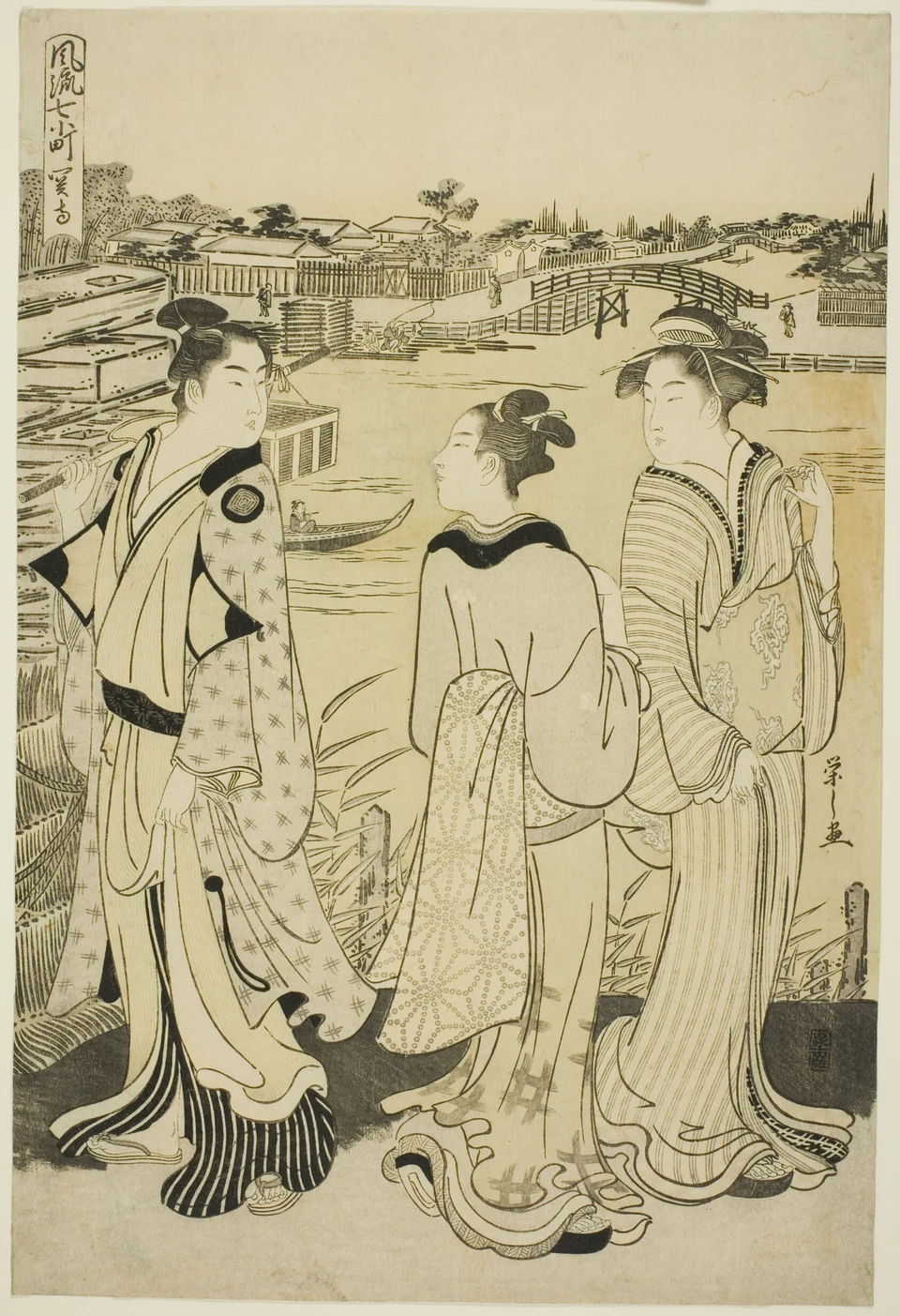 Ono no Komachi at Seki Temple, from the series The Fashionable Seven Komachi (Furyu nana Komachi)Edo period (1615–1868), about 1788
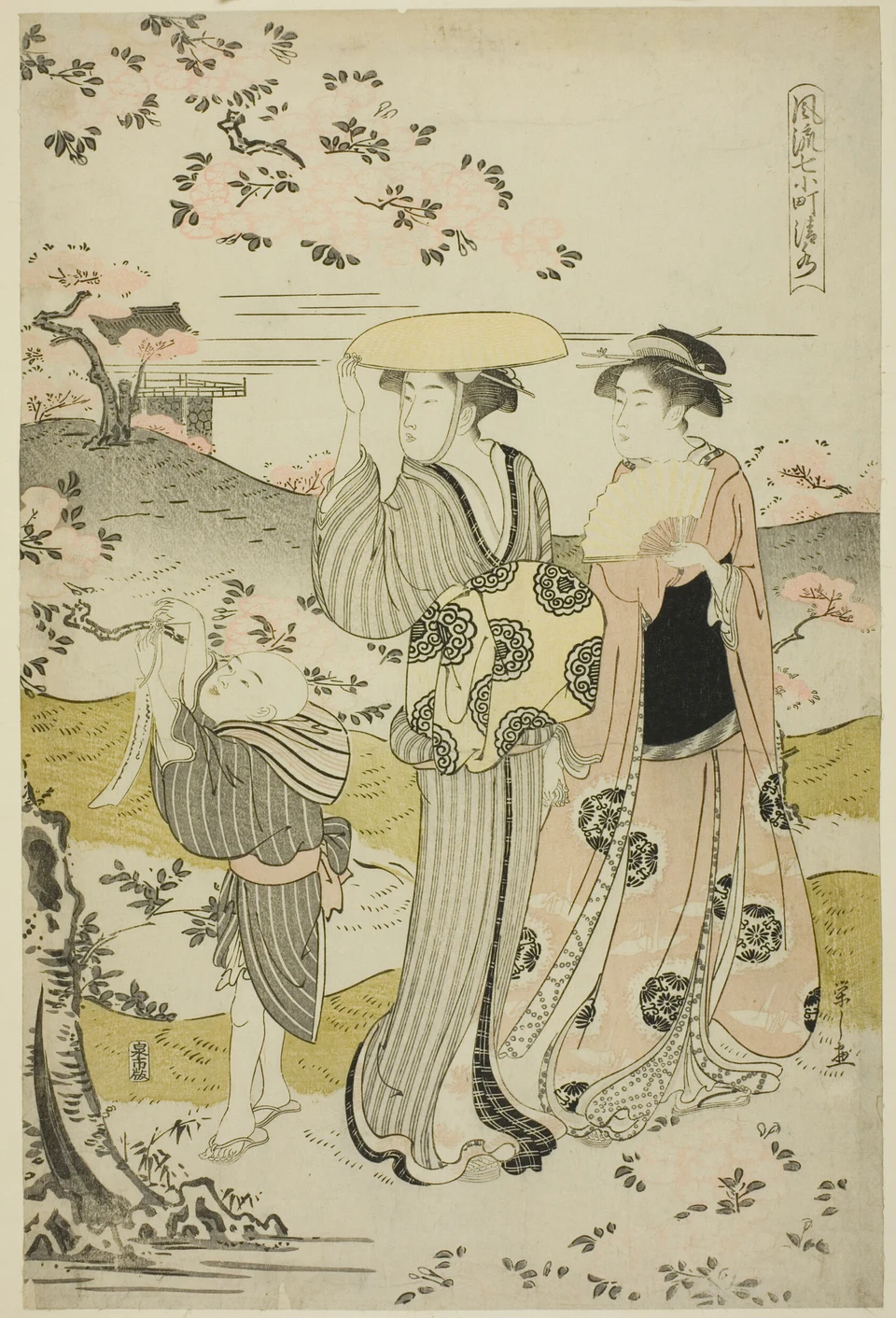 Ono no Komachi Visiting Kiyomizu Temple, from the series The Fashionable Seven Komachi (Furyu nana Komachi)Edo period (1615–1868), about 1788
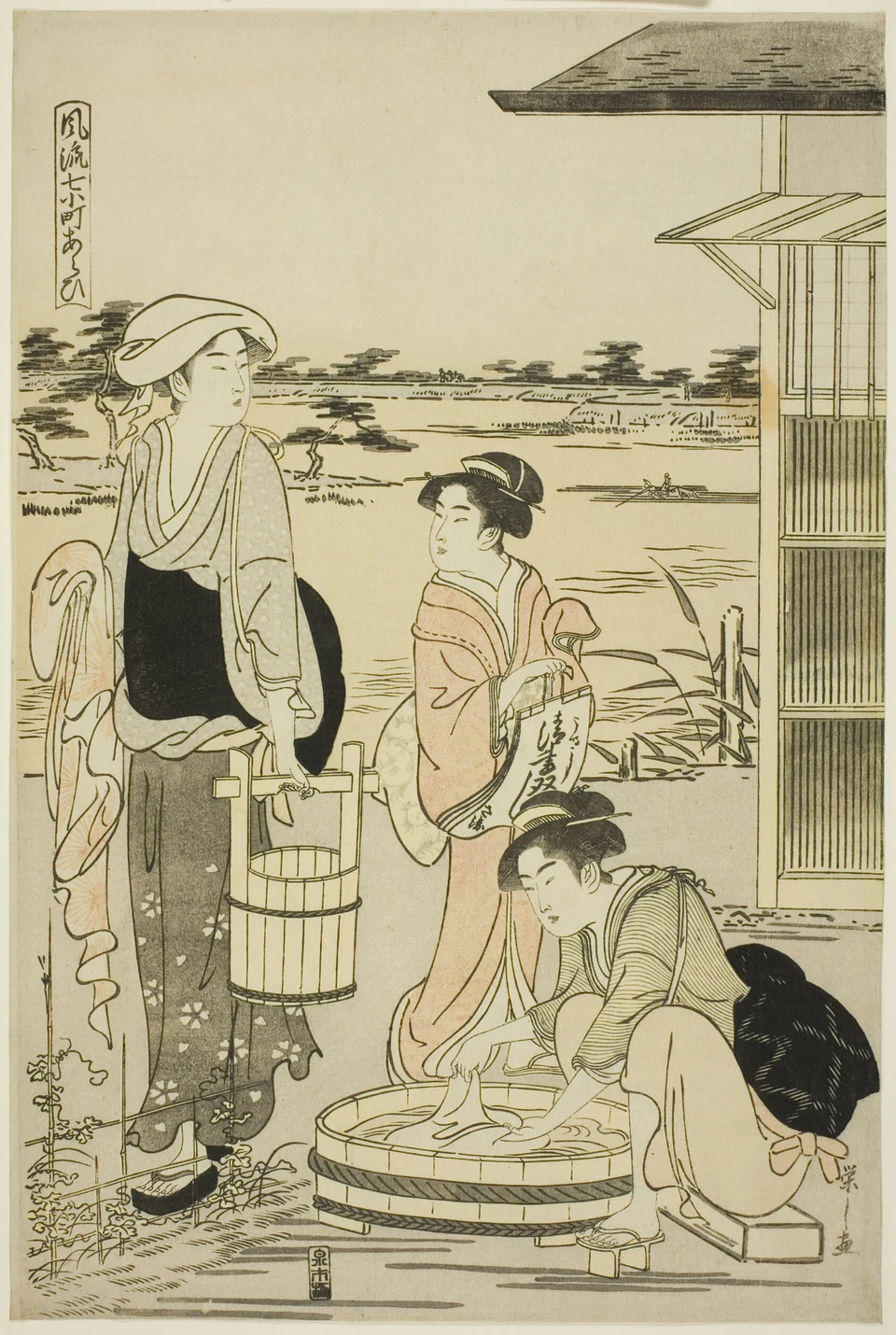 Ono no Komachi Washing the Copybook, from the series The Fashionable Seven Komachi (Furyu nana Komachi)Edo period (1615–1868), about 1788
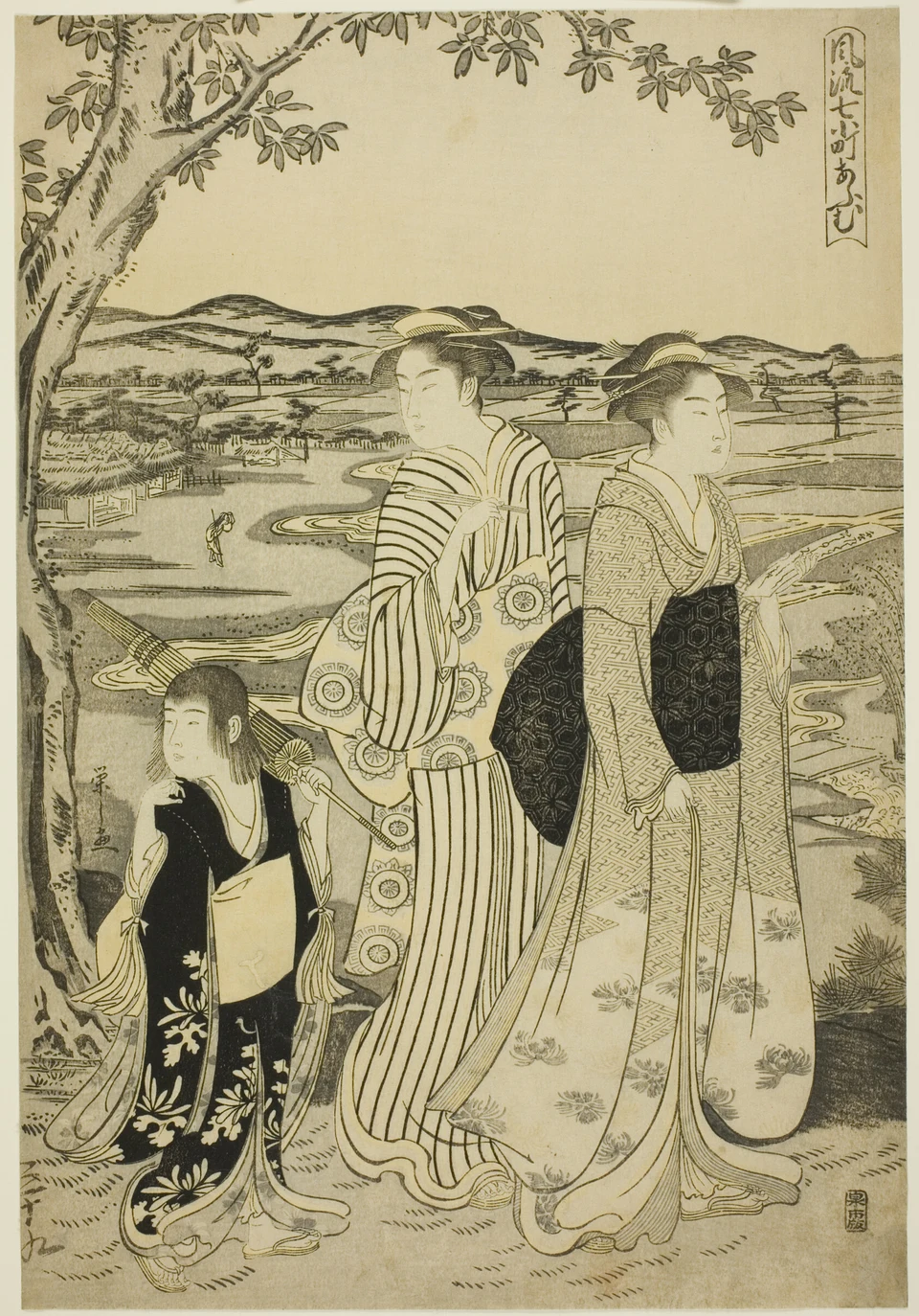 Parrot Komachi, from the series The Fashionable Seven Komachi (Furyu nana Komachi)c. 1788
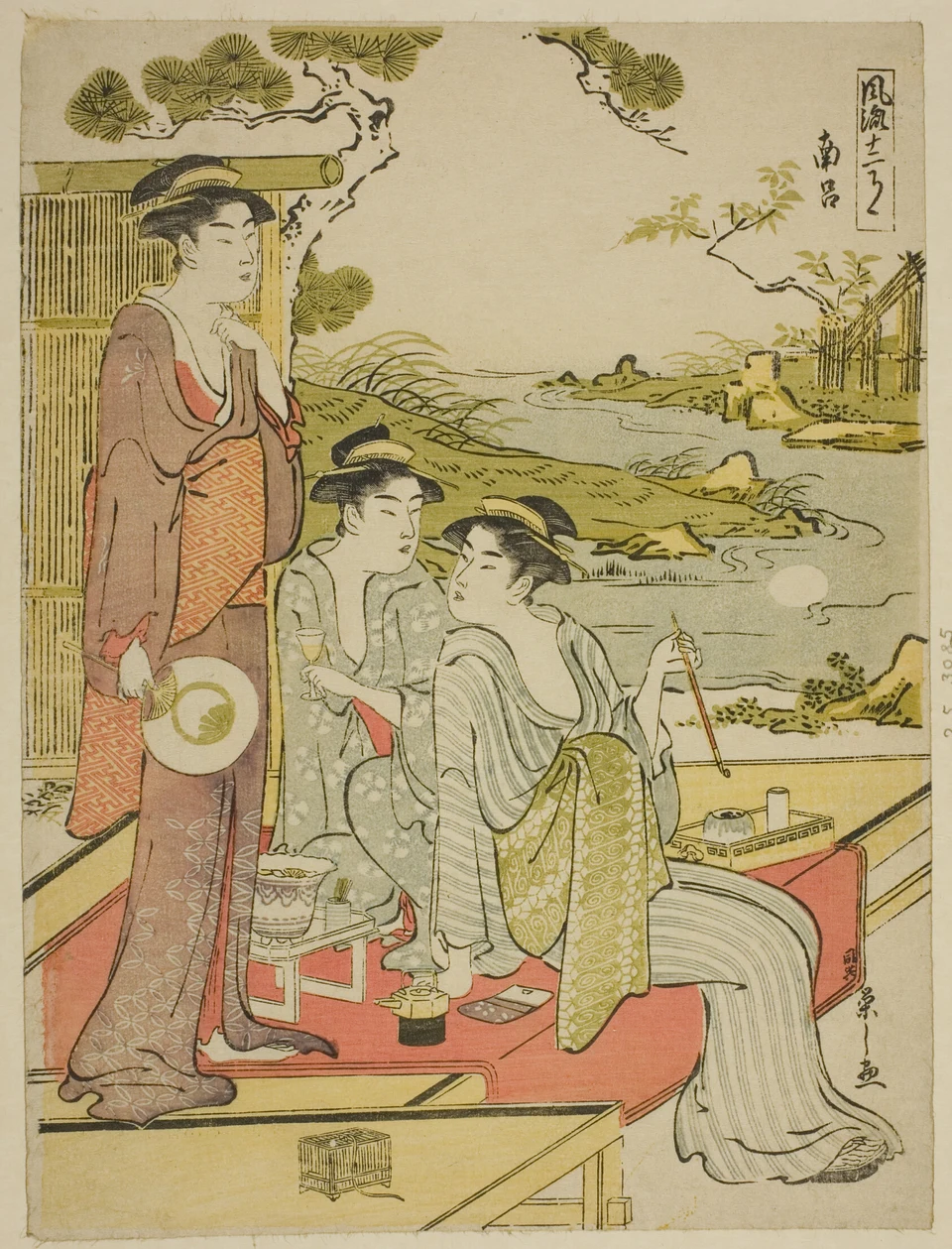 The Eighth Month (Nanryo), from the series a Calendar of Elegance (Furyu junikagetsu)c. 1788
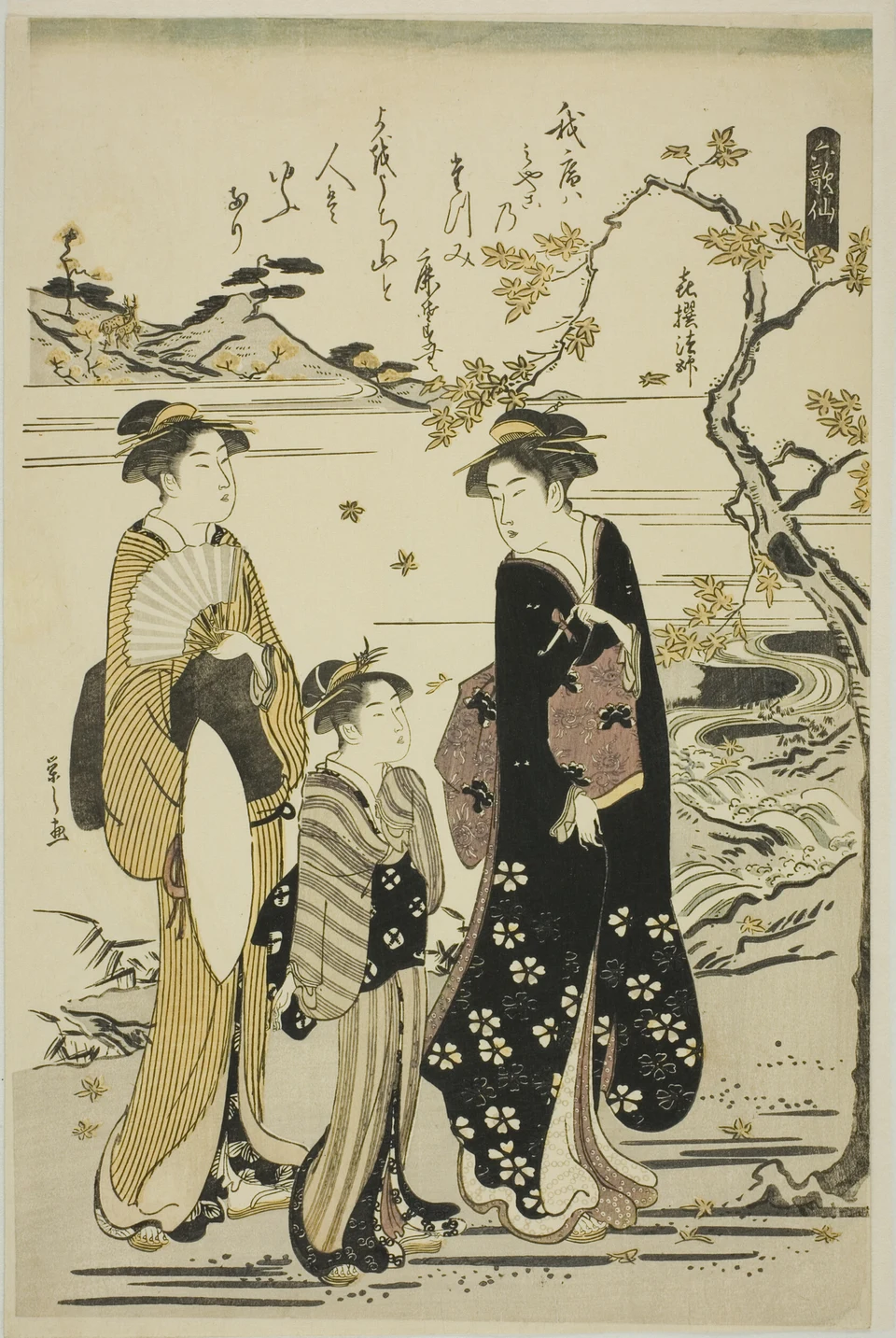 The Priest Kisen, from the series "Six Immortal Poets (Rokkasen)"c. 1789/90
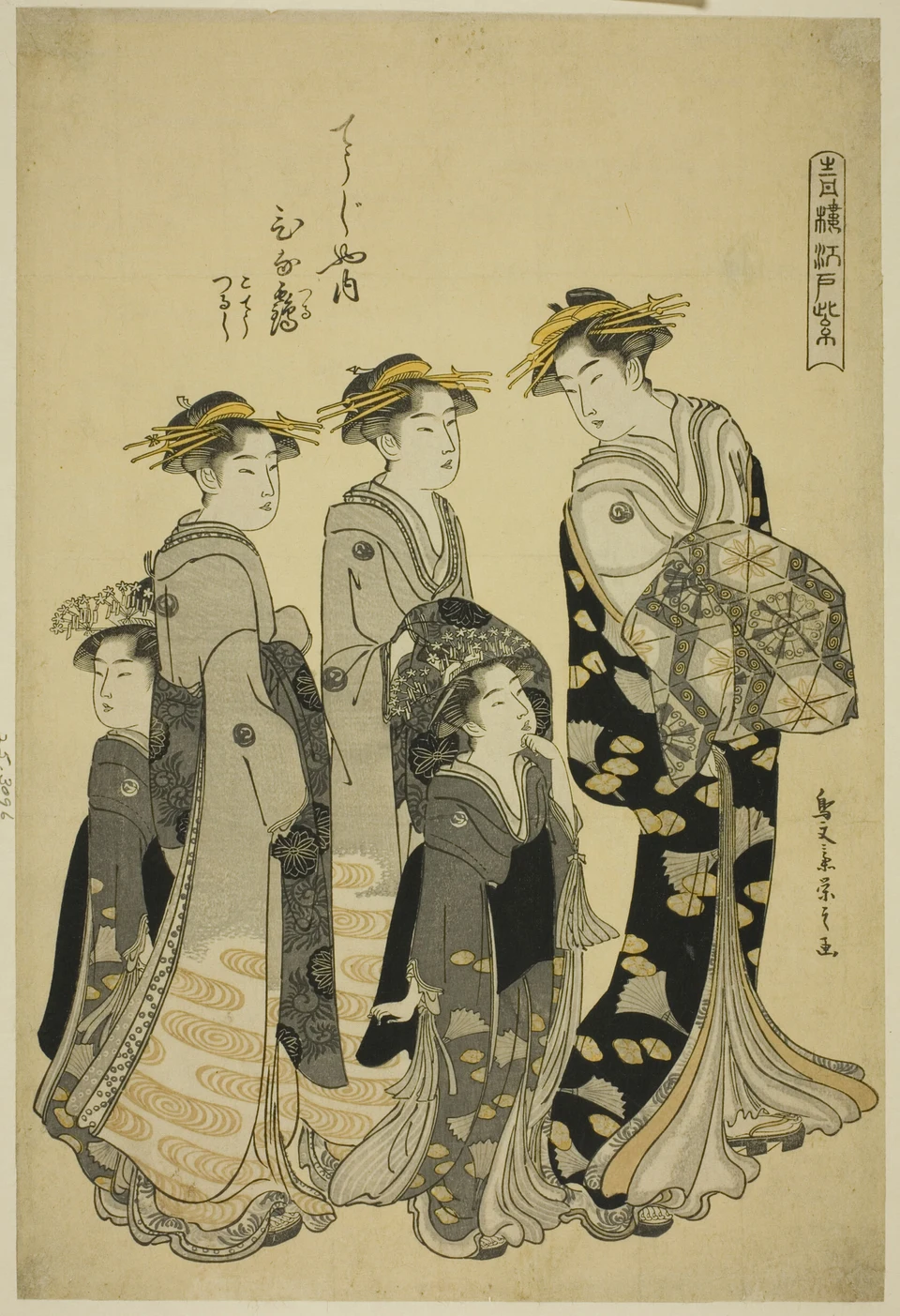 The Courtesan Hinazuru of the Chojiya with her Attendants, from the series "Edo Purple in the Pleasure Quarters (Seiro Edo murasaki)"c. 1790
1798–1822 · 4 works
Walk these 4In the museum: Ukiyo-e room · 1 work
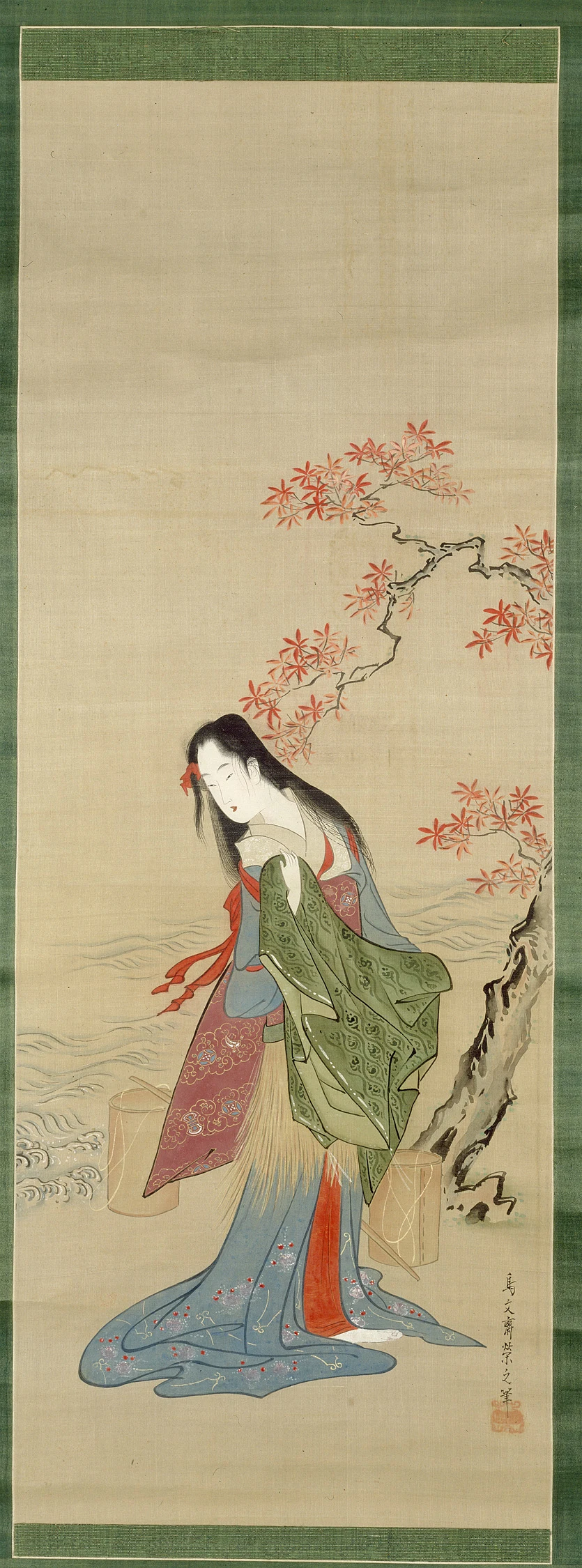
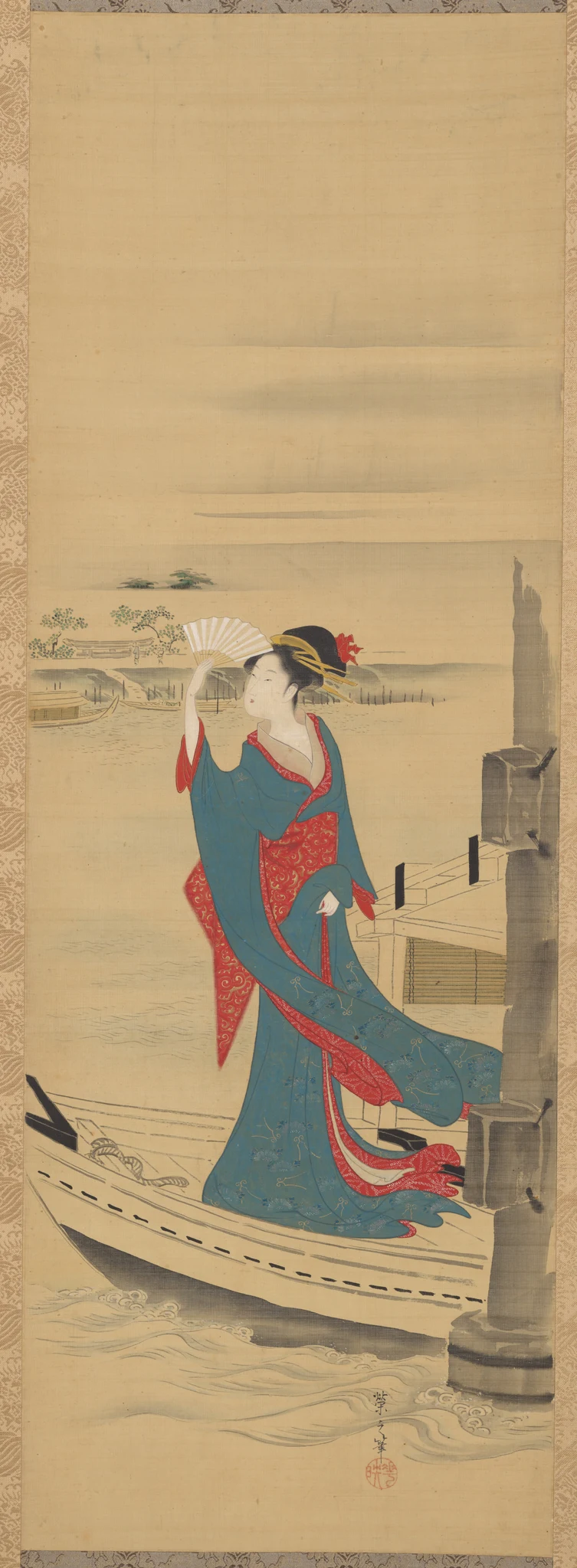
Ukiyo-e · 2 works
Walk these 2Around 1790 Edo’s print designers celebrated courtesans and kabuki actors as stars. Chōbunsai Eishi, a samurai who left his post as an official painter, drew courtesans with their attendants. Tōshūsai Sharaku, active for about ten months, and Utagawa Toyokuni I portrayed actors. The courtesans of the Yoshiwara were exploited in a system of forced and strictly controlled prostitution.
In the museum: Ukiyo-e room · 2 works
Japanese painting · 1 work
Walk this workOther works · 11 works
Walk these 11Katsushika Hokusai
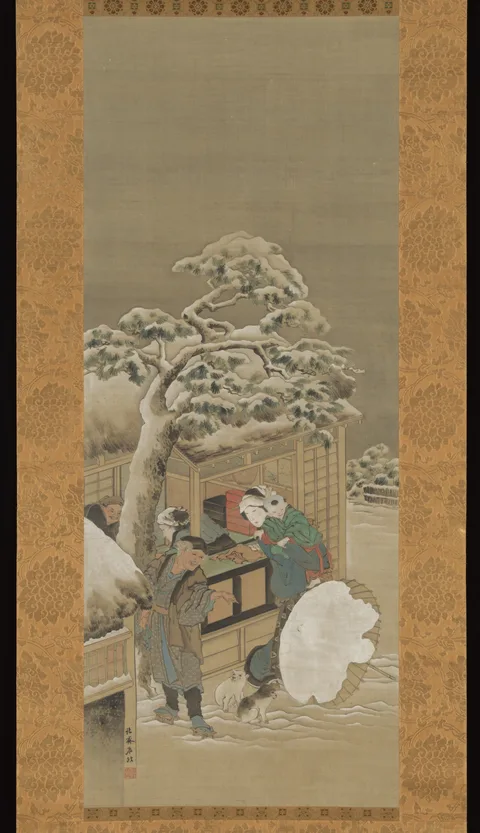
In Front of a Shop, dated 1780
Katsushika Ōi
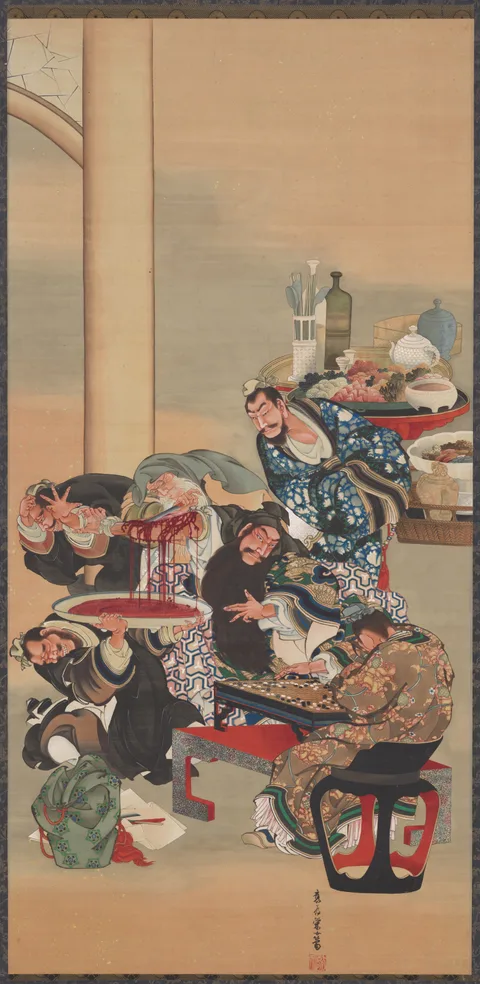
Operating on Guan Yu's Arm, 1840s
Utagawa Hiroshige
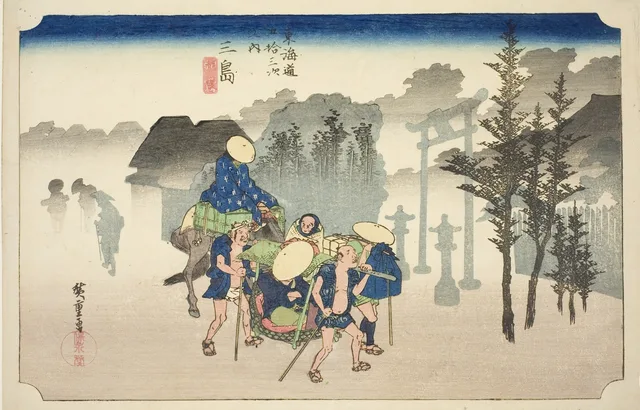
Mishima: Morning Mist (Mishima, asagiri), from the series "Fifty-three Stations of the Tokaido Road (Tokaido gojusan tsugi no uchi)," also known as the Hoeido Tokaido, c. 1833/34