Suzuki Harunobu
c. 1725–1770 · Ukiyo-e · 15 works
Suzuki Harunobu helped establish the richly colored woodblock prints known as nishiki-e in eighteenth-century Japan. His designs often bring young figures into quiet encounters, seasonal scenes, and settings that echo poems or older stories. Small choices carry much of the feeling: a shared umbrella, patterned fabric, or a contrast between dark and light robes. The printed surface also matters. In some impressions, embossing adds texture without ink, rewarding a closer look beyond the colors that first catch the eye.
15 works · 1750–1770
Notice how clothing patterns and broad, plain areas balance one another. What does a small gesture suggest about the figures’ relationship?
1750–1761 · 3 works
Walk these 3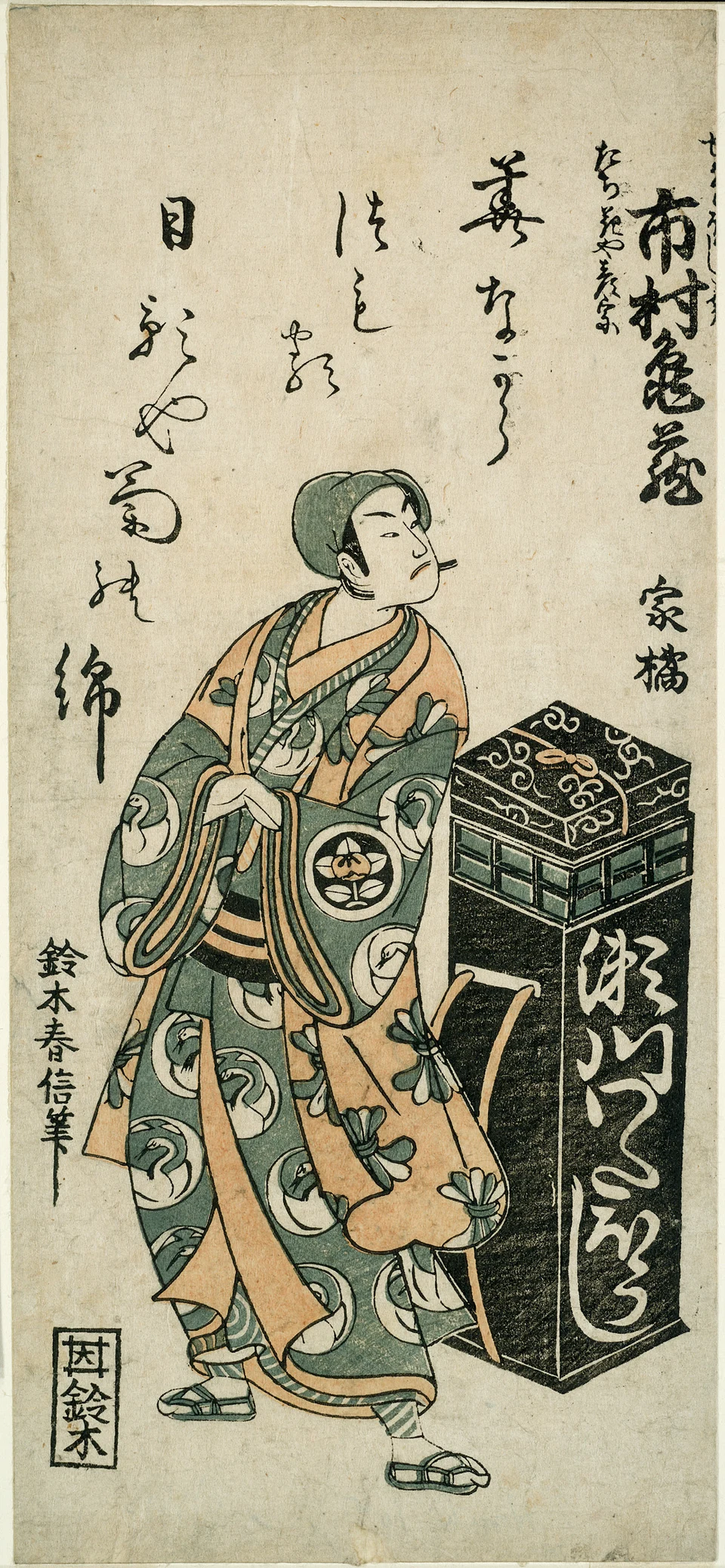
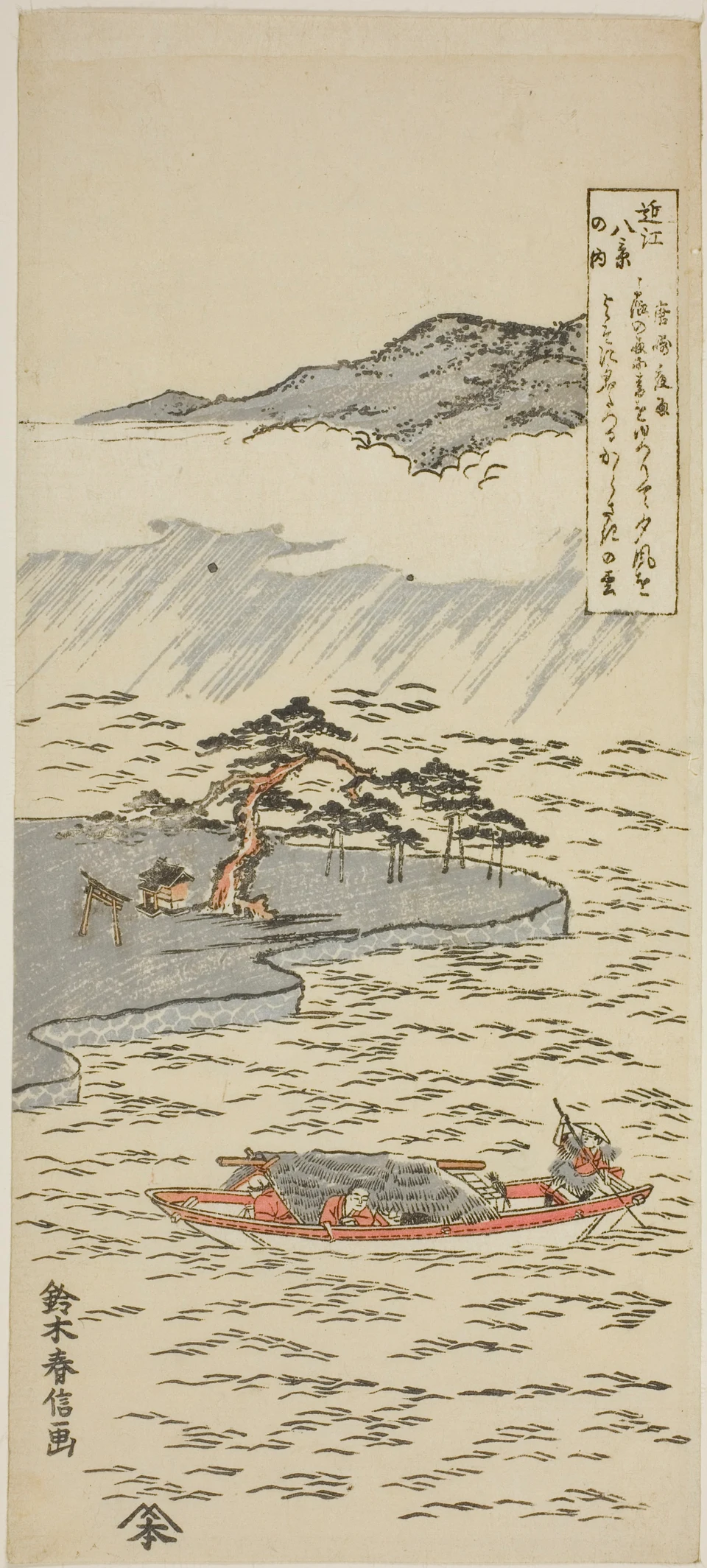
1764–1765 · 7 works
Walk these 7In the museum: Ukiyo-e room · 2 works
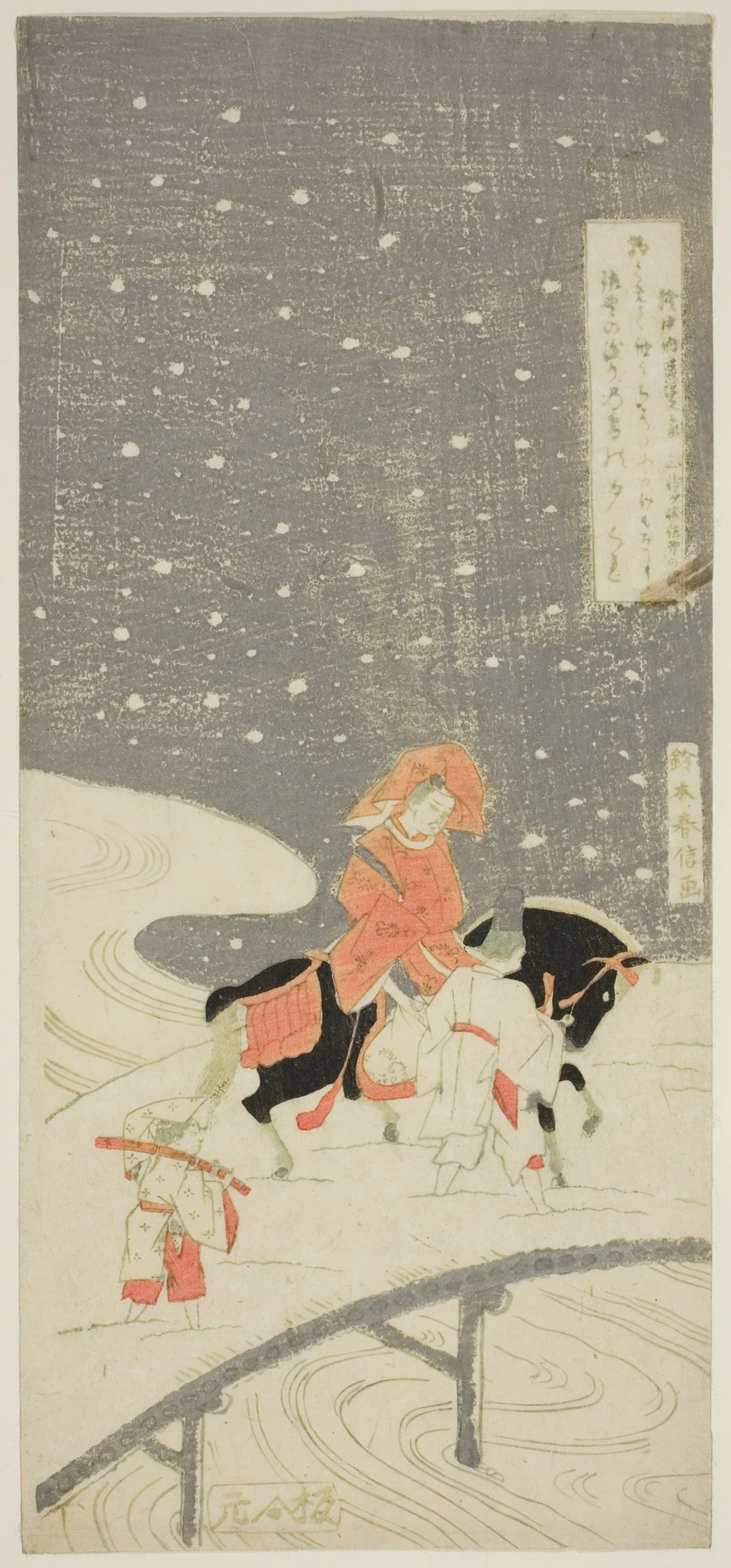
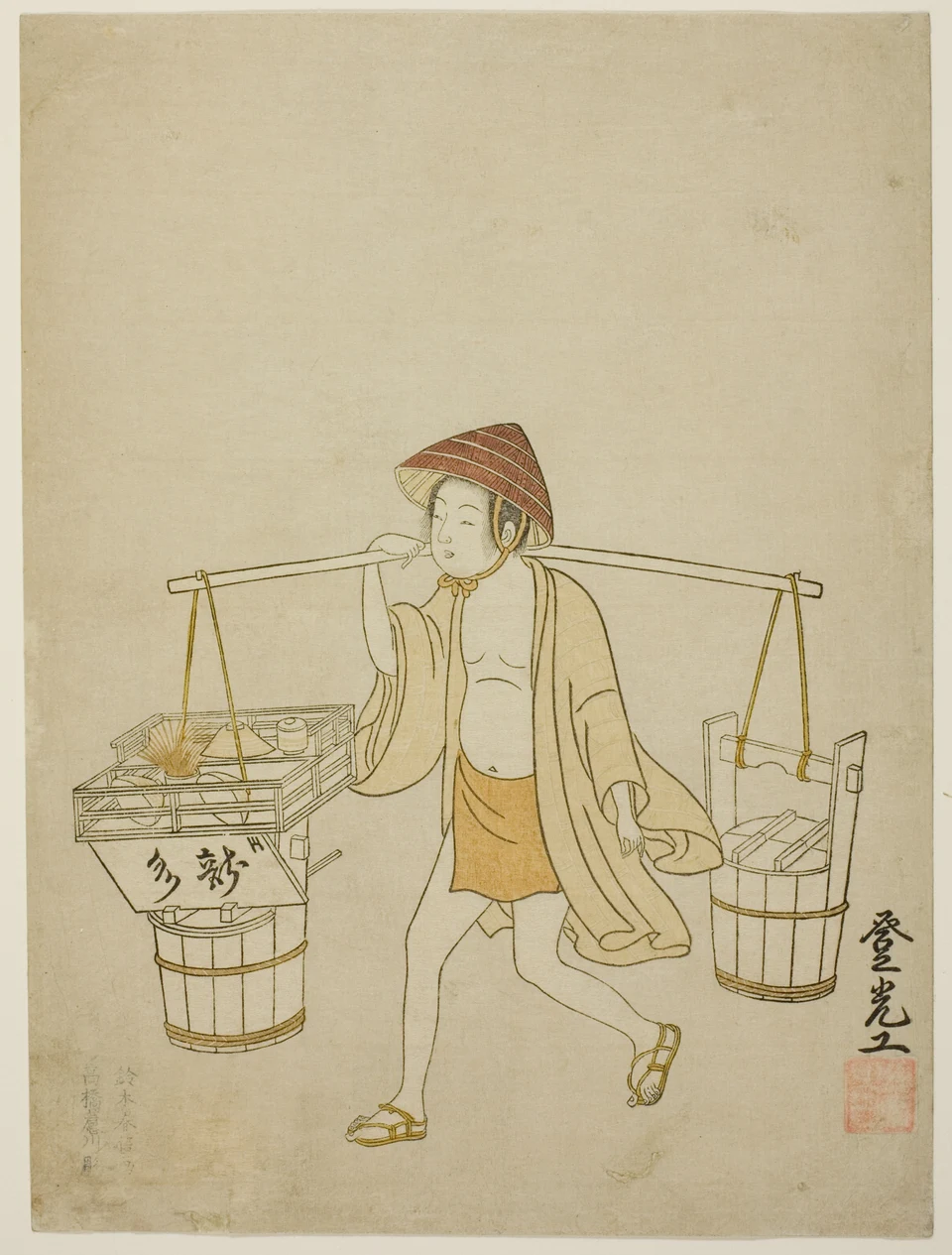
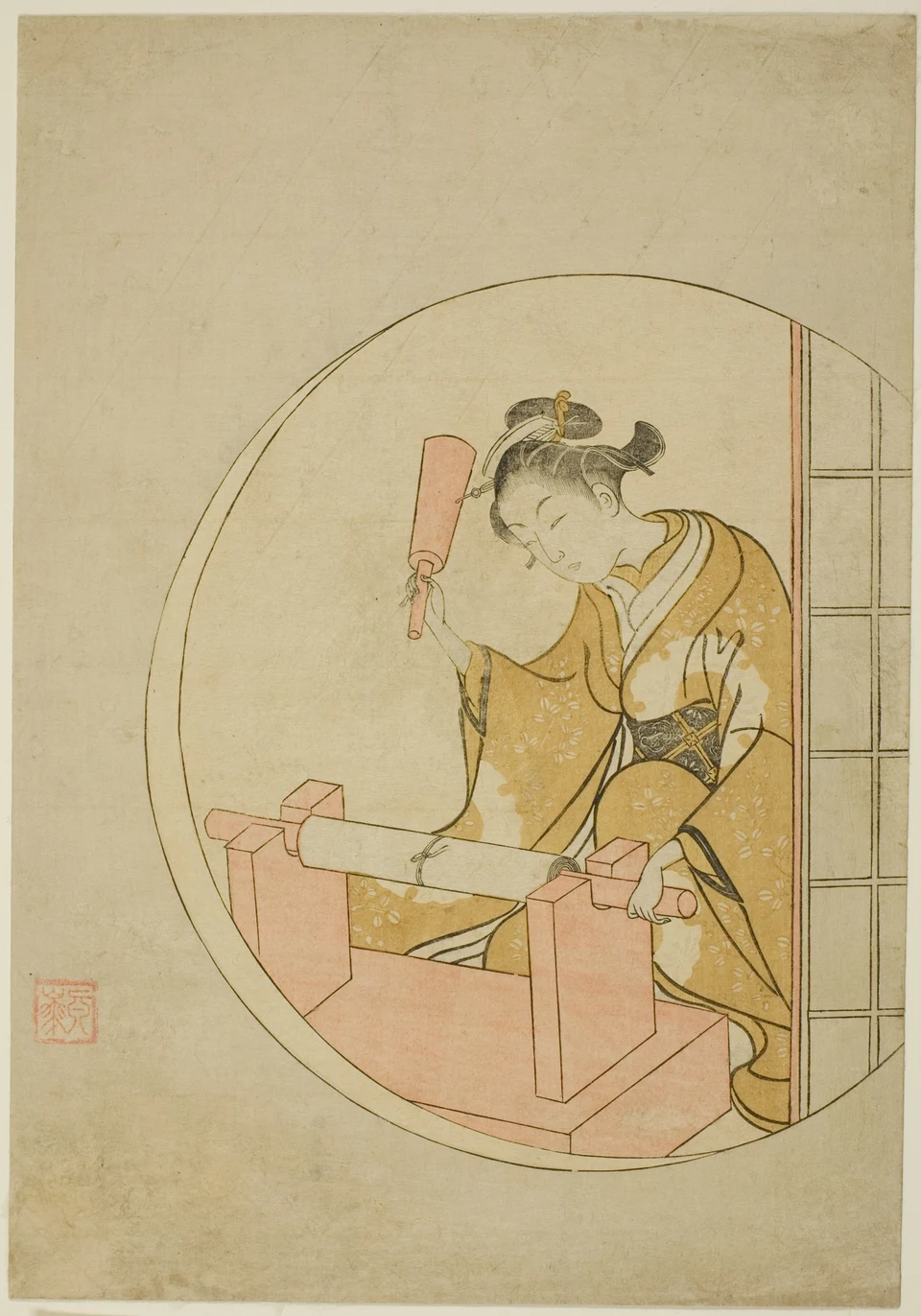
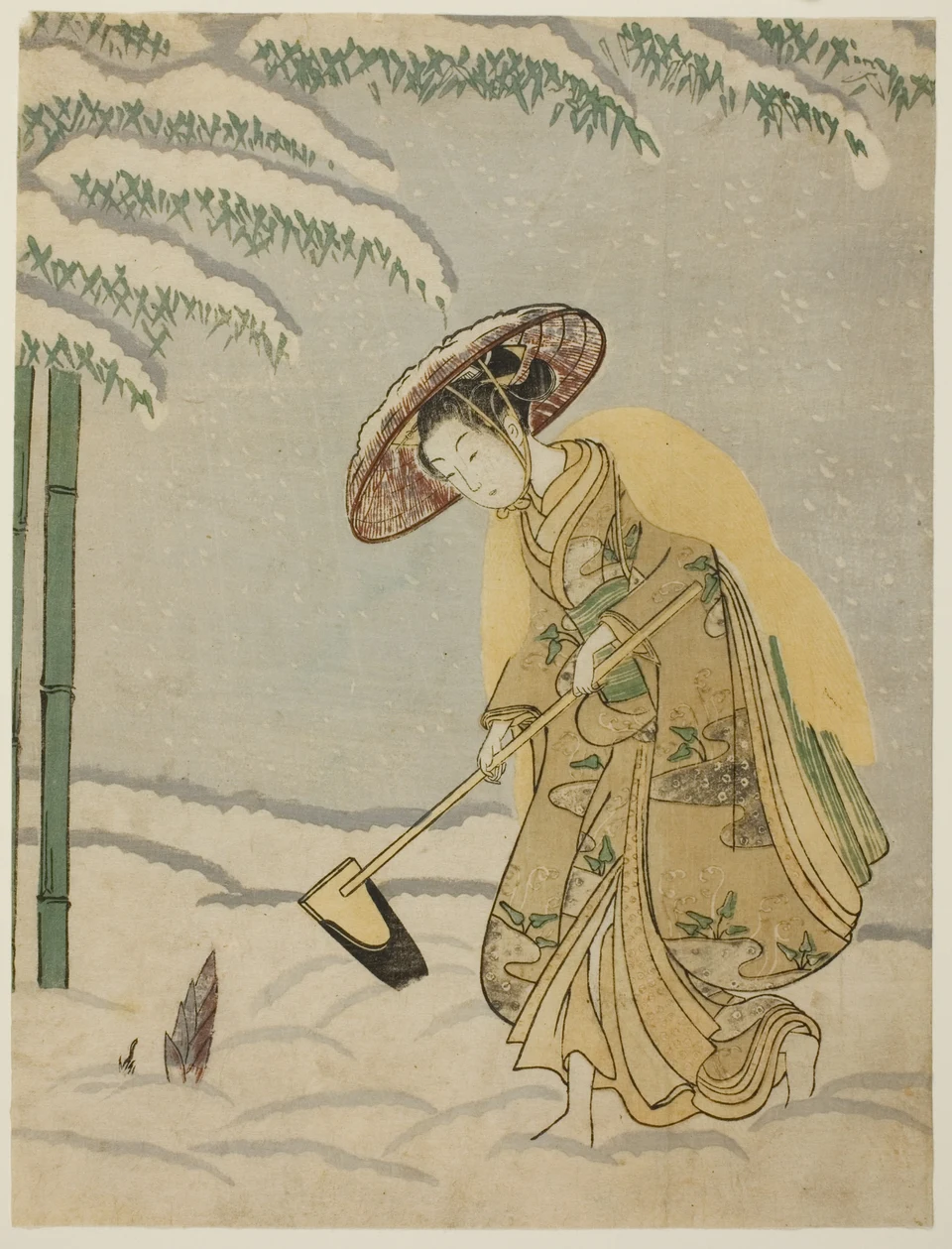
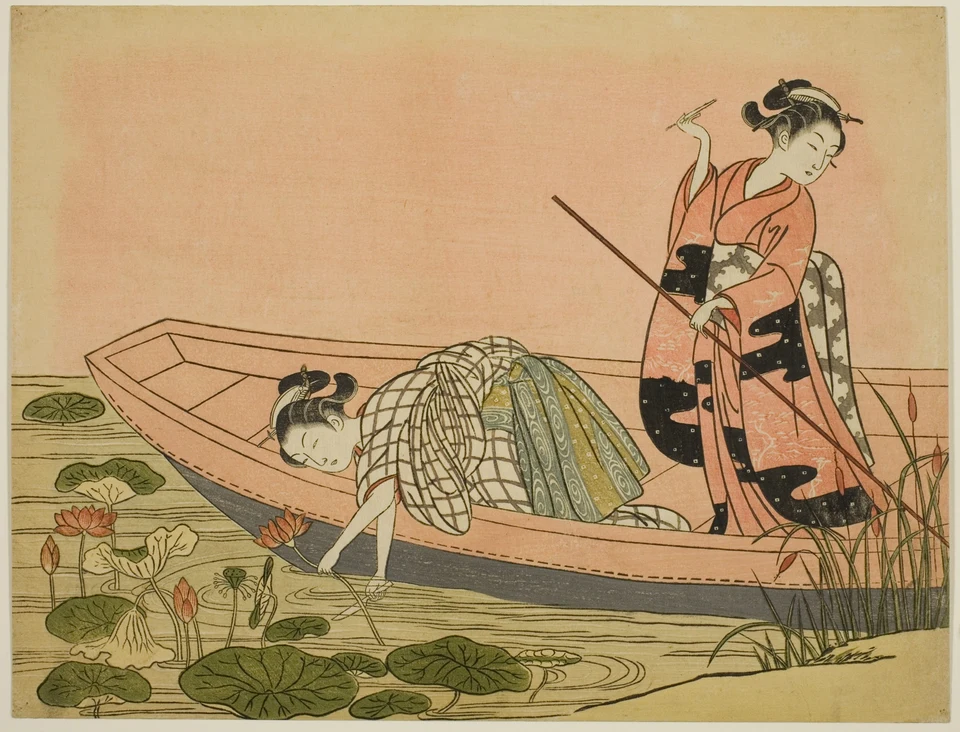
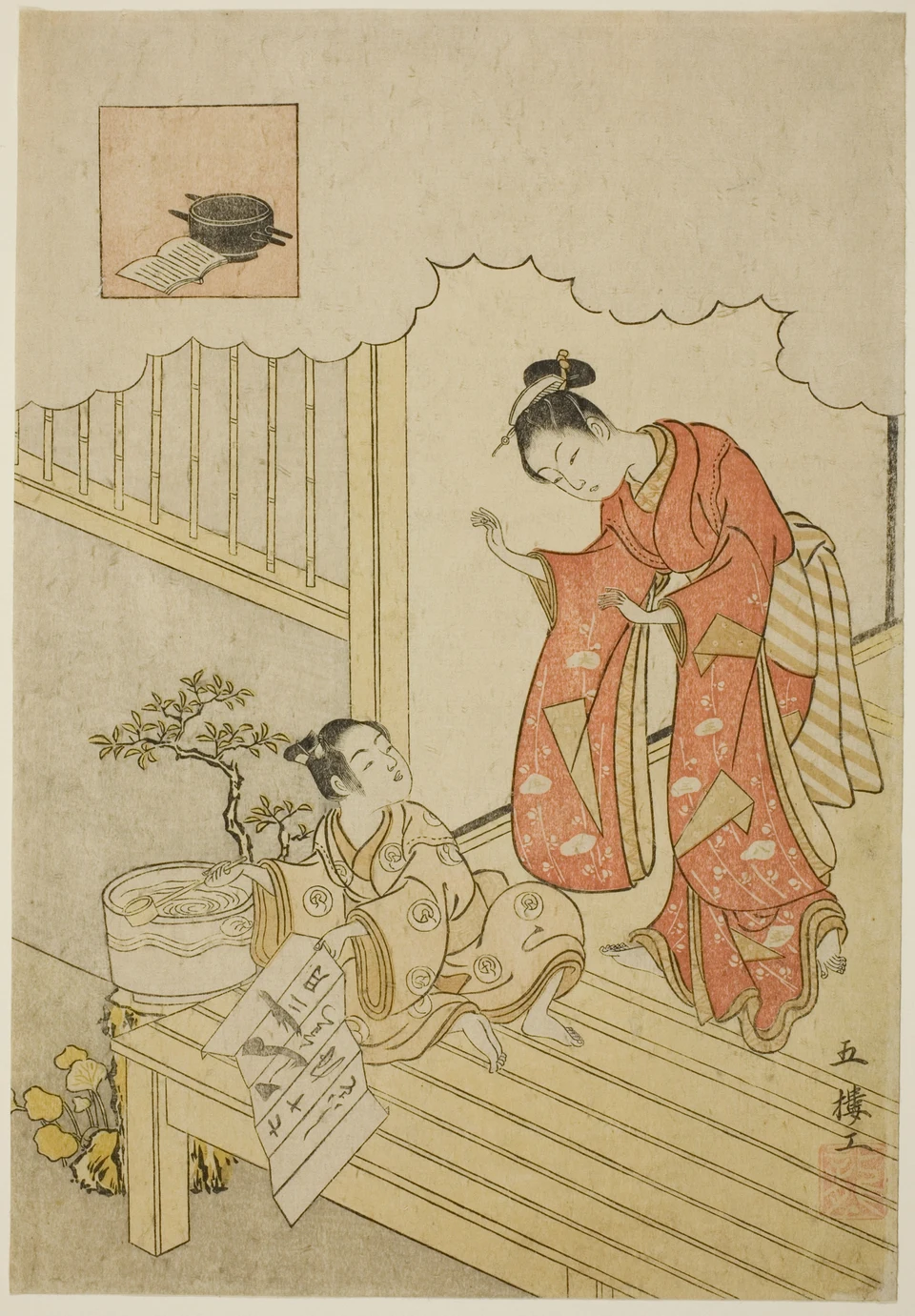
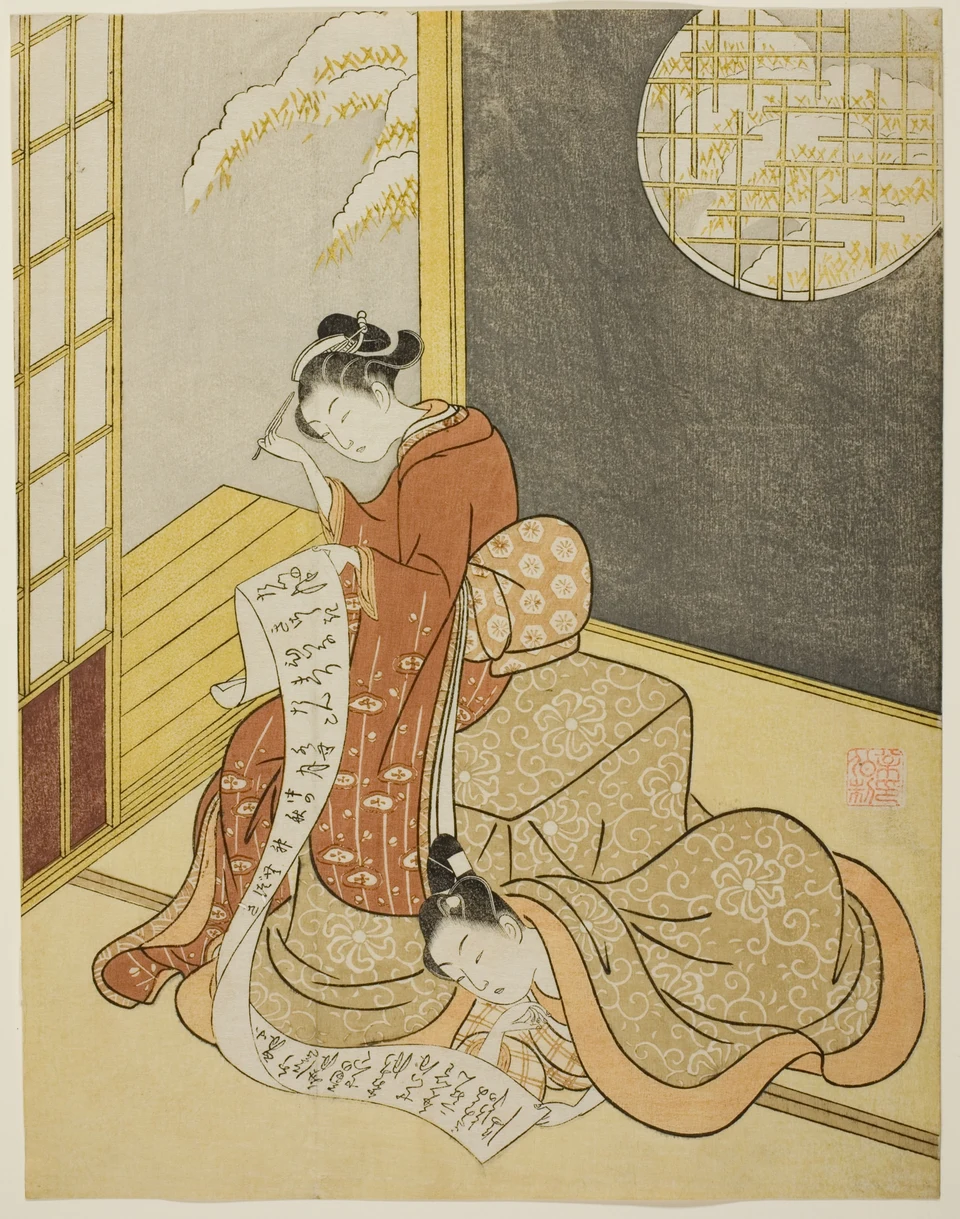
1766–1770 · 5 works
Walk these 5Suzuki Harunobu is generally credited as the first Japanese printmaker to give each color its own block. Such full-color prints, called nishiki-e or brocade pictures, were perfected in 1765, and his finest work dates from the last five years of his life. Here one hides a calendar, another a visual riddle, and two are tall pillar prints.
In the museum: Ukiyo-e room · 3 works
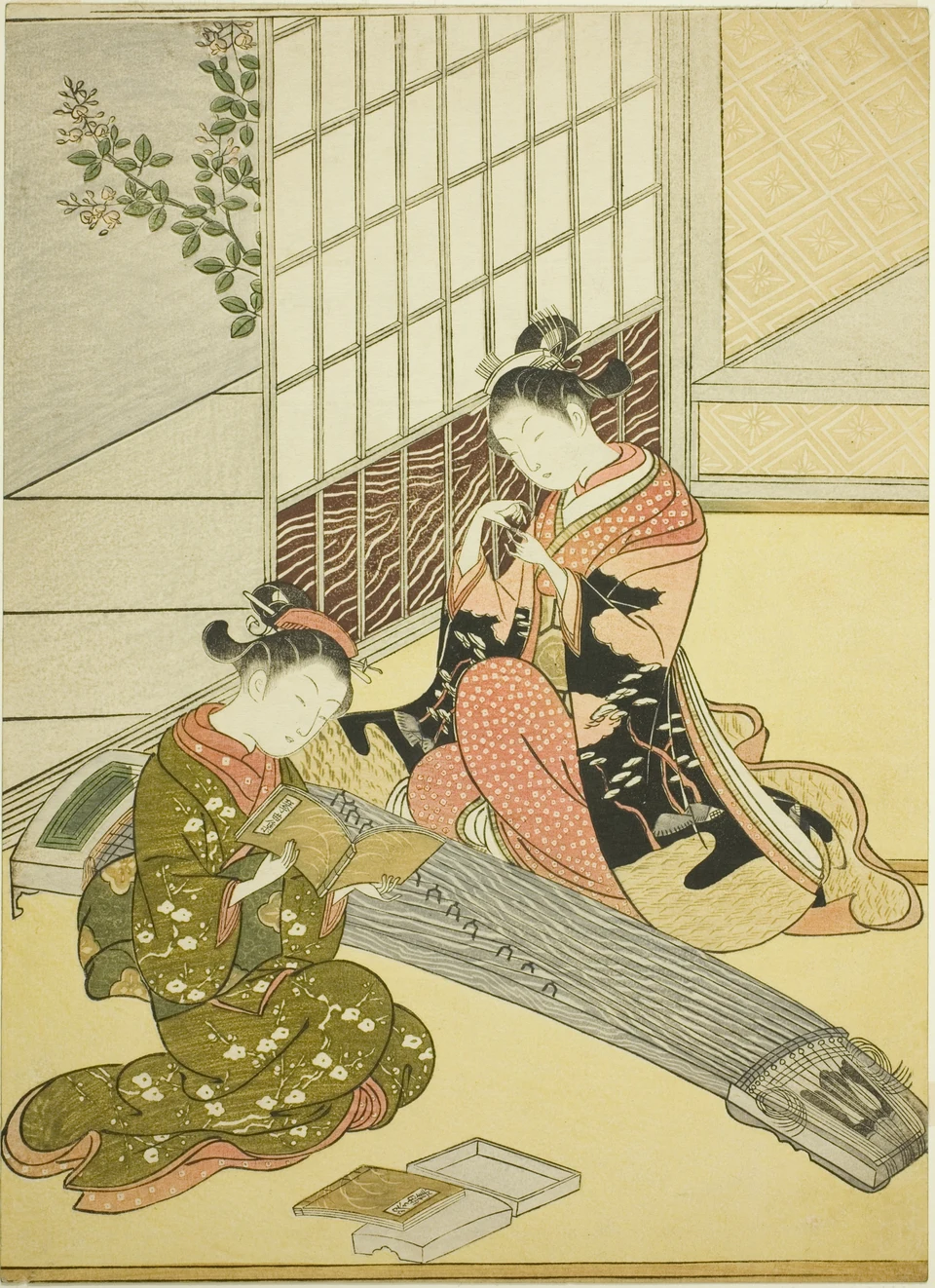 Descending Geese of the Koto Bridges (Kotoji no rakugan), from the series "Eight Views of the Parlor (Zashiki hakkei)"c. 1766
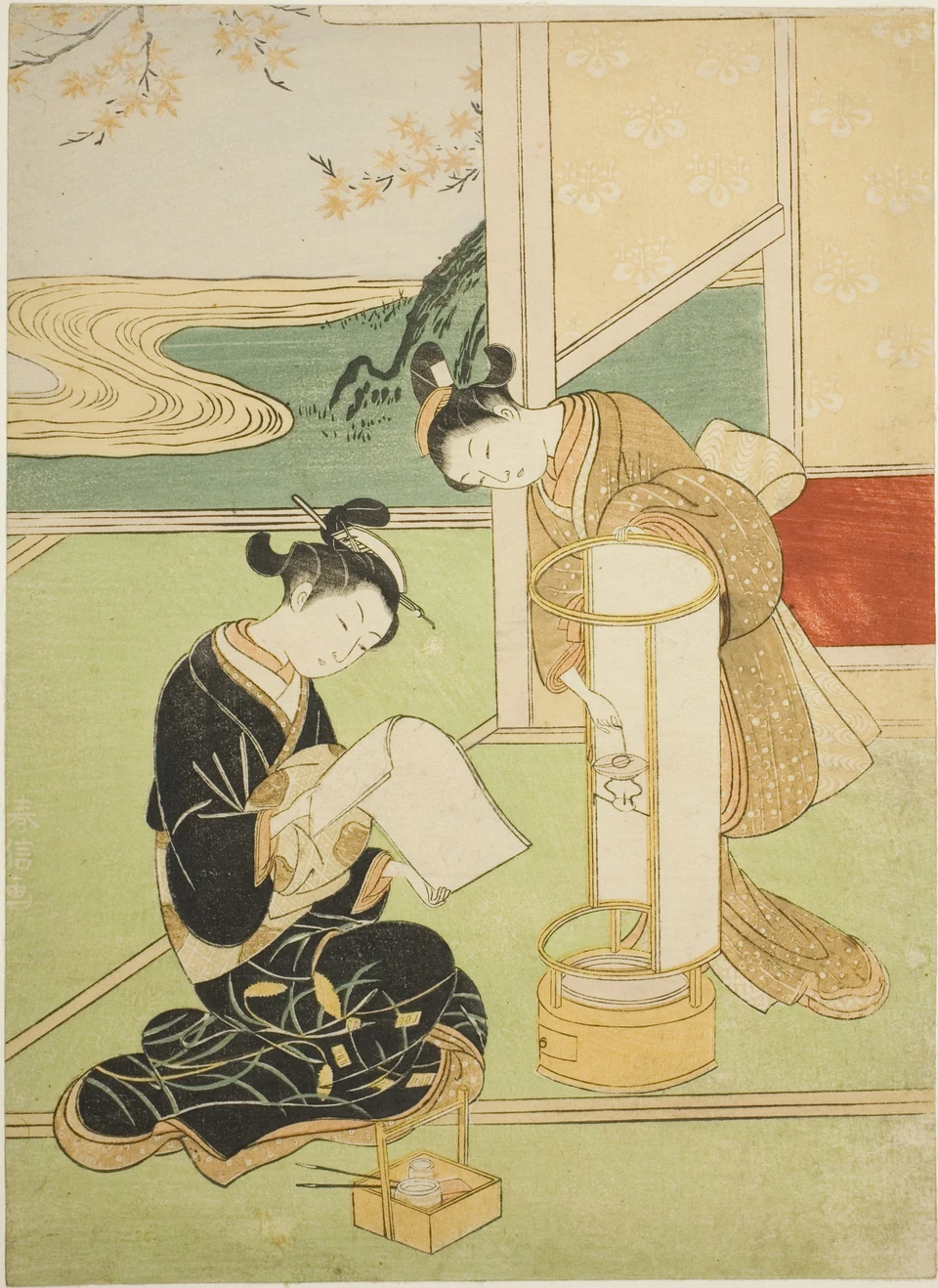 Evening Glow of a Lamp (Andon no sekisho), from the series "Eight Views of the Parlor (Zashiki hakkei)"c. 1766
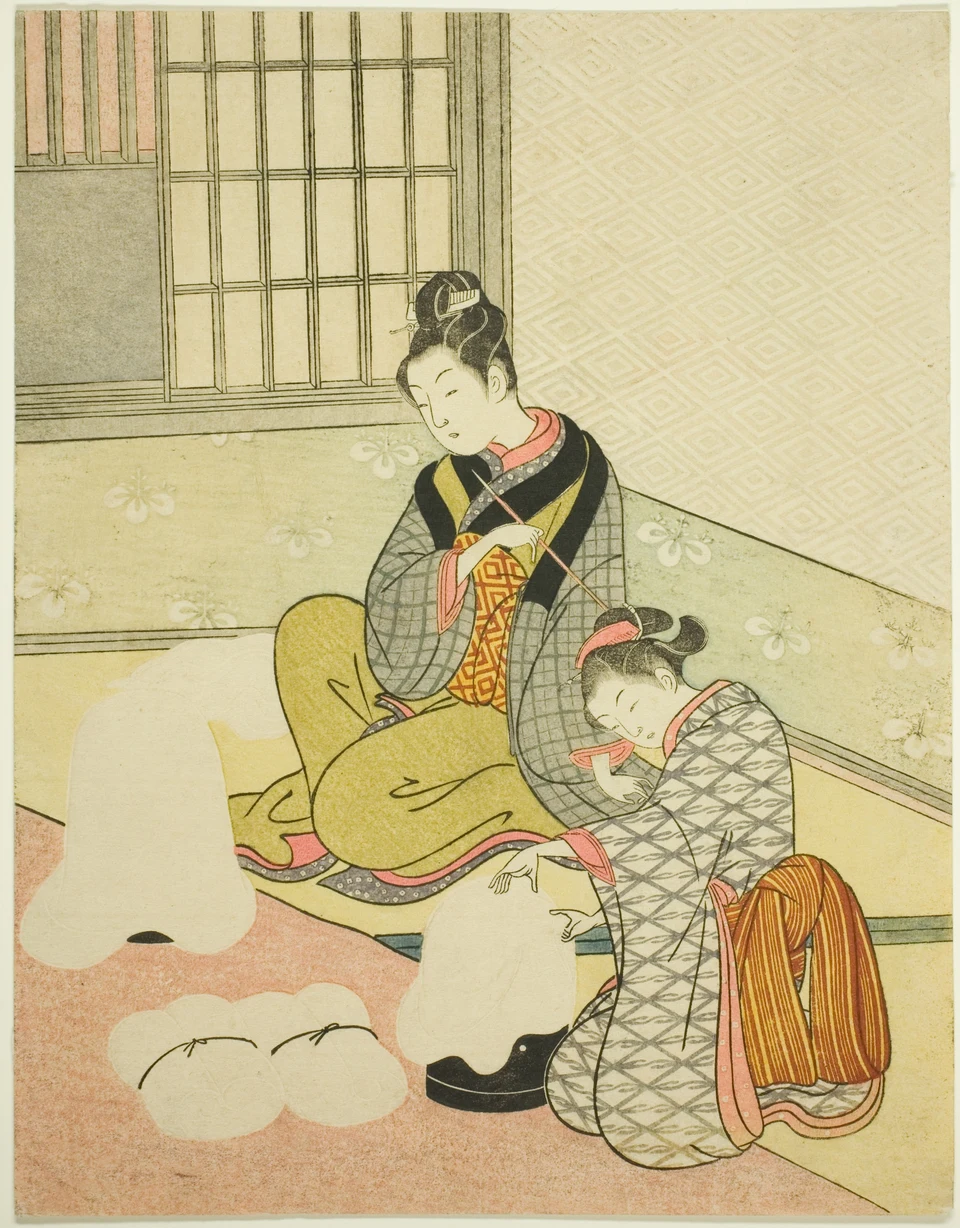 Evening Snow on a Floss Shaper (Nurioke no bosetsu), from the series "Eight Views of the Parlor (Zashiki hakkei)"c. 1766
 The Heron Maidenc. 1766/67
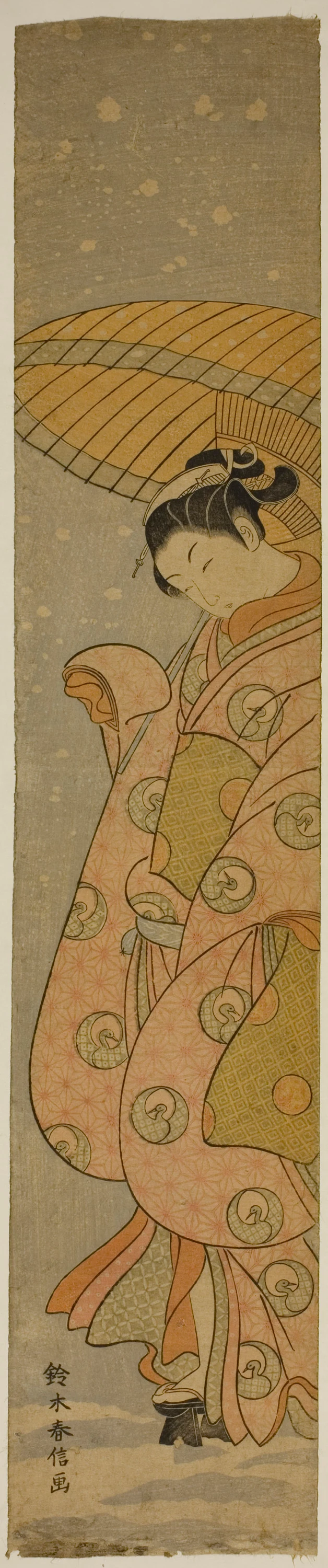 Beauty Under an Umbrella in the Snowc. 1770
Chōbunsai Eishi
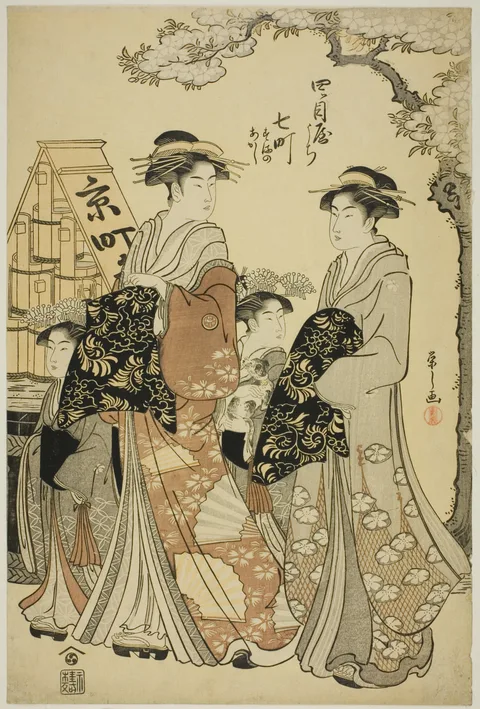
Nanamachi of the Yotsumeya with Attendants Sumano and Akashi, c. 1787
Hishikawa Moronobu
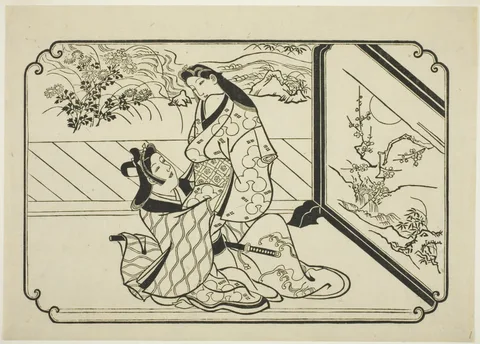
Behind the Screen, c. 1673/81
Ichieisai Yoshitsuya
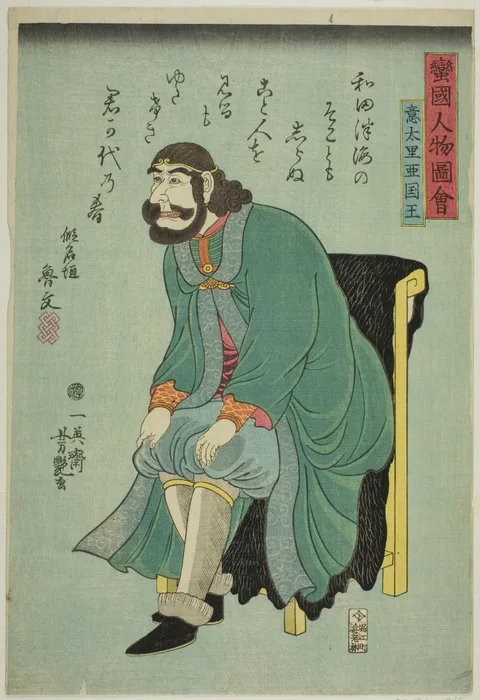
King of Italy (Itaria kokuo), from the series "People of Barbarian Nations (Bankoku jinbutsu zue)", 1861