Shibata Zeshin
1807–1891 · Japanese painting · 22 works
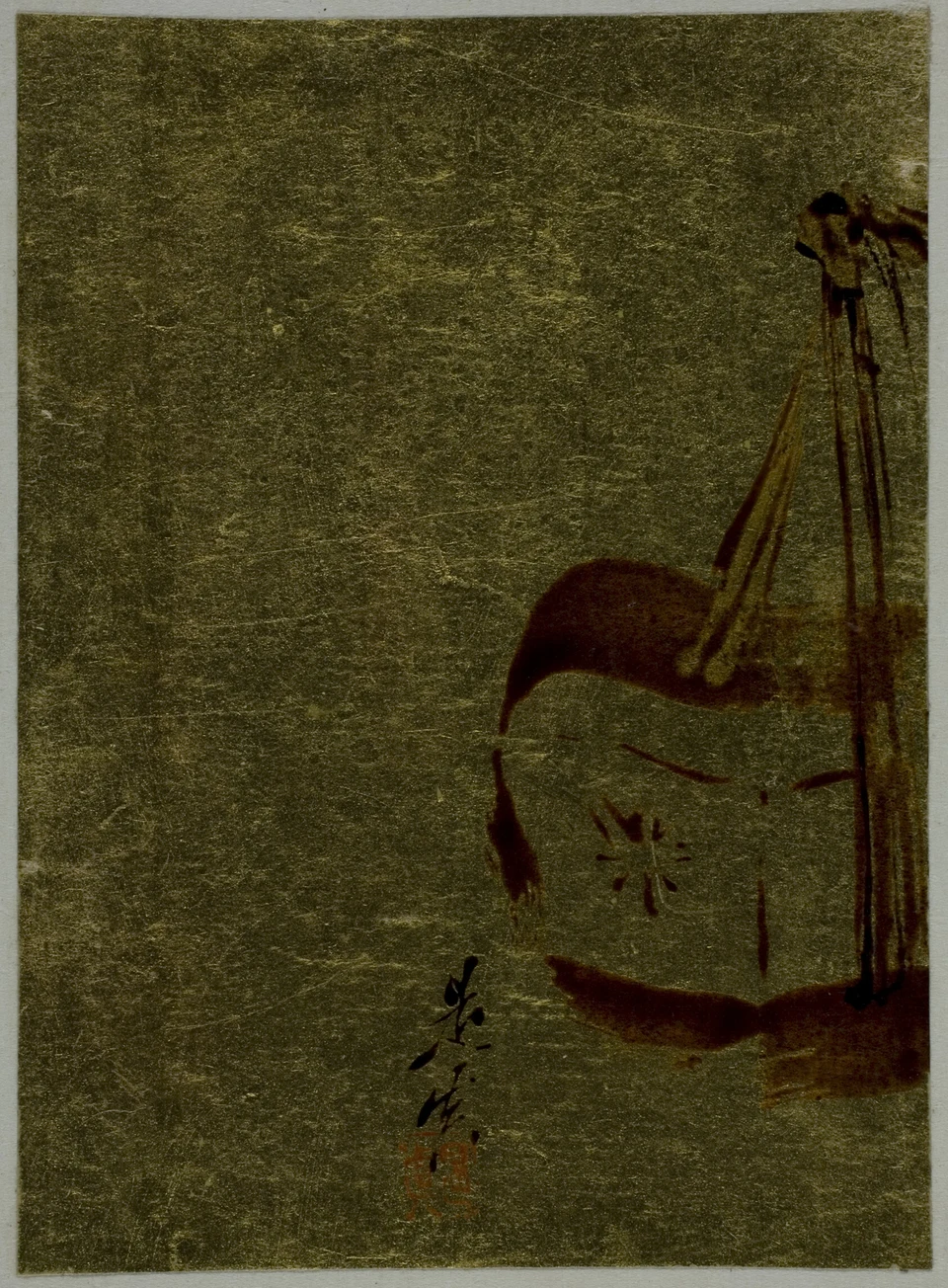
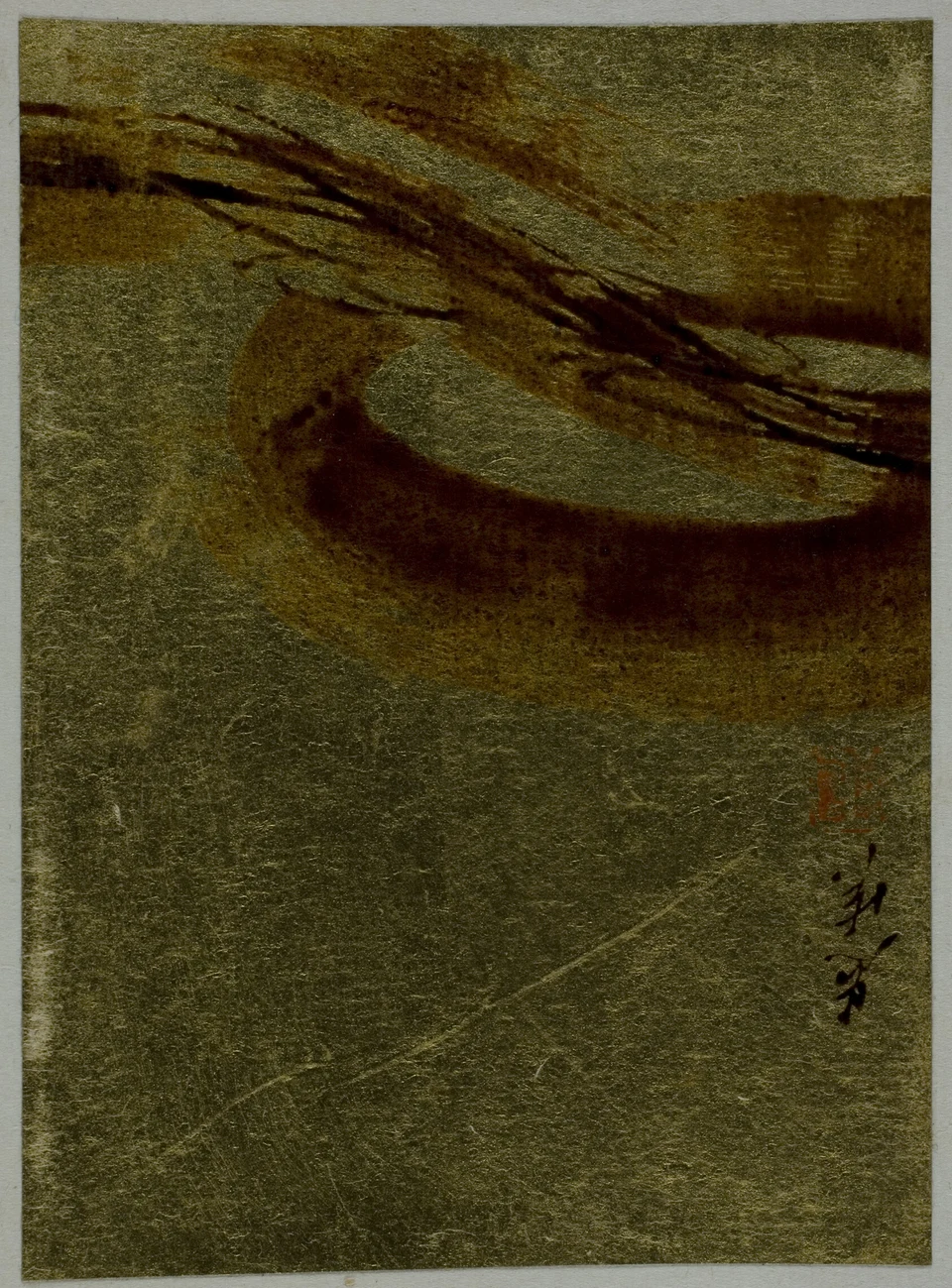
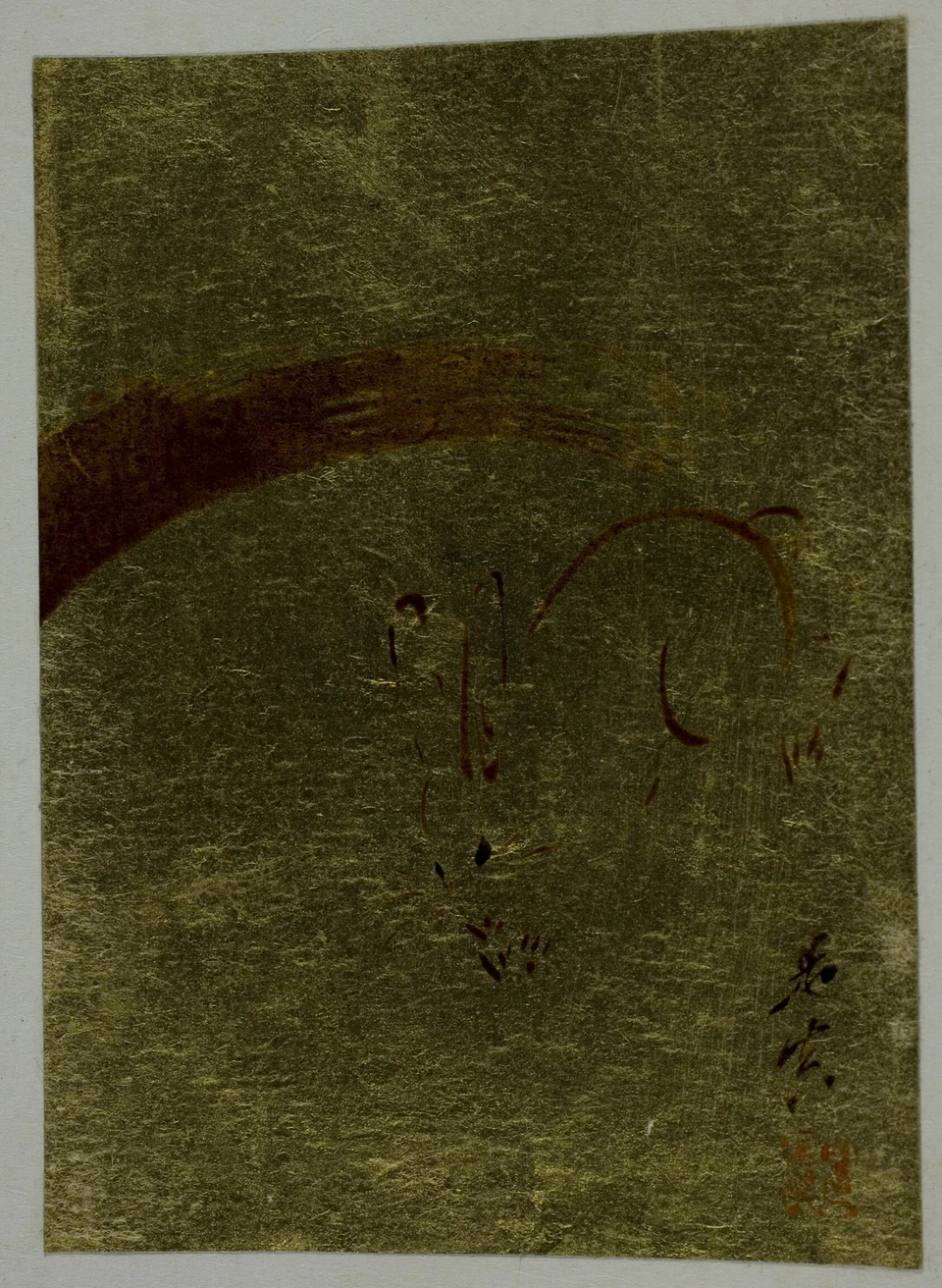
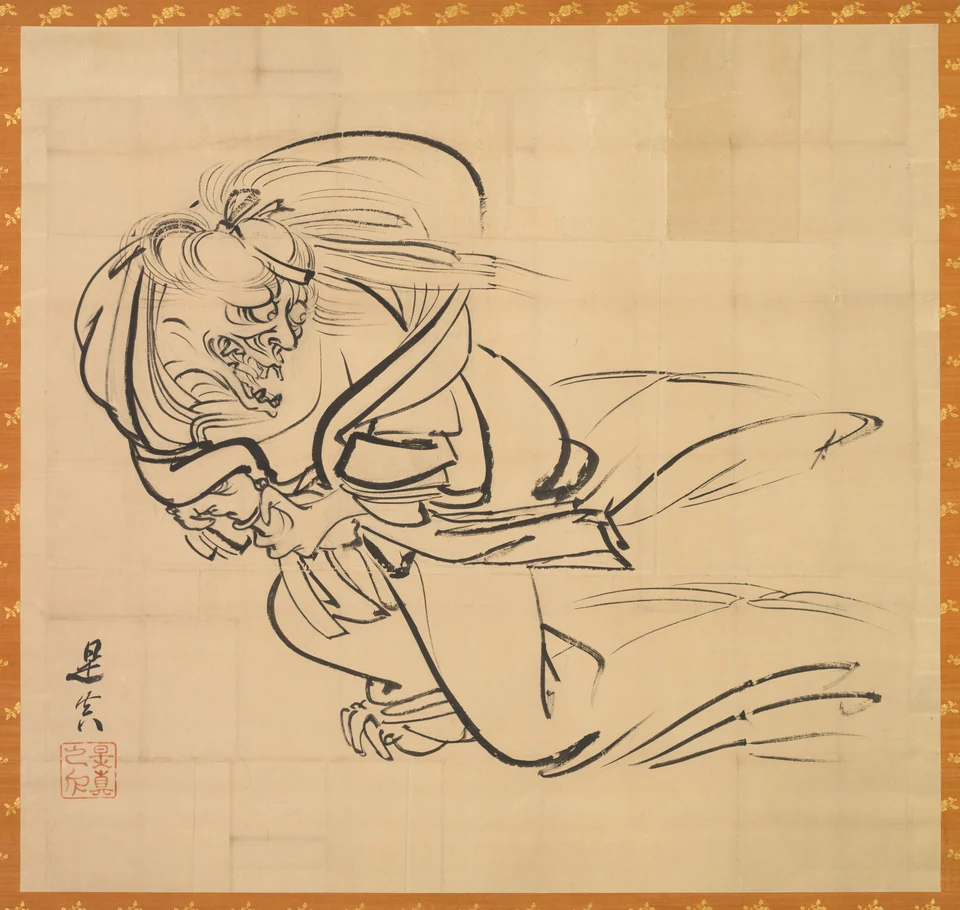
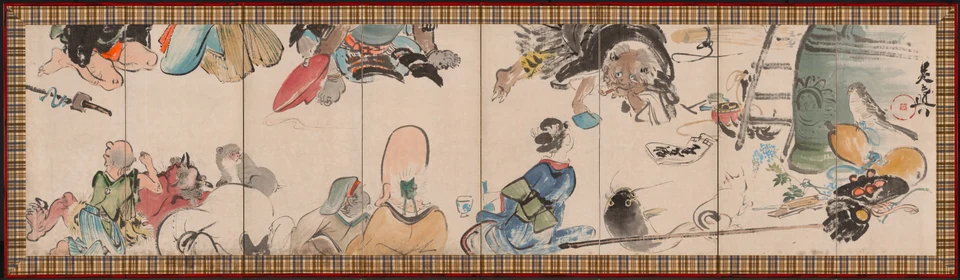
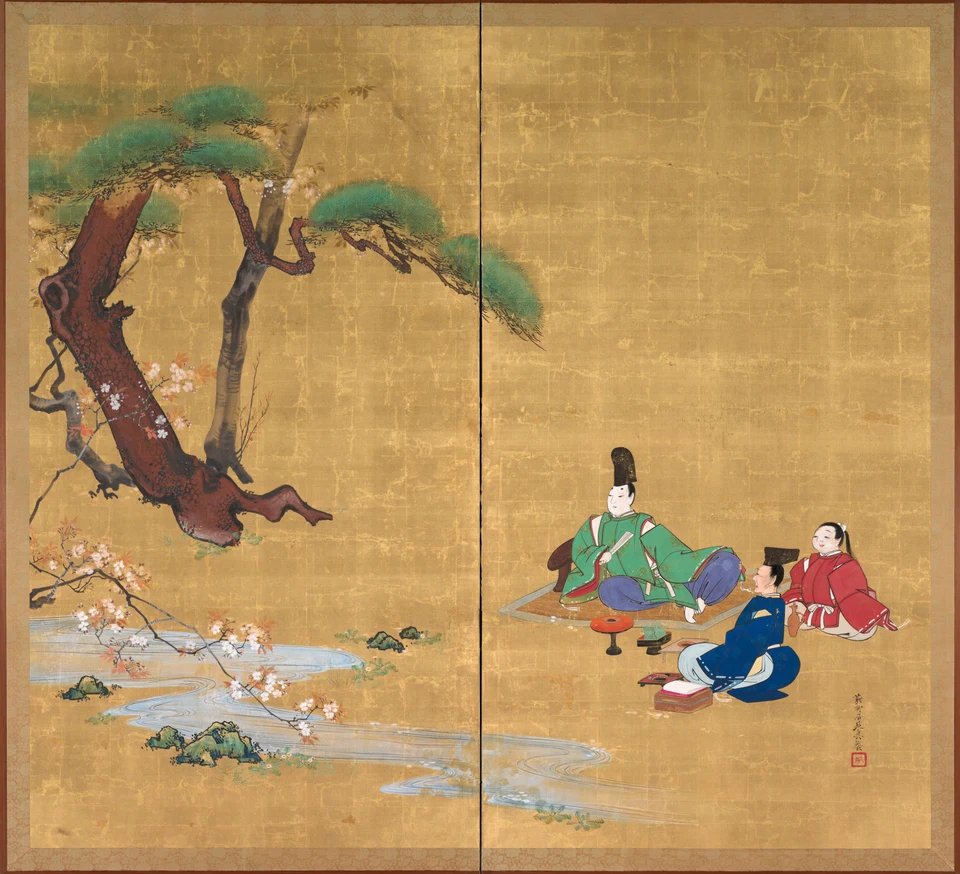
Shibata Zeshin worked with both painting and lacquer, finding new possibilities in a material usually associated with decorated objects. He developed ways to brush lacquer onto paper and vary its texture, working within a palette much more restricted than that of ordinary pigments. His ink-and-color paintings offer another side of the same inventive attention. Birds, animals, waterfalls, and everyday objects can occupy a small sheet with remarkably little surrounding scenery. Check the medium beside each work: a similar subject can be made through quite different materials and processes.
22 works · 1807–1888
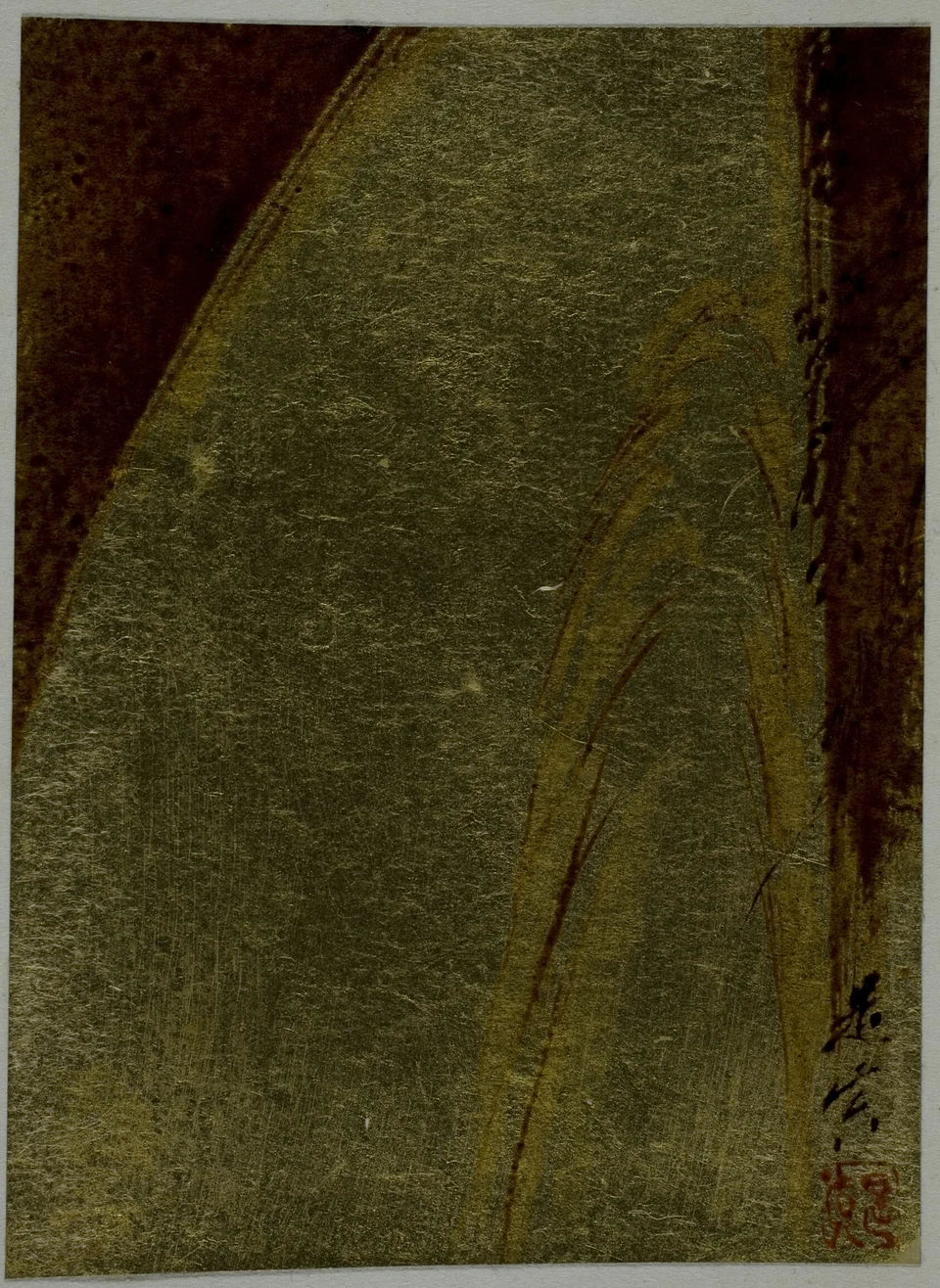
Compare Waterfall with one of the small animal pictures. Which marks describe the subject, and which leave you to imagine its surroundings?
1807 · 6 works
Walk these 6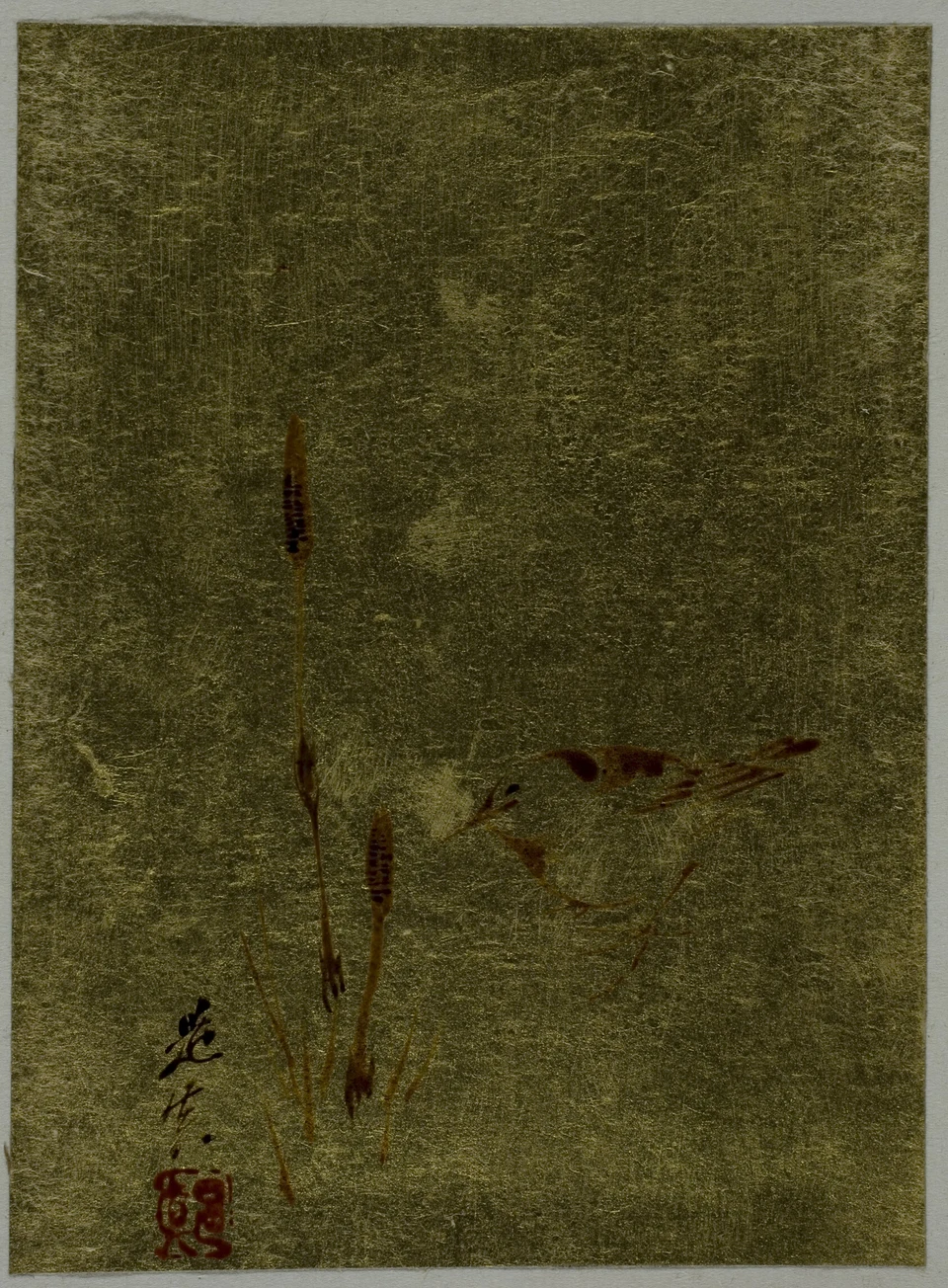
1830–1866 · 5 works
Walk these 5In the last decades of shogun rule, literati painters such as Yamamoto Baiitsu, Nakabayashi Chikutō and Tsubaki Chinzan studied Chinese painting closely, even copying Chinese albums with their inscriptions. Shibata Zeshin, also a master of lacquer, and Kawanabe Kyōsai, trained in ukiyo-e and the Kano school, carried wit and demons into the Meiji era that began in 1868.
In the museum: Japanese painting room · 1 work
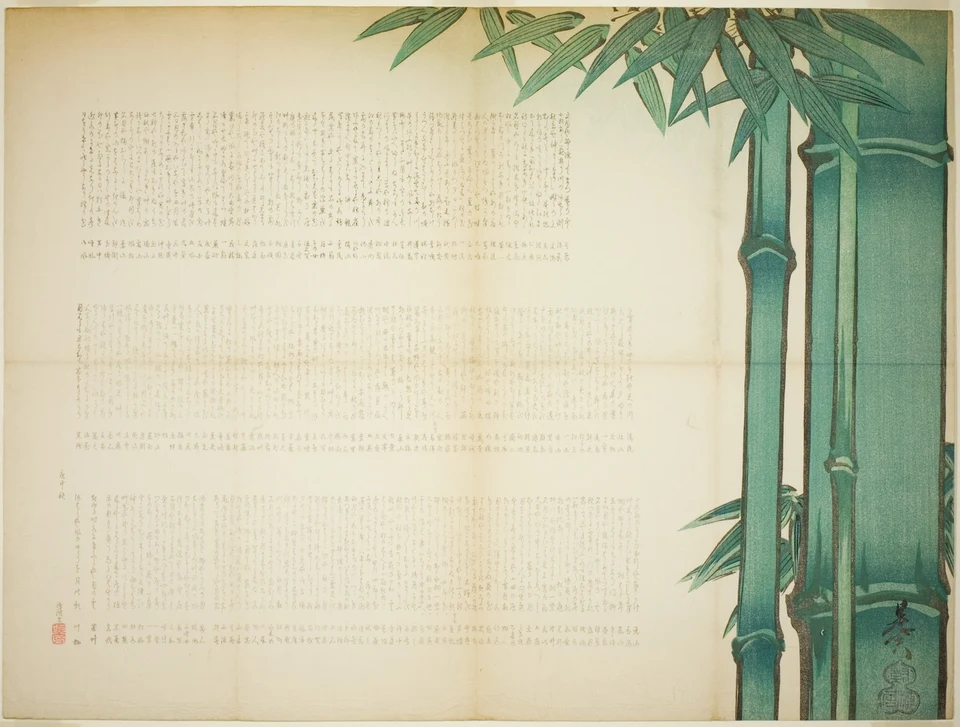
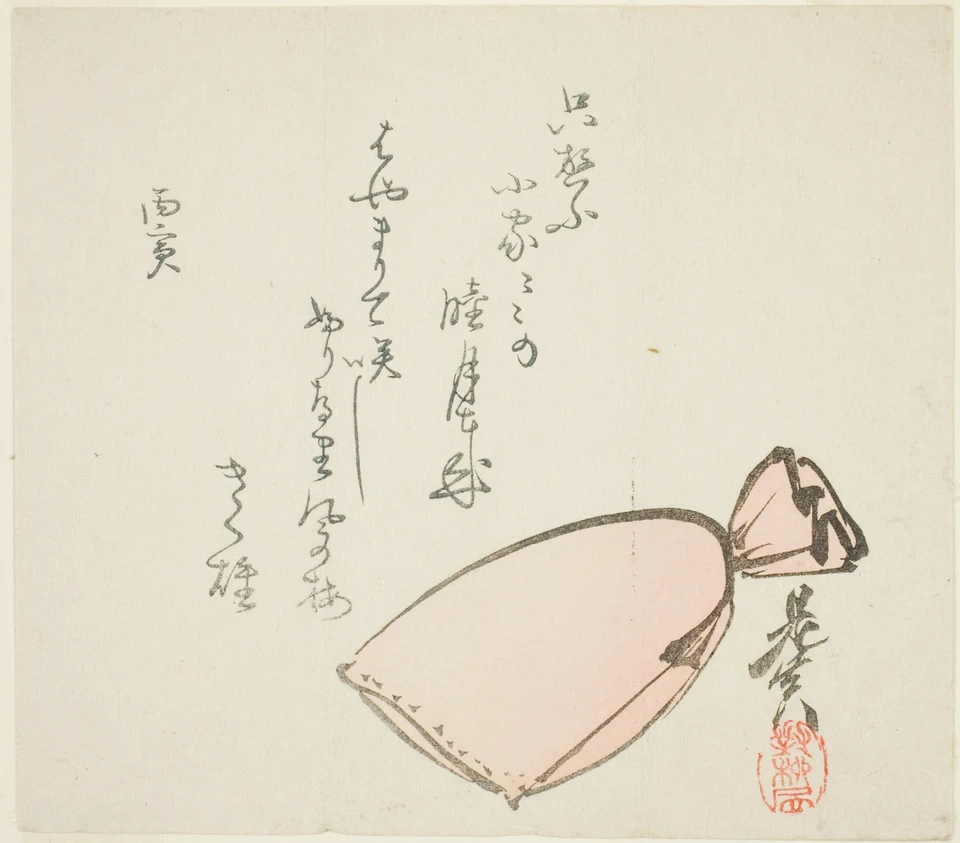
1879–1888 · 11 works
Walk these 11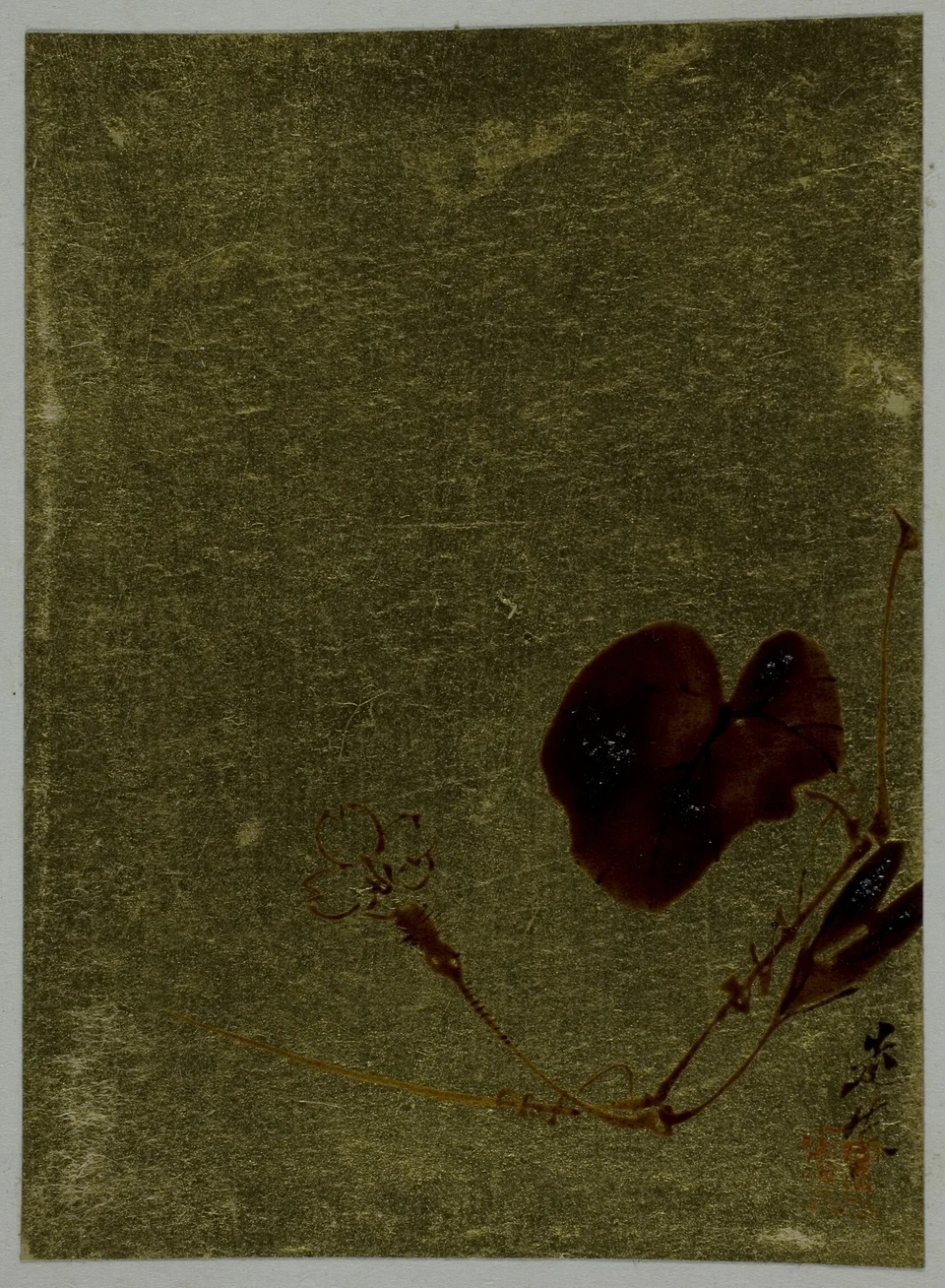 Flower BlossomMiji period (1868–1912)
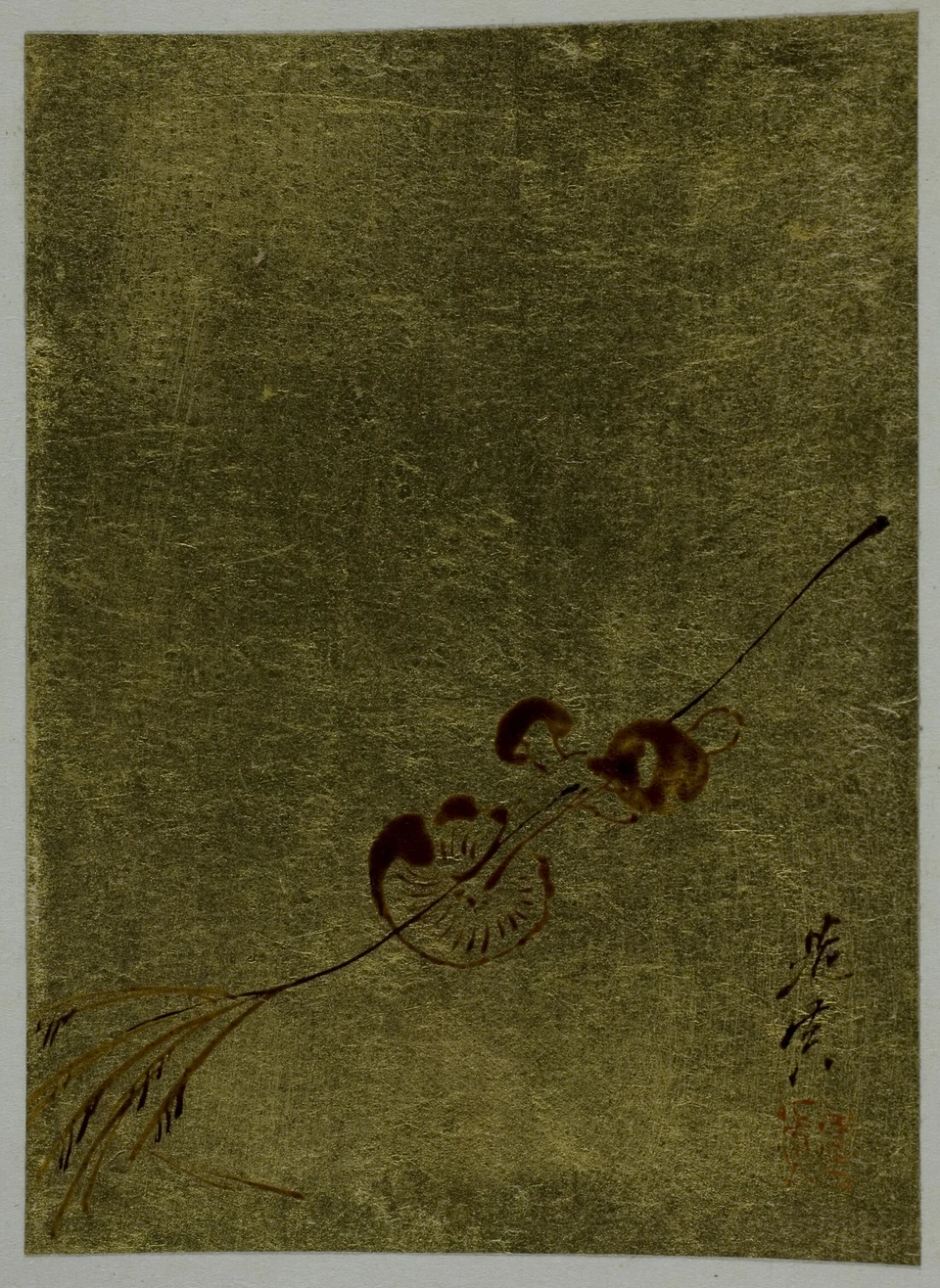 MushroomsMeiji period (1868–1912)
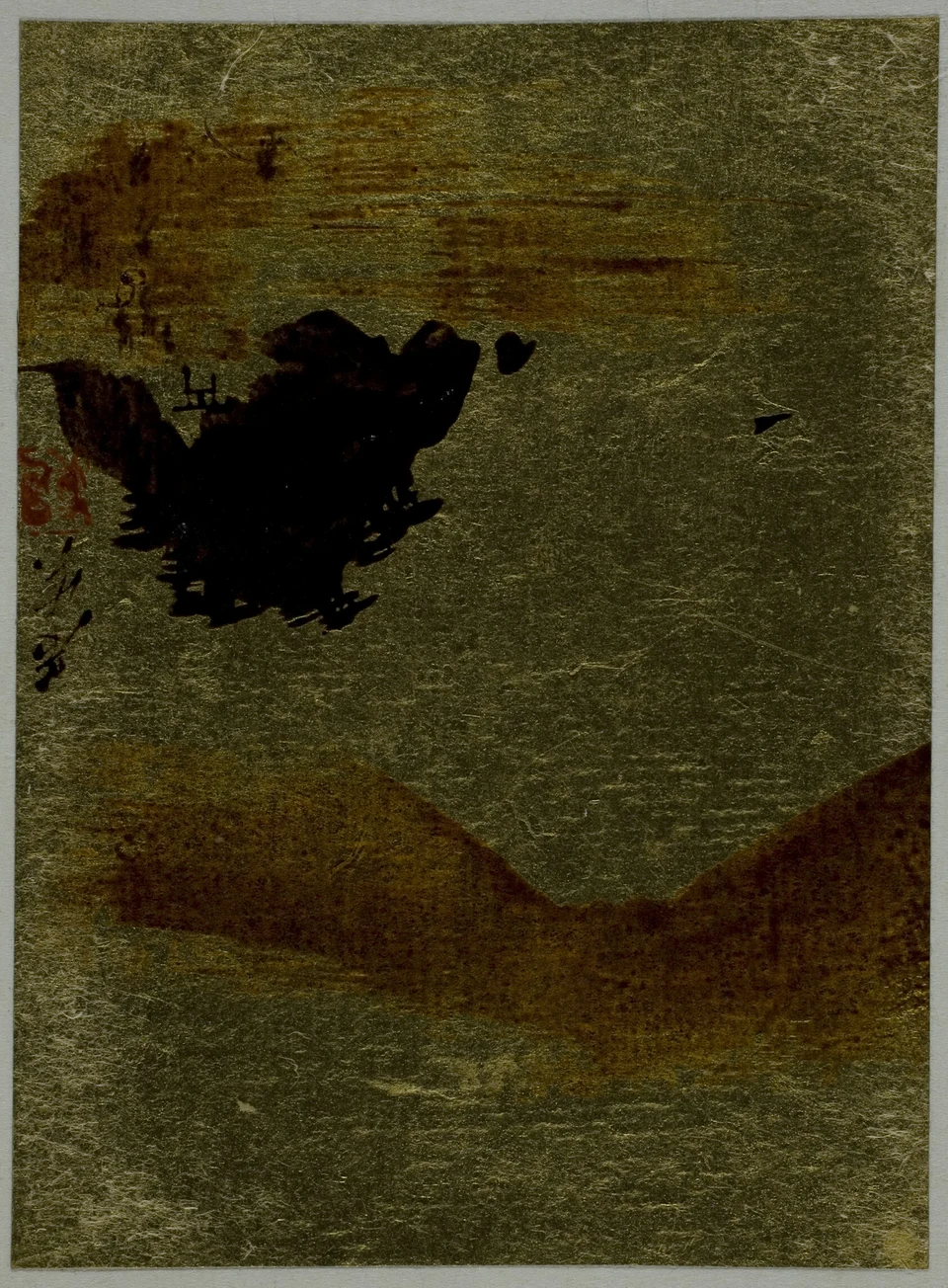
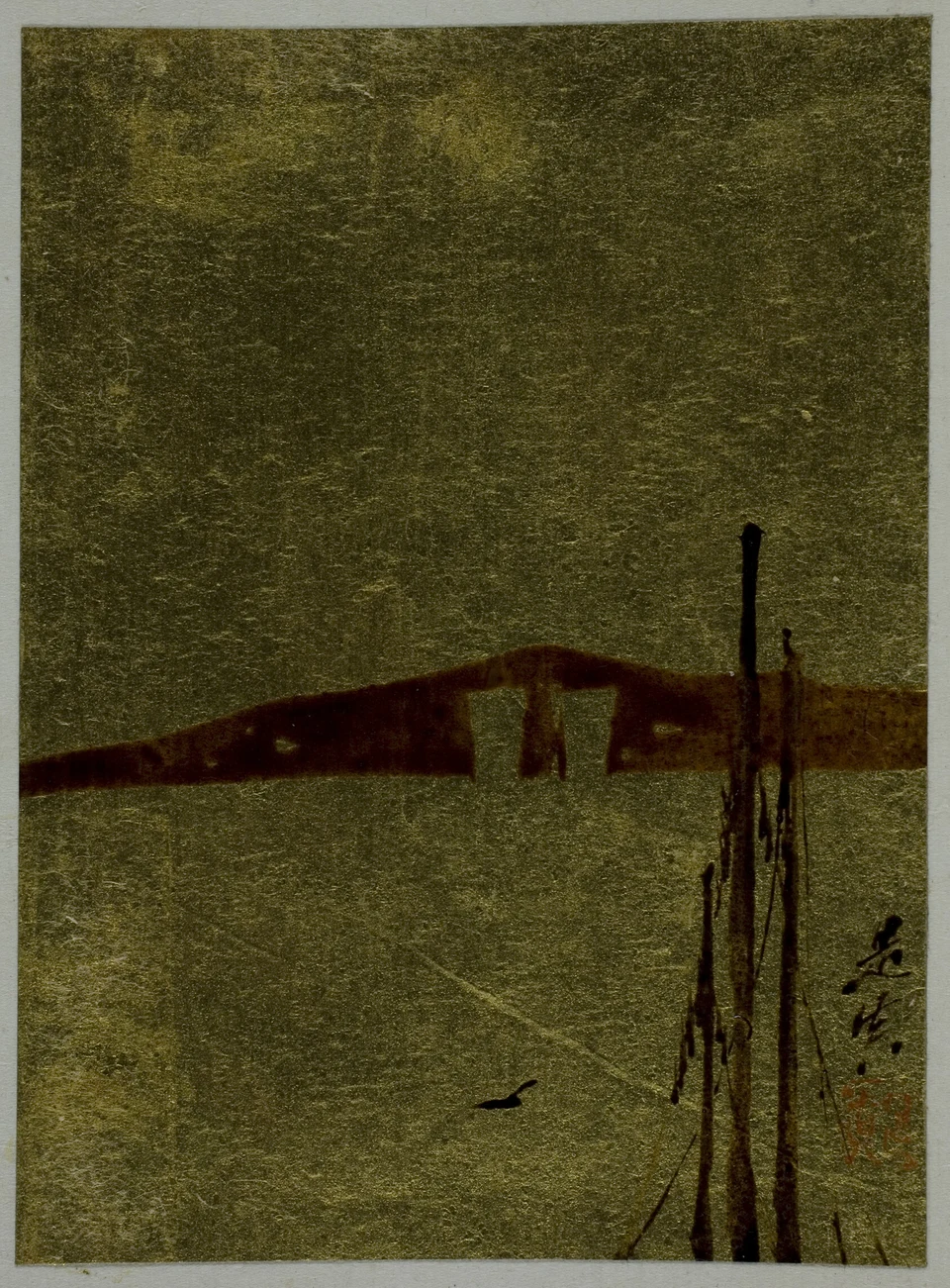 Water Scene with MountainMeiji Period (1868–1912)
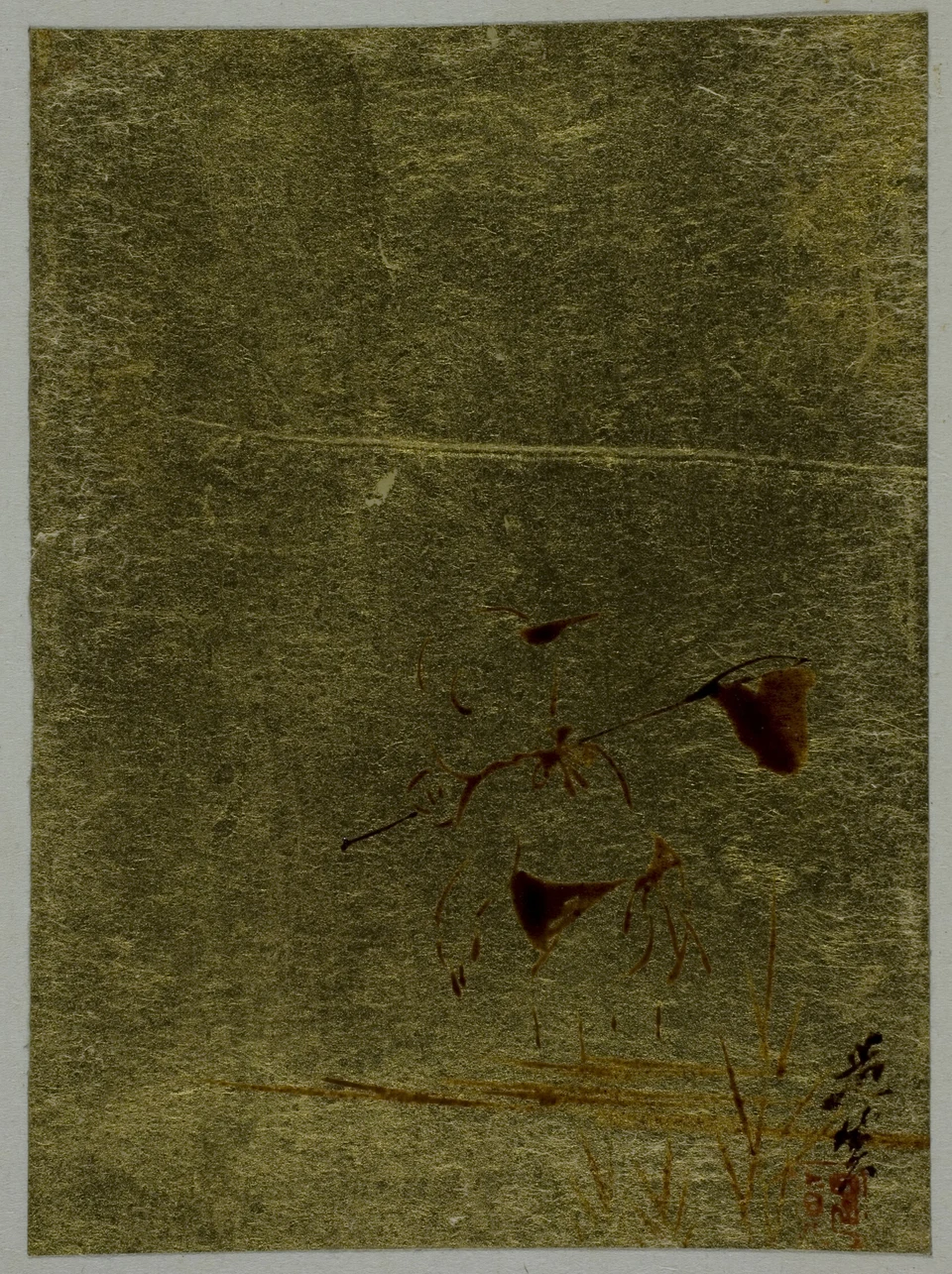 Youth with Fish NetMeiji period (1868–1912)
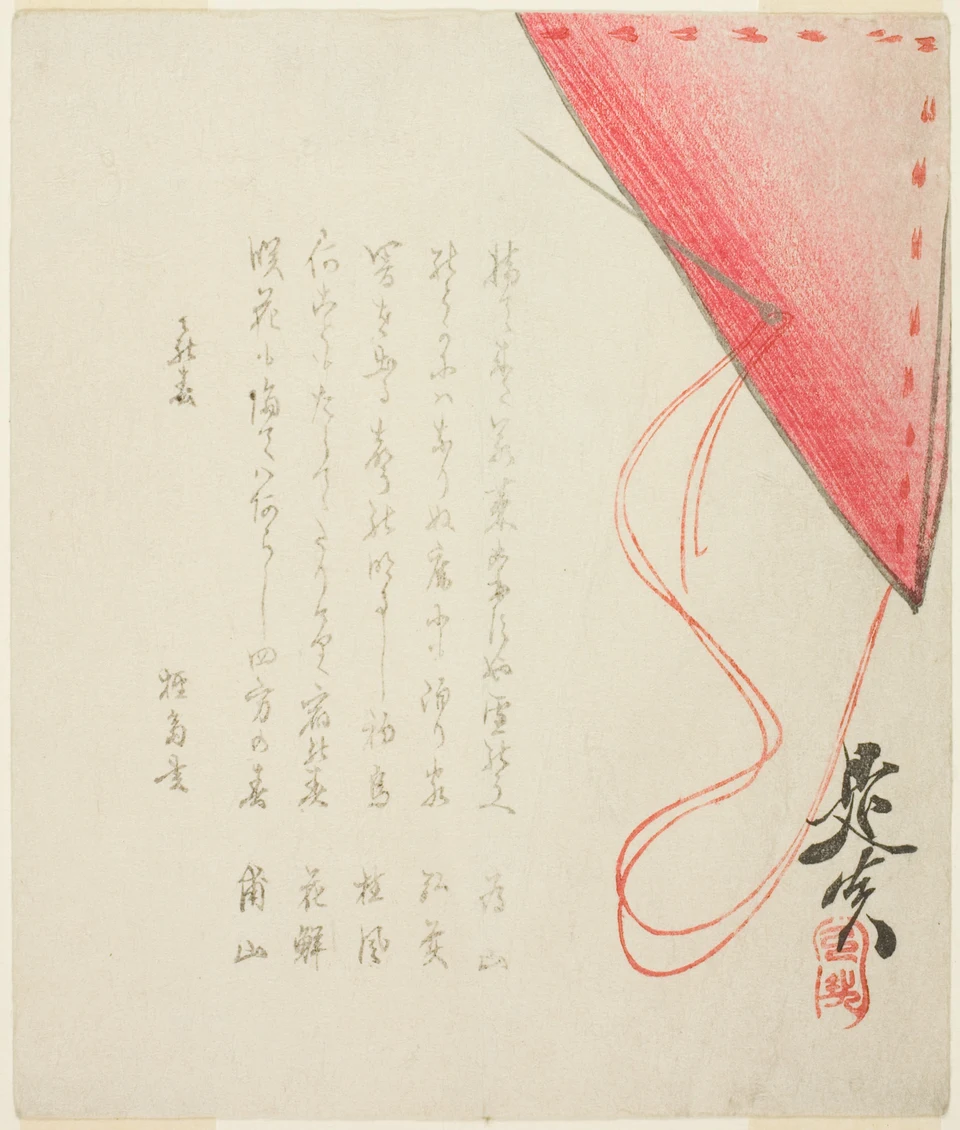 Stitched fukusa and needle and threadc.1881
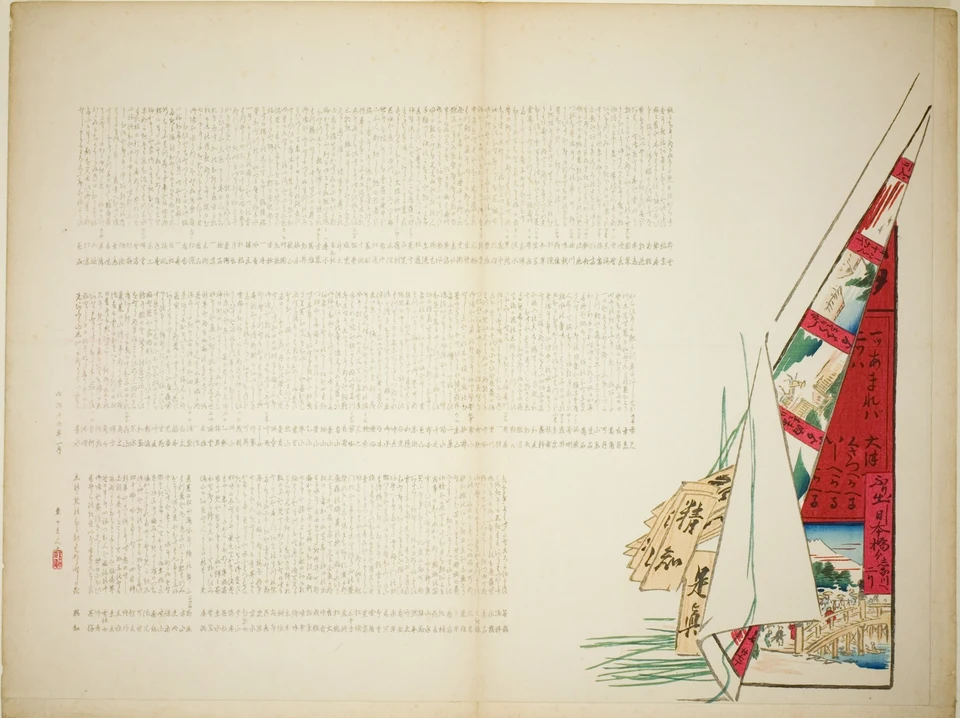 Poetic Travel1st month, 1883
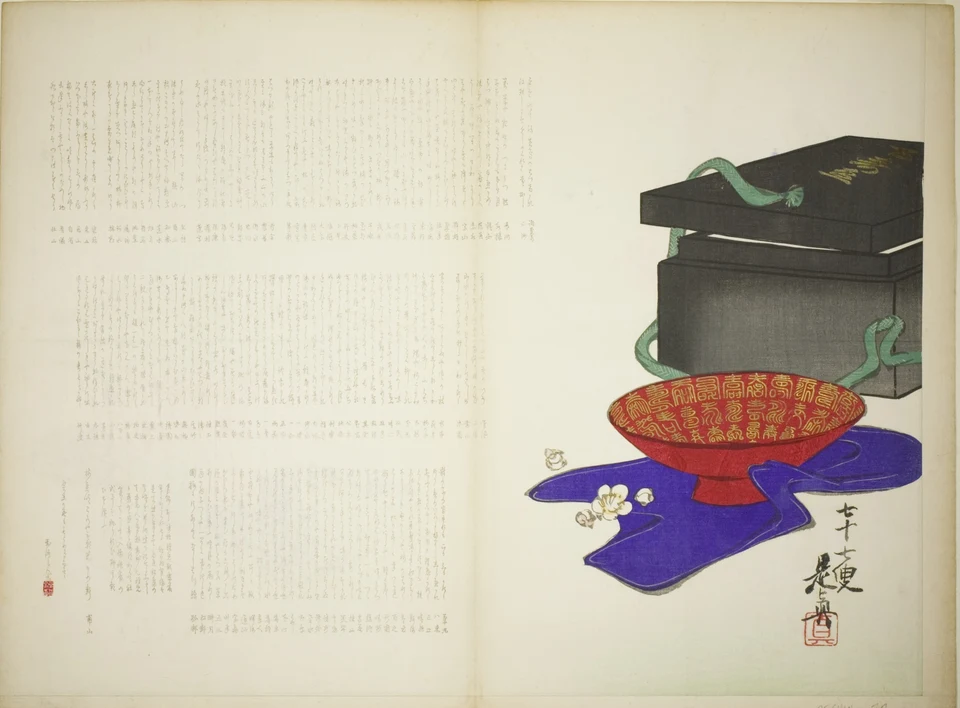 The Cup of Long Lifespring 1883
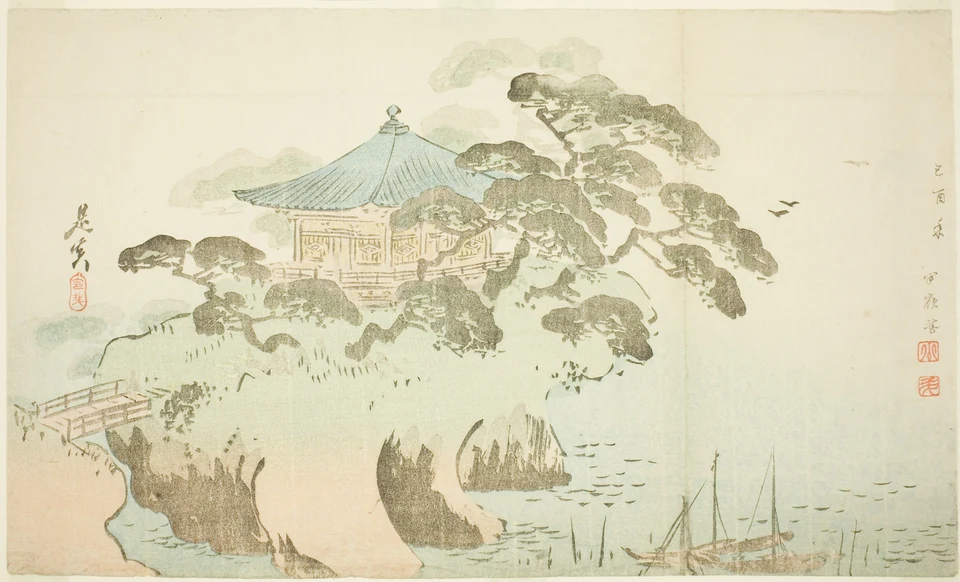 A temple hall1885
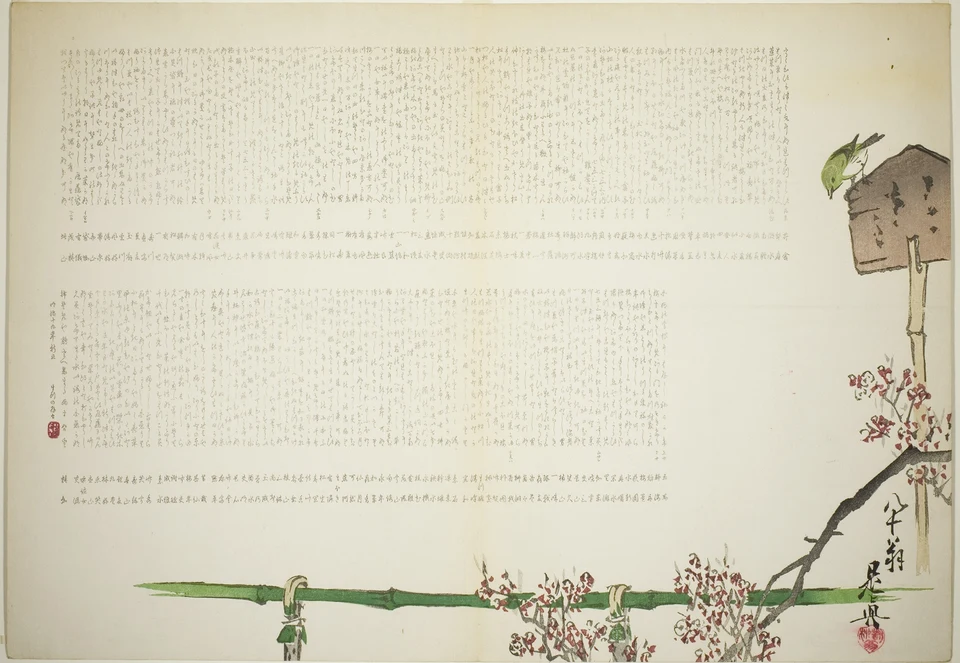 Bush Warbler Perched on a Signboard alongside a Bamboo-fenced Plum Garden1886
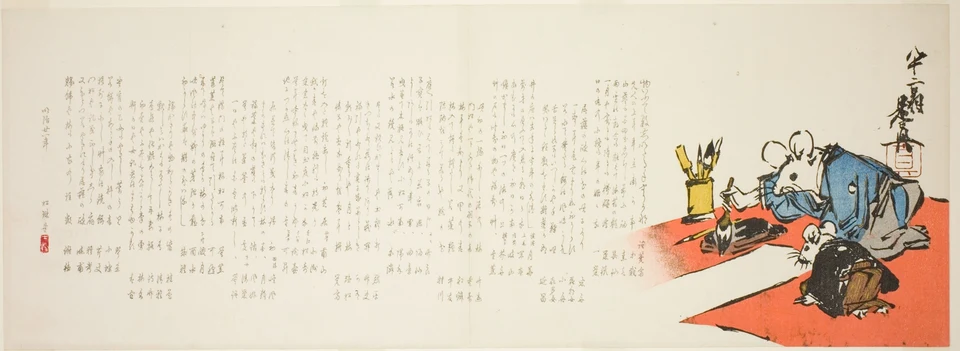 Two formally dressed rats about to execute the first calligraphy of the year1888
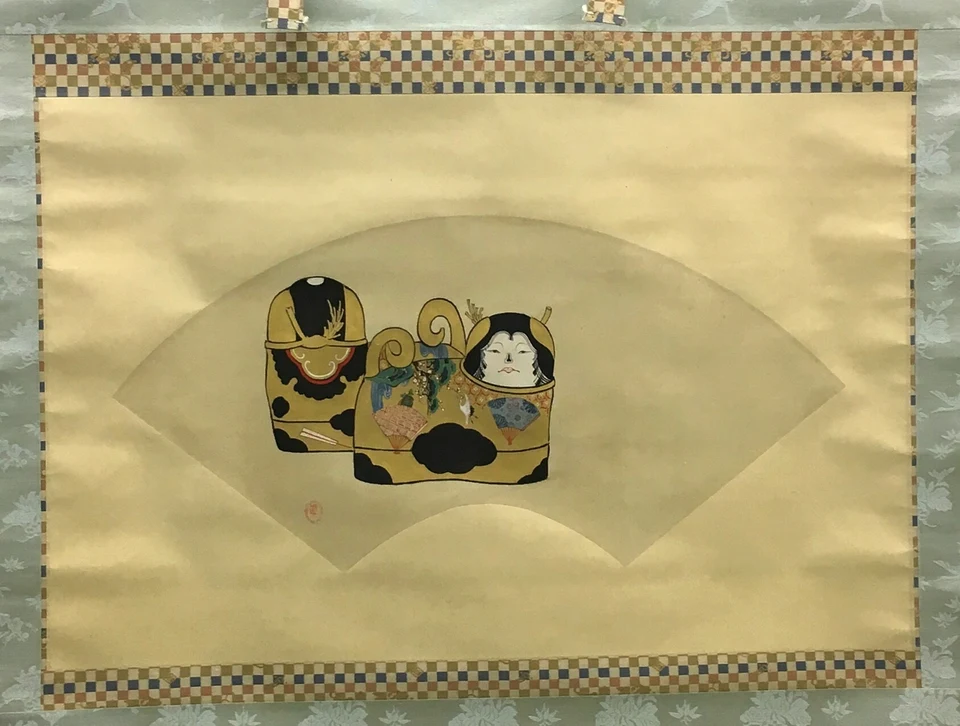 CatUnknown
Chōbunsai Eishi
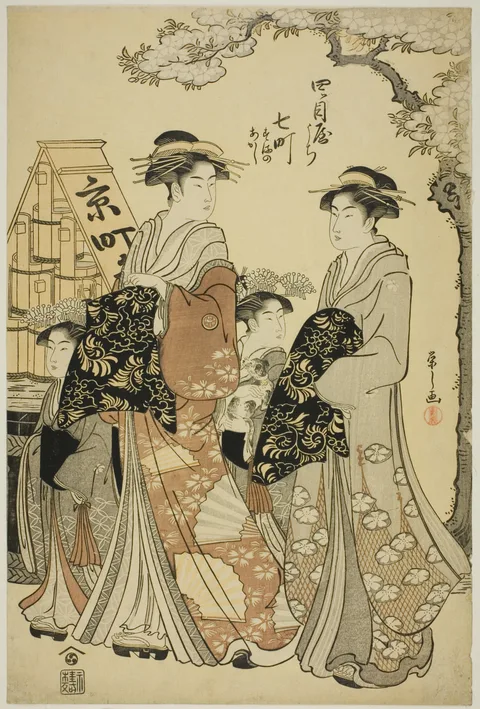
Nanamachi of the Yotsumeya with Attendants Sumano and Akashi, c. 1787
Hon’ami Kōetsu
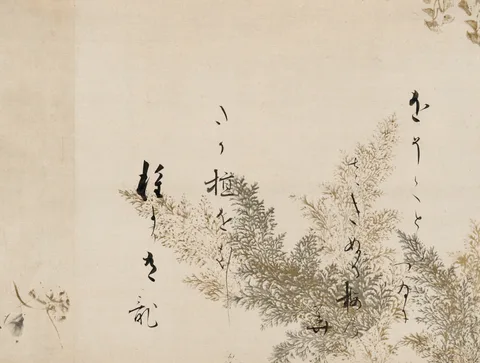
A Poem from the Shin Kokinshu with Design of Shinobugusa (Moss Fern), 1605-10
Ike Taiga
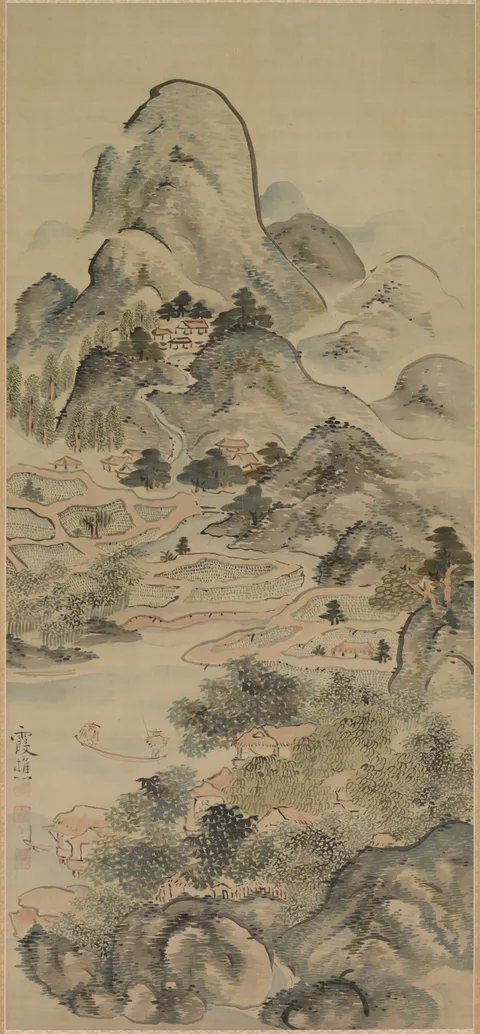
Fishing in a Springtime Valley, 1700s