Yashima Gakutei
1786?–1868 · 7 works
Yashima Gakutei designed surimono, woodblock prints made for private circulation, often among poets and poetry groups. These sheets could serve as New Year greetings and bring an image into conversation with a poem or literary reference. His subjects range from courtly tales and legendary figures to modest arrangements of objects. A bowl, scissors, and morning glories can therefore invite the same close attention as a dramatic story. Even without reading the writing, the placement of text, objects, and open paper offers a way into the design.
7 works · 1820–1821
In Bowl, scissors, and morning glories, trace the space left between the objects. How does the writing take part in that arrangement?
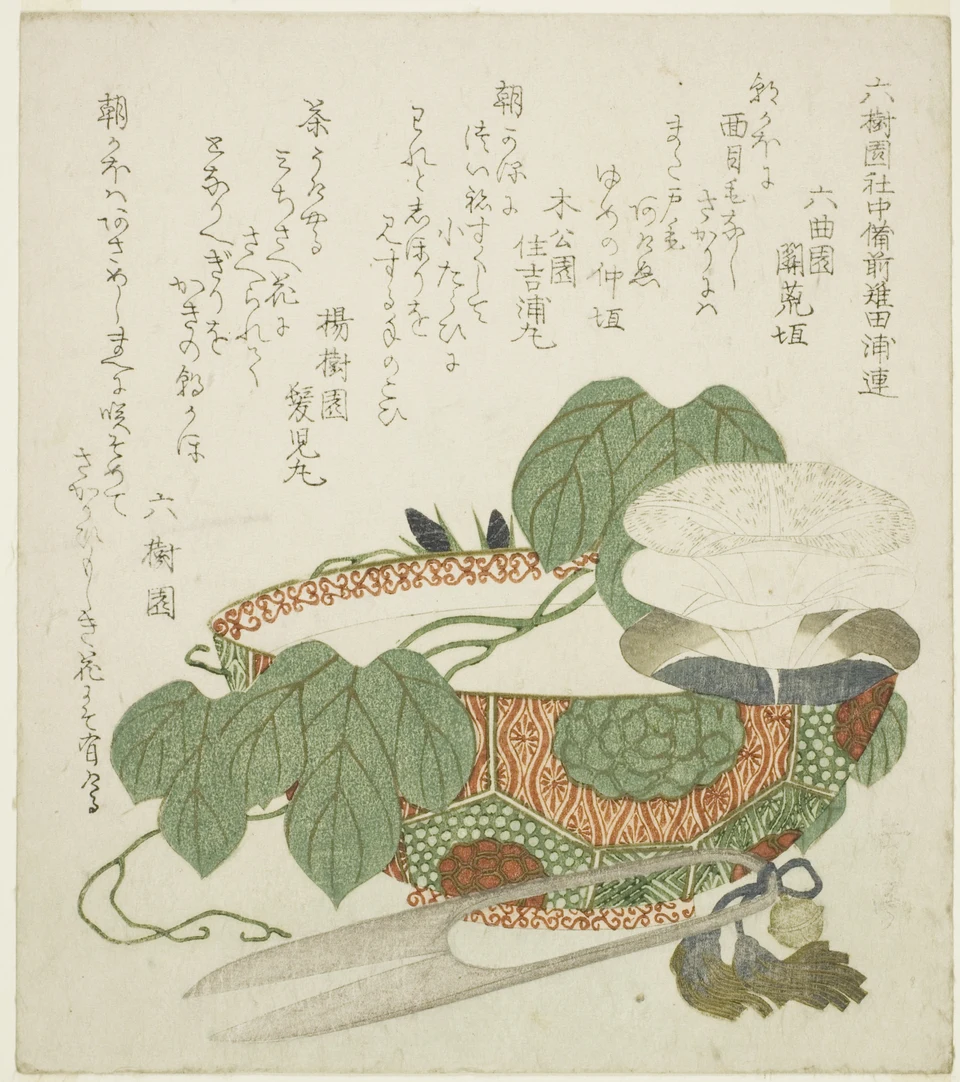 Bowl, scissors, and morning gloriesc. 1820
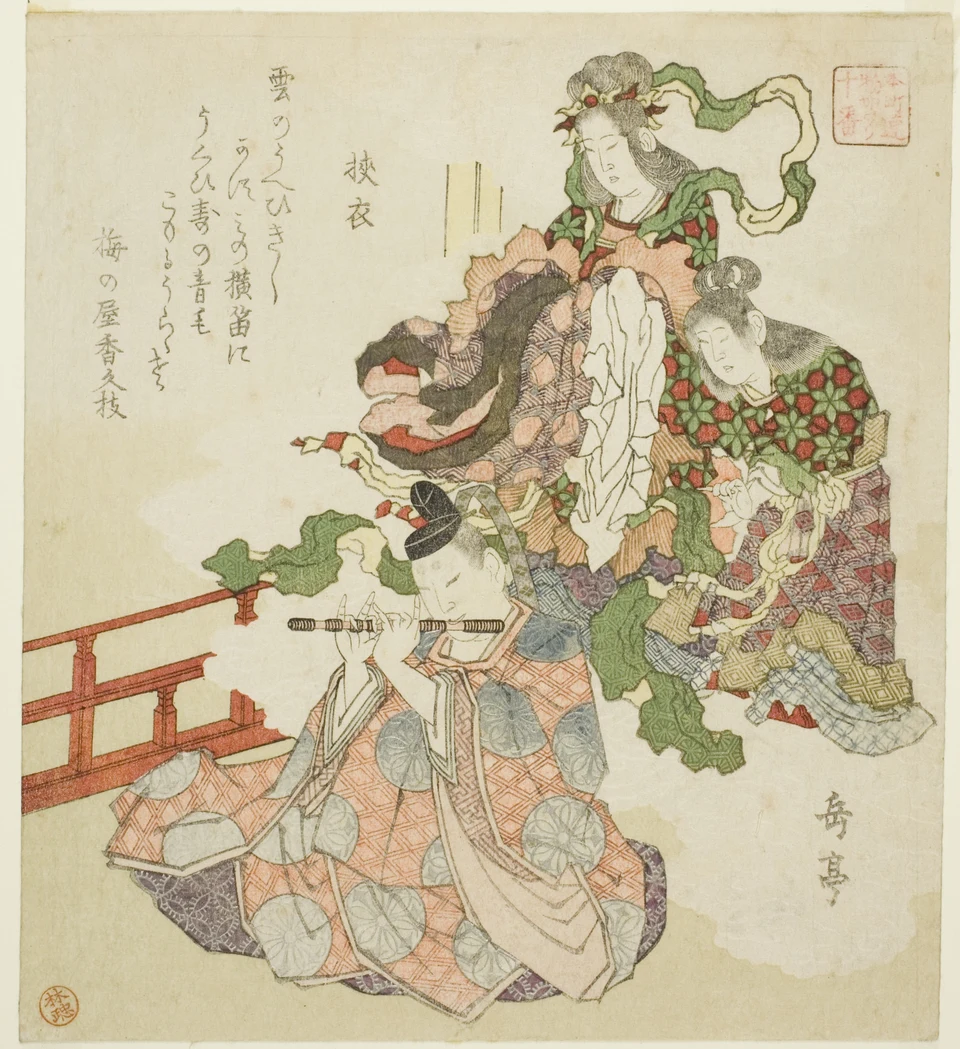
- The Tale of Sagoromo, from the series "Ten Courtly Tales for the Honcho Circle (Honchoren monogatari juban)"c. 1820
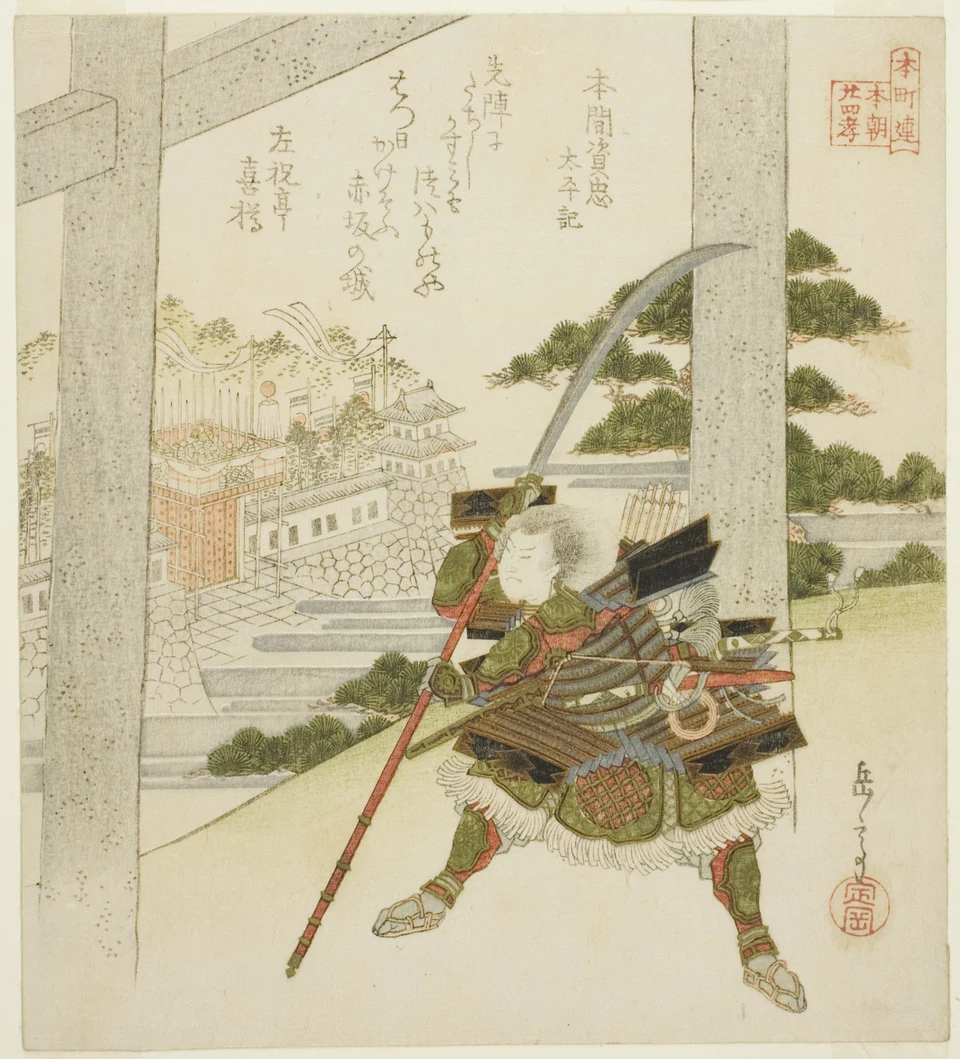 Honma no Suketada from the Chronicles of Grand Peace (Honma no Suketada, Taiheiki), from the series "Twenty-four Japanese Paragons of Filial Piety for the Honcho Circle (Honchoren Honcho nijushiko)"c. 1821
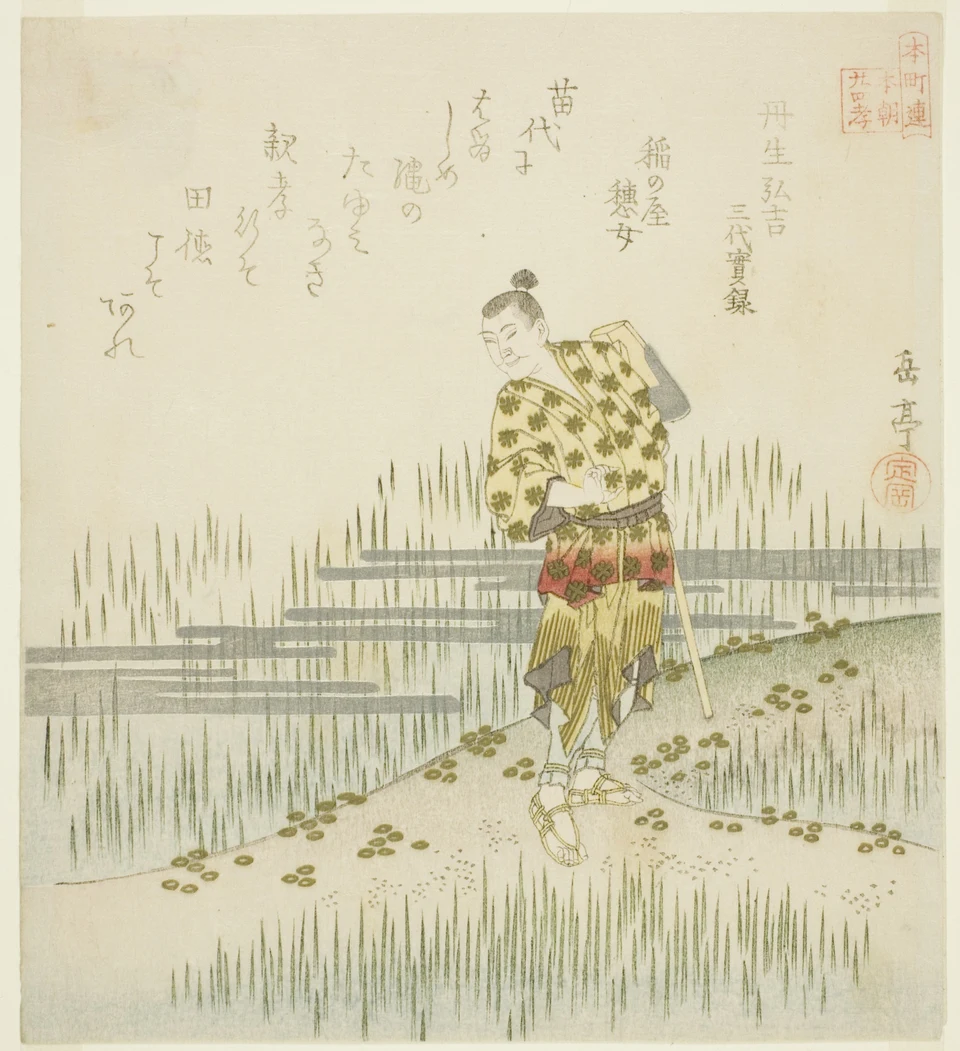 Nibu Hiroyoshi from the Veritable Records of Three Reigns (Nibu Hiroyoshi, Sandai jitsuroku), from the series "Twenty-four Japanese Paragons of Filial Piety for the Honcho Circle (Honchoren Honcho nijushiko)"c. 1821
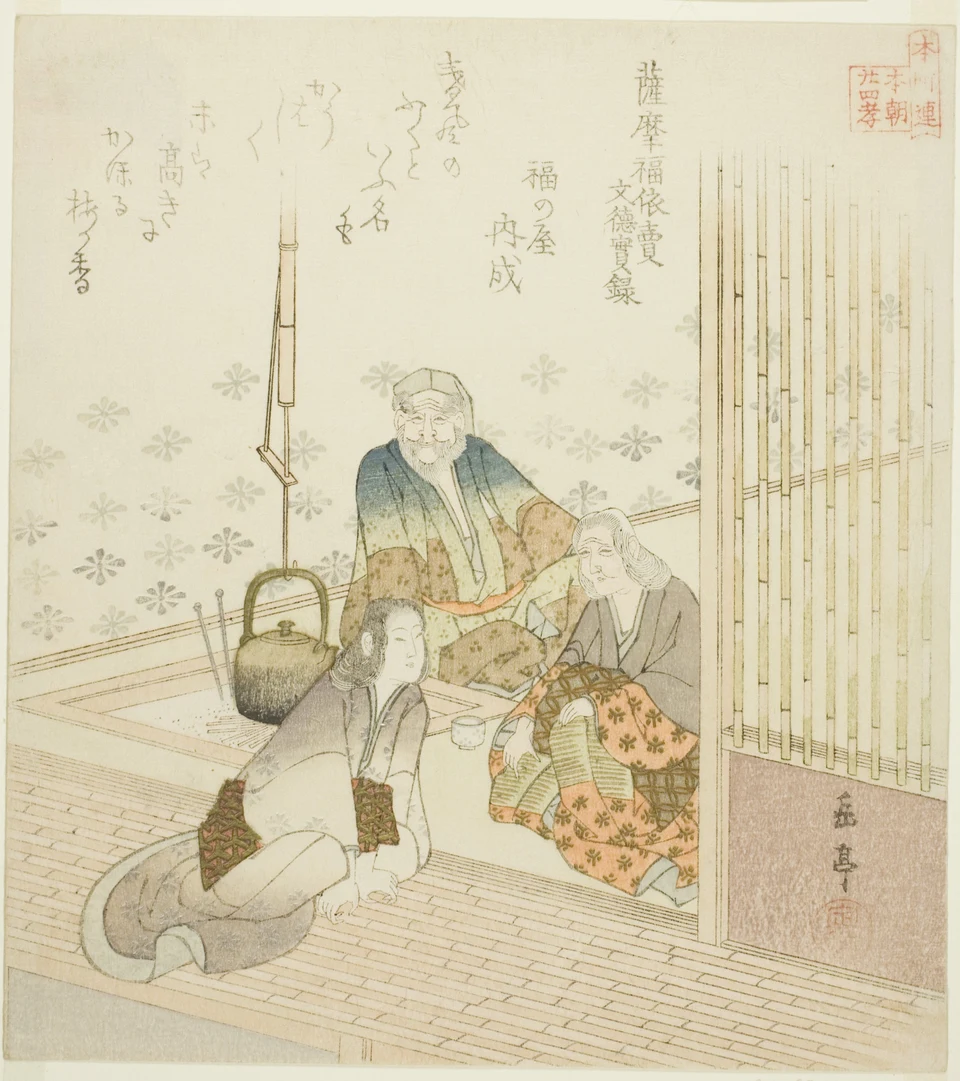 Satsuma no Fukuyorime from the Veritable Records of Emperor Montoku (Satsuma no Fukuyorime, Montoku jitsuroku), from "Twenty-four Japanese Paragons of Filial Piety for the Honcho Circle (Honchoren Honcho nijushiko)"c. 1821
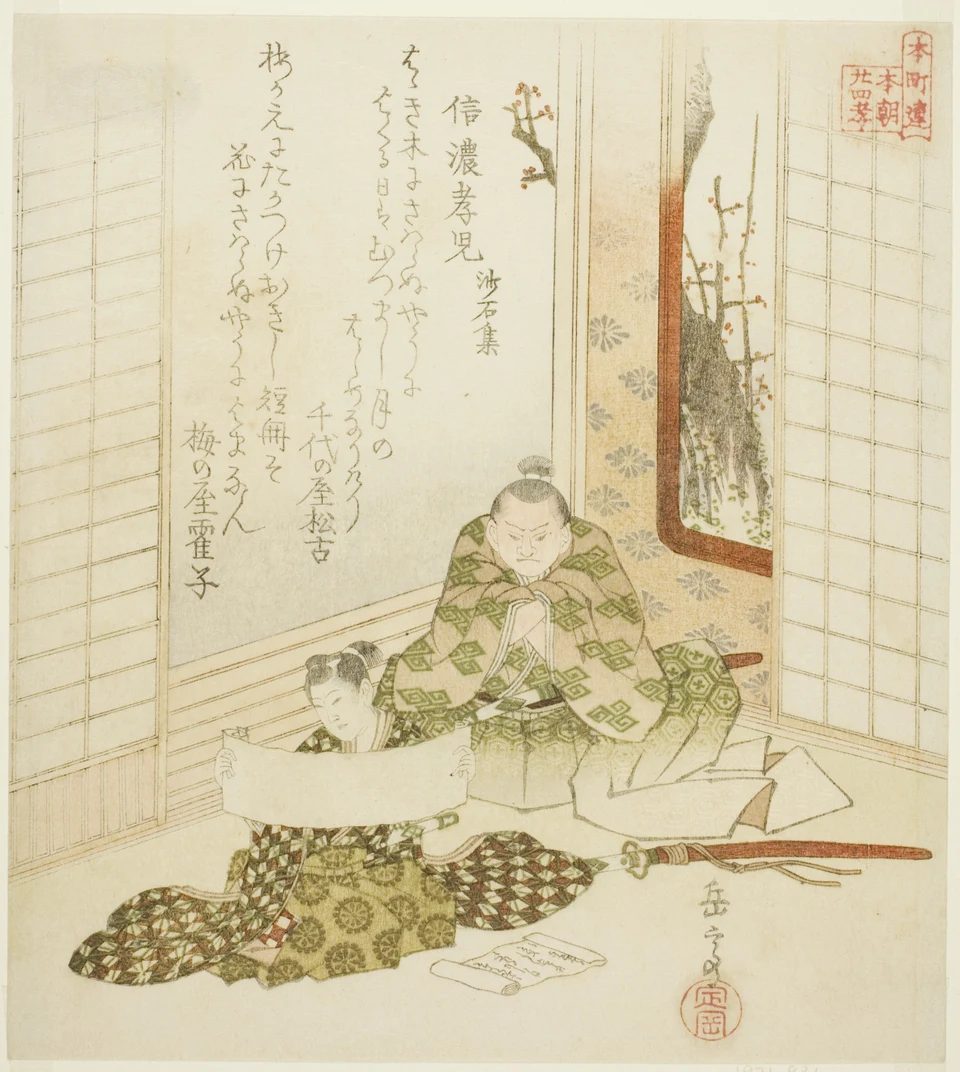 The Filial Child from Shinano Province from the Collection of Stone and Sand (Shinano koji, Shasekishu), from the series "Twenty-four Japanese Paragons of Filial Piety for the Honcho Circle (Honchoren Honcho nijushiko)"c. 1821
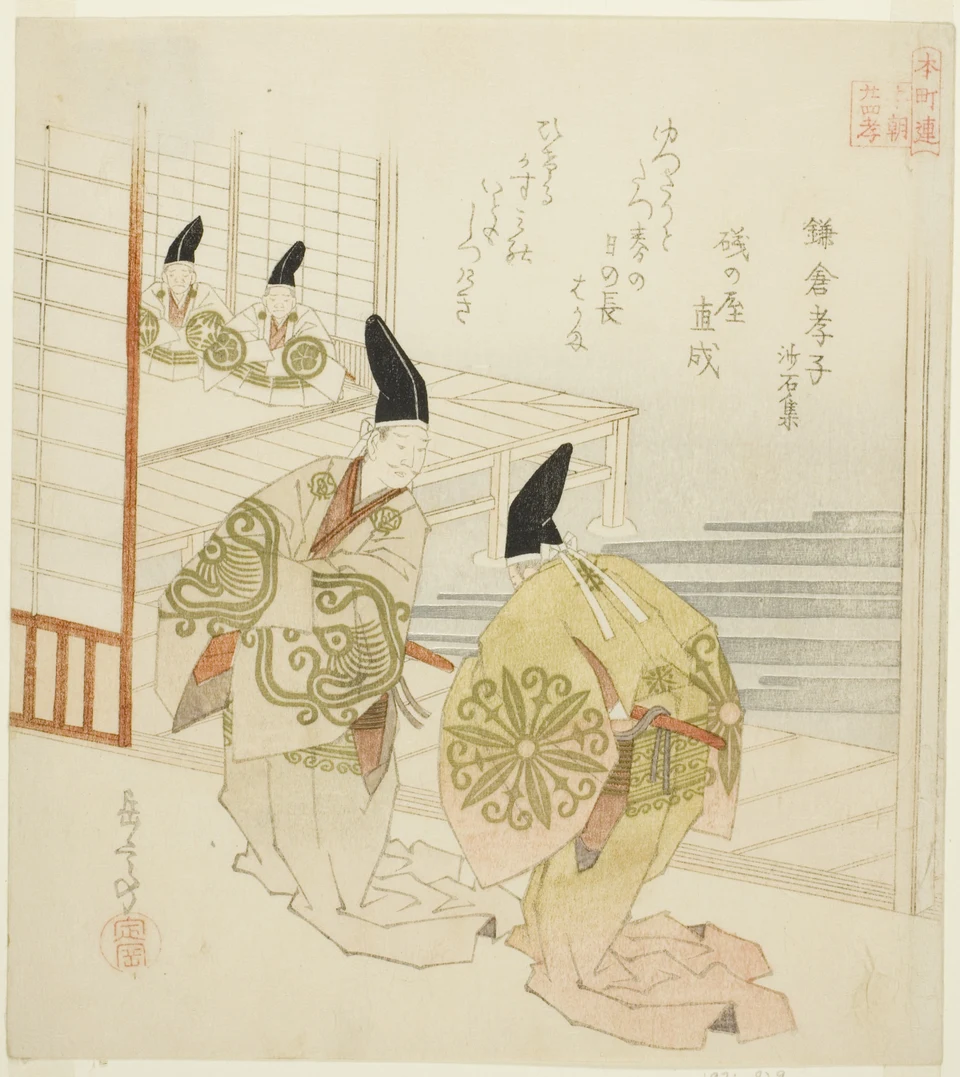 The Filial Son of Kamakura from the Collection of Stone and Sand (Kamakura koshi, Shasekishu), from the series "Twenty-four Japanese Paragons of Filial Piety for the Honcho Circle (Honchoren Honcho nijushiko)"c. 1821
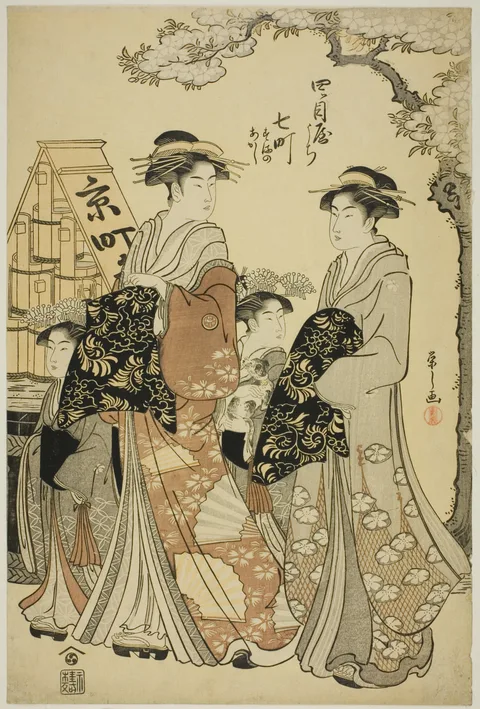
Chōbunsai Eishi
Nanamachi of the Yotsumeya with Attendants Sumano and Akashi, c. 1787
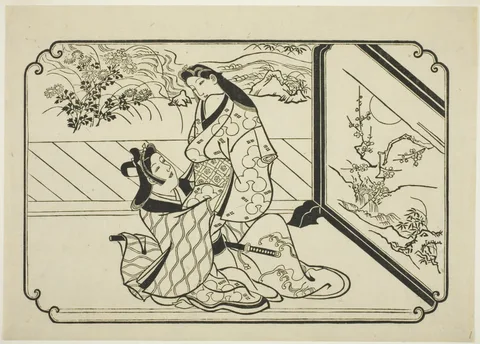
Hishikawa Moronobu
Behind the Screen, c. 1673/81
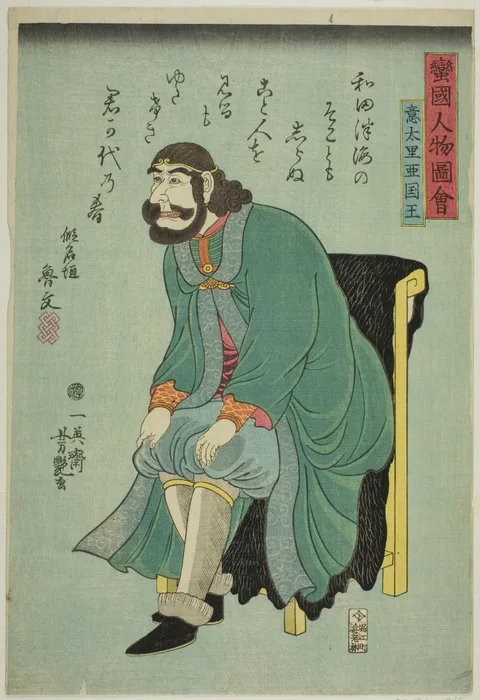
Ichieisai Yoshitsuya
King of Italy (Itaria kokuo), from the series "People of Barbarian Nations (Bankoku jinbutsu zue)", 1861