Utagawa Toyokuni I
1769–1825 · Ukiyo-e · 13 works
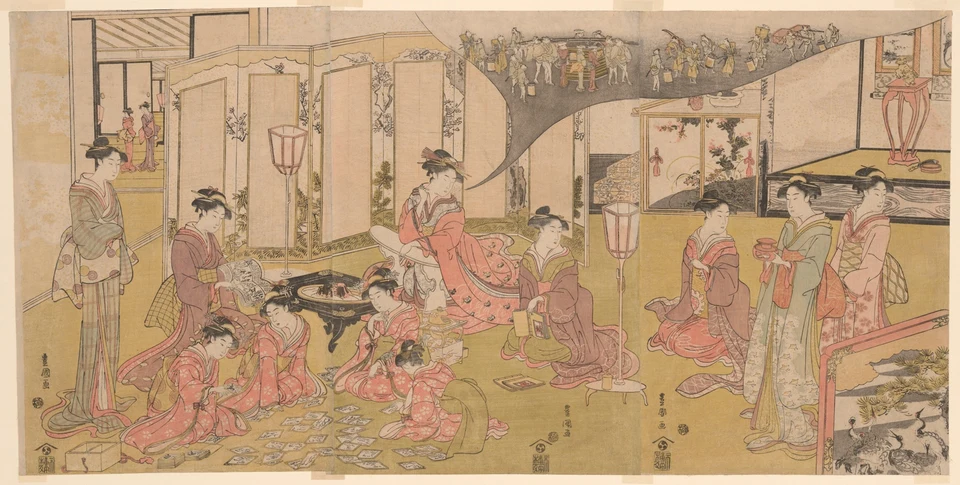
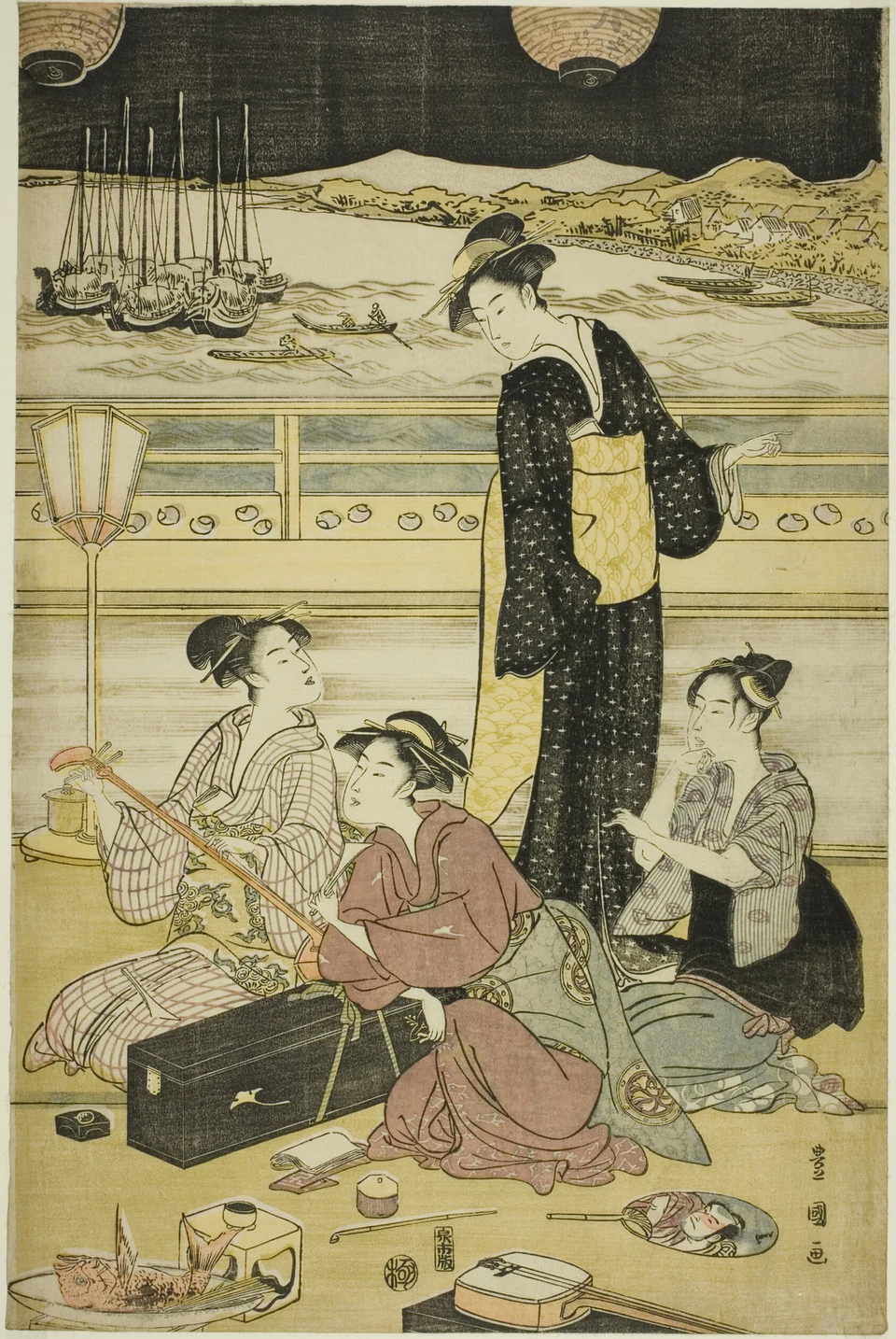
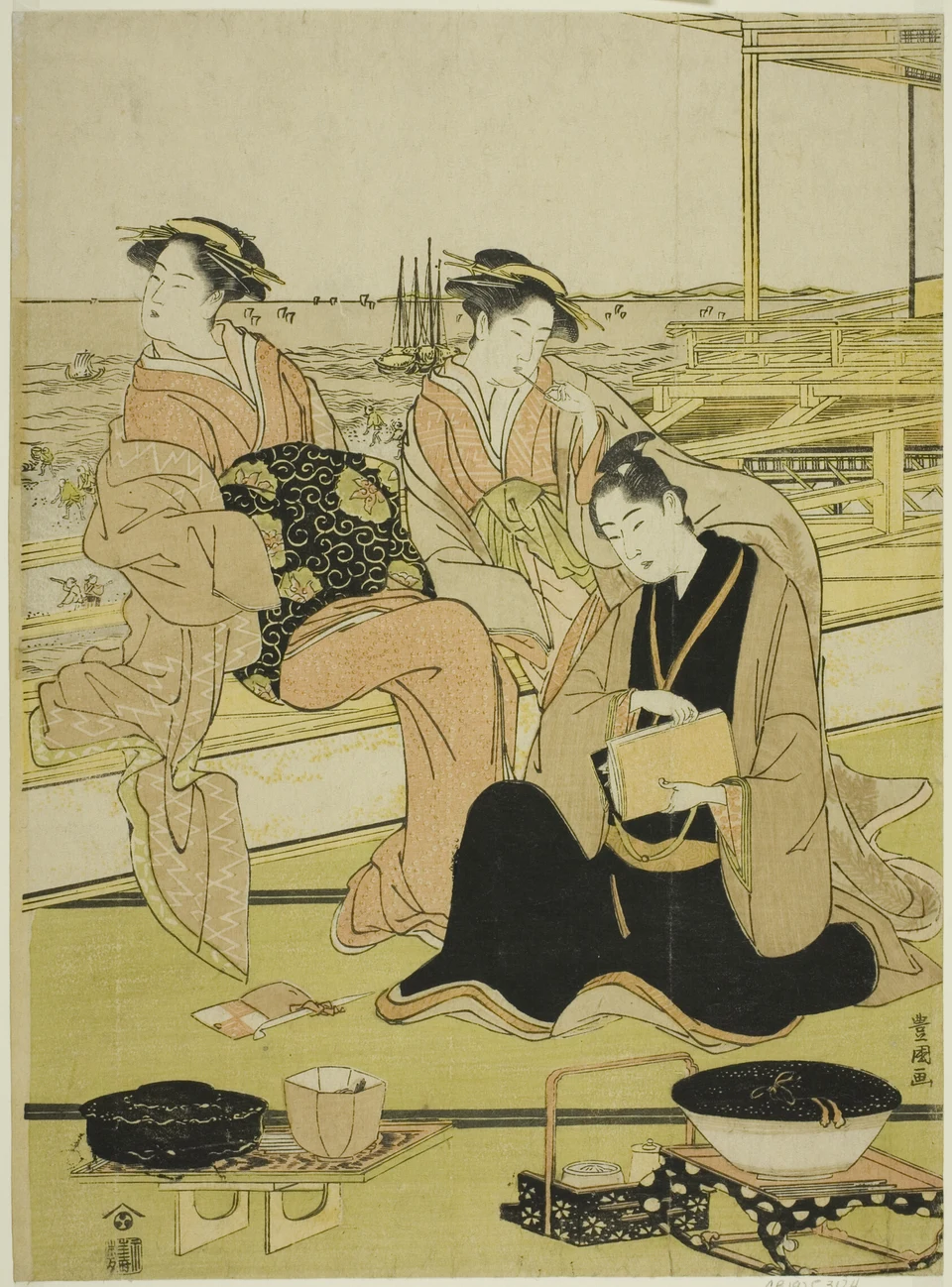
Utagawa Toyokuni I helped make the Utagawa school a central force in Japanese printmaking. His successful Portraits of Actors on Stage series began in 1794, bringing recognizable performers together with flowing outlines and lively color. He also depicted women, social gatherings, and household entertainments. The Card Game opens onto a wealthy Edo home where young men play a poetry-based game of recognition. Such scenes invite a different pace of looking from the actor portraits: follow the exchange between figures, then notice how clothing, furnishings, and surrounding space connect them.
13 works · 1790–1793
In The Card Game, trace the players’ gestures toward the cards. How does the arrangement make their shared activity legible?
c. 1790 · 3 works
Walk these 3Around 1790 Edo’s print designers celebrated courtesans and kabuki actors as stars. Chōbunsai Eishi, a samurai who left his post as an official painter, drew courtesans with their attendants. Tōshūsai Sharaku, active for about ten months, and Utagawa Toyokuni I portrayed actors. The courtesans of the Yoshiwara were exploited in a system of forced and strictly controlled prostitution.
In the museum: Ukiyo-e room · 1 work
1792 · 3 works
Walk these 3
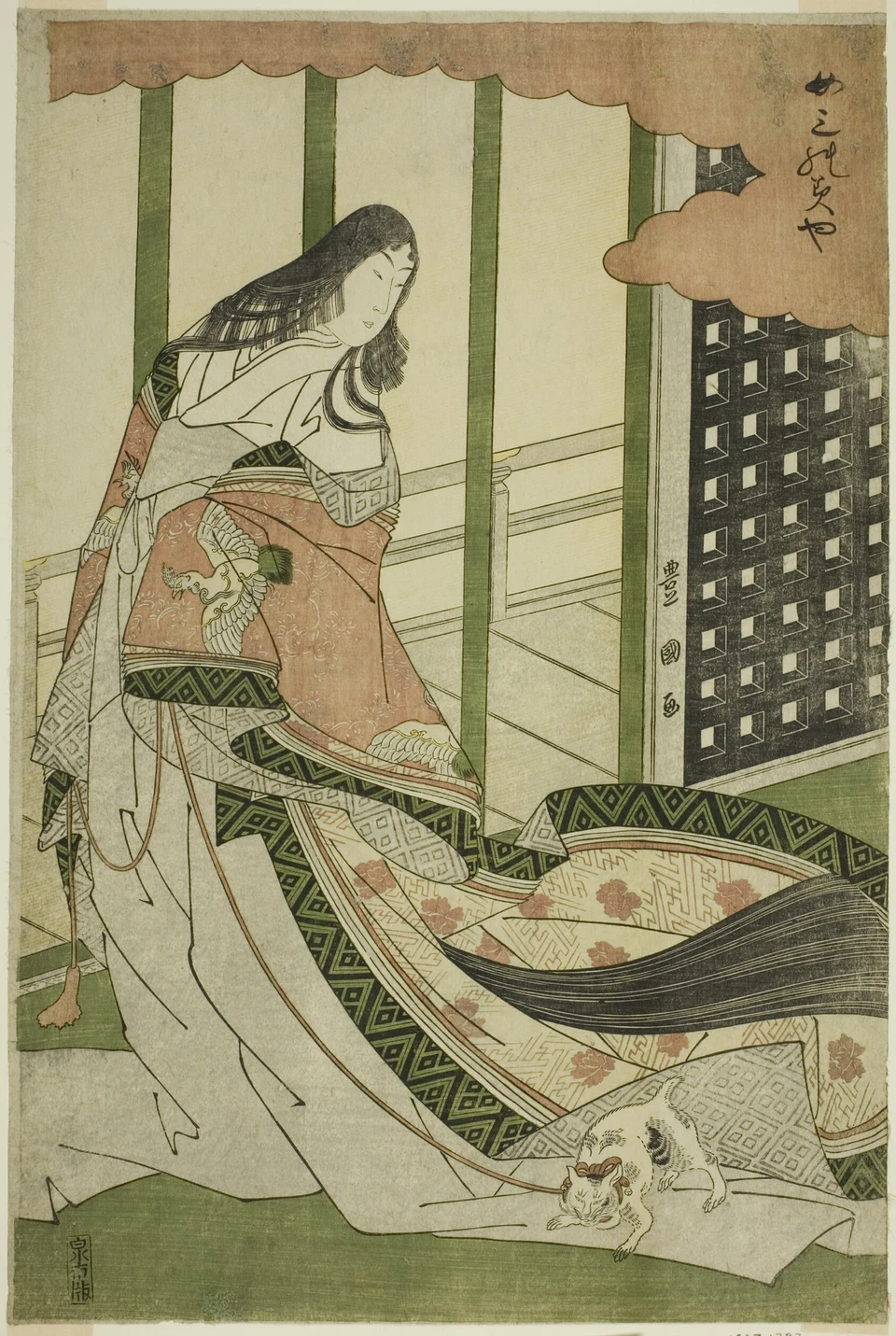
c. 1793 · 7 works
Walk these 7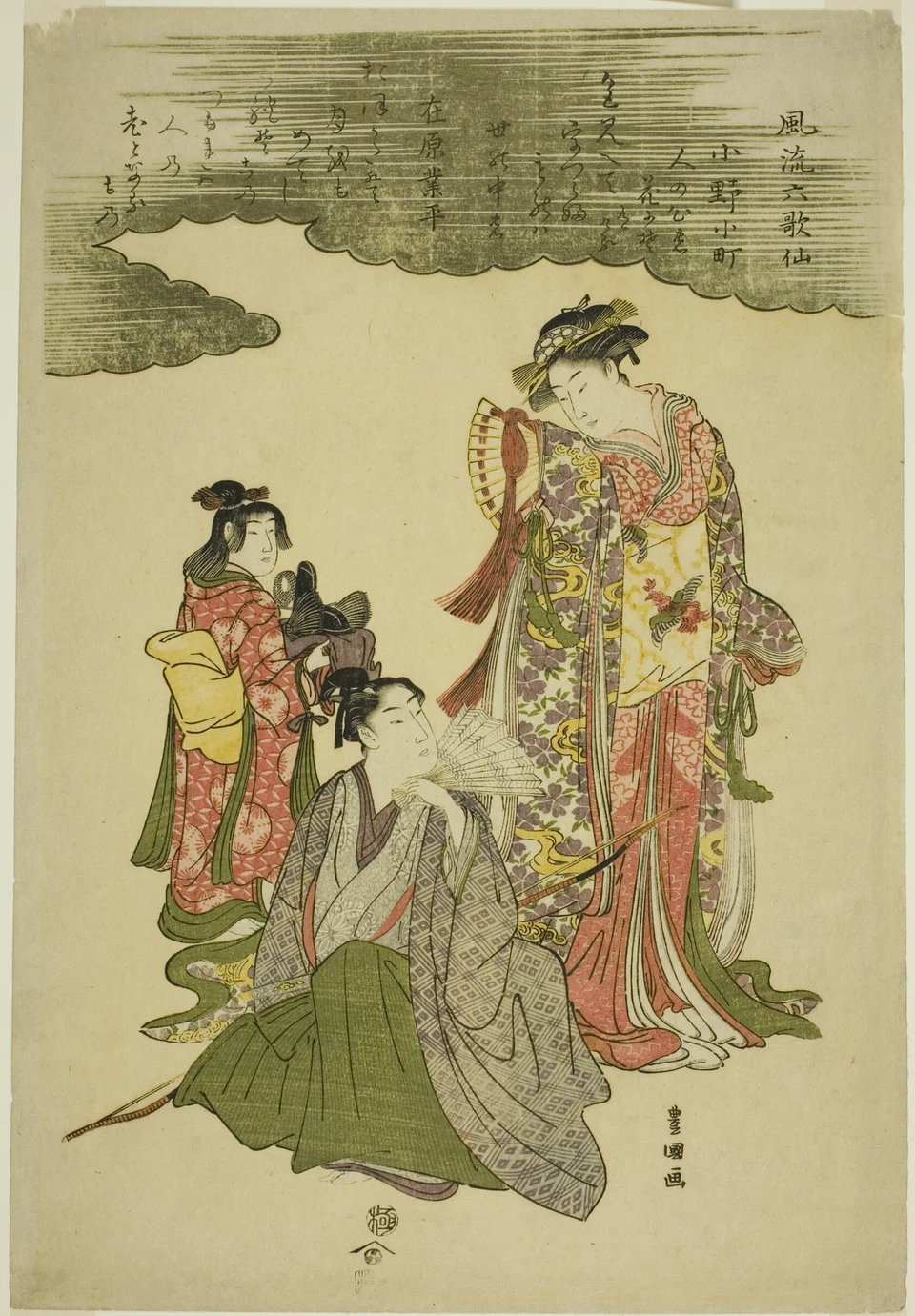 Fashionable Six Immortal Poets (Furyu rokkasen)c. 1793
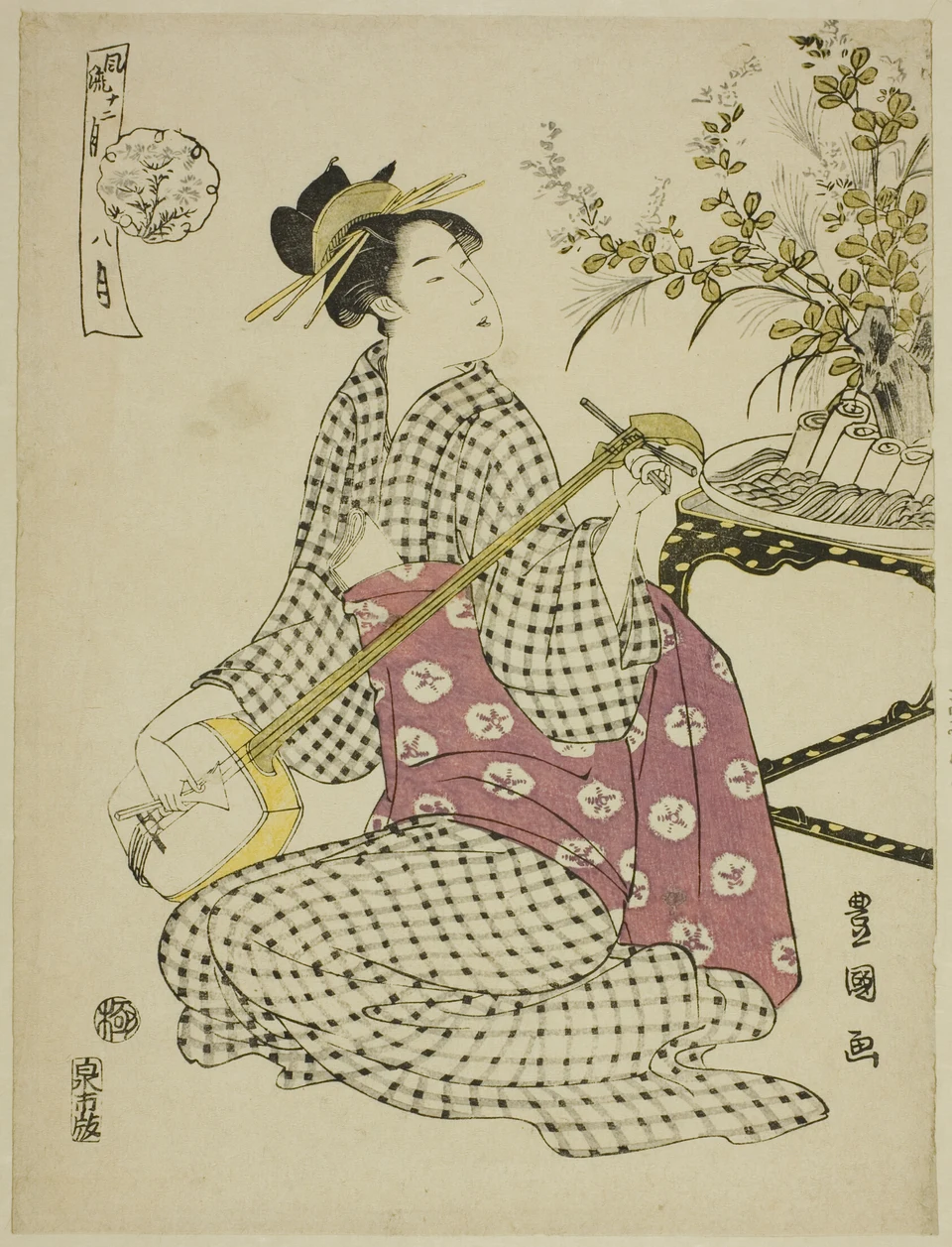 The Eighth Month (Hachi gatsu), from the series "Fashionable Twelve Months (Furyu junikagetsu)"c. 1793
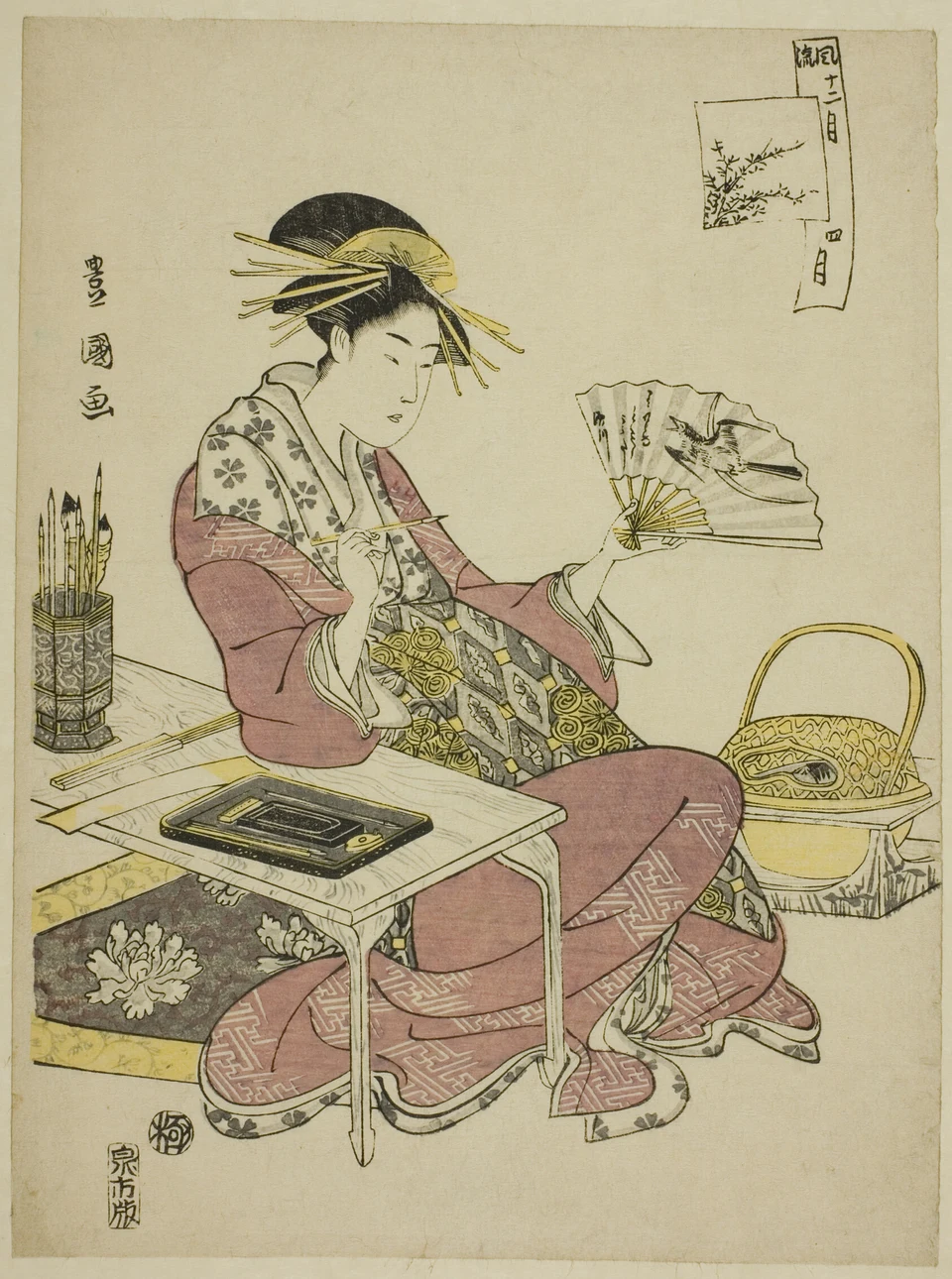 The Fourth Month (Shi gatsu), from the series "Fashionable Twelve Months (Furyu junikagetsu)"c. 1793
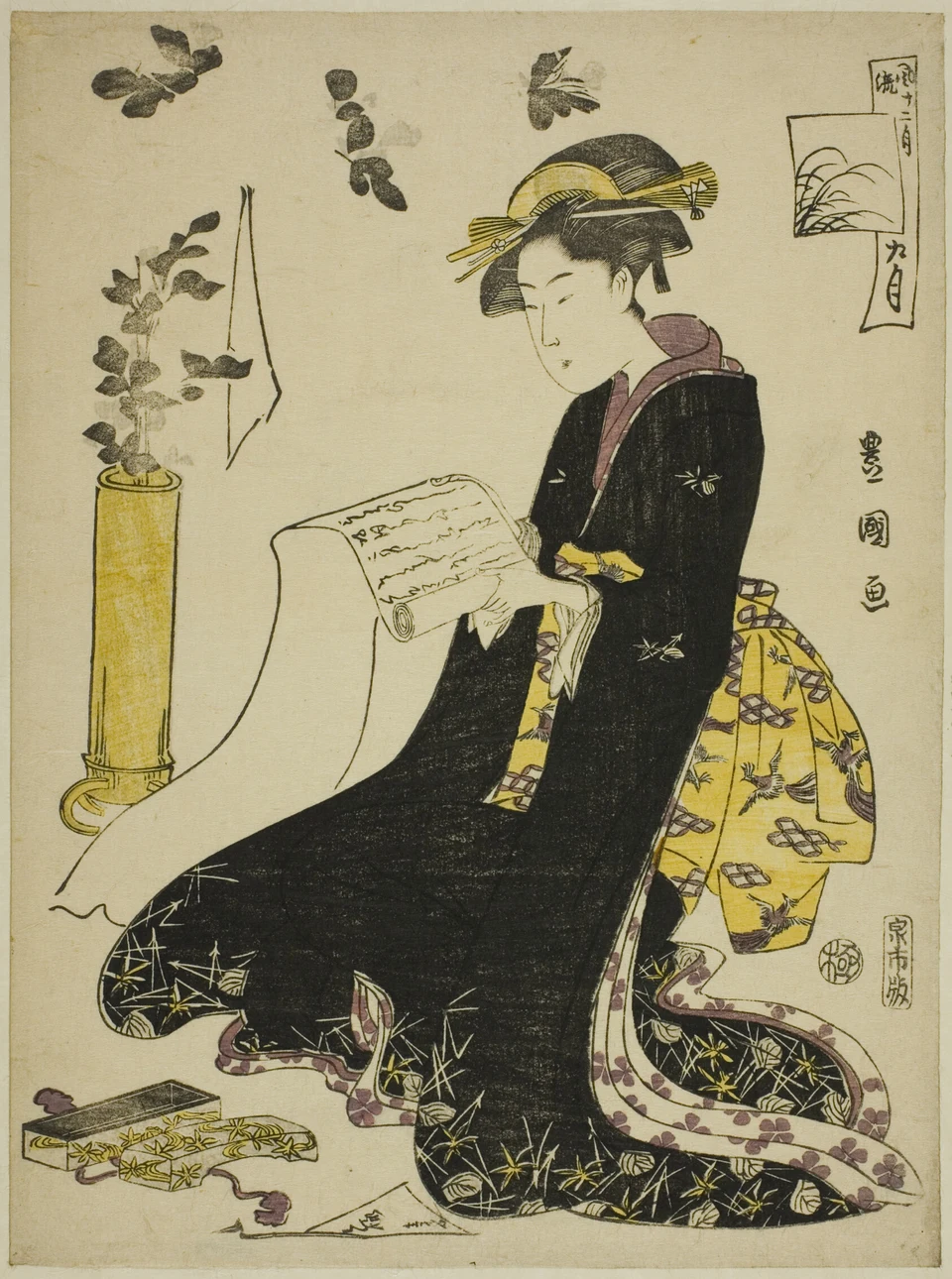 The Ninth Month (Ku gatsu), from the series "Fashionable Twelve Months (Furyu junikagetsu)"c. 1793
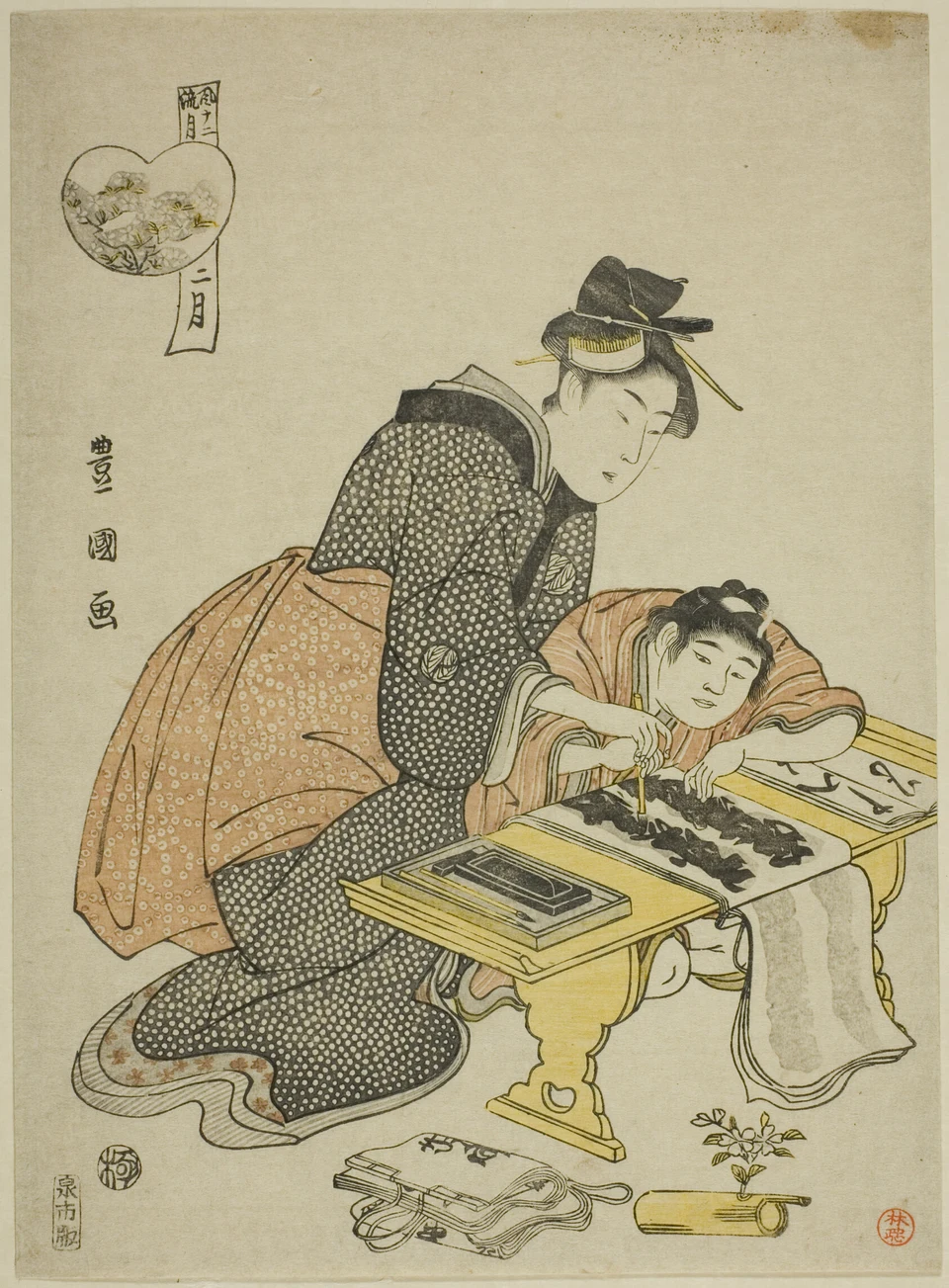 The Second Month (Ni gatsu), from the series "Fashionable Twelve Months (Furyu junikagetsu)"c. 1793
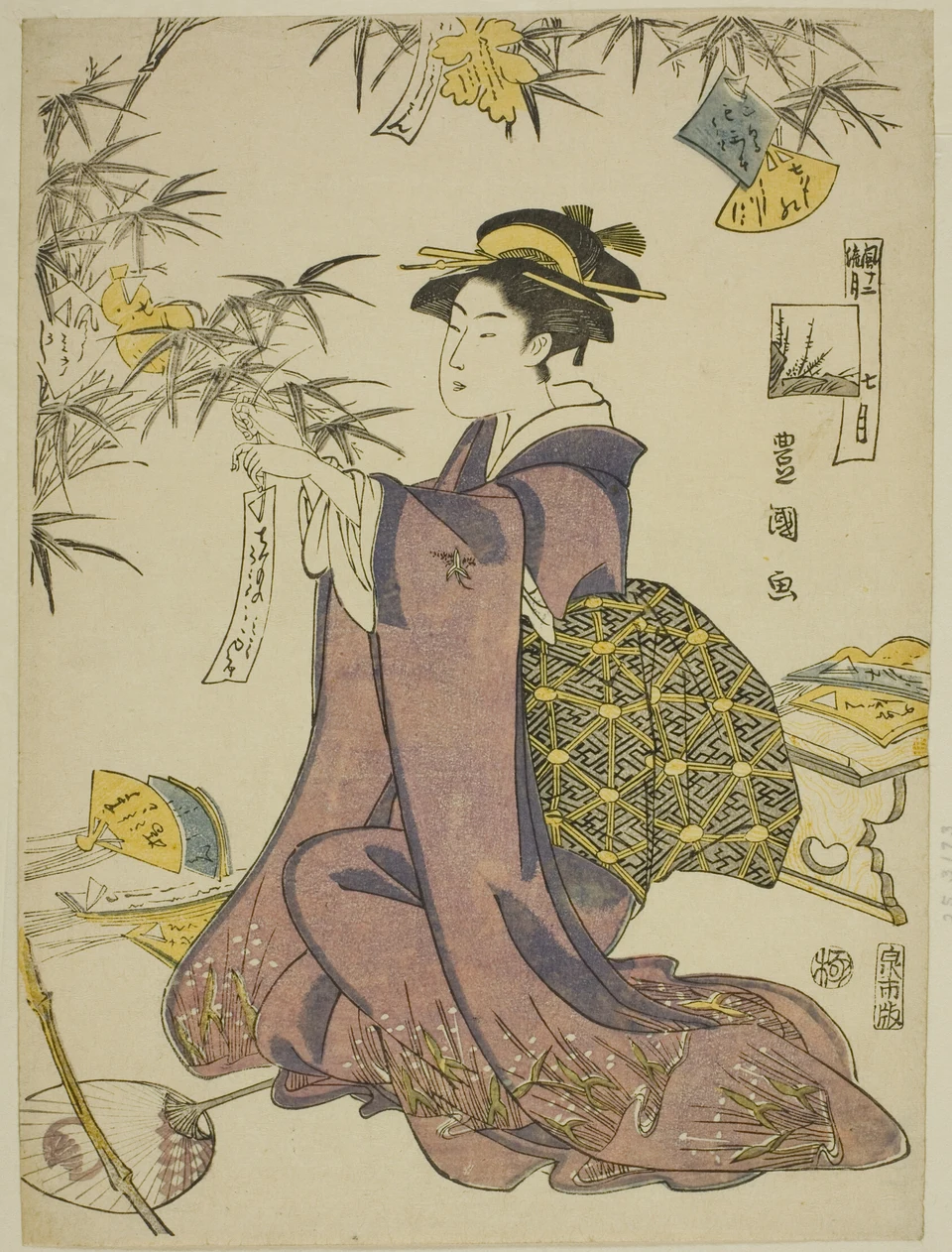 The Seventh Month (Shichi gatsu), from the series "Fashionable Twelve Months (Furyu junikagetsu)"c. 1793
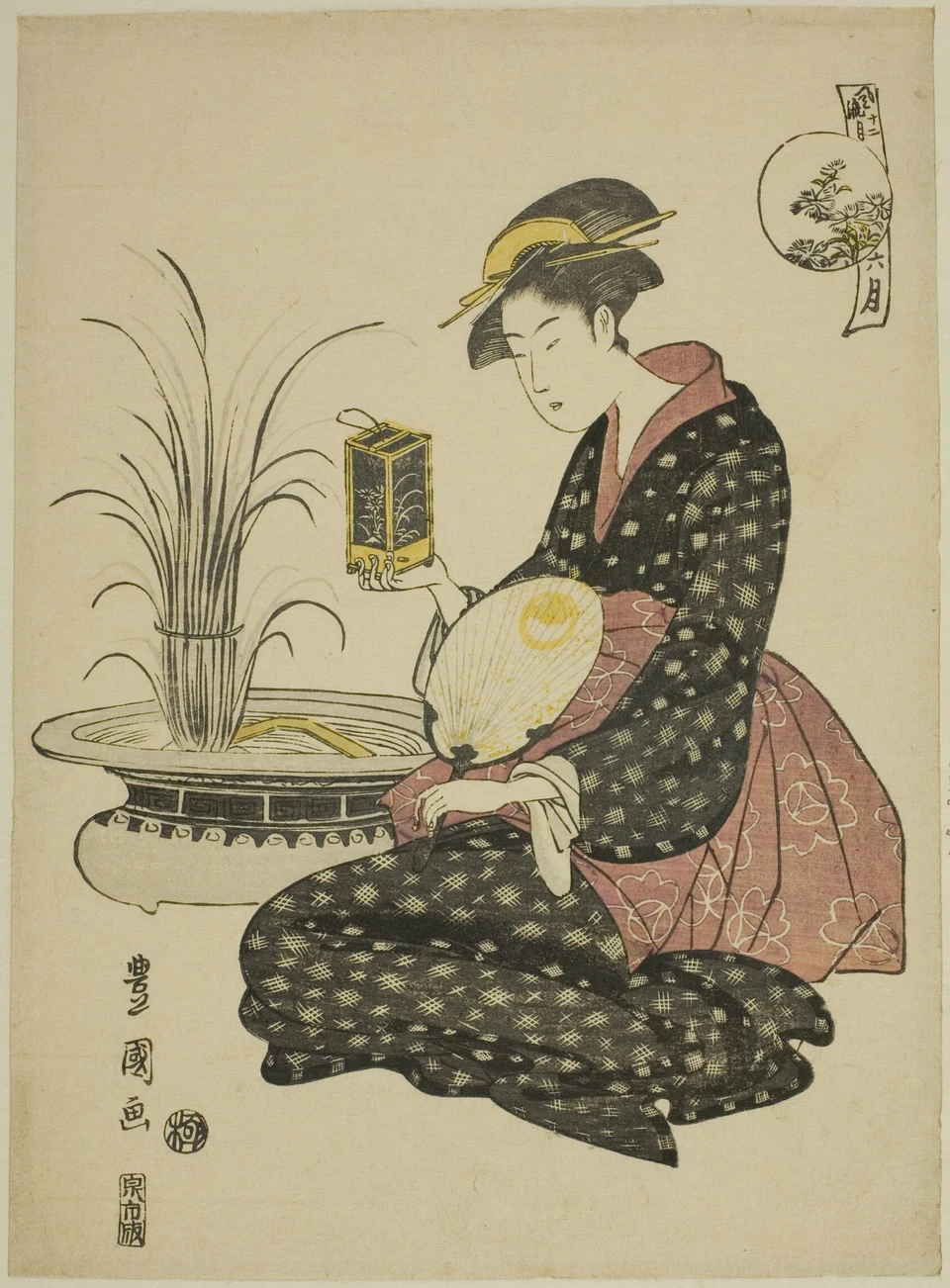 The Sixth Month (Roku gatsu), from the series "Fashionable Twelve Months (Furyu junikagetsu)"c. 1793
Chōbunsai Eishi
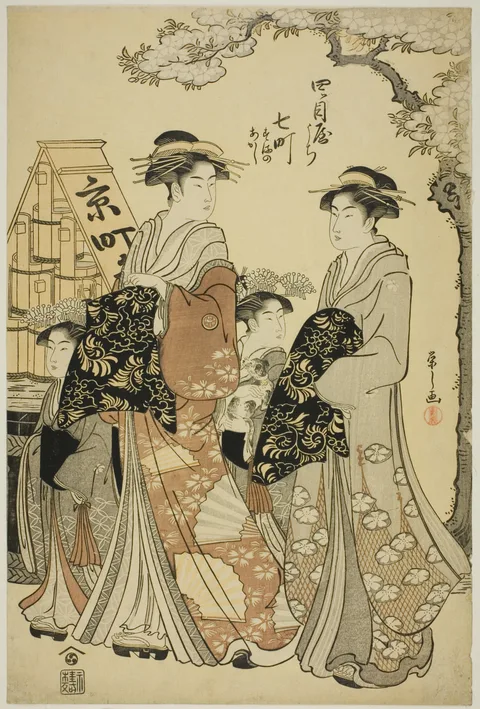
Nanamachi of the Yotsumeya with Attendants Sumano and Akashi, c. 1787
Hishikawa Moronobu
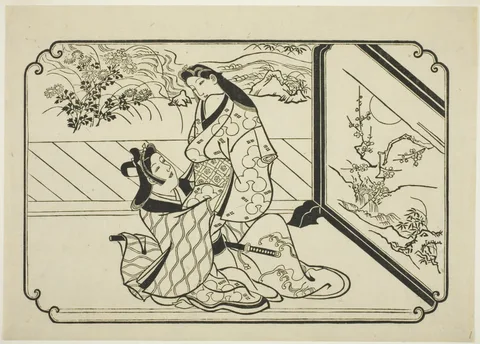
Behind the Screen, c. 1673/81
Ichieisai Yoshitsuya
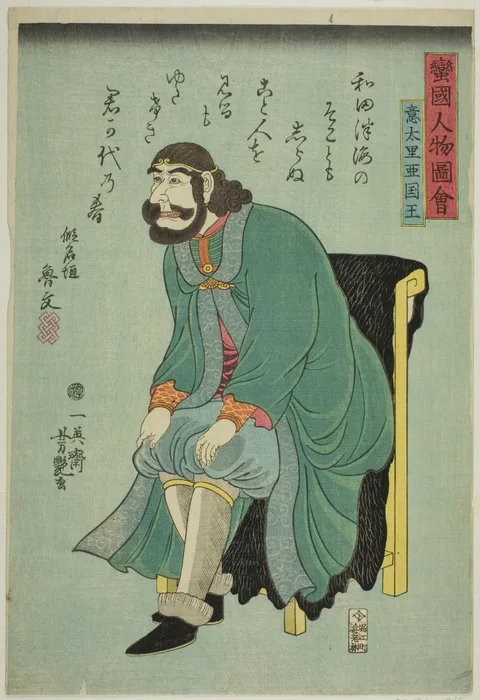
King of Italy (Itaria kokuo), from the series "People of Barbarian Nations (Bankoku jinbutsu zue)", 1861