Tsukioka Yoshitoshi
1839–1892 · Ukiyo-e · 14 works
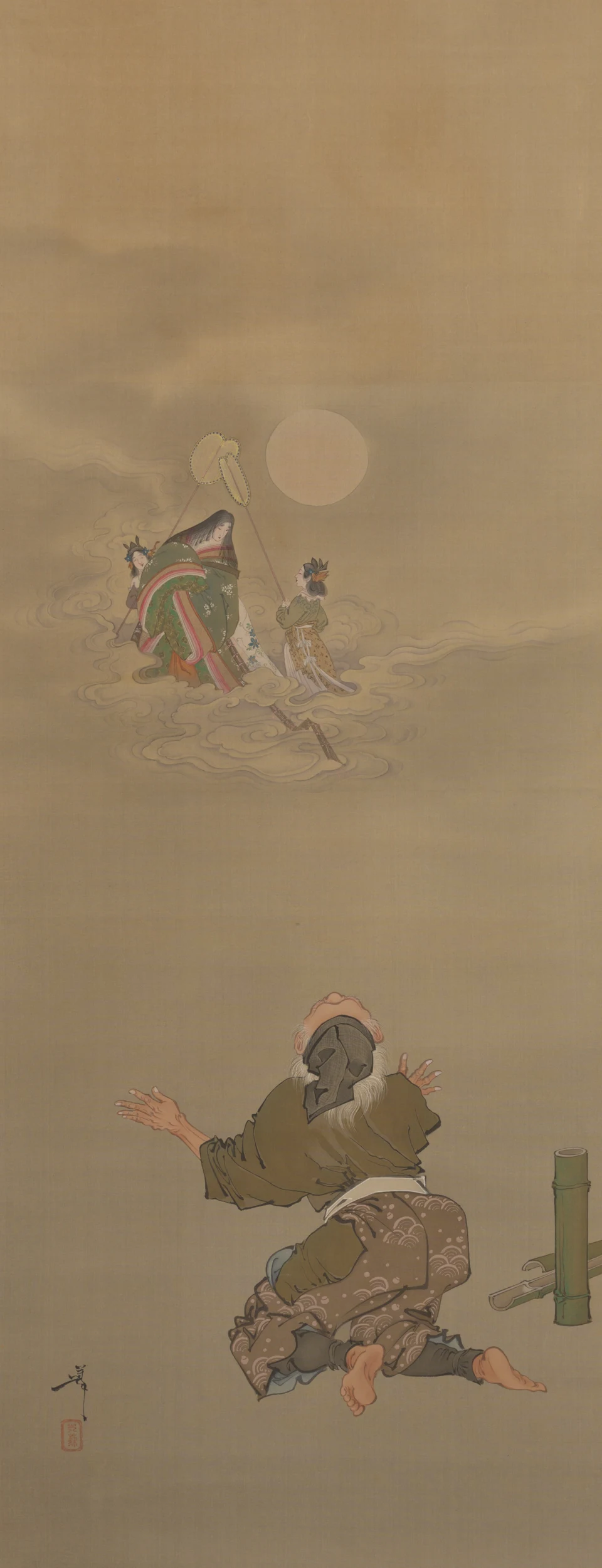
Tsukioka Yoshitoshi made woodblock prints and paintings during Japan’s transition from the Edo period into the Meiji era. He studied with Kuniyoshi and drew on legends, history, actors, and everyday behavior. His designs can hold a scene at an emotionally charged moment, allowing a gesture or a stretch of empty space to suggest what happens next. In the Bamboo Cutter story, for example, the old man appeals to Princess Kaguya as she returns to the moon. Looking across the prints reveals many ways of making an old story feel present.
14 works · 1862–1889
In Received Back into the Moon Palace, follow the bamboo cutter’s gesture toward Kaguya. How does the space between them affect the moment?
1862–1867 · 4 works
Walk these 4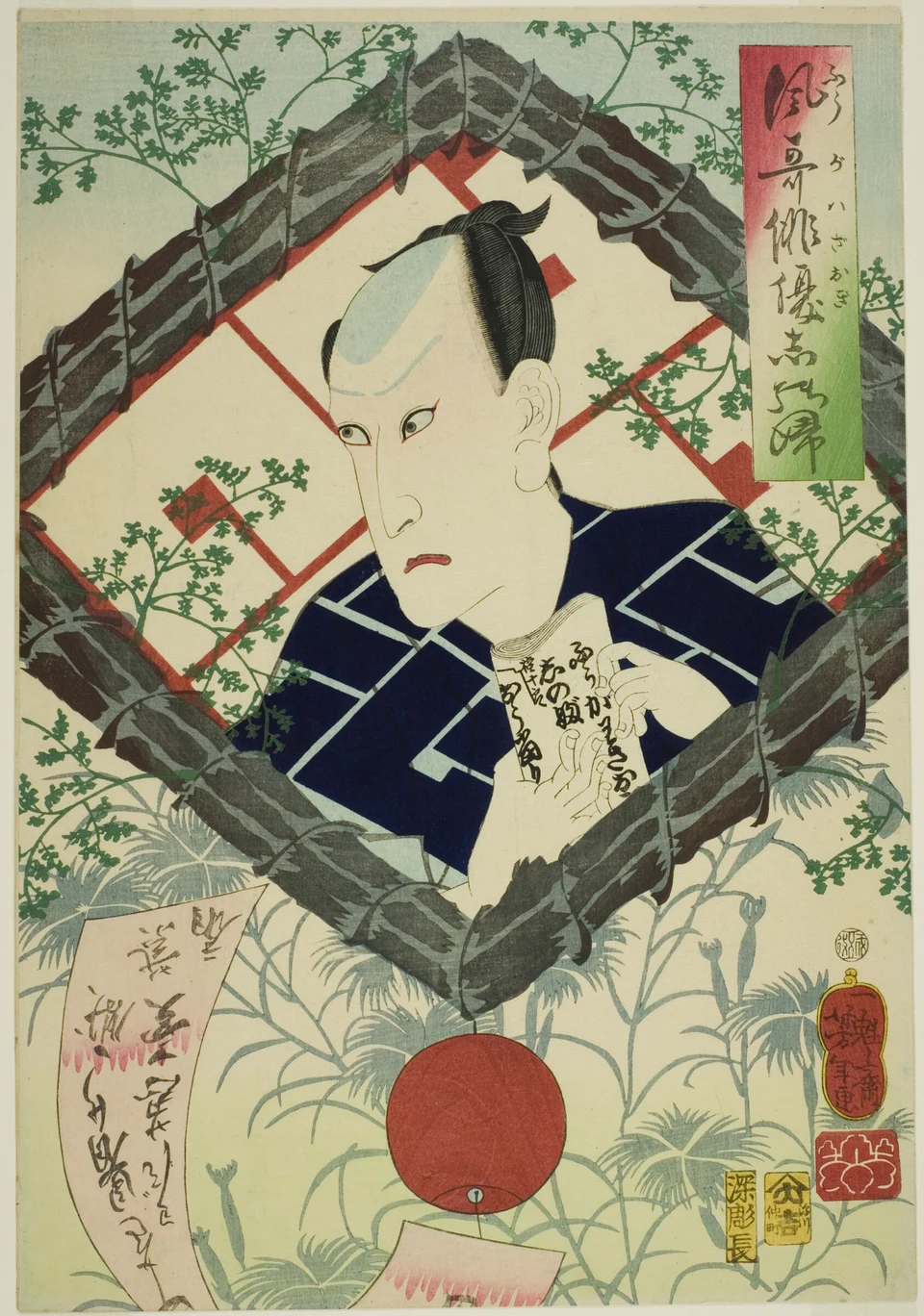 The Actor Kawarazaki Gonjuro I, from the series "Reminiscences of Elegant Actors (Fuga wazaogi shinobu)"1862
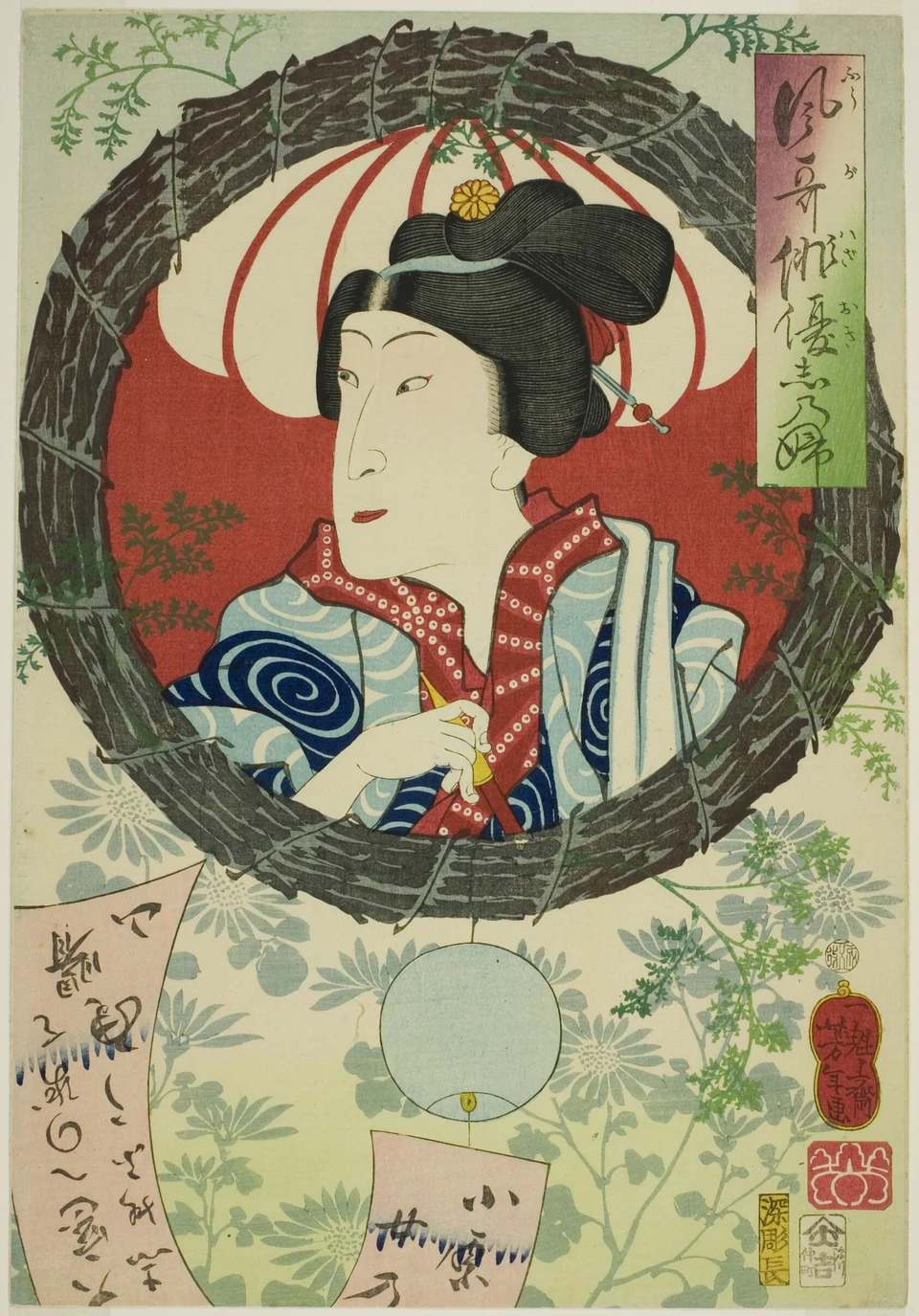 The Actor Sawamura Tanosuke III, from the series "Reminiscences of Elegant Actors (Fuga wazaogi shinobu)"1862
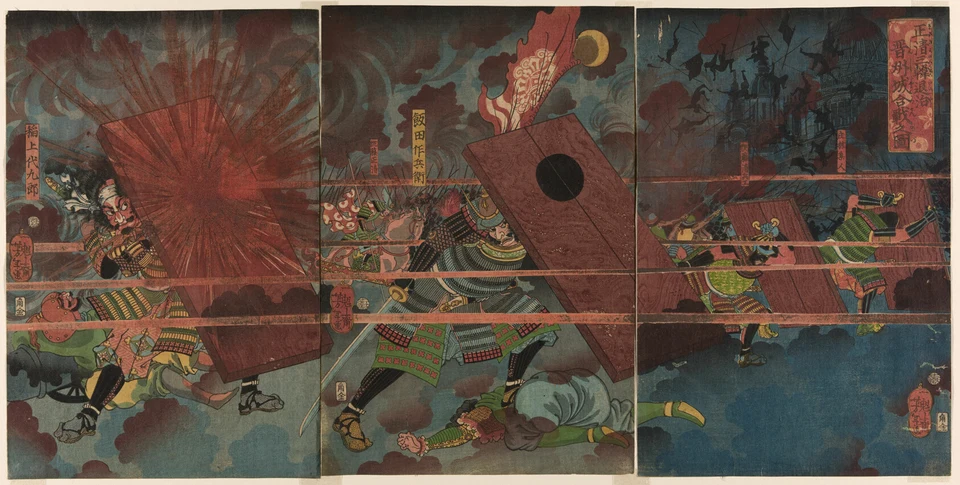 The Battle at Jinju during Masakiyo's Conquest of Korea (Masakiyo Sankan taiji, Shinshujo kassen no zu)1863
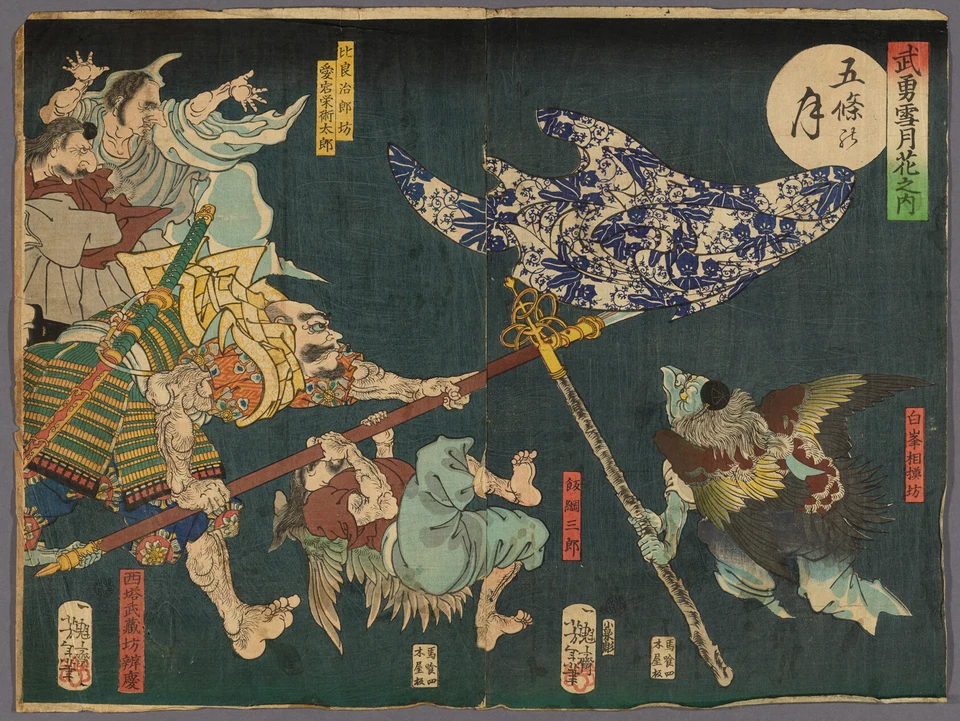 The Moon over Gojo Bridge (Gojo no tsuki), from the series "Heroes for the Snow, Moon, and Flowers (Buyu setsugekka)"1867
1876–1886 · 6 works
Walk these 6Ukiyo-e stayed popular from the last decades of the Edo period into the Meiji period. Hokusai’s daughter Katsushika Ōi painted a scene from a Chinese novel, and Utagawa Kuniyoshi drew actors as wall graffiti. His pupil Tsukioka Yoshitoshi turned legend and history into prints, Ogata Gekkō won prizes at world’s fairs, and Tsukioka Kōgyo specialized in Noh.
In the museum: Ukiyo-e room · 2 works
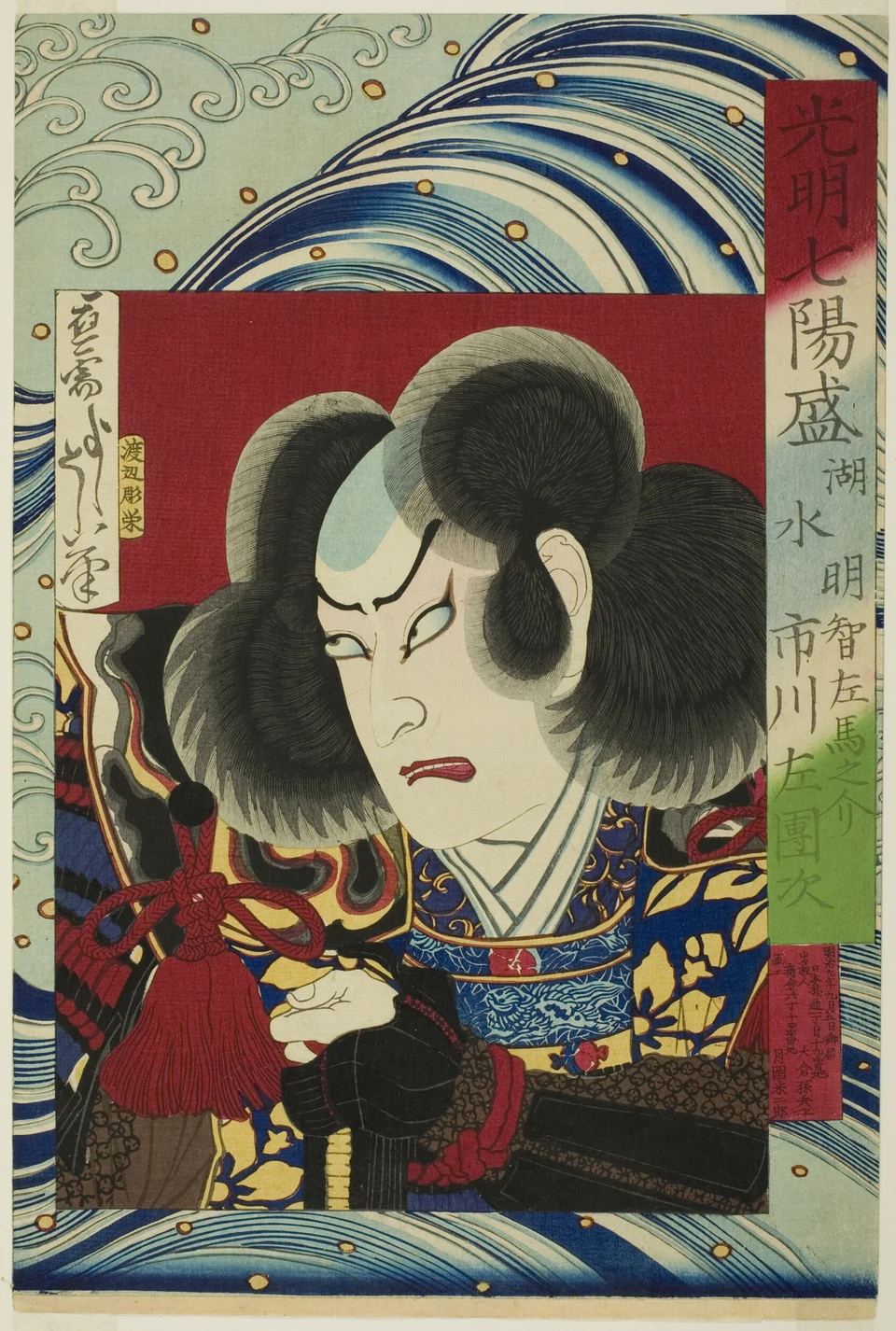 The Actor Ichikawa Sadanji as Akechi Samenosuke, from the series "Seven Brilliant Heroes (Komei shichi yosei)"1876
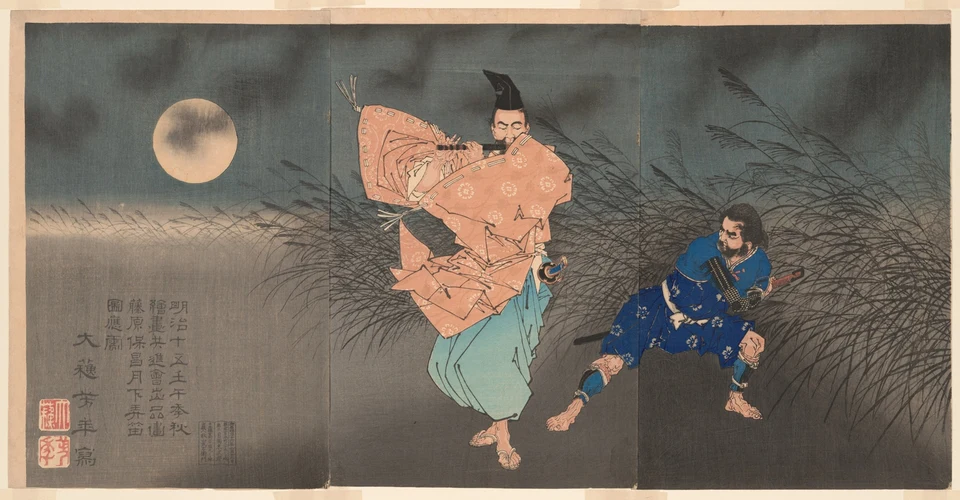 Fujiwara no Yasumasa Playing His Flute in the MoonlightAbout 1883
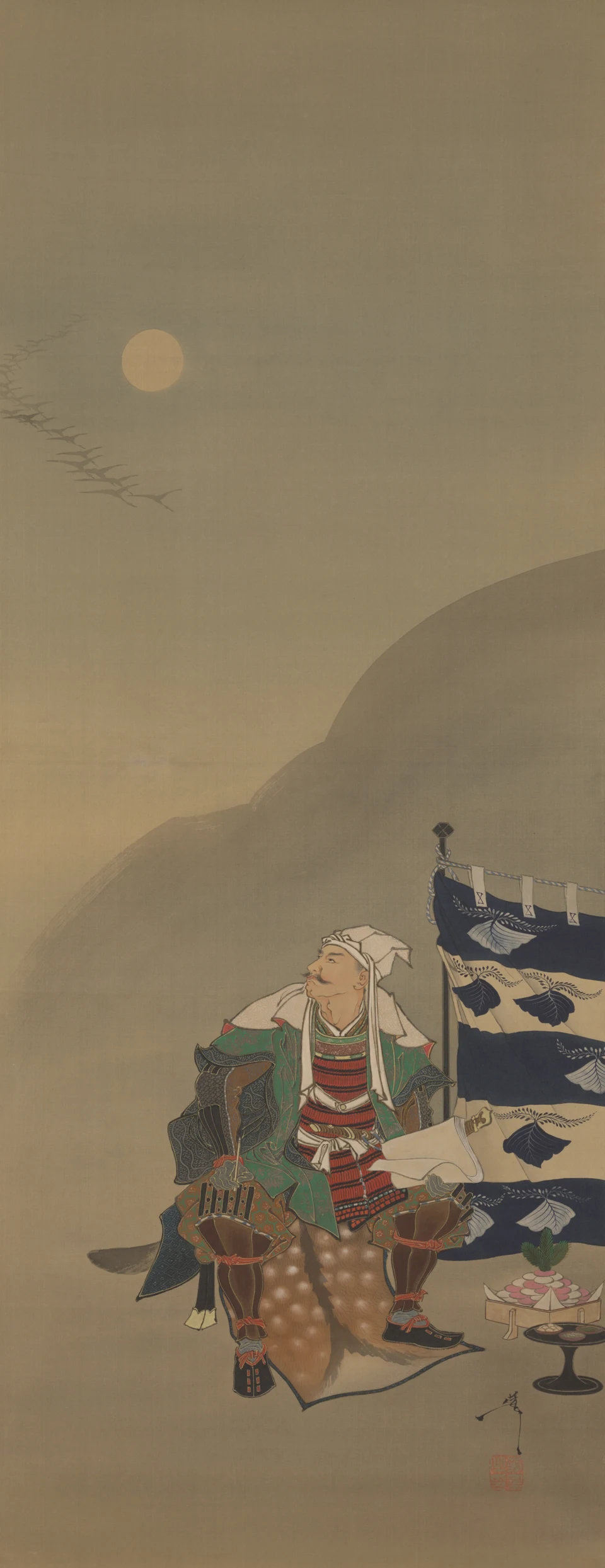 Frost fills the air and the autumn air is still/lines of returning geese cross the moon in the third hour-Kenshin, from the series Twelve Aspects of the Moon1885/92
- Received Back into the Moon Palace-Taketori (Bamboo Cutter) from the series Twelve Aspects of the Moonc. 1885/92
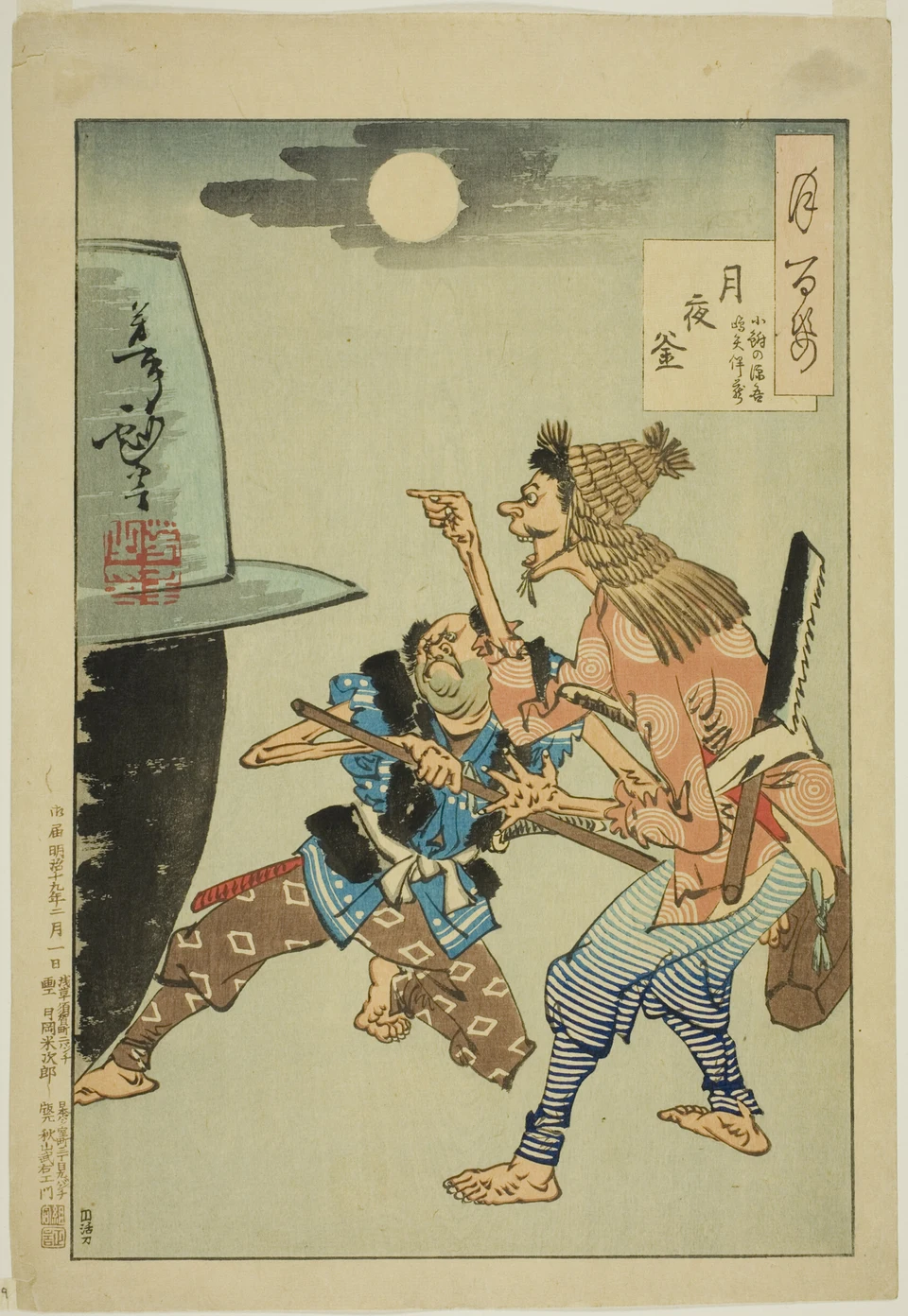 A Cauldron on a Moonlit Night (Tsukiyo no kama), from the series "One Hundred Aspects of the Moon (Tsuki hyakushi)"1886
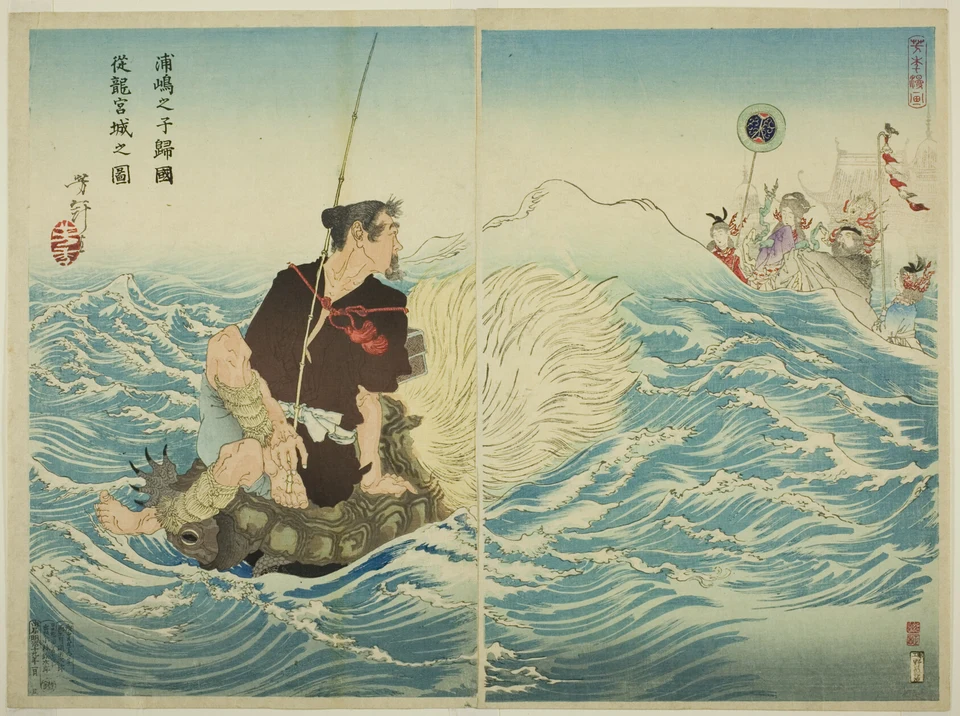 Urashima Taro Returning Home from the Palace of the Dragon King (Urashima Taro no ko kikoku ju Ryugujo no zu)1886
1888–1889 · 4 works
Walk these 4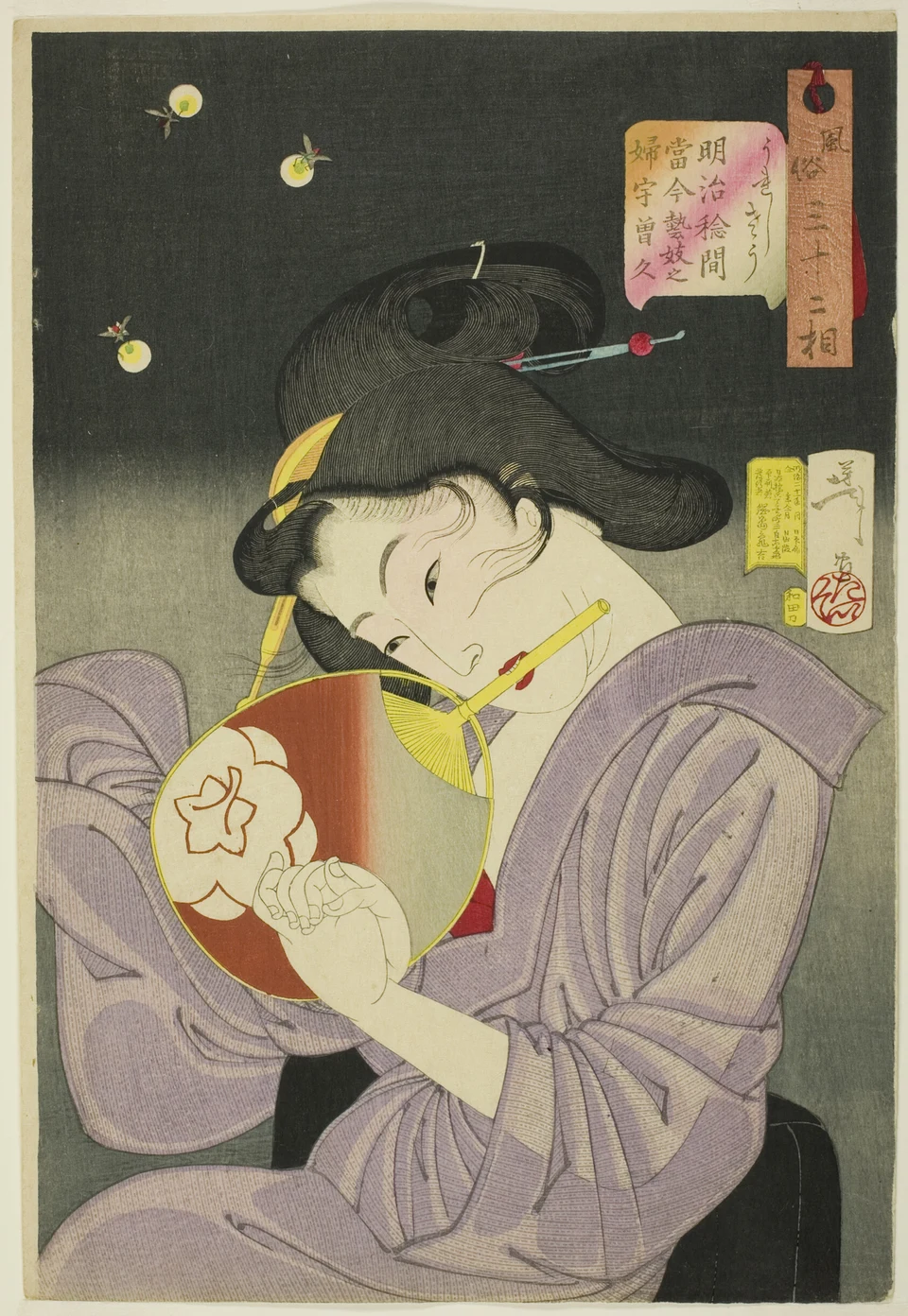 Delighted (Ureshiso), from the series "Thirty-two Aspects of Women (Fuzoku sanjuniso)"1888
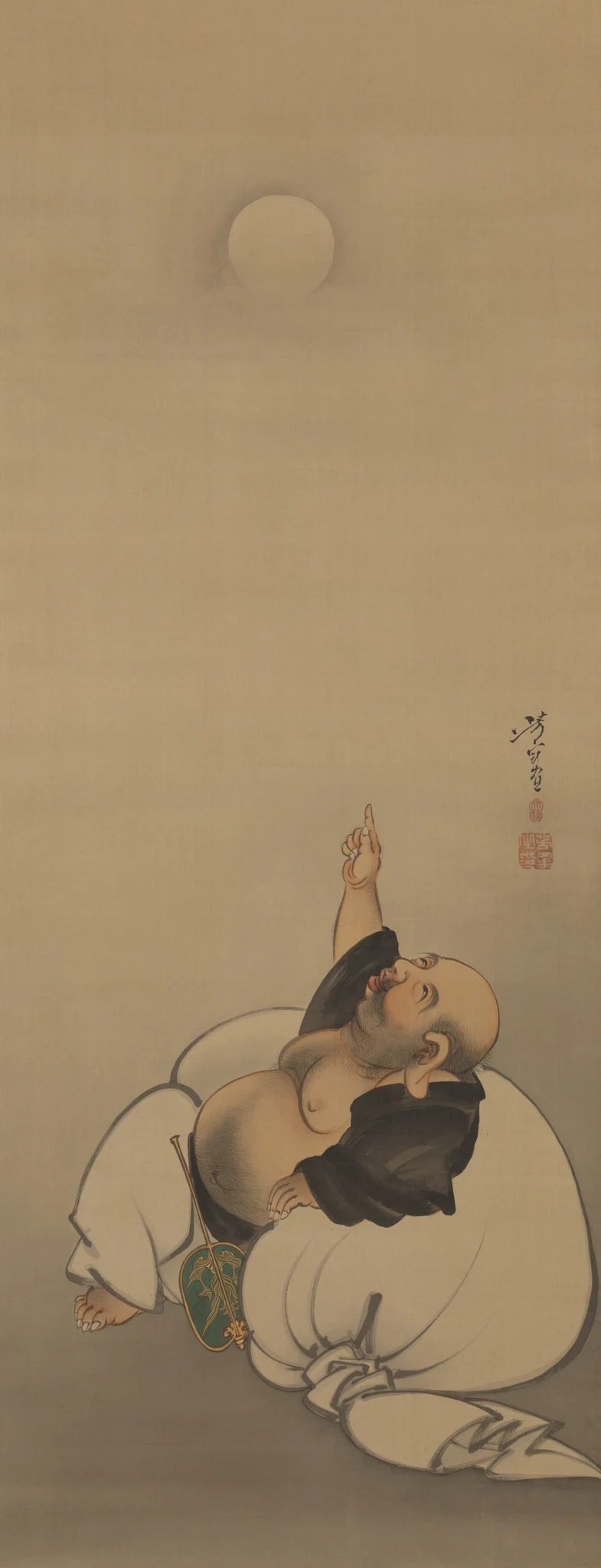 Moon of Enlightenment, from the series Twelve Aspects of the MoonAbout 1885-92
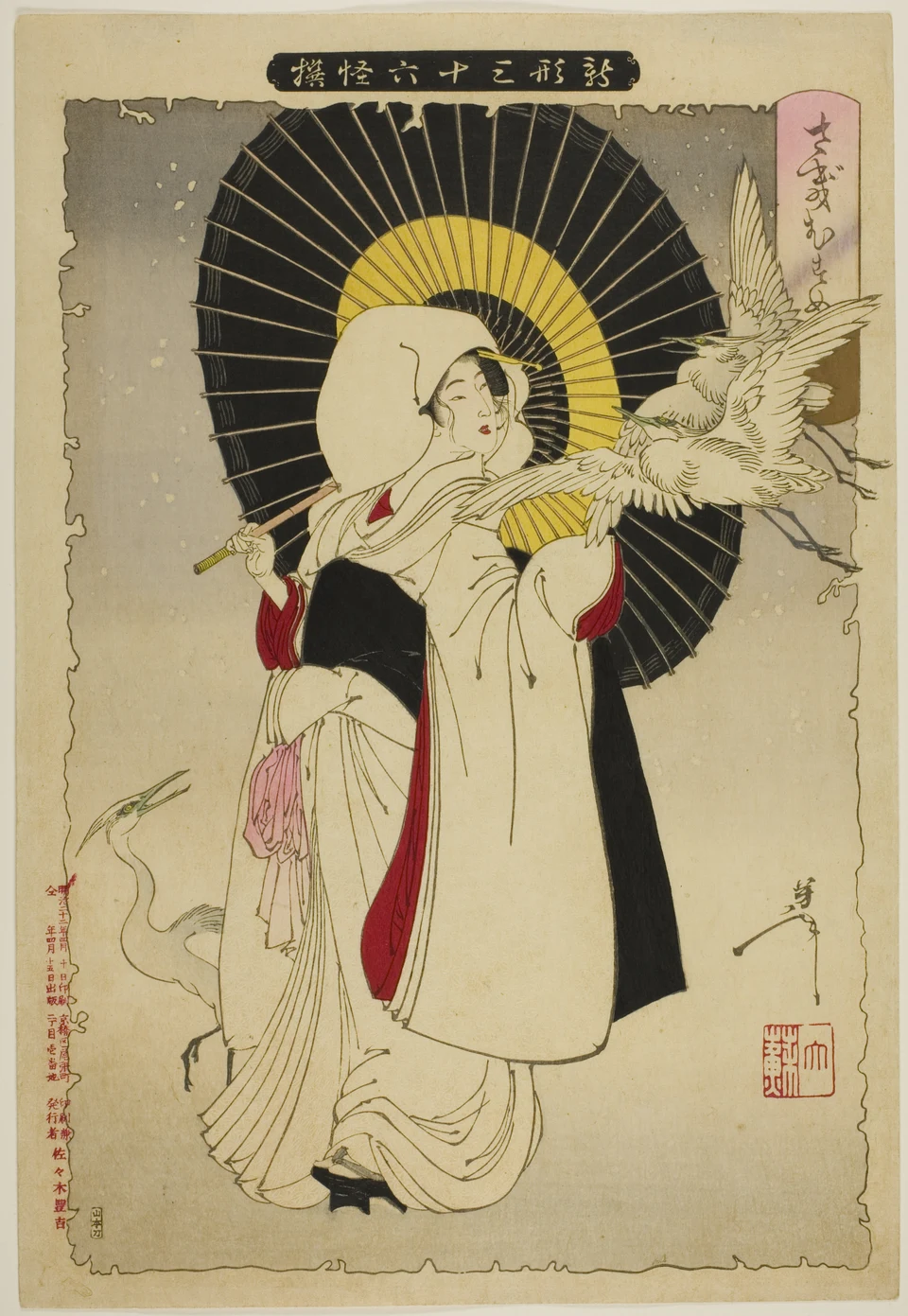 Heron Maiden from the series "New Forms of Thirty-Six Ghosts"1889
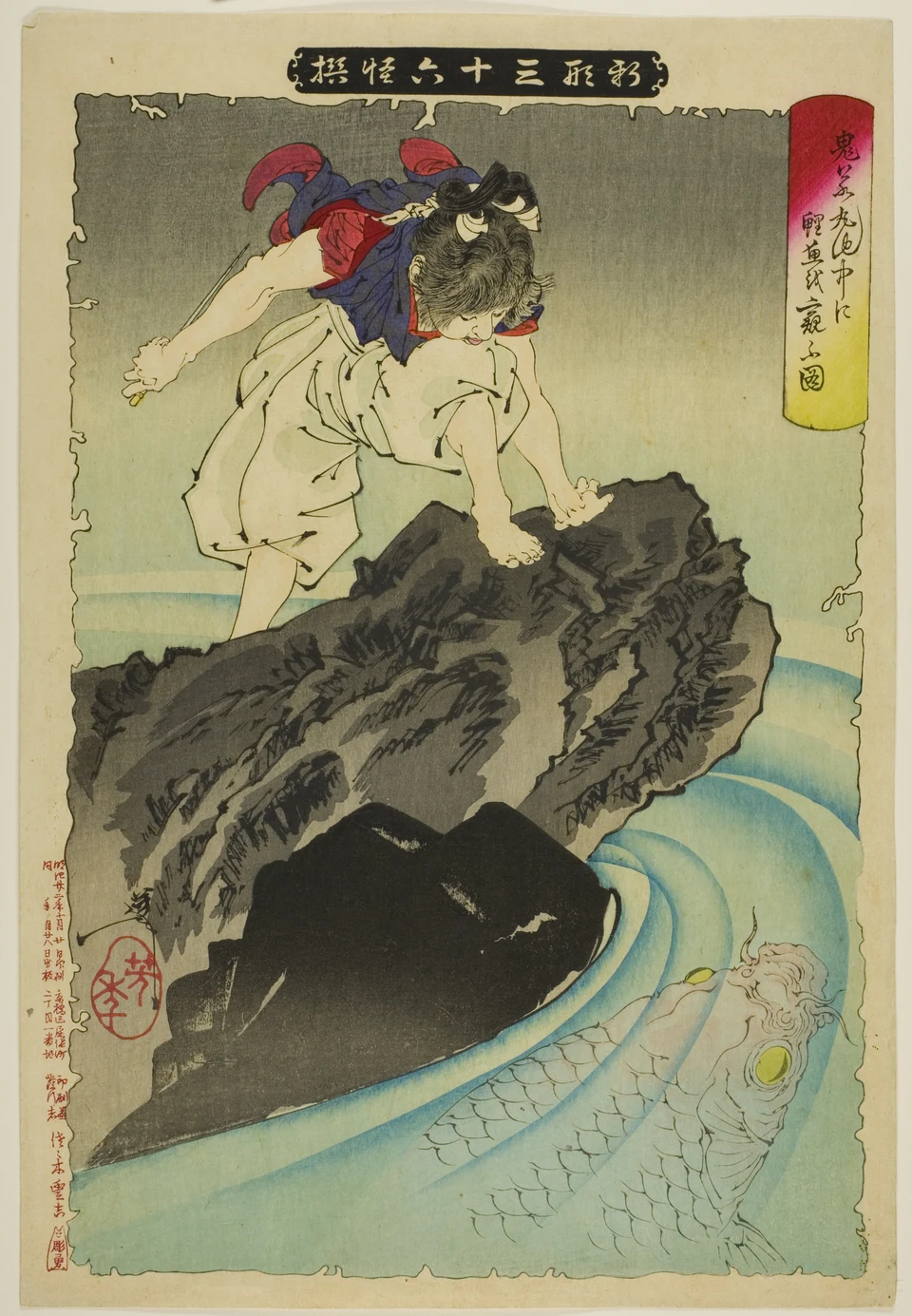 Oniwakamaru Observing the Great Carp in the Pond, from the series "New Forms of Thirty-Six Ghosts"1889
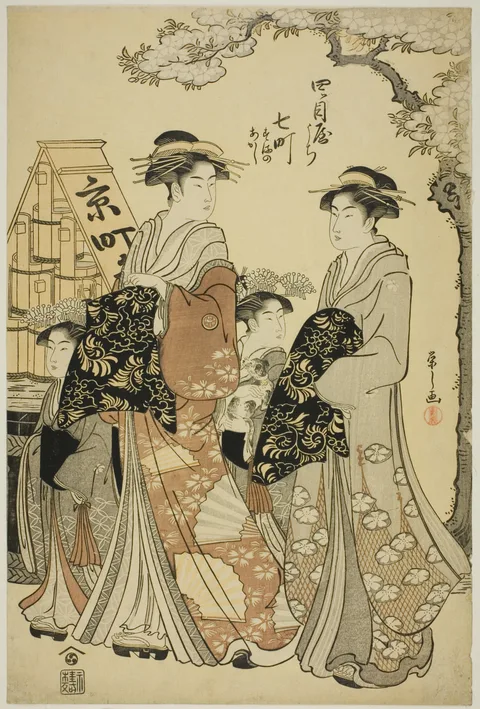
Chōbunsai Eishi
Nanamachi of the Yotsumeya with Attendants Sumano and Akashi, c. 1787
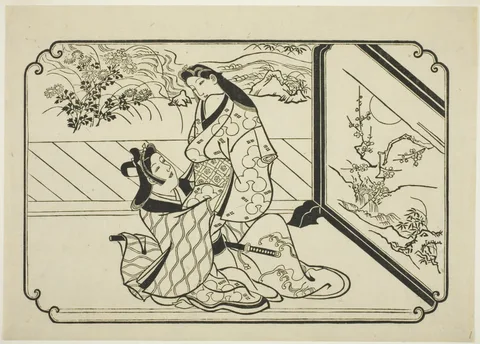
Hishikawa Moronobu
Behind the Screen, c. 1673/81
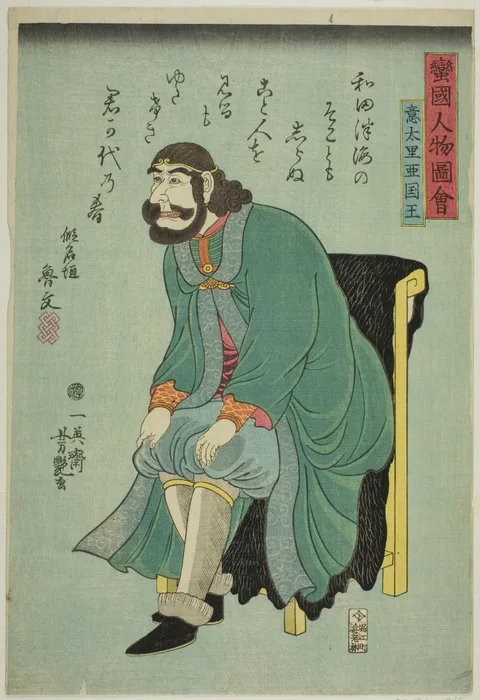
Ichieisai Yoshitsuya
King of Italy (Itaria kokuo), from the series "People of Barbarian Nations (Bankoku jinbutsu zue)", 1861