Torii Kiyonobu I
1664–1729 · Ukiyo-e · 15 works
Torii Kiyonobu I helped establish the visual language of Kabuki theater in early Japanese woodblock prints. His family’s work for the stage brought bold outlines and emphatic gestures into images that could be held in the hand. These prints belong to a period before full-color woodblock printing became widespread; color was often added by hand over the printed design. The theatrical figures reward attention to the curve of a sleeve or the angle of a leg. Some surviving works are attributed to Kiyonobu rather than securely identified as his, a distinction retained in their records.
15 works · 1700–1721
Compare an actor’s face with the outline of the costume. Which communicates the character most immediately?
1700–1710 · 5 works
Walk these 5Hishikawa Moronobu, credited as the first true ukiyo-e artist, drew the people of Edo at leisure, in black-ink prints and in paintings. Torii Kiyonobu I, founder of the Torii school, made kabuki actors his main subject. The courtesans in such pictures, women of Edo’s licensed Yoshiwara quarter, were exploited in a system of forced and strictly controlled prostitution.
In the museum: Ukiyo-e room · 2 works
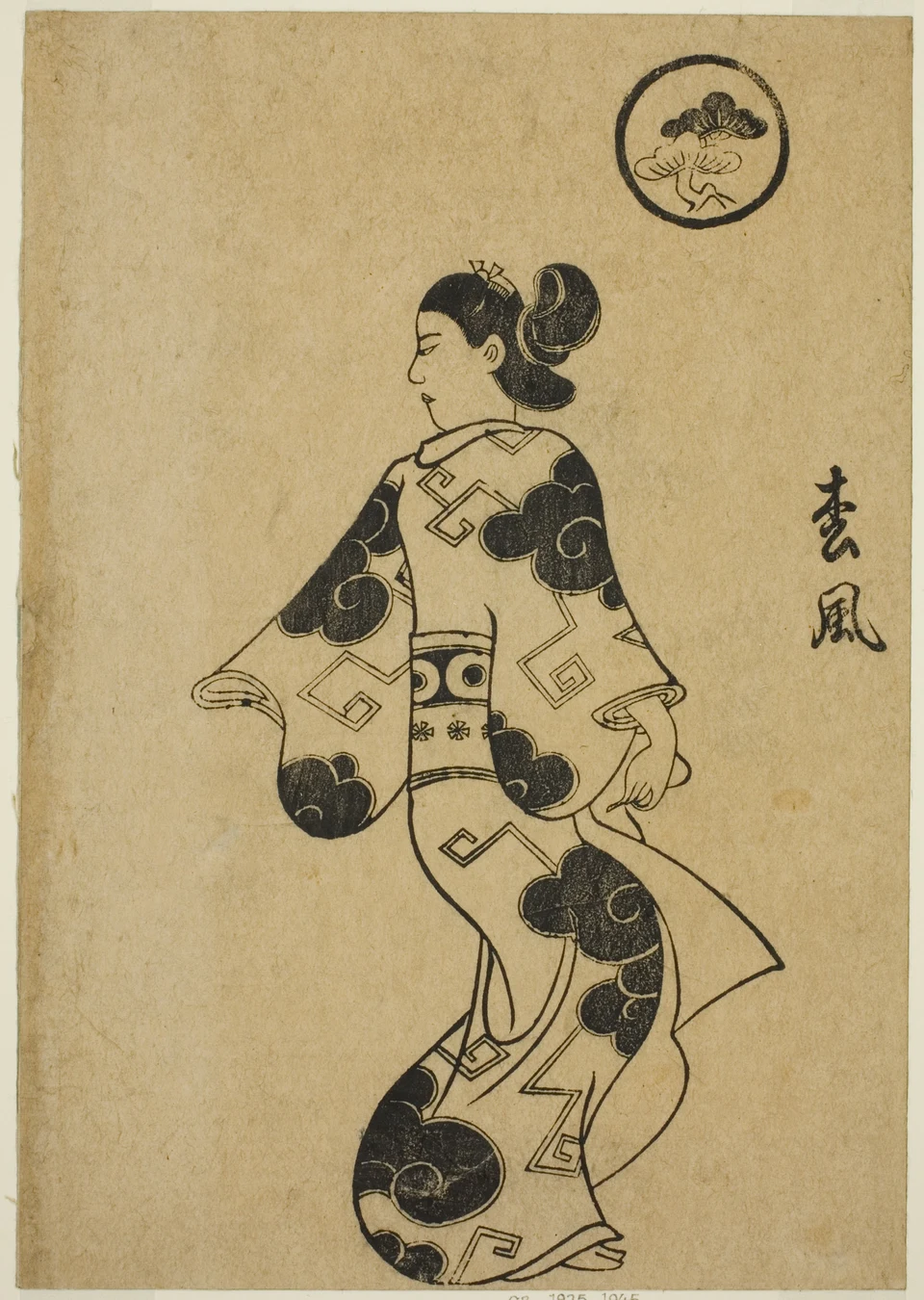 Matsukaze, from "Album of Courtesans (Keisei ehon)"c. 1700
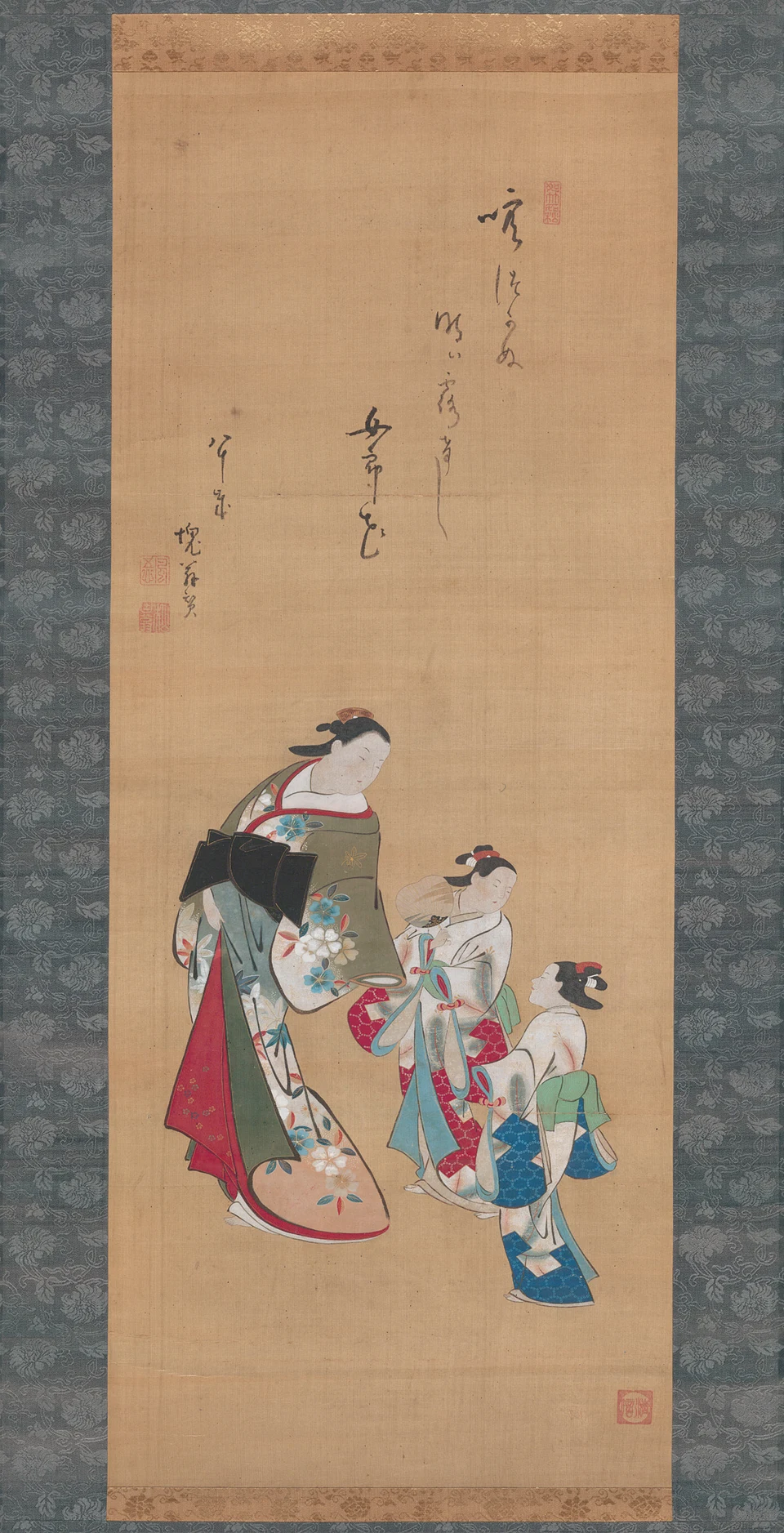 Courtesan and Two AttendantsAbout 1705
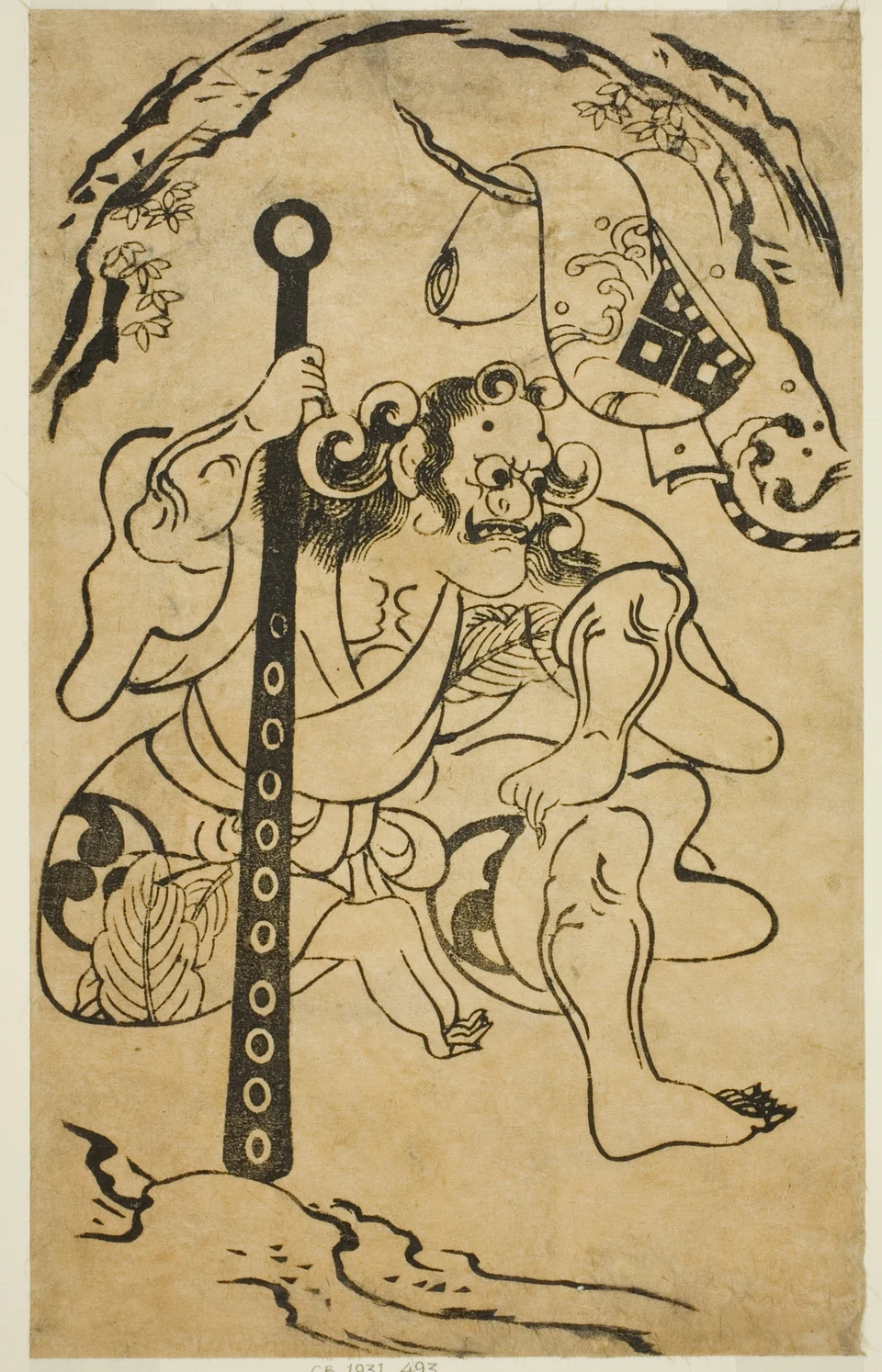 The actor Yamanaka Heikuro I as a demonc. 1706Attributed to Torii Kiyonobu I
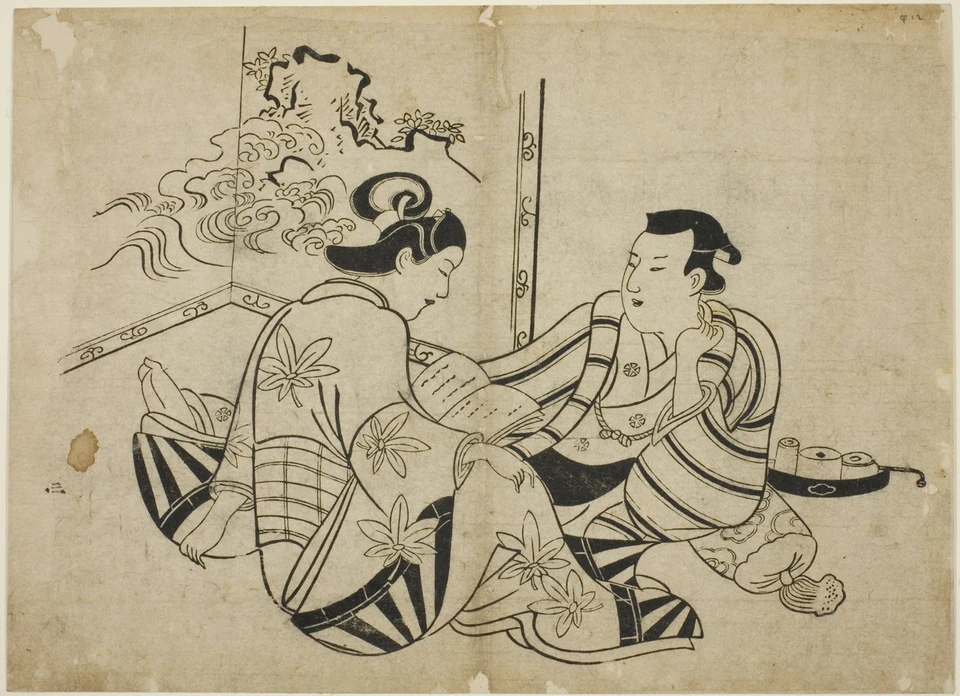
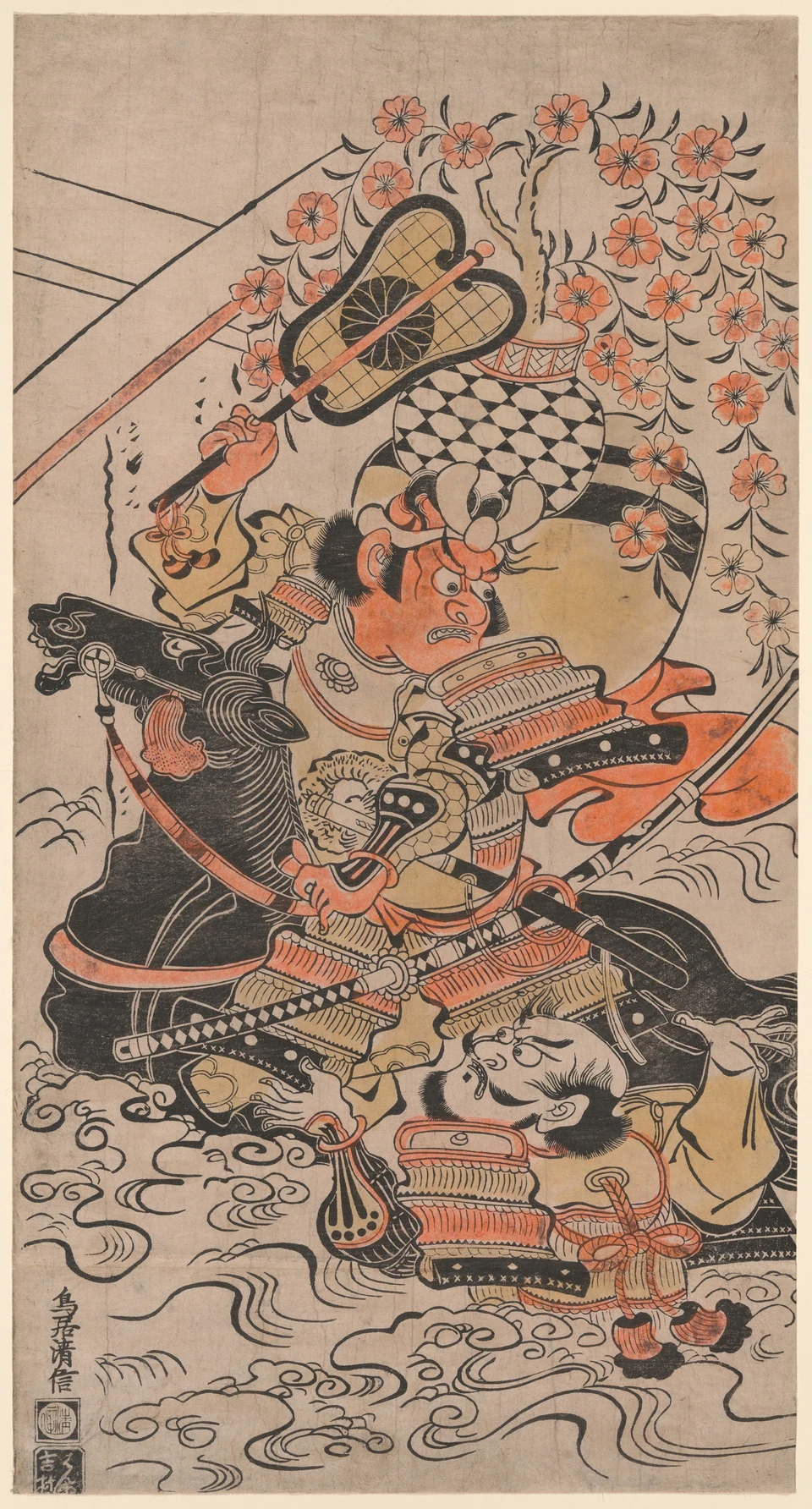 A Battle in Mid-Streamc. 1705-10
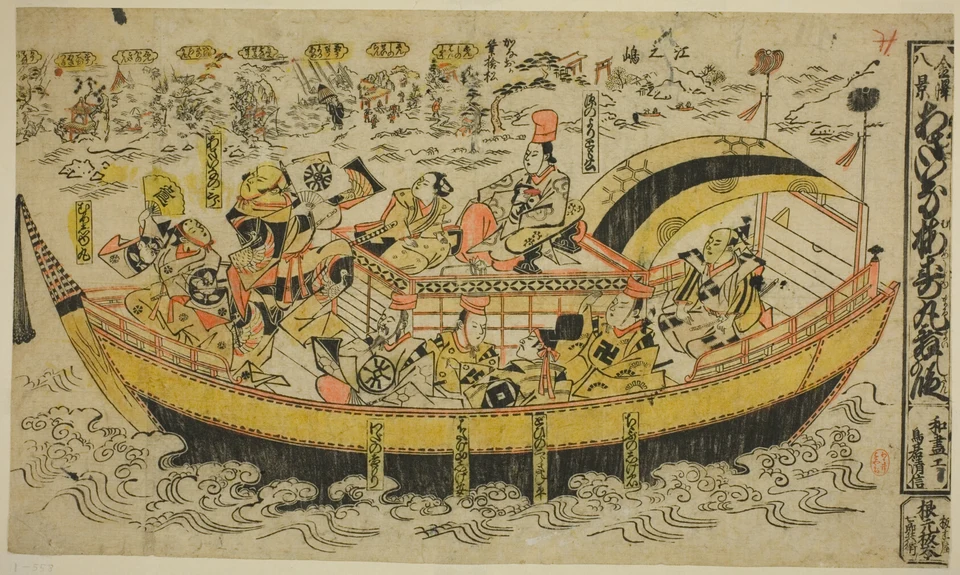 Eight Scenes of Kanazawa (Kanazawa hakkei): The Dance of Asahina and Umejumaru (Asaina Umejumaru mai no dan)c. 1707
1709–1710 · 3 works
Walk these 3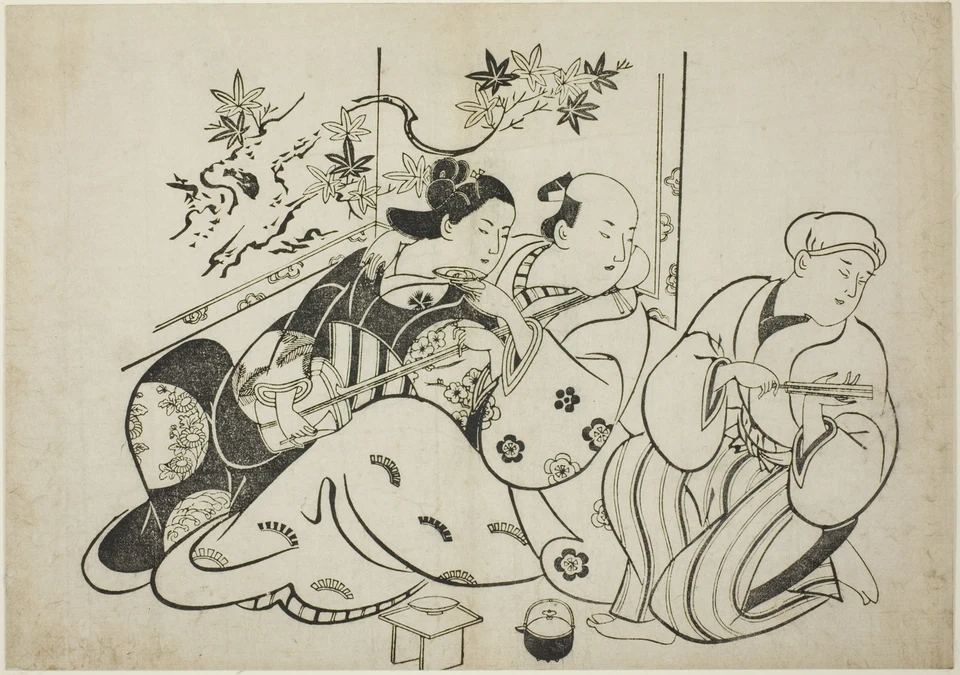
1715–1721 · 7 works
Walk these 7In the museum: Ukiyo-e room · 1 work
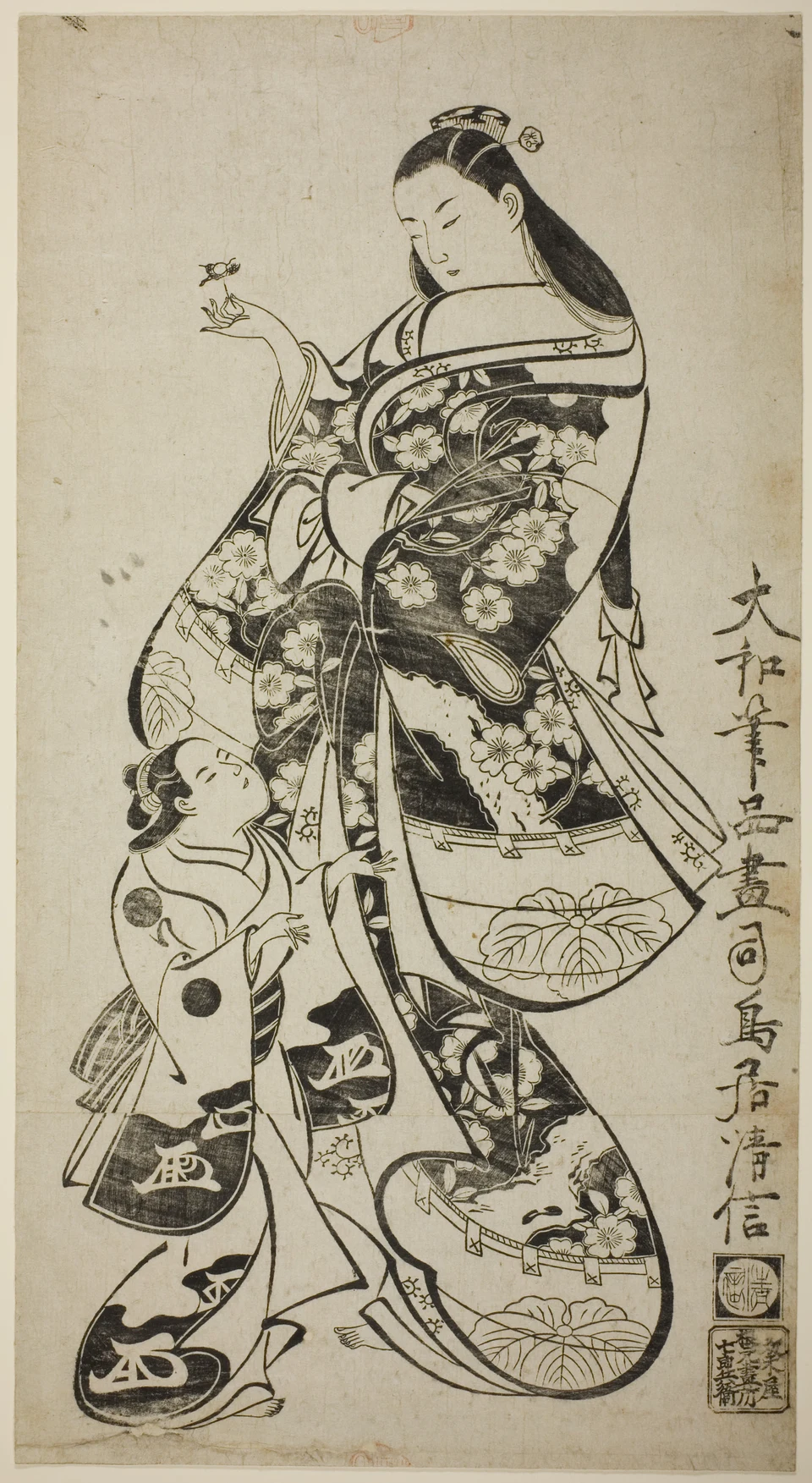 A Courtesan with Her Child Attendantc. 1715
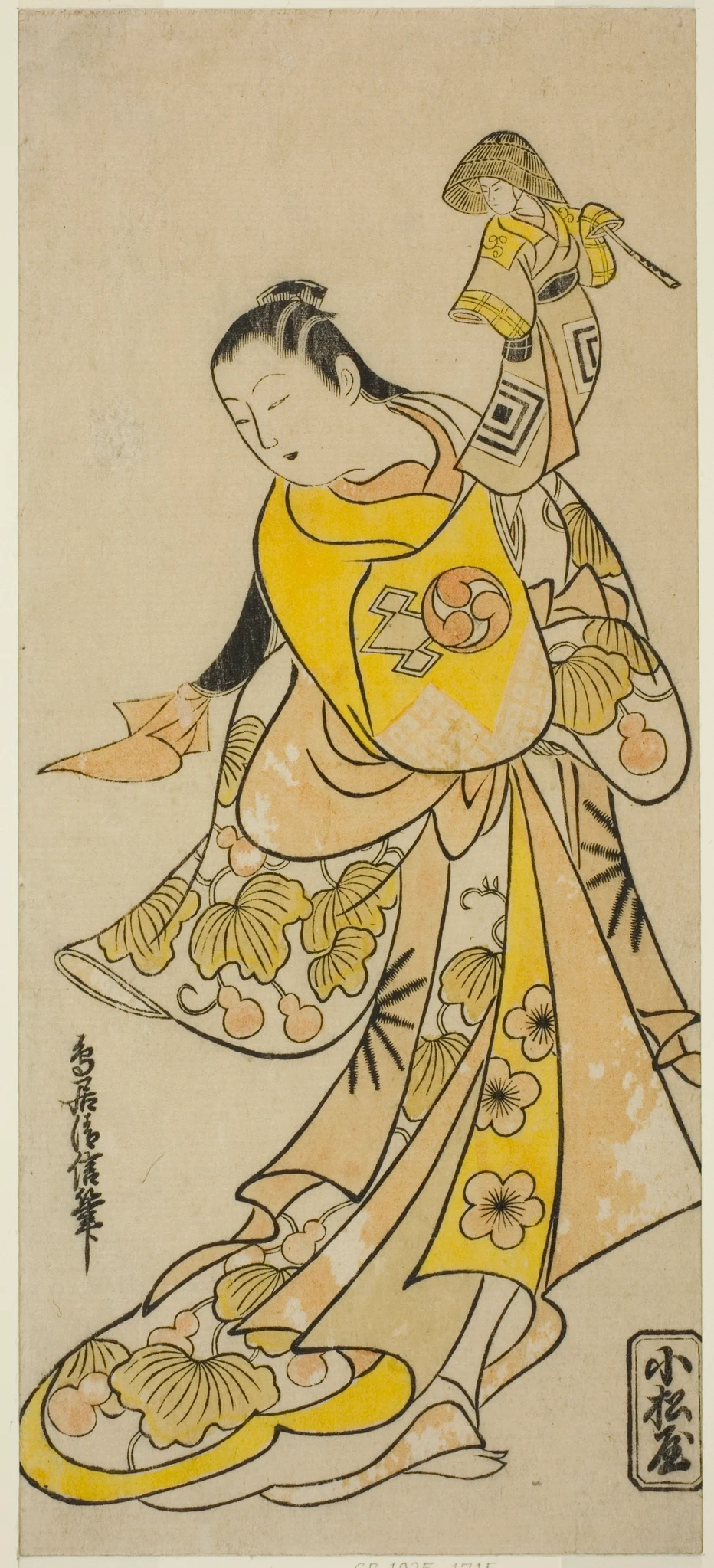 The Actor Nakamura Takesaburo I as Kewaizaka no Shosho (?)c. 1718
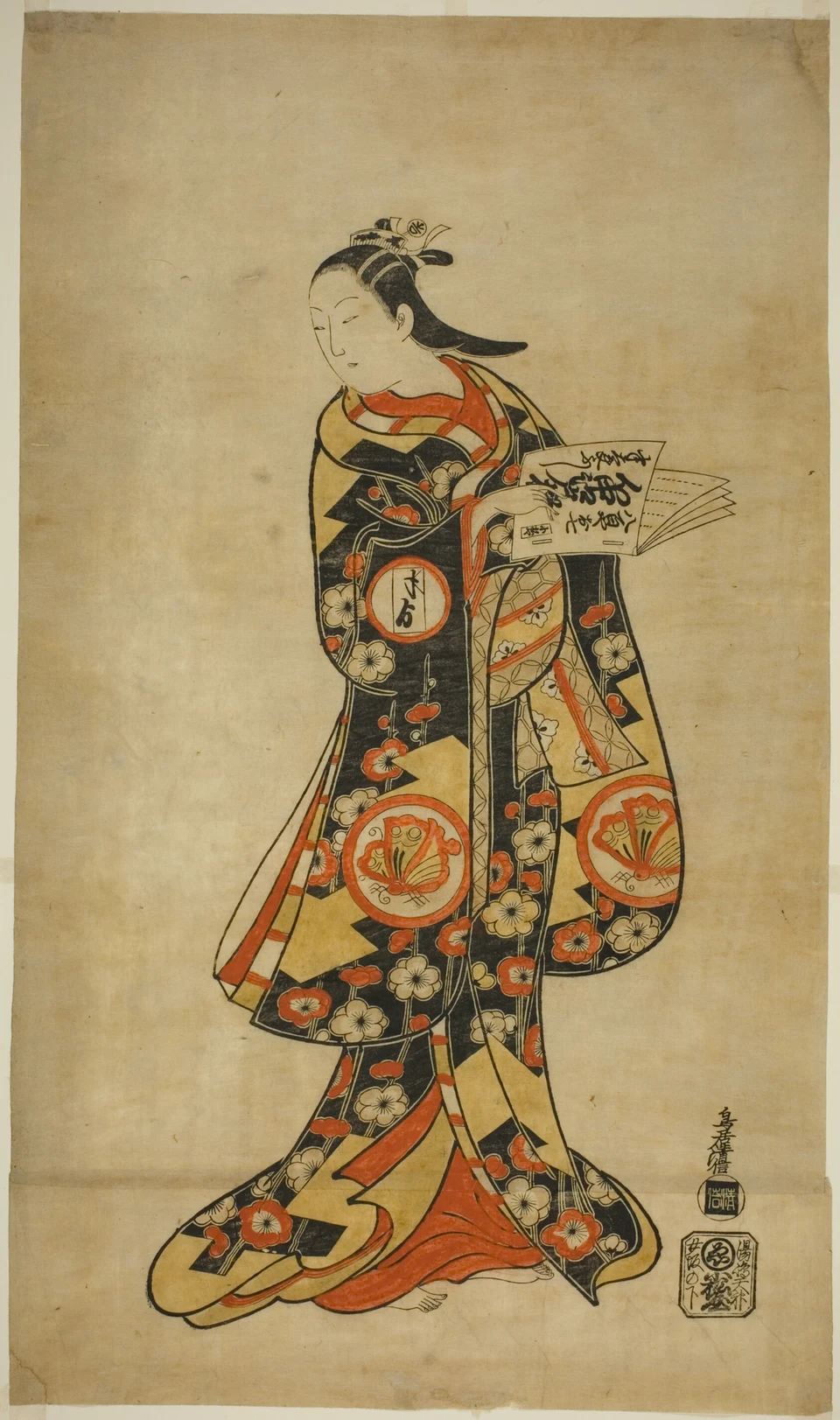 The Actor Sanjo Kantaro II as Oshichi in the play "Nanakusa Fukki Soga," performed at the Ichimura Theater in the first month, 17181718
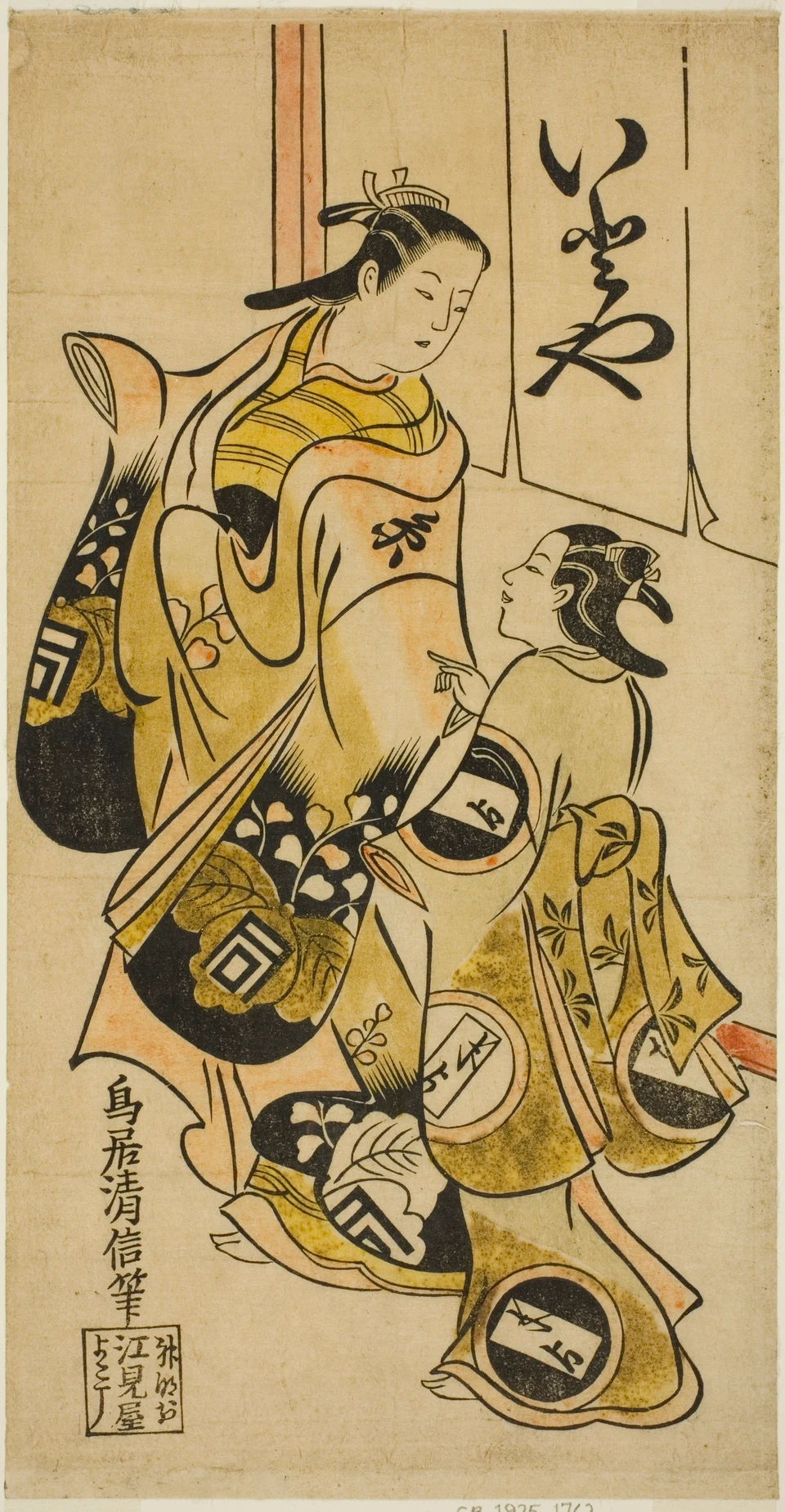 The Actor Sanogawa Mangiku I as Sanada, the daughter of the spinner Itoya, with an attendant in the play "Hiragana Yomeiri Izu Nikki," performed at the Nakamura Theater in the eleventh month, 17181718
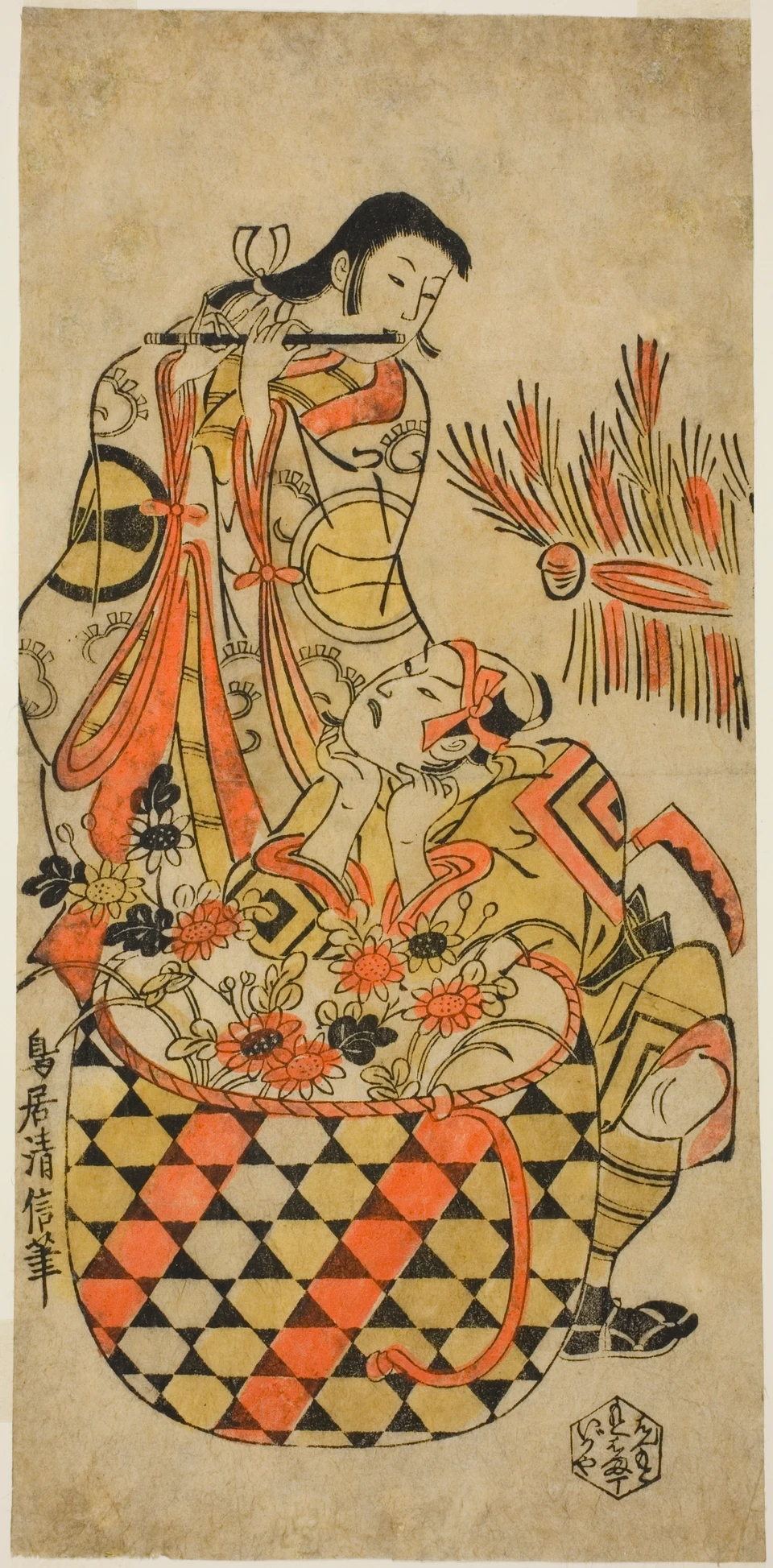 The Actors Ichikawa Danjuro II and Ichikawa Monnosuke Ic. 1720
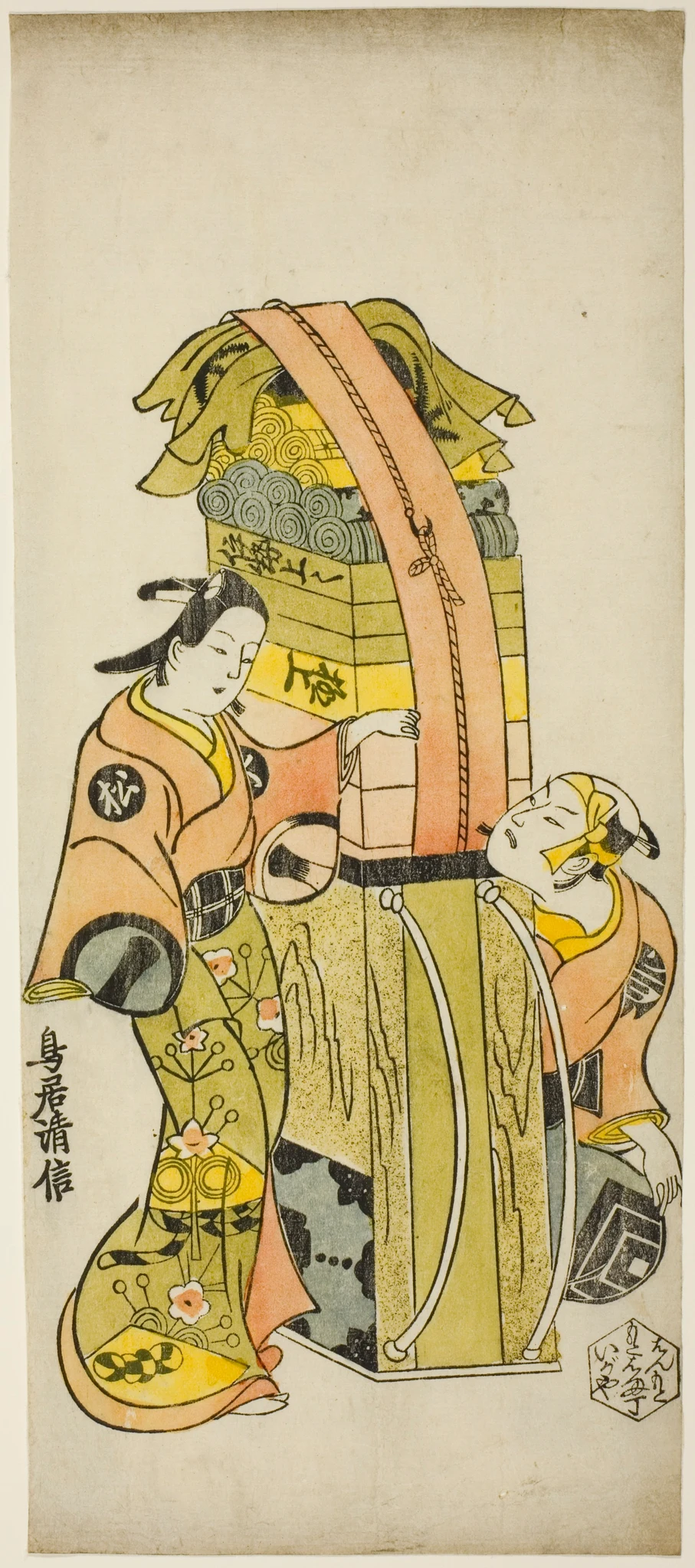 The Actors Ichikawa Danjuro II as Kamada Matahachi and Ichikawa Monnosuke I as Hisamatsu in the play "Osome Hisamatsu Shinju Tamoto no Shirashibori," performed at the Morita Theater, 17201720
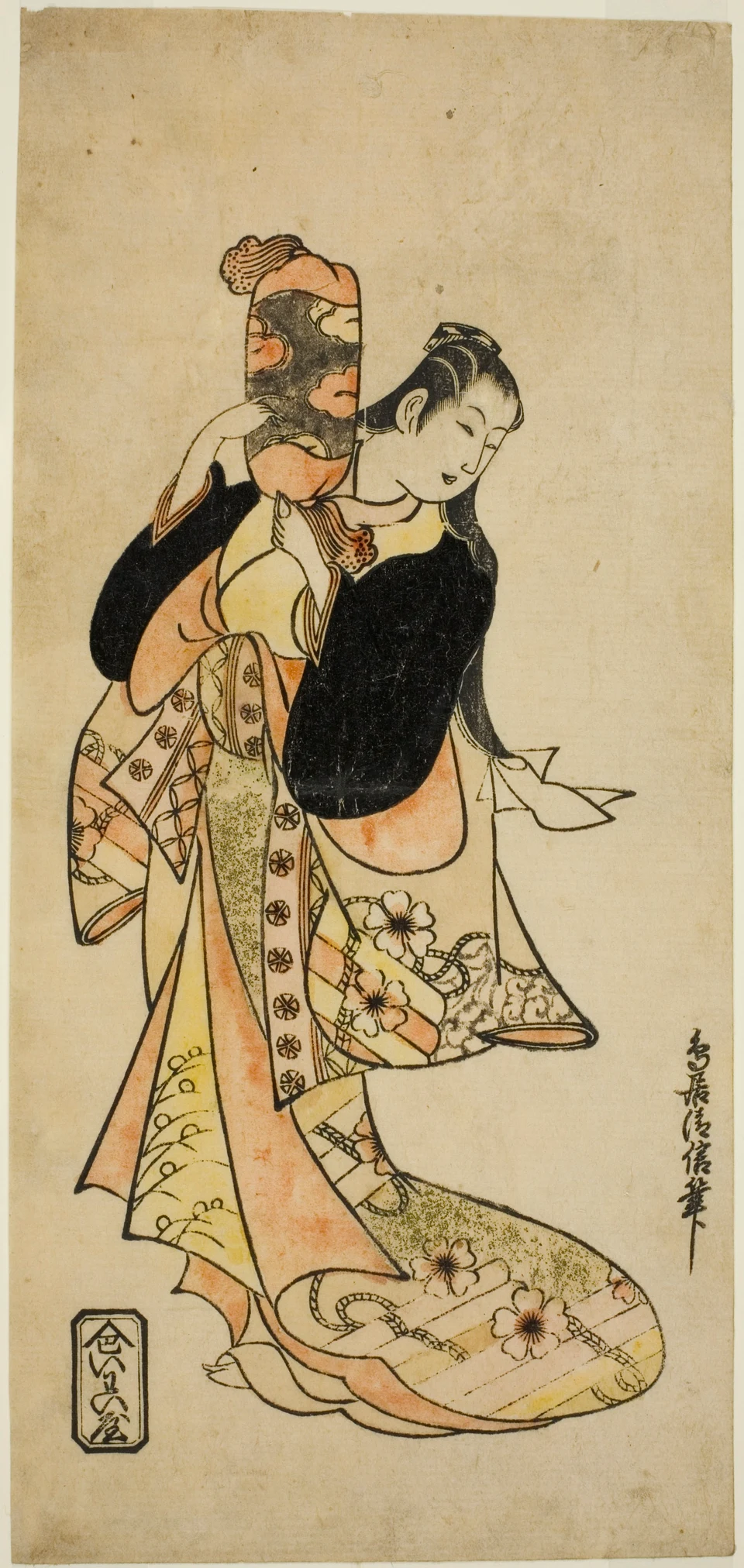 The Actor Ichikawa Monnosuke I as Oiso no Tora in the play "Nigiwai Suehiro Soga," performed at the Morita Theater in the first month, 1721 (?)c. 1721
Chōbunsai Eishi
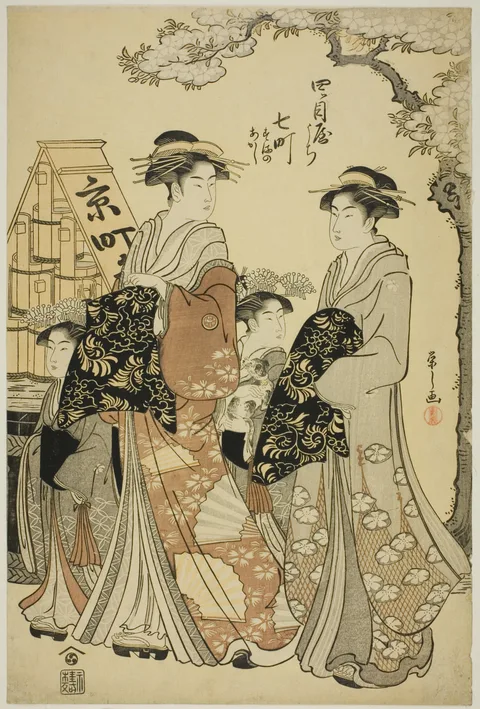
Nanamachi of the Yotsumeya with Attendants Sumano and Akashi, c. 1787
Hishikawa Moronobu
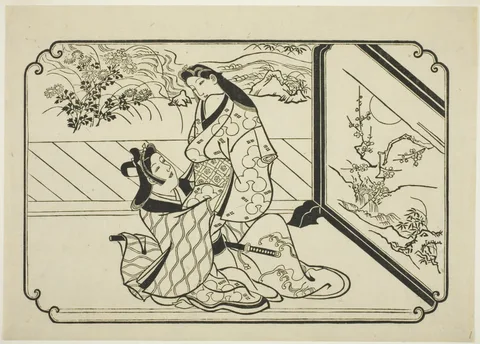
Behind the Screen, c. 1673/81
Ichieisai Yoshitsuya
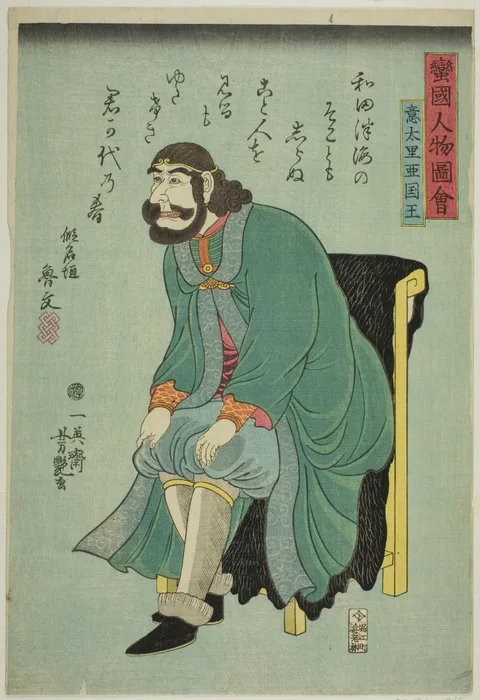
King of Italy (Itaria kokuo), from the series "People of Barbarian Nations (Bankoku jinbutsu zue)", 1861