Ren Yi
1840–1895 · Chinese painting: Qing · 9 works
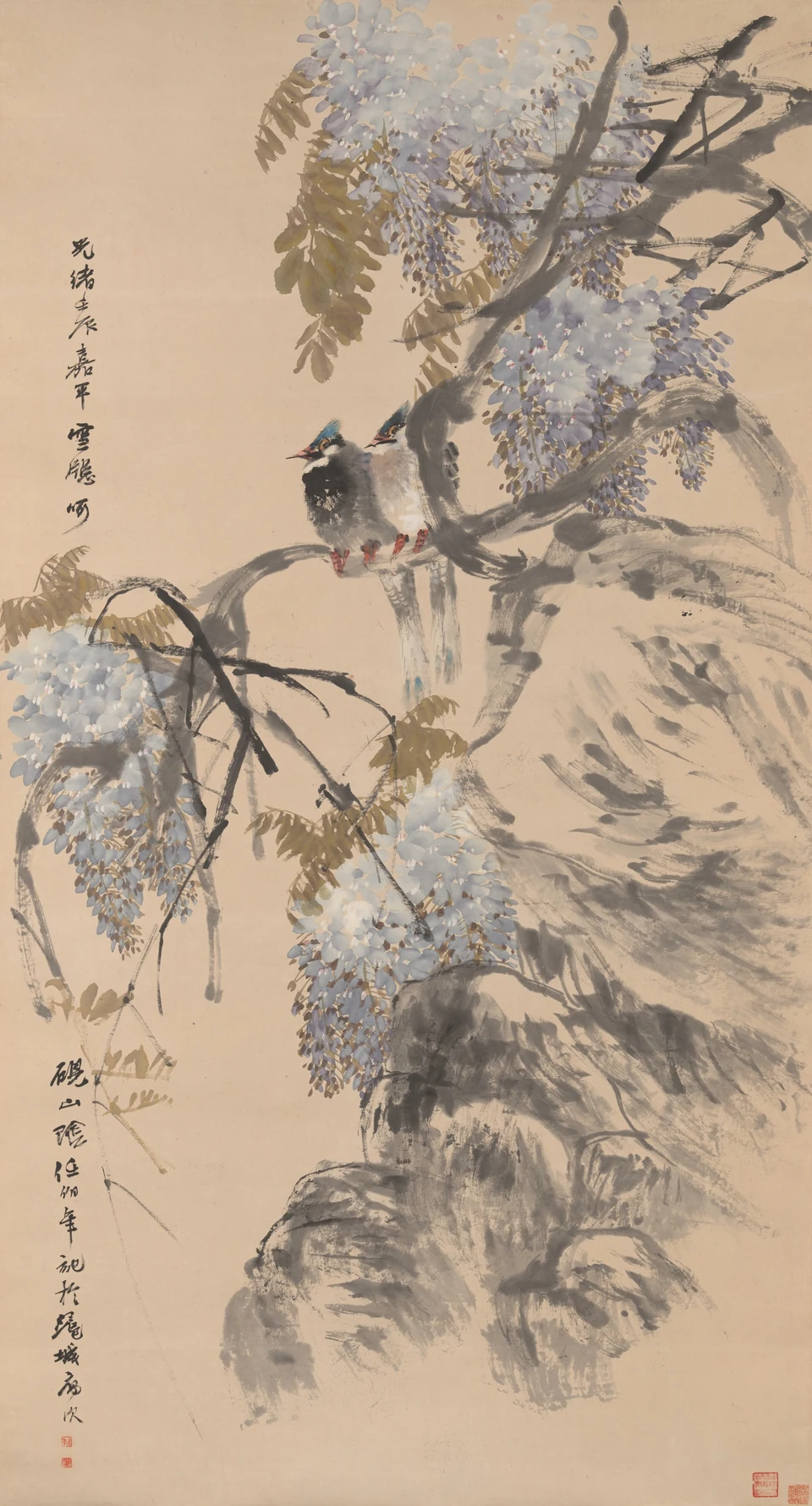
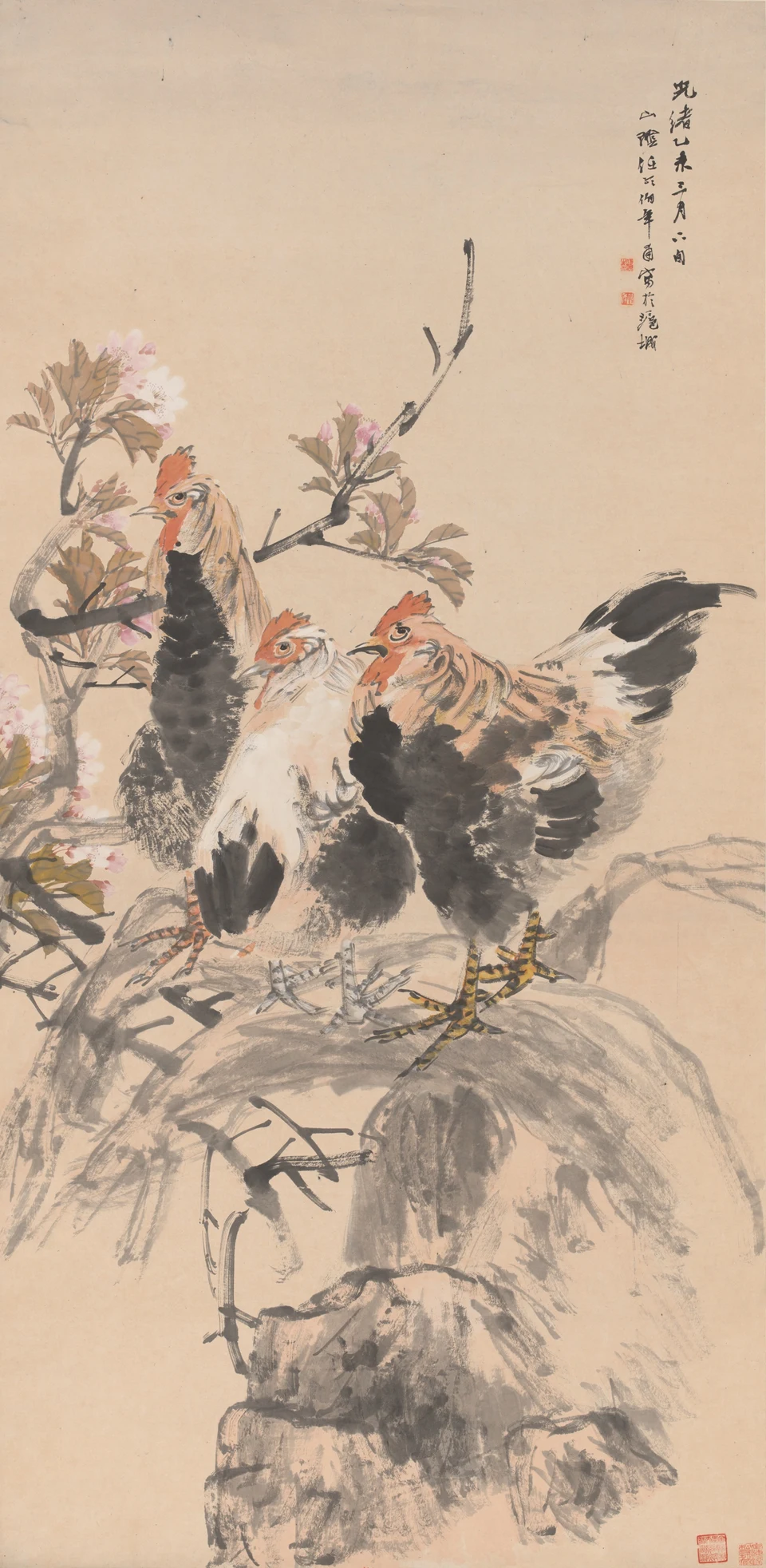
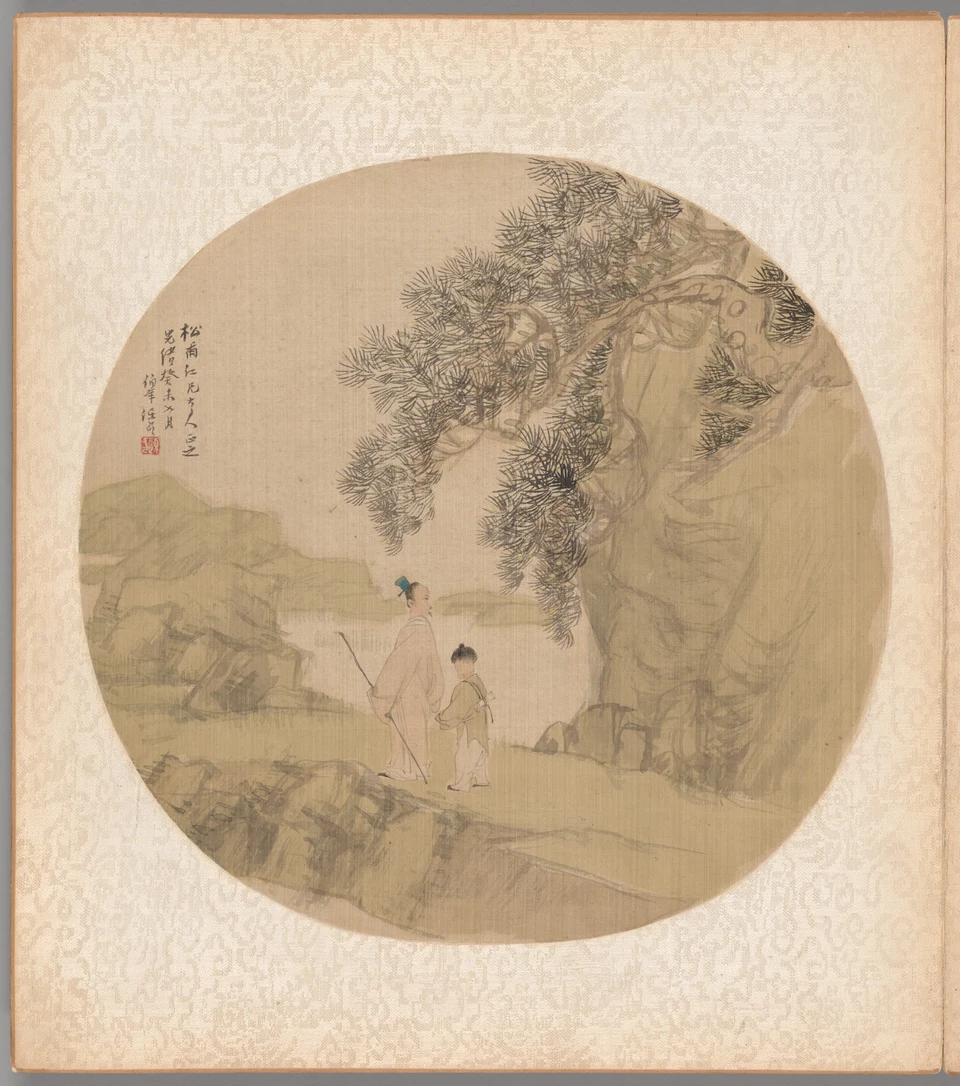
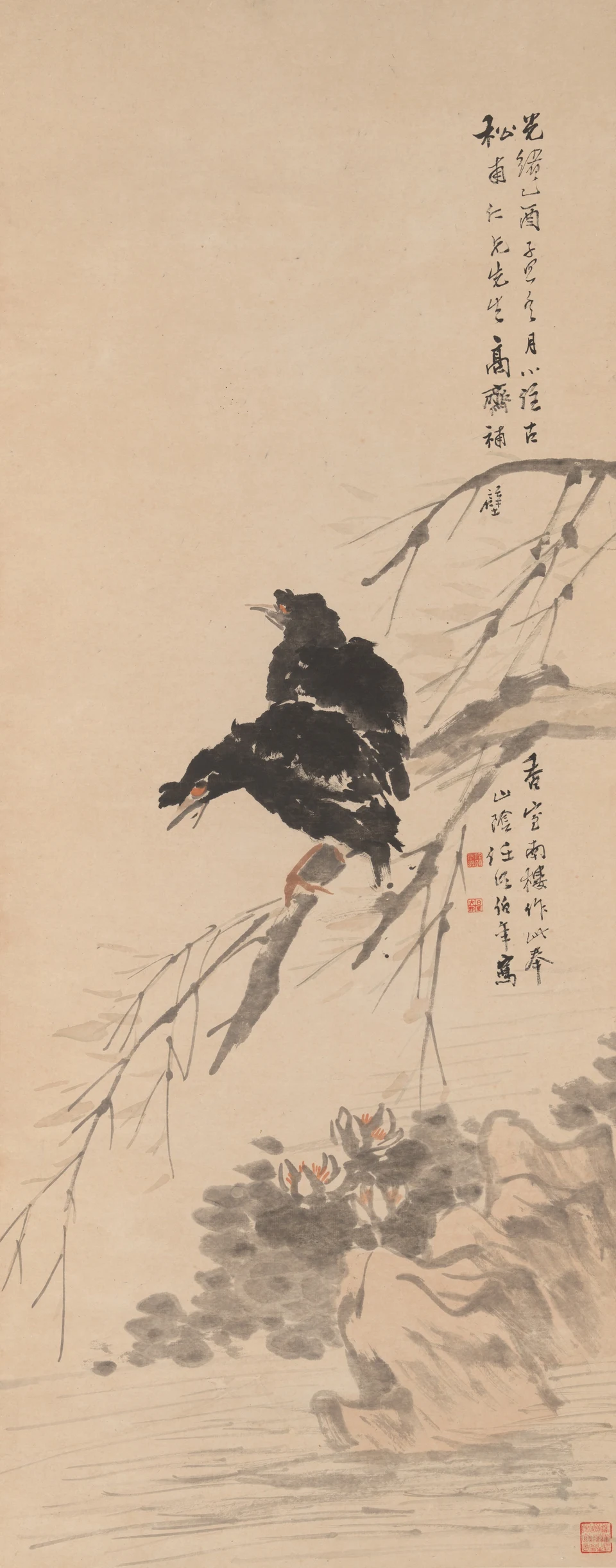
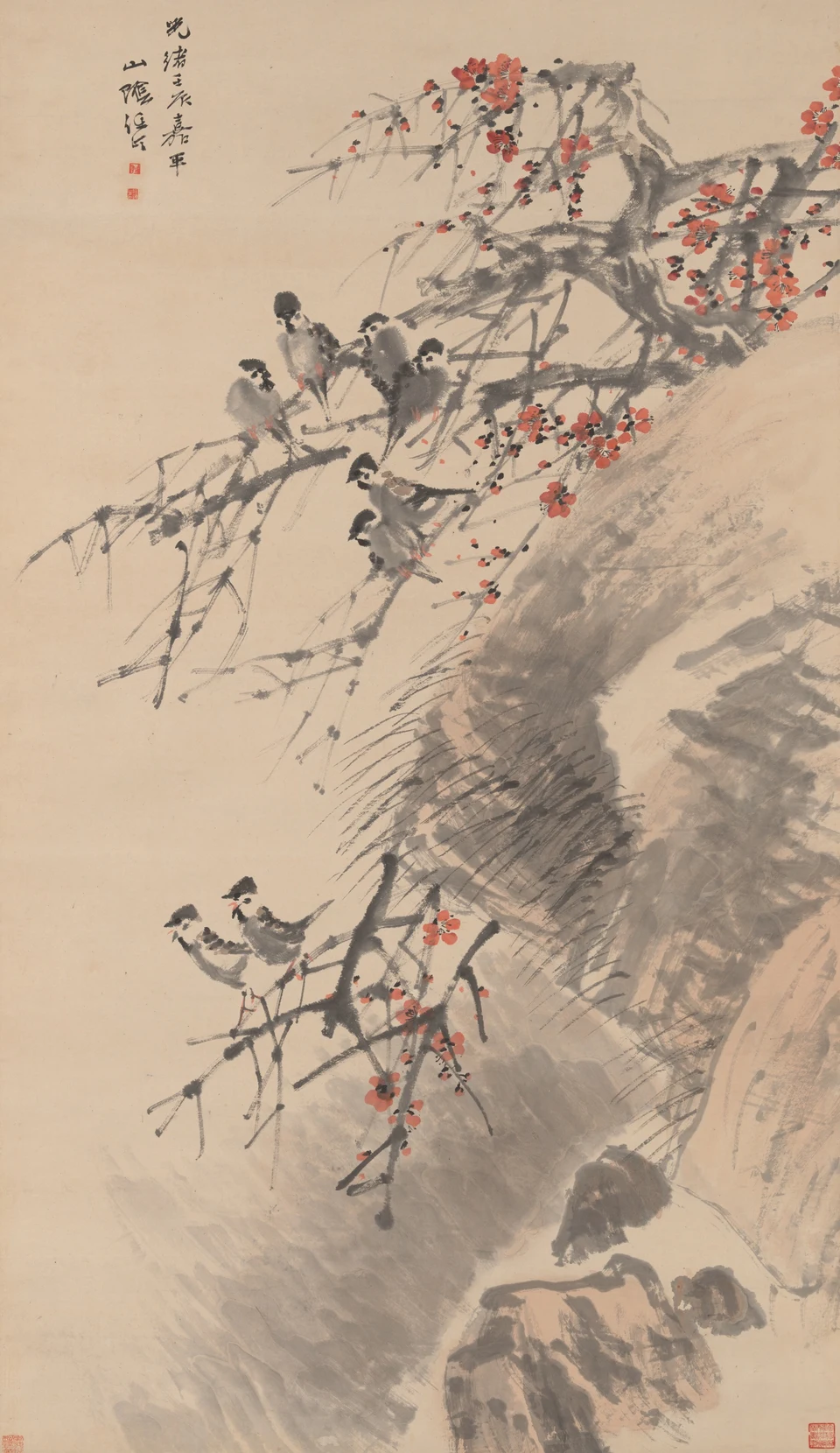
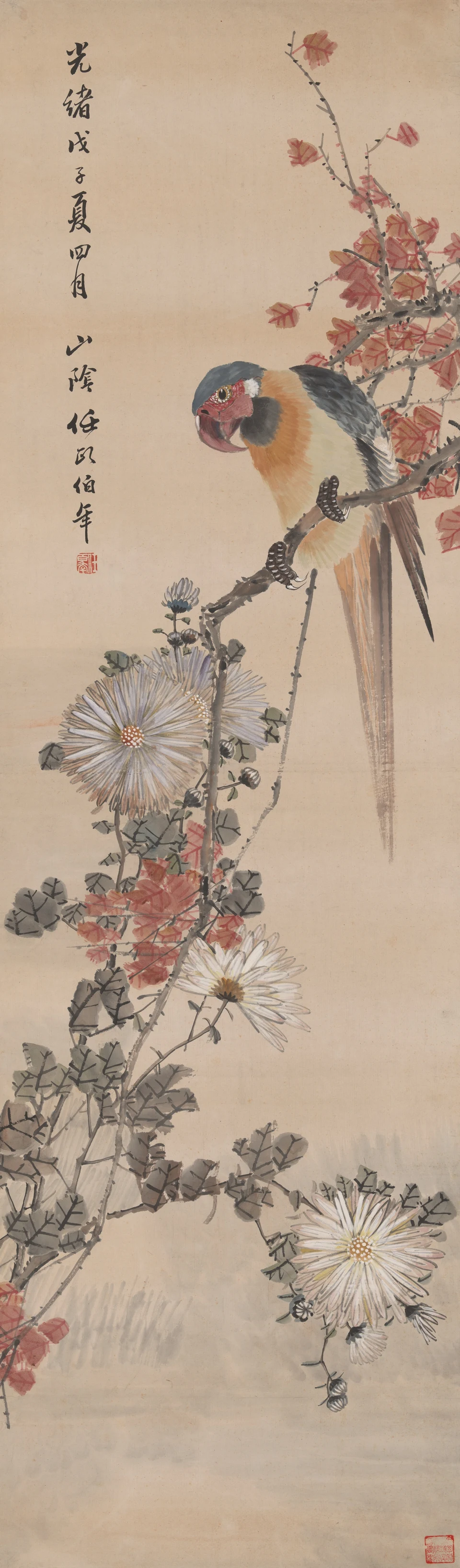
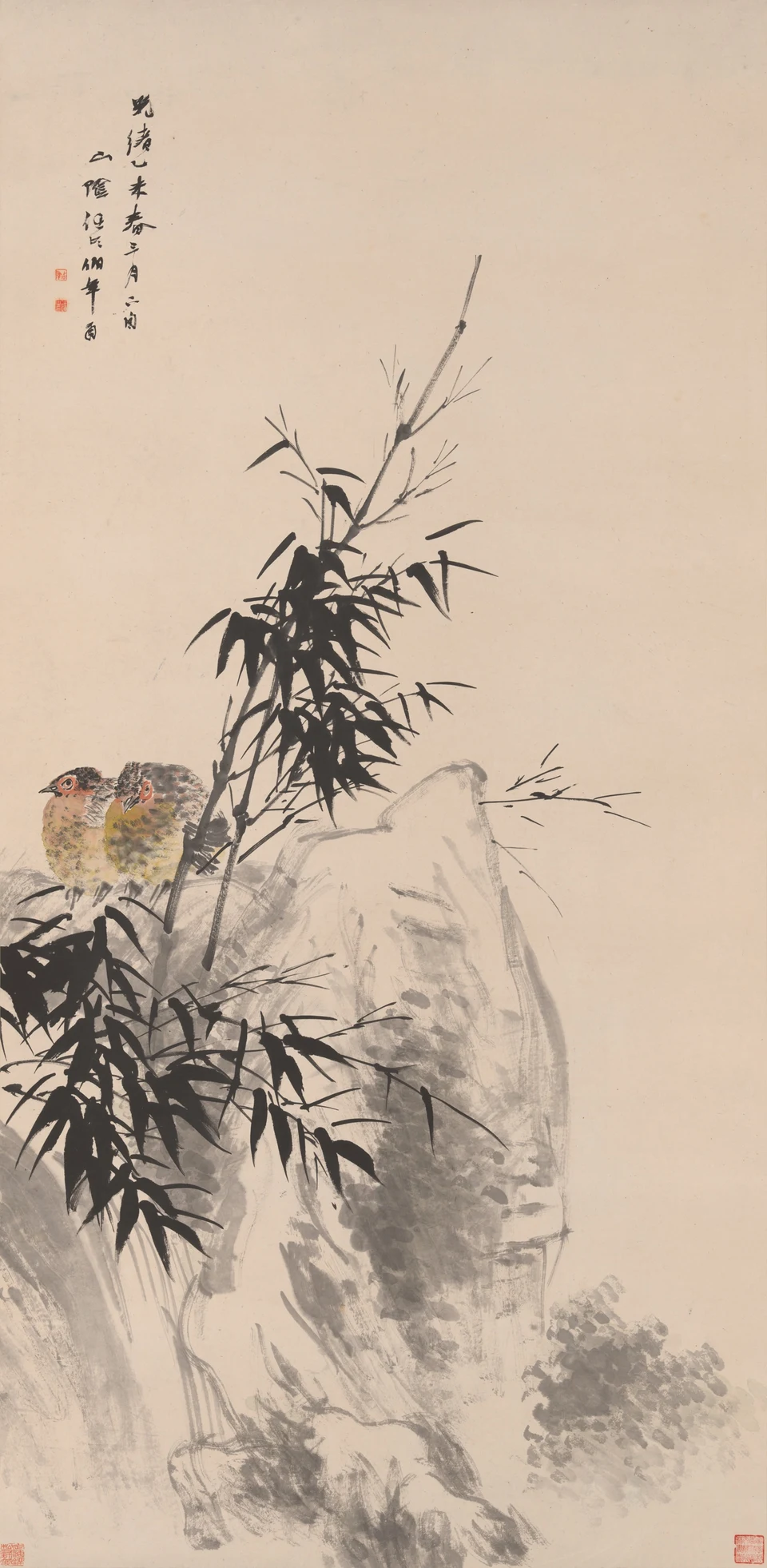
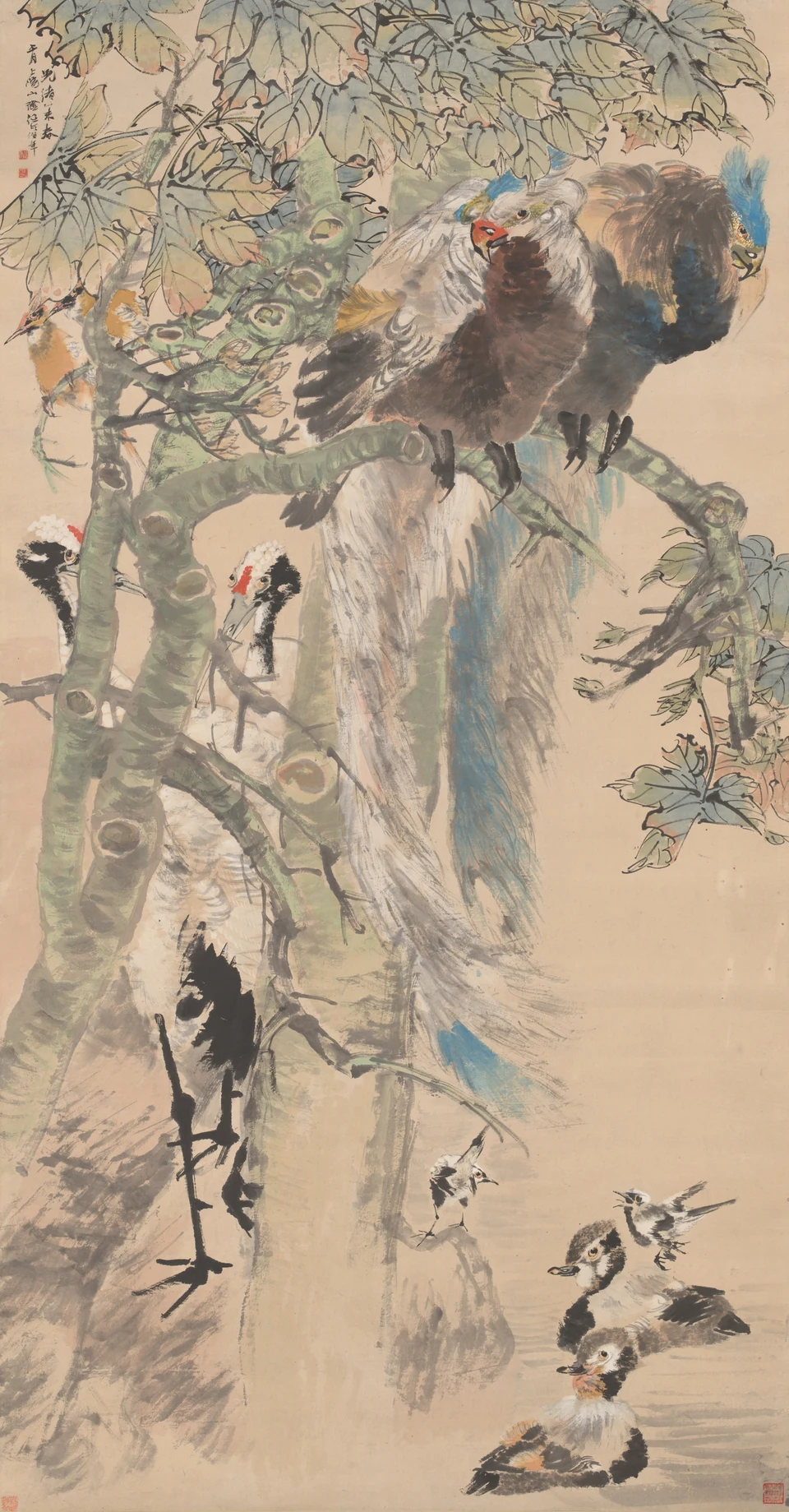
Ren Yi, also known as Ren Bonian, became a leading painter in nineteenth-century Shanghai. His birds, flowers, and figures join recognizable subjects with an energetic handling of ink and color. Early work often holds color within clear outlines; later paintings can let wet washes and rapid strokes carry more of the image. In Mandarin Ducks and Lotus, broad leaves share the surface with much more sharply defined birds. The contrast shows how a single painting can bring together several kinds of mark without making every part equally detailed.
9 works · 1840–1895
Compare the lotus leaves with the ducks. Which parts depend on a wash of ink, and which on quick, precise strokes?
1840–1868 · 3 works
Walk these 3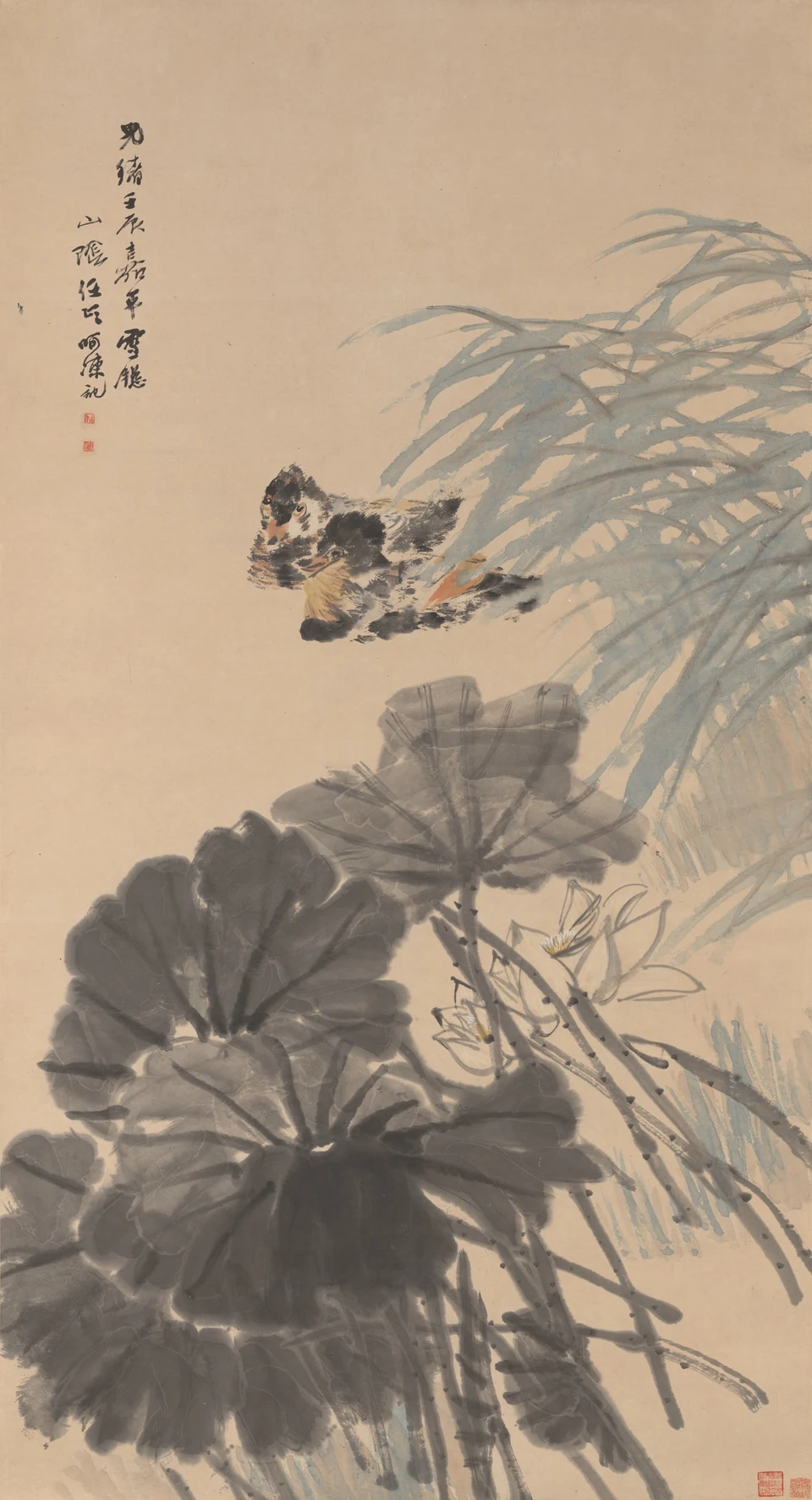
1883–1887 · 3 works
Walk these 3By the late 1800s Shanghai had its own school of painters. Hu Gongshou, from nearby Huating, was one of its pioneers. Ren Yi arrived in 1857 and by 1875 was the city’s best-known painter, prized for birds and flowers. All four works here came to the Art Institute from Florence Ayscough and Harley Farnsworth MacNair, who had lived in Shanghai.
In the museum: Chinese painting: Qing room · 2 works
1888–1895 · 3 works
Walk these 3In the museum: Chinese painting: Qing room · 1 work
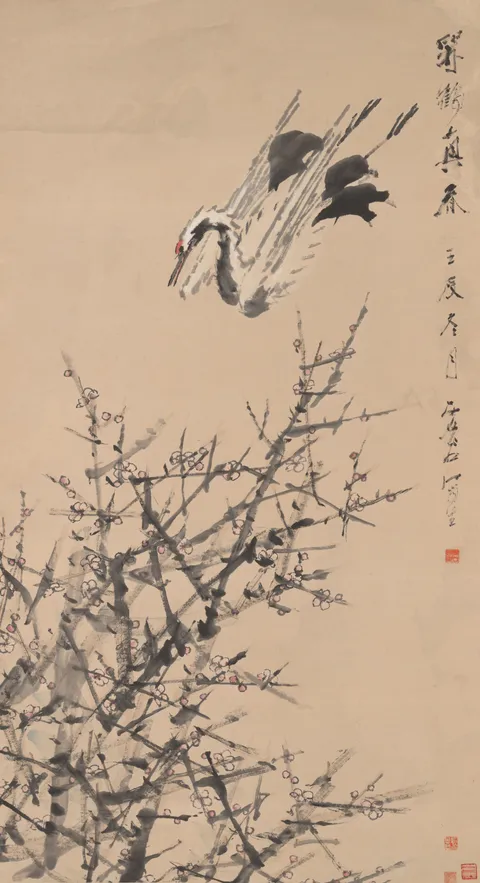
Xugu
Plum Blossoms, Crane, and Spring, Qing dynasty ( 1644–1912); 1824–1896; c.1892
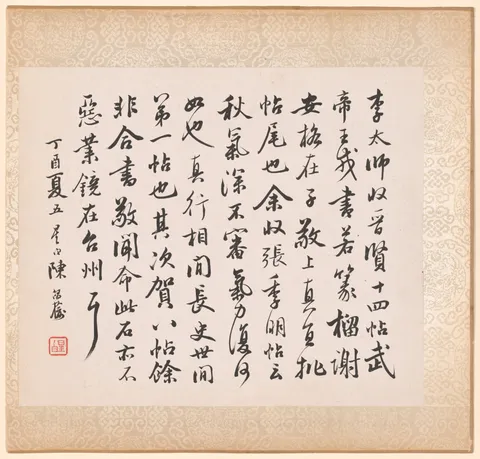
Chen Xiuyu
Calligraphy Accompanying Xugu's Painting, Qing dynasty (1644–1911), 1897
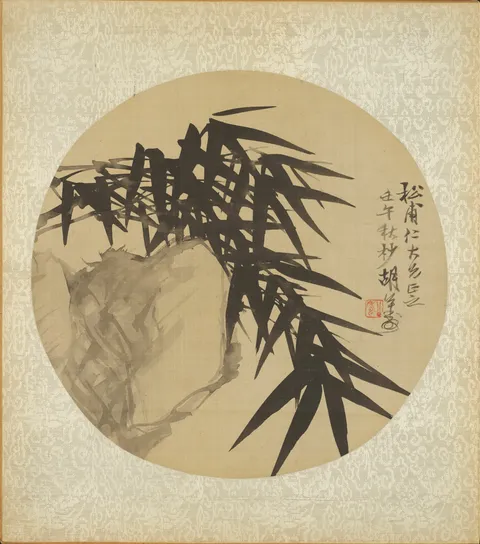
Hu Gongshou
One of Sixteen Album Leaves, Qing dynasty (1644–1911), dated 1882