William Hogarth
1697–1764 · Rococo · 8 works
William Hogarth made pictures that ask to be read as well as seen. Working in eighteenth-century London, he developed sequences of paintings and engravings that followed social ambition, folly, and their consequences. Prints carried these stories to audiences beyond the owners of the paintings. His illustrations to Samuel Butler’s Hudibras apply the same appetite for narrative detail to a satirical poem. A gesture, an object, or a picture within the picture can act as a clue. Rather than settling the story at a glance, the crowded scenes reward repeated inspection.
8 works · 1725–1751
Find a detail in the background of a Hudibras print. Does it support the main action or quietly make fun of it?
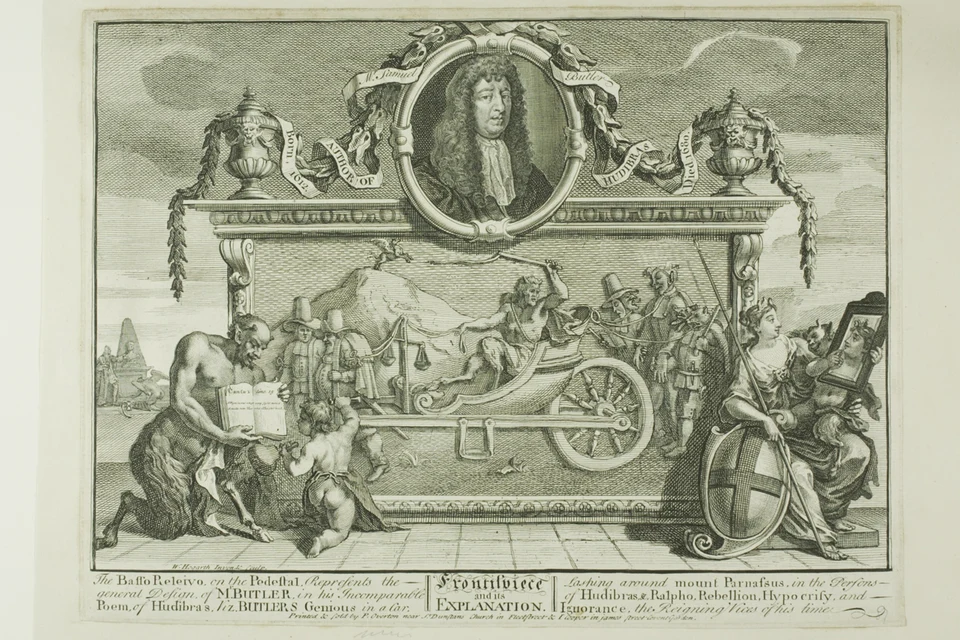 Frontispiece, plate one from HudibrasFebruary 1725/26
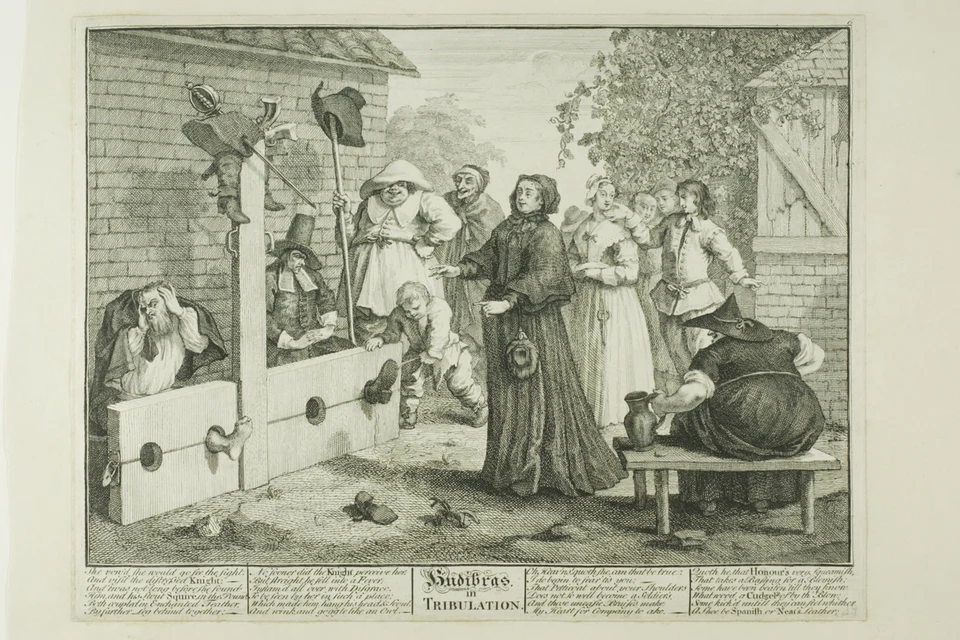 Hudibras in Tribulation, plate six from HudibrasFebruary 1725/26
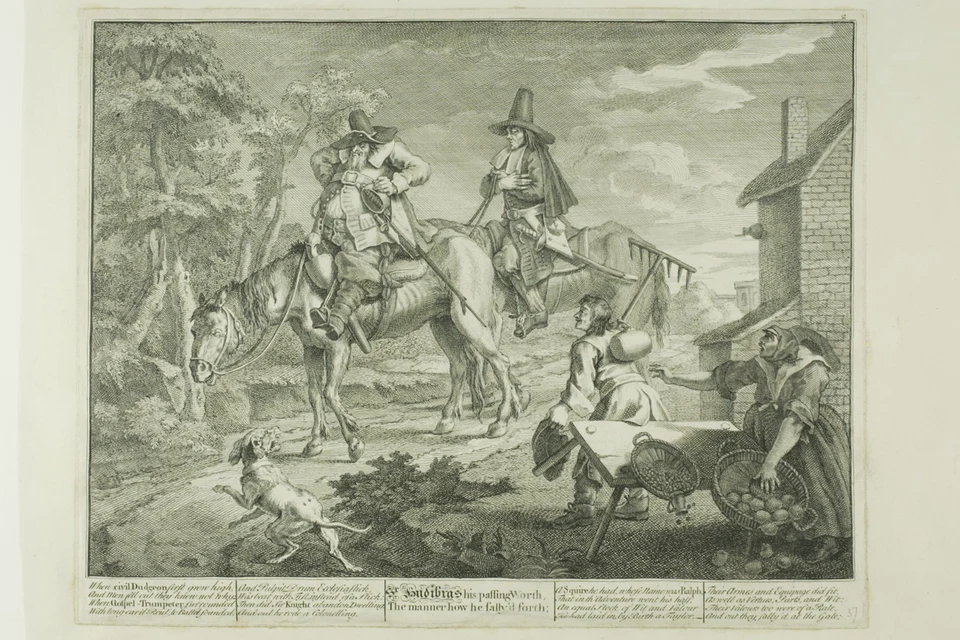 Hudibras Sallying Forth, plate two from HudibrasFebruary 1725/26
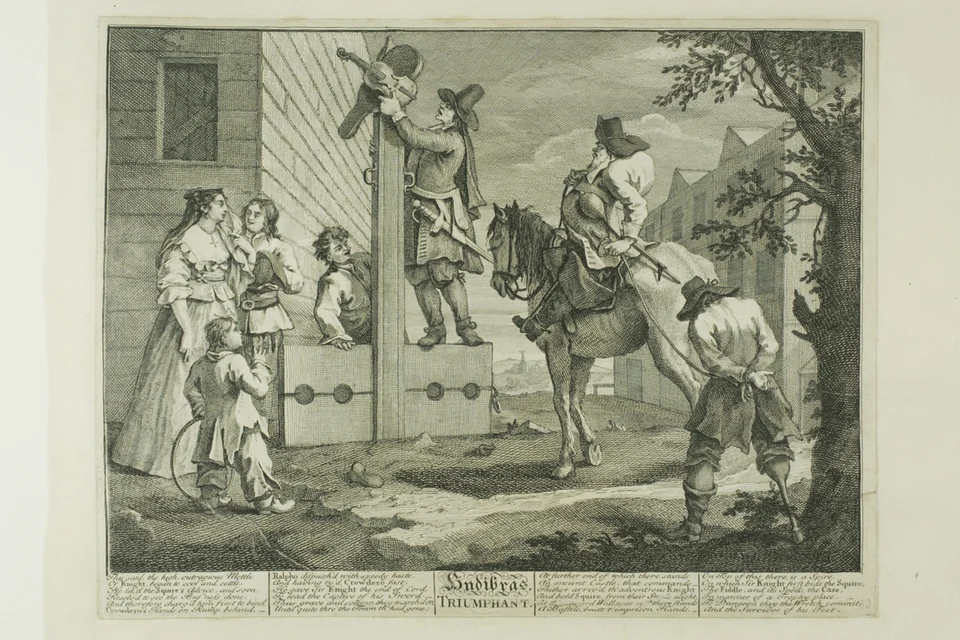 Hudibras Triumphant, plate four from HudibrasFebruary 1725/26
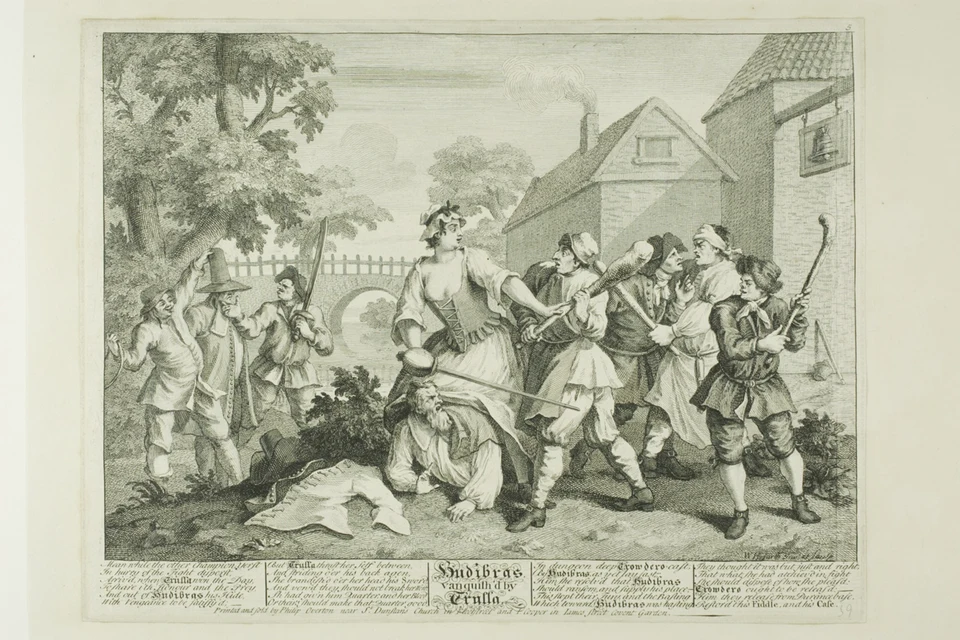 Hudibras Vanquished by Trulla, plate five from HudibrasFebruary 1725/26
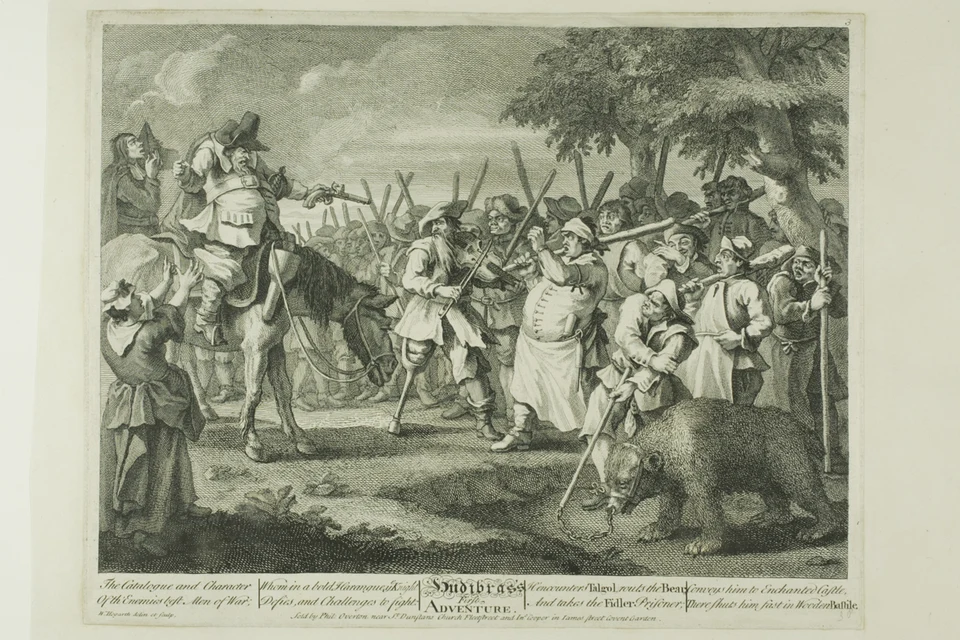 Hudibras' First Adventure, plate three from HudibrasFebruary 1725/26
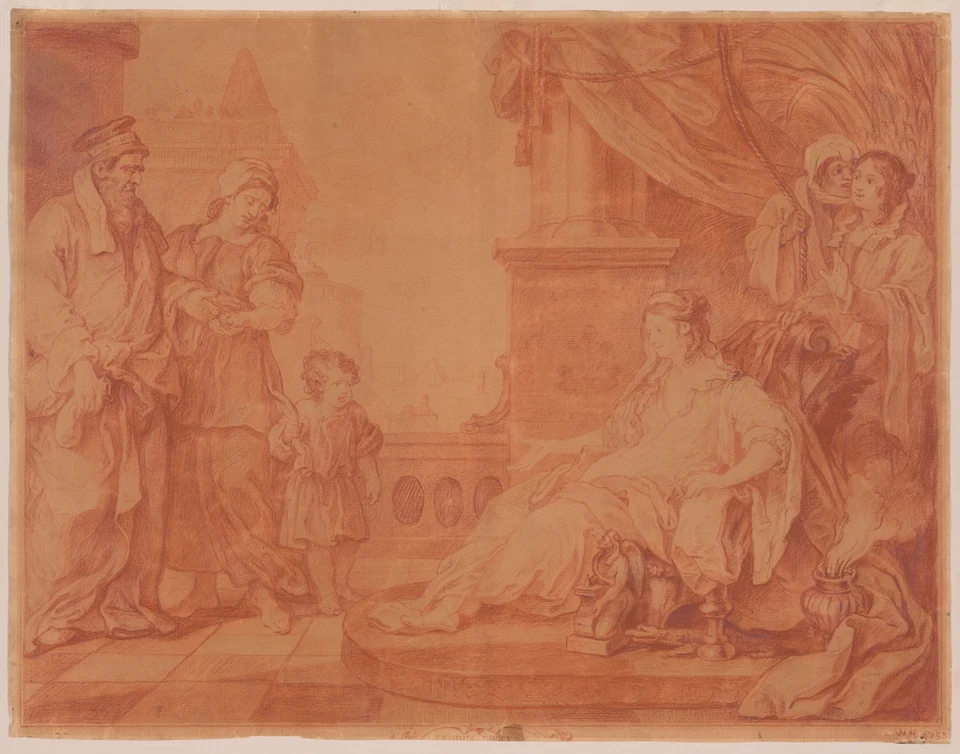 Moses Brought to Pharaoh’s Daughter1751
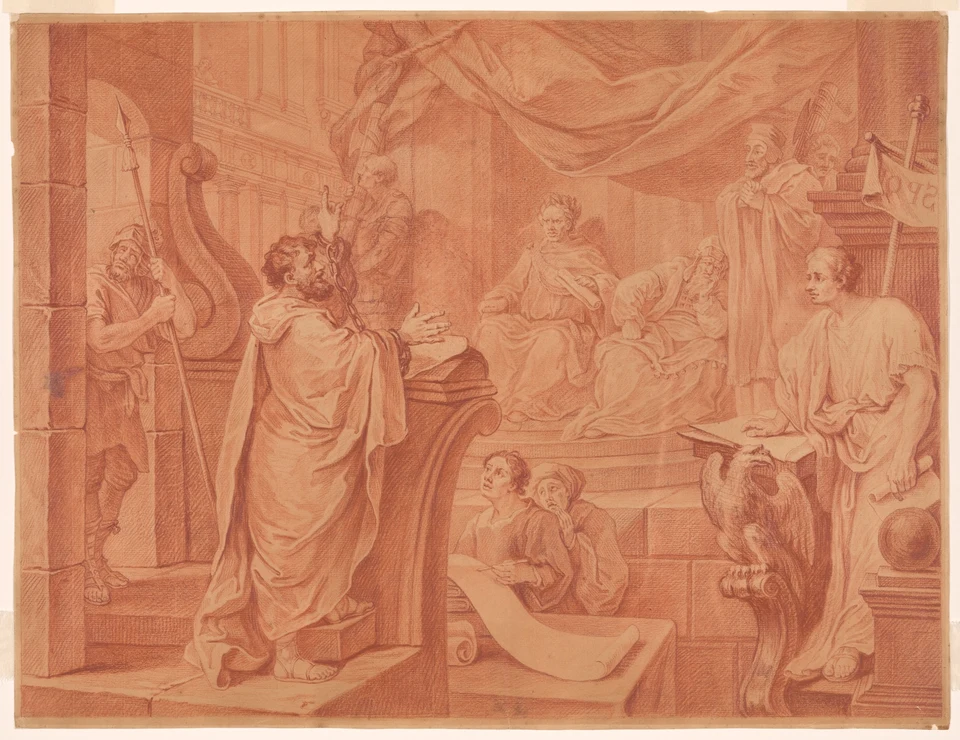
- Paul Before Felixc. 1751