William Blake
1757–1827 · 8 works
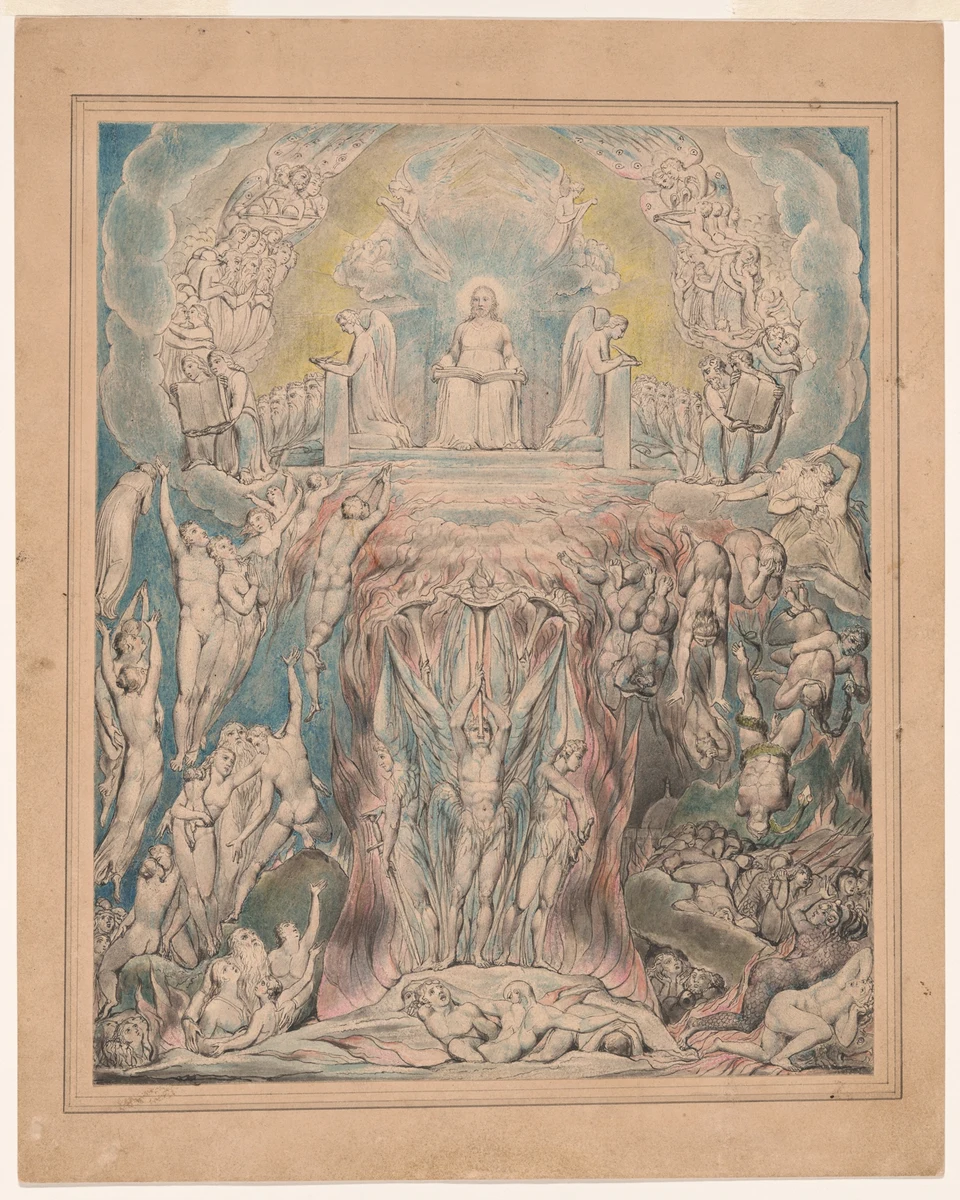
William Blake brought poetry and image-making into the same working process. Trained as an engraver, he developed relief etching to print words and pictures together, then colored many sheets by hand with help from his wife, Catherine. His books and separate images drew on the Bible, his own invented figures, and urgent questions about power and human freedom. The resulting pictures ask for more than the recognition of a familiar story. A body’s pose, the surrounding light, and the relationship between writing and image all help carry the idea.
8 works · 1794–1822
Look at a figure’s pose before trying to identify the story. What changes when you then consider the title or accompanying words?
1794–1810 · 3 works
Walk these 3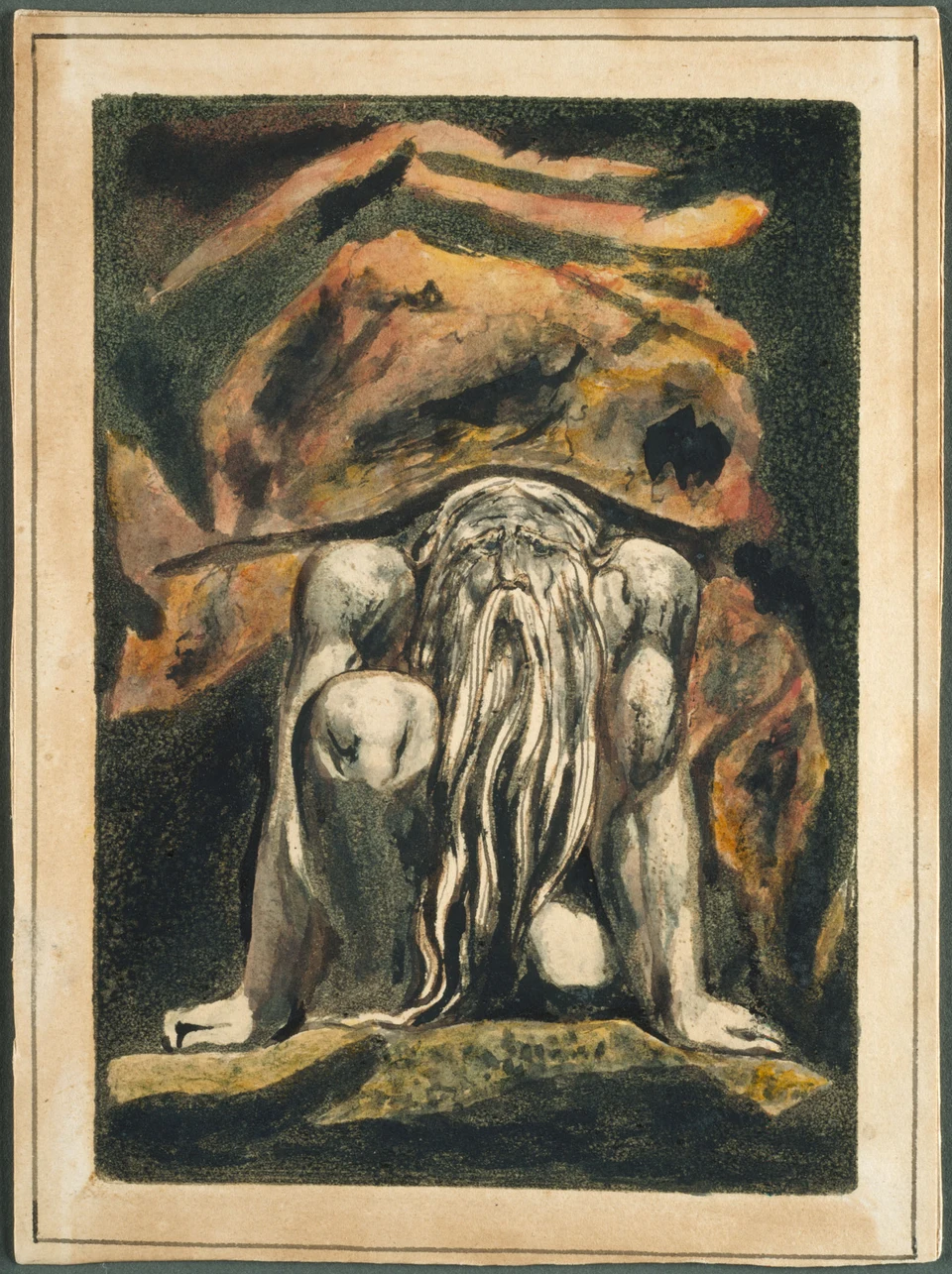
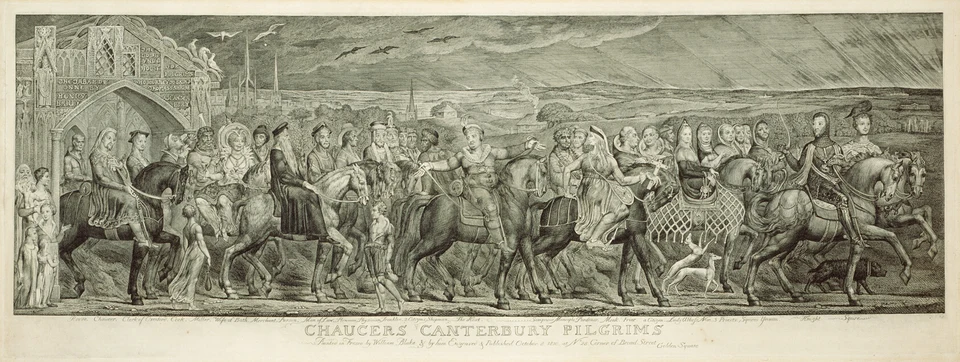
1821–1822 · 5 works
Walk these 5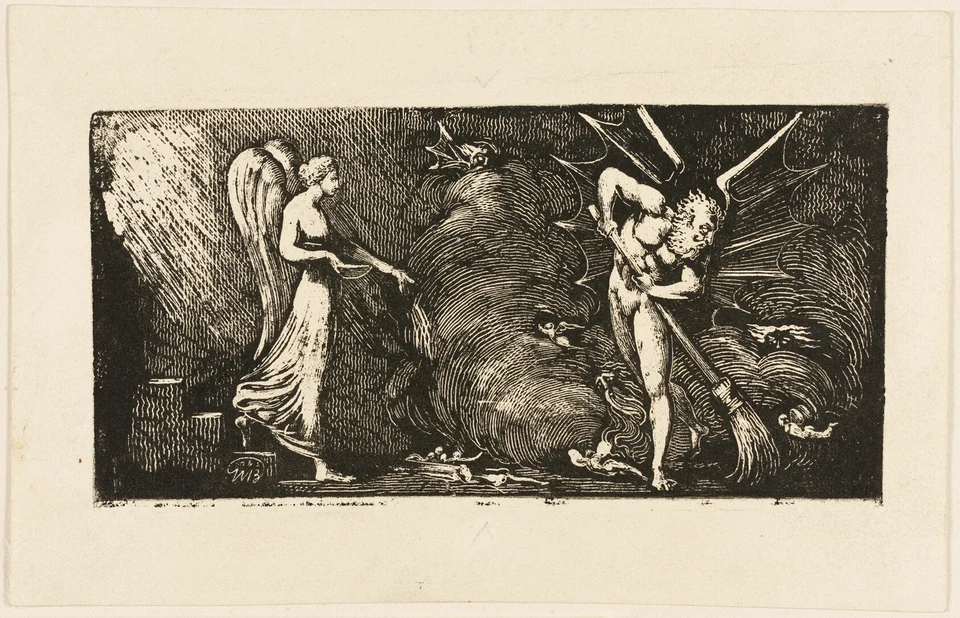 'The Man Sweeping the Interpreter's Parlour,' from Bunyan's Pilgrim's progress1820–22
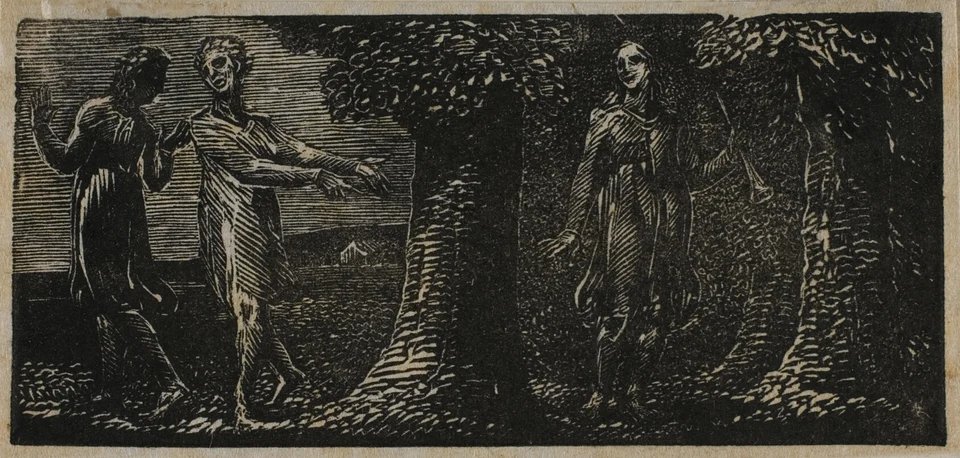 Colinet Mocked by Two Boys, from The Pastorals of Virgil1821
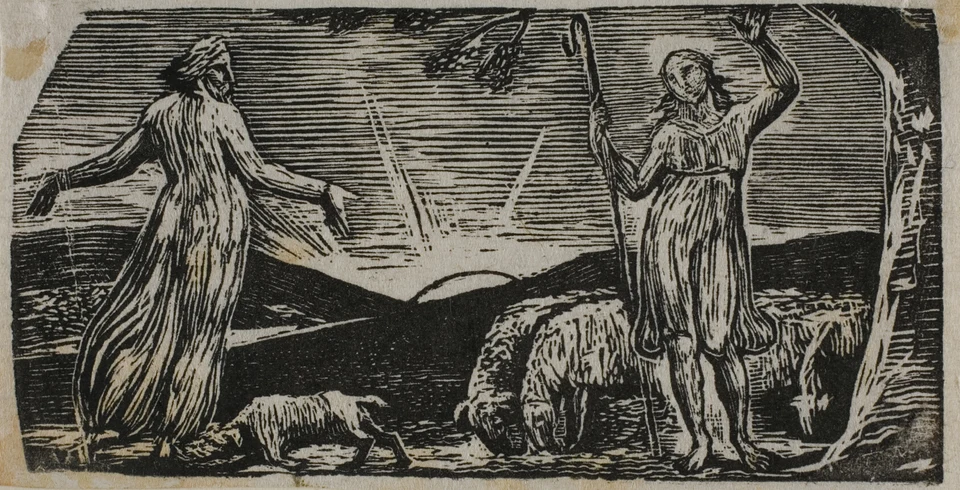 Thenot Remonstrates with Colinet, from The Pastorals of Virgil1821
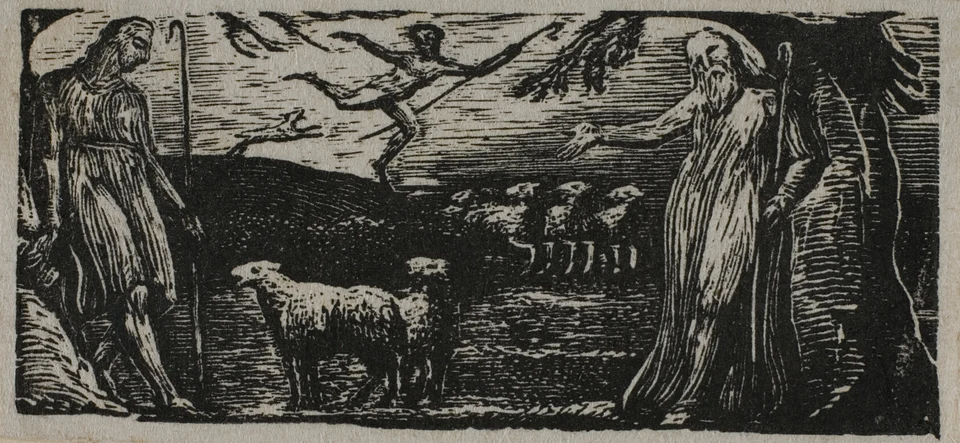 Thenot Remonstrates with Colinet, Lightfoot in Background, from The Pastorals of Virgil1821
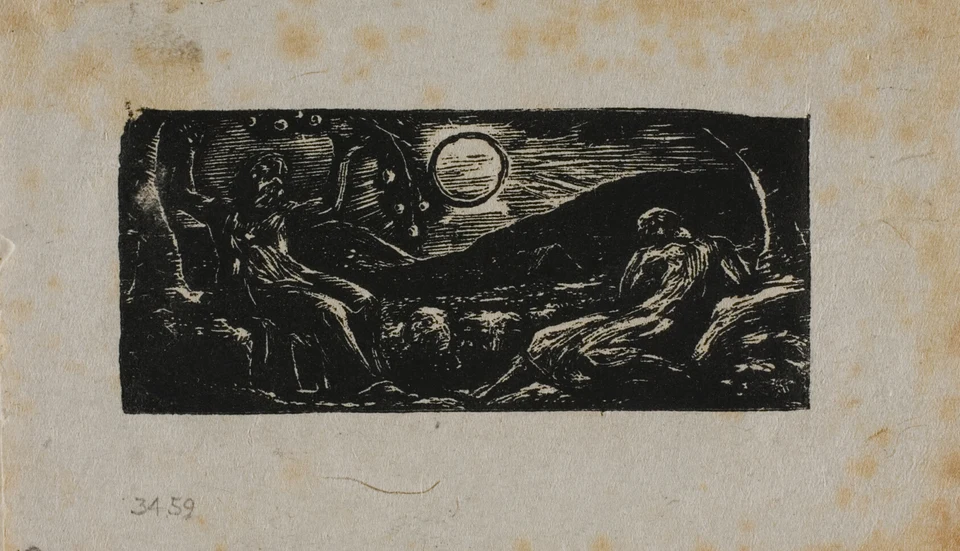 Thenot Under Fruit Tree, from The Pastorals of Virgil1821
Alvan Fisher
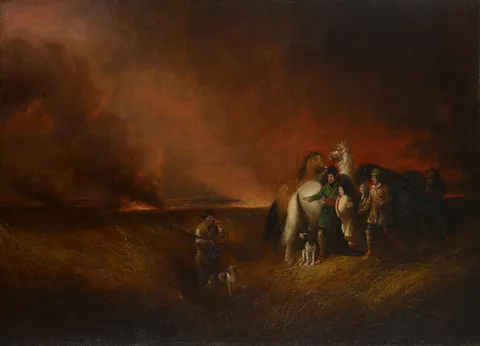
The Prairie on Fire, 1827
Baron Antoine Jean Gros
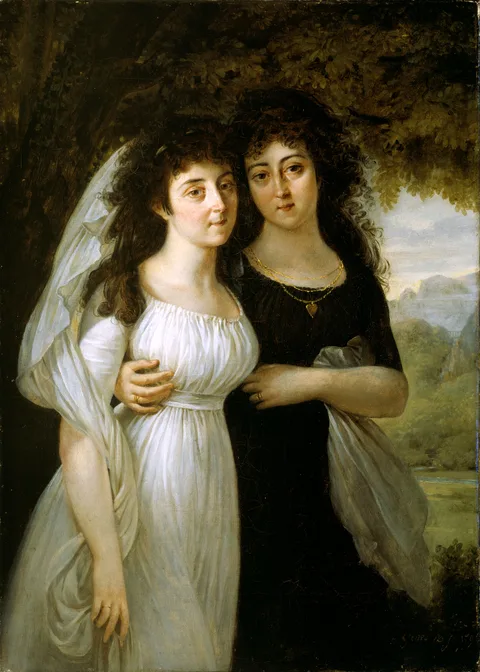
Portrait of the Maistre Sisters, 1796
Benjamin West
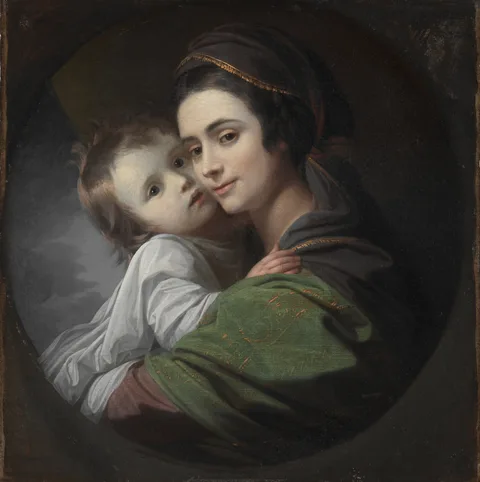
Elizabeth Shewell West and Her Son, Raphael, c. 1770