Giovanni Battista Piranesi
1720–1778 · 8 works
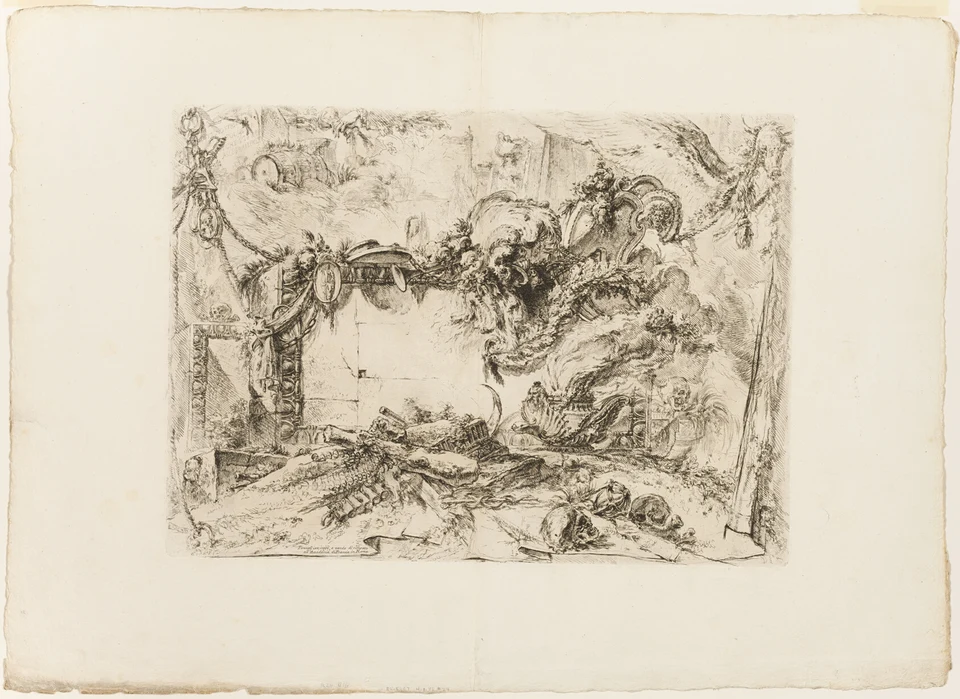
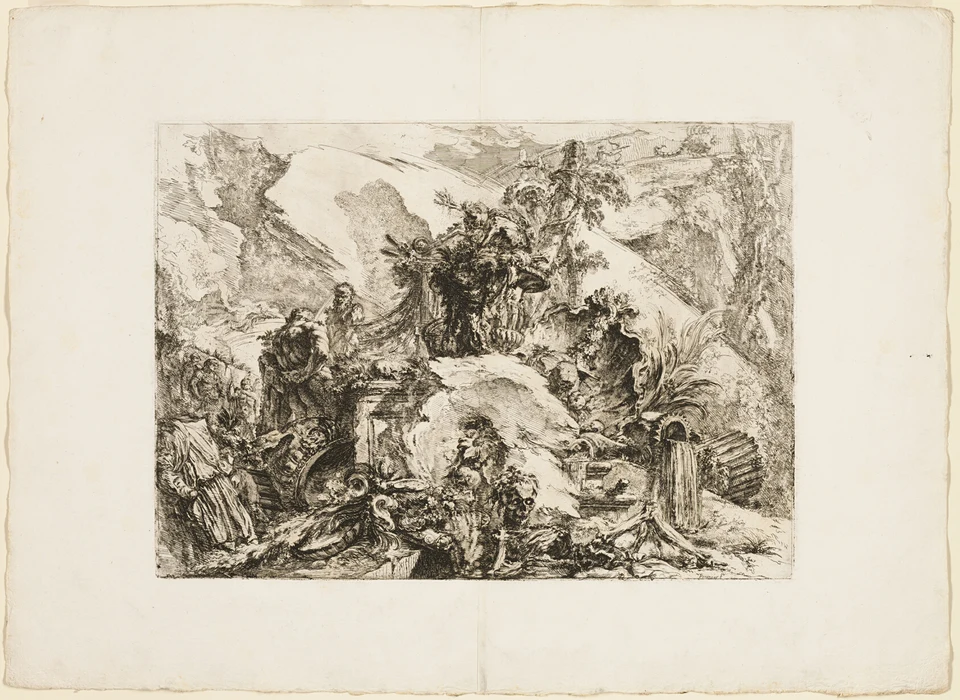
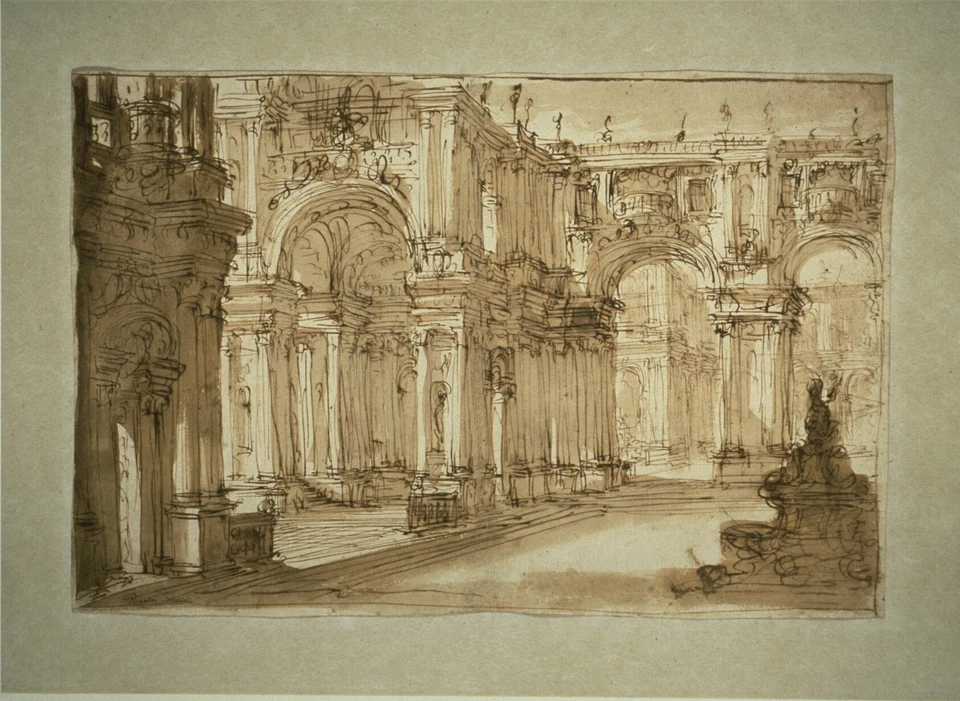
Giovanni Battista Piranesi thought of himself as an architect, even though prints became his best-known work. Rome’s buildings and ancient remains supplied material for close study and ambitious invention. His views offer recognizable places, while the Imaginary Prisons turn stairs, platforms, and massive structures into spaces that resist easy understanding. Tiny figures make these settings seem even larger. Moving between the two kinds of prints reveals how observation and imagination could work together, with the etched line describing both worn stone and an impossible architectural idea.
8 works · 1748–1750
Find the smallest human figure, then trace a route through the architecture. Can you tell where each stair or passage would lead?
1748–1750 · 5 works
Walk these 5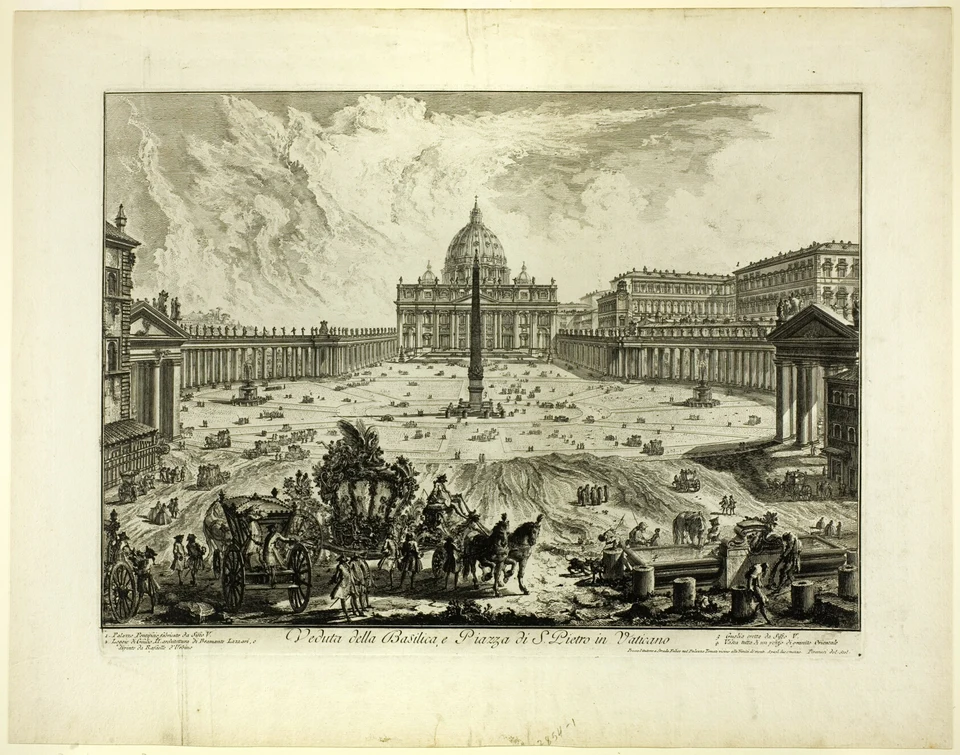 View of St. Peter's Basilica and Piazza in the Vatican, from Views of Rome1748
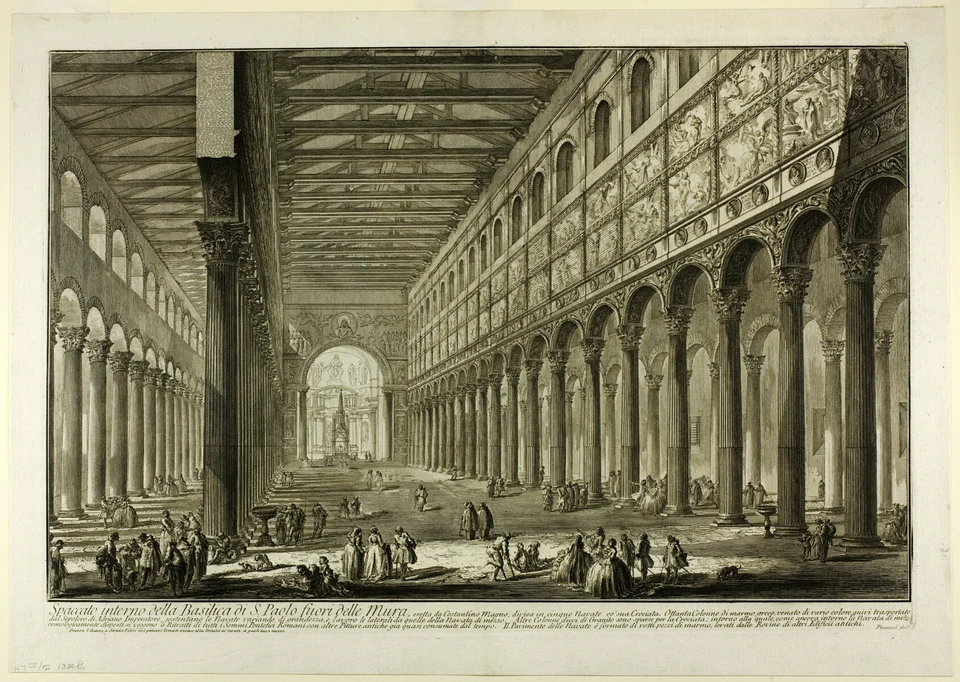 Cut-away view of the interior of the Basilica of S. Paolo fuori delle Mura [St. Paul outside the Walls], from Views of Rome1749
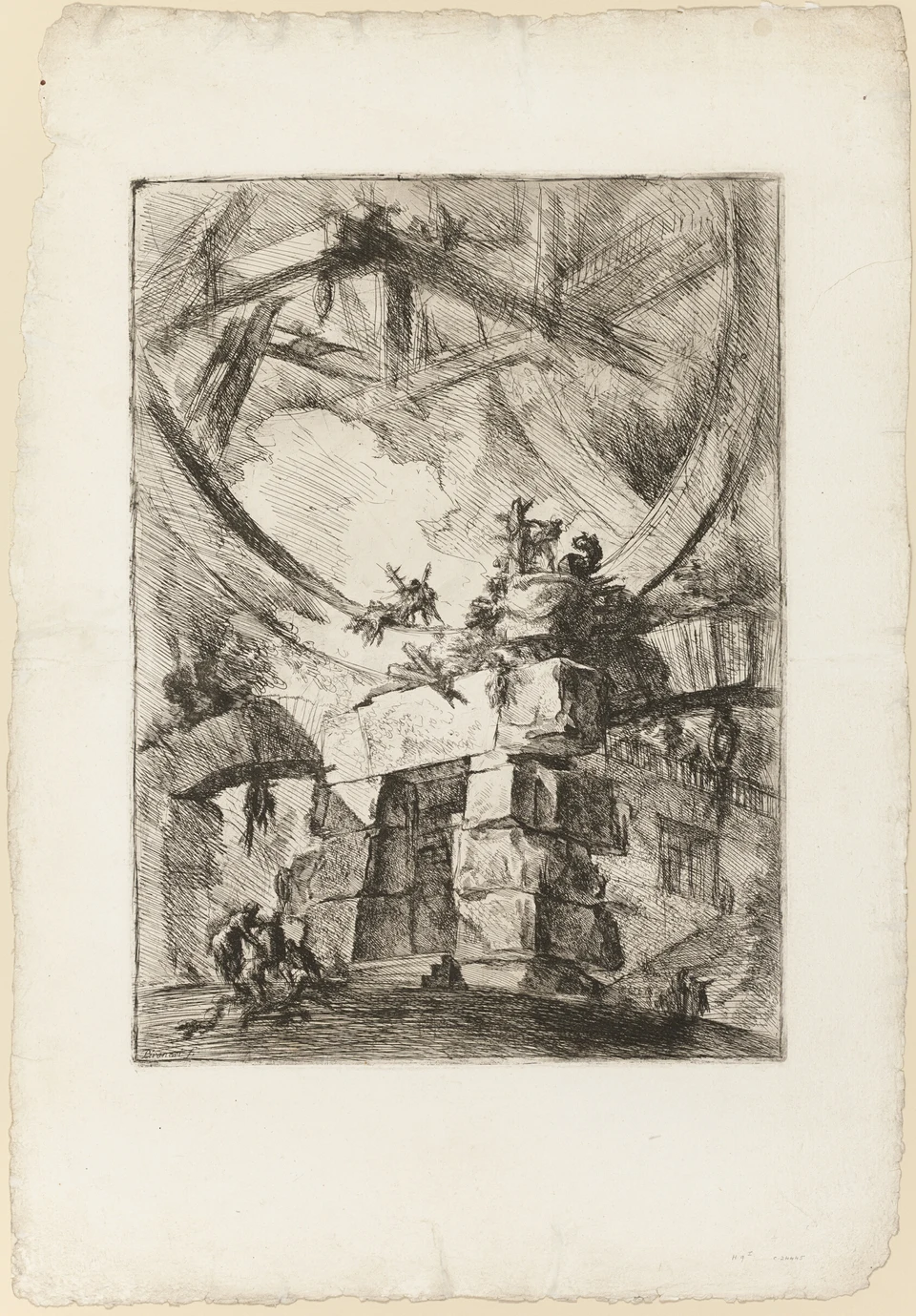 The Giant Wheel, plate 9 from Carceri d'invenzione (Imaginary Prisons)1748/50
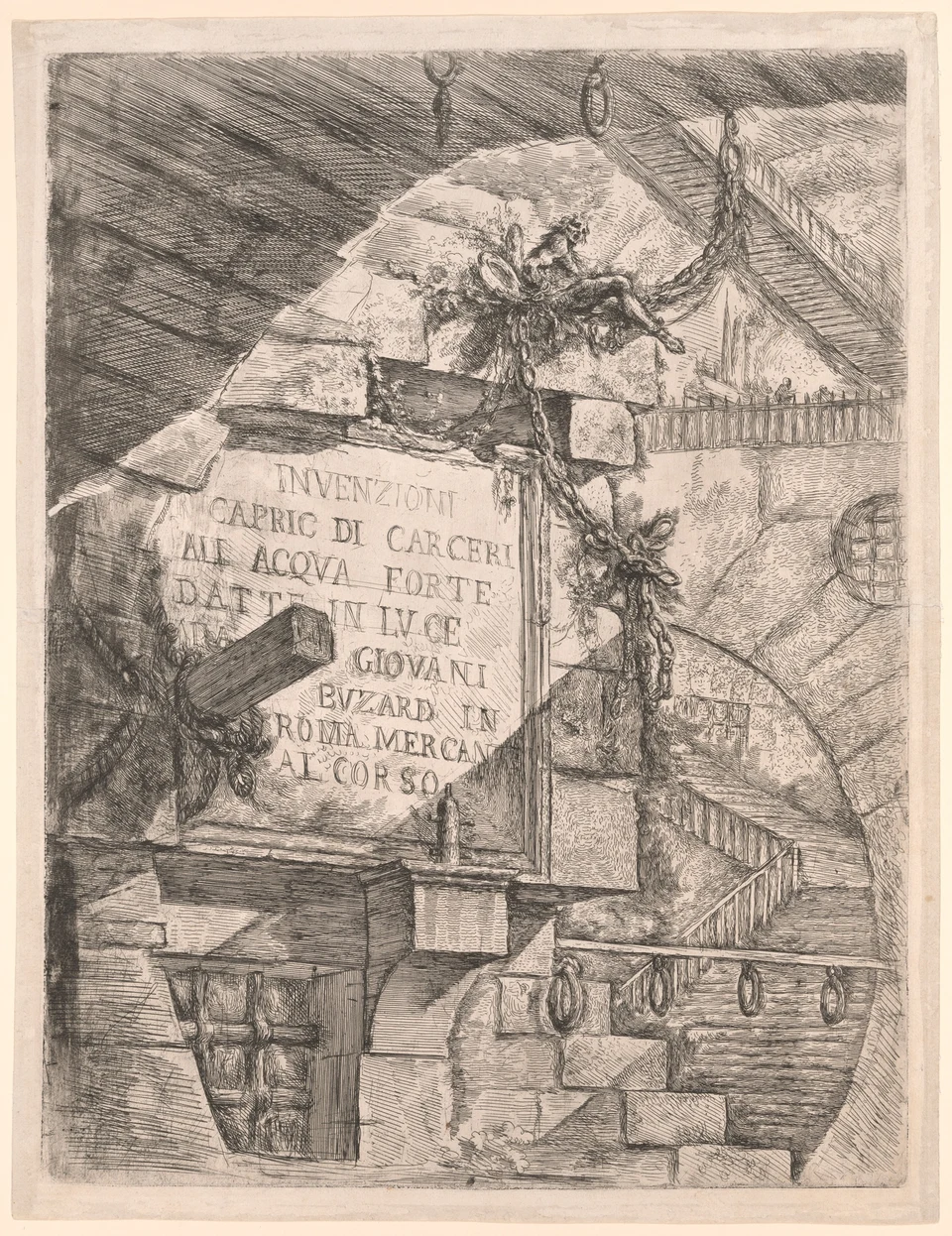 Title Page from Imaginary Prisons1749–50
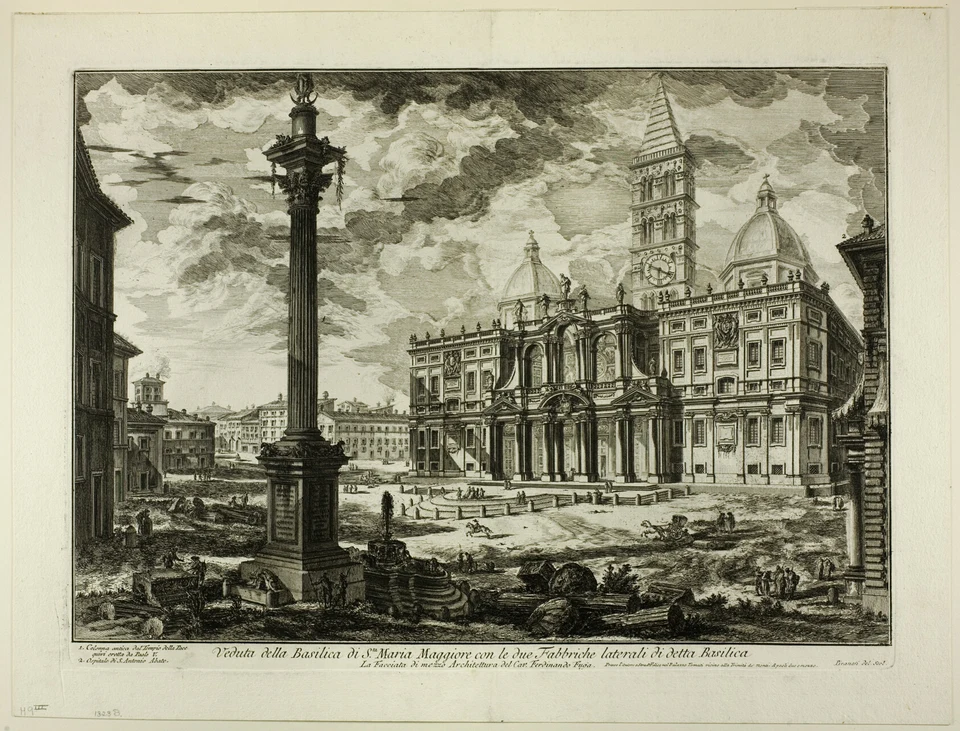 View of the Basilica of S. Maria Maggiore with its two flanking wings, from Views of Rome1749